A
Directing
Alain Jaubert
No biography available.
Known For
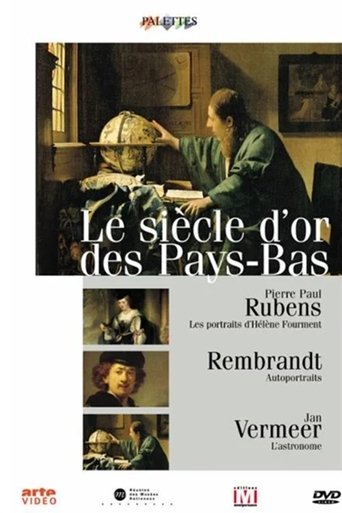 Le siècle d'or des Pays-Bas · 2002
Le siècle d'or des Pays-Bas
2002
MovieDocumentary
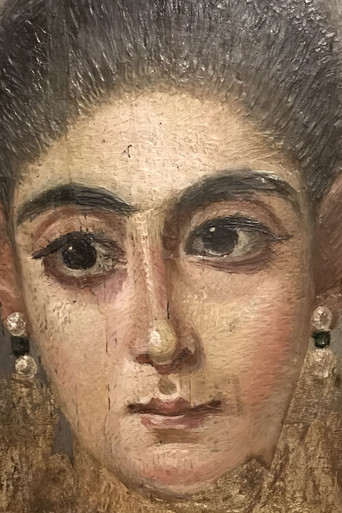 Le Dernier Regard – L’Européenne, portrait du Fayoum · 1998
Le Dernier Regard – L’Européenne, portrait du Fayoum
1998
MovieDocumentary
Using a funerary portrait from the Fayum preserved at the Louvre Museum, this documentary explores the art of portrait painting in Roman Egypt during the 2nd and 3rd centuries AD. These strikingly realistic faces, painted on wooden panels and placed on mummies, reveal a multicultural society shaped by Egyptian, Greek, and Roman traditions. Through this single portrait, the film reflects on identity, memory, and the human relationship to death.
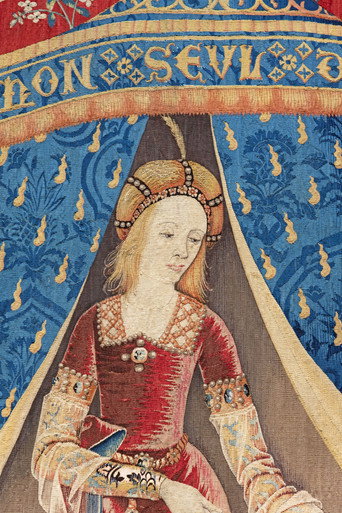 La Dame à la Licorne « Le sixième sens » · 1997
La Dame à la Licorne « Le sixième sens »
1997
Movie
A hanging composed of the six most famous tapestries in the world. These pictures, reproduced everywhere and in all possible forms, have become the emblems of a certain form of romantic art of the late Middle Ages. Beautiful ladies, fabulous animals, abundant flowers, sparkling colours, everything in these tapestries brings pleasure to the eyes. But once the first marvelling is past, the visitor asks questions. What are these blasons that are so obstinately repeated ? What scenes exactly are these hieratic ladies playing ? Why is there each time a lion and a unicorn ? What do these trees, flowers, various animals scattered all over the surface mean ? And who had these splendours woven ? And for what use? Which artist designed the models ? Questions burst out everywhere. Several of them have surprising answers.
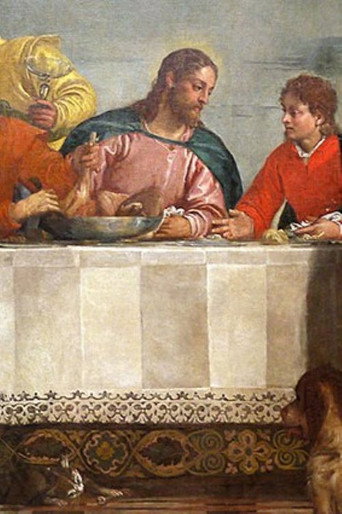 Véronèse « Un tableau en procès » · 1989
Véronèse « Un tableau en procès »
1989
Movie
A study of Veronese’s painting The Feast in the House of Levi (1573), originally conceived as a representation of the Last Supper. By transforming the traditional space and spirit of the subject into a grand Venetian banquet, the painter was accused of heresy by the Inquisition (reconstructed here through a voice-over of his dialogue with the judges). Ordered to correct the work, Veronese changed only its title.
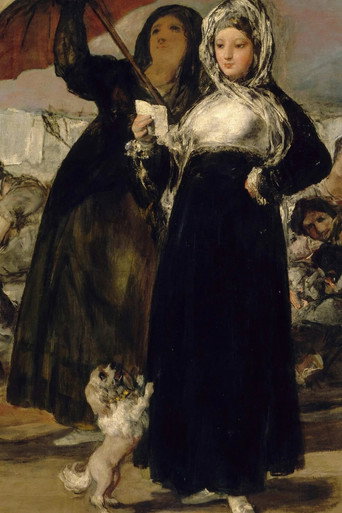 Francisco de Goya « La Lettre, la Flèche et le Balai » · 1992
Francisco de Goya « La Lettre, la Flèche et le Balai »
1992
Movie
Why have these two paintings, The Young Women and The Old Women, always been presented together? Historical investigation does not provide an answer. Alain Jaubert then sets out to follow the trail, patiently gathering clues: both paintings depict a lady and her servant. But while in The Young Women a “maja” is shown in a street scene that seems to belong to the European literary tradition, in The Old Women, Goya portrays an aging coquette and her servant, rendered as caricatures. The diamond arrow worn by the coquette is a clue that helps interpret these two paintings... As this “audiovisual autopsy” unfolds, the works come together to form a kind of fable about destiny—both that of Spain, devastated by the Napoleonic wars, and that of the painter himself, aged and disillusioned, who finds renewed energy in a new love.
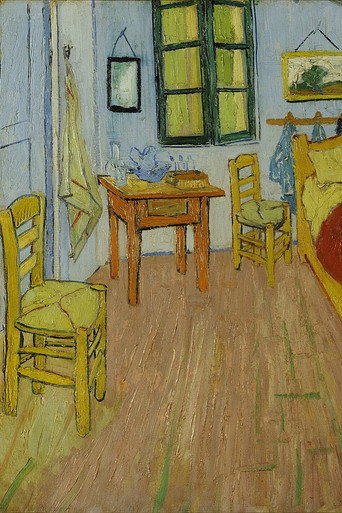 Van Gogh « La haute note jaune » · 1994
Van Gogh « La haute note jaune »
1994
Movie
In october 1888 Vincent Van Gogh who has been living for eight months in Arles, paints his room. A year later, when he is at the Saint-Paul de Mausole Hospice near Saint-Rémy, he feels compelled to paint two copies of this picture which he is especially fond of. It is deliberately simple and yet seems very strange. Vincent wanted to see it as a symbol of rest but the objects in it seem to retreat and space seems to become deformed. Detailed researchs, as in the series "Palettes" has made it possible to reconstitute exactly the room in Arles. Vincent painted it in fact with the detail which fascinated him in the work of the old Dutch Masters. But he brought to it the extraordinary gift of his brush stroke and his new range of colours. That autumn, between the sunflowers, the harvest and the room in Arles Vincent reached the "higt note in yellow".
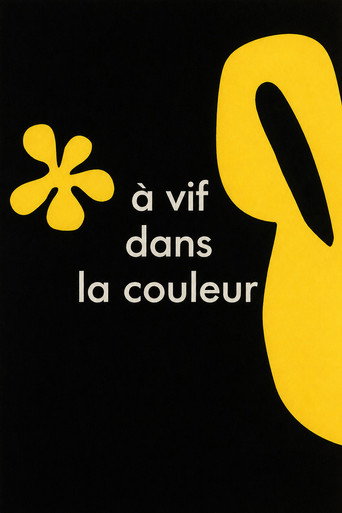 Henri Matisse « A vif dans la couleur » · 1995
Henri Matisse « A vif dans la couleur »
1995
Movie
Composed in Nice, at the Hôtel Régina where the painter had been living since 1949, The Sadness of the King, a 1952 painting nearly four meters by three, is one of the last great works of Matisse. It was created using the cut-paper technique: the painter, immobilized by illness, cuts shapes from sheets of paper previously coated with gouache. He directs an assistant who pins them and moves them on the wall until the desired balance is achieved. Scissors, handled with dexterity, thus henceforth replace pencils and brushes. The pure tones used in the composition eliminate all shading and allow the painter to play solely on the relationships between colors and, above all, on contrasts: black and white (considered by Matisse as colors in their own right), red and blue, green and yellow...
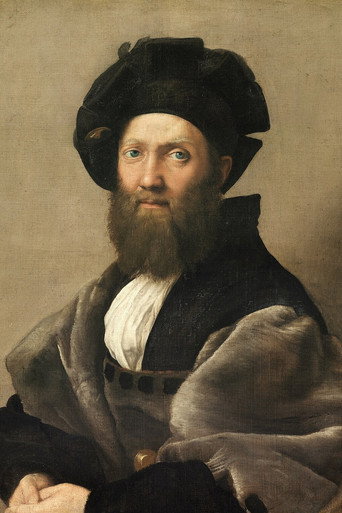 Rafaello Sanzio dit Raphaël « Portrait de l’ami en homme de cour, Portrait de Baldassare Castiglione » · 1994
Rafaello Sanzio dit Raphaël « Portrait de l’ami en homme de cour, Portrait de Baldassare Castiglione »
1994
Movie
Raphael strives to capture the open and sympathetic face of his friend and deliberately simplifies his composition. Yet the image is filled with clues and can be interpreted today using both traditional laboratory analysis and historical archives. The technical details of the pictorial surface, the choice of colors, and the hidden symmetries of the image already reveal how the painting was created. But the clothing, the hairstyle, the materials used, and even the model’s gaze—or the way the reflections are placed in his eyes—each carry a precise meaning within this composition.
Filmography
Sort