Palettes
1995 · 1 season · 49 eps · ★ 9.0 · Documentary
Ended
An educational French TV documentary series which goes into depth during each episode into the analysis of a single painting.
Directed by Alain Jaubert
Network: ARTE
Your Rating
Cast
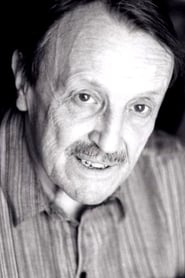 Marcel Cuvelier
 More from Alain JaubertSee all →
 Lascaux: The Prehistory of Art · 1995
Lascaux: The Prehistory of Art
★ 10.01995
MovieDocumentary
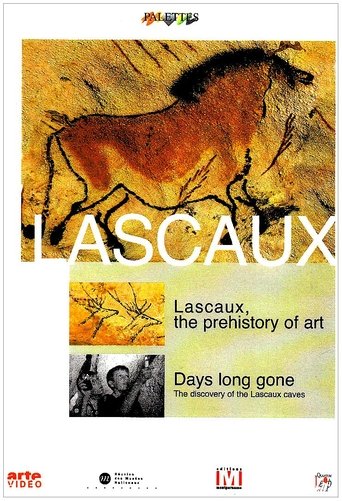
Documentary of a network of caves discovered in 1940 in France. Inside are hundreds of depictions of animals painted approximately 17,000 years ago. The site is no longer open to the public, but can be seen here.
 J.M.W. Turner · 2009
J.M.W. Turner
★ 8.02009
MovieDocumentary
The Briton Joseph Mallord William Turner (1775 - 1851) is one of the most productive painters in art history: he created around 32,000 works, mostly landscape paintings. At the age of 14, the Royal Academy in London accepted him as a scholarship holder, and he later became a member there and taught at it. The “master of light”, as Turner was called early on, is considered the most famous forerunner of impressionism. Alain Jaubert's film presents the themes and experiences that determined Turner's work and life: natural spectacles, ships and extensive study trips to France, Italy and the Alps.
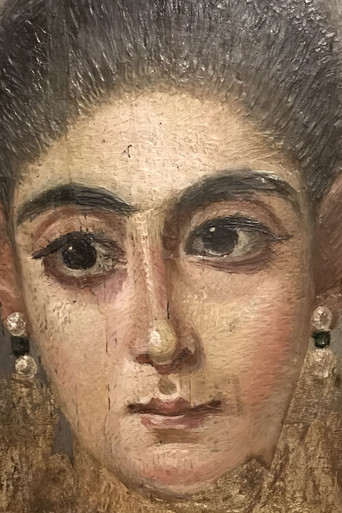 Le Dernier Regard – L’Européenne, portrait du Fayoum · 1998
Le Dernier Regard – L’Européenne, portrait du Fayoum
1998
MovieDocumentary
Using a funerary portrait from the Fayum preserved at the Louvre Museum, this documentary explores the art of portrait painting in Roman Egypt during the 2nd and 3rd centuries AD. These strikingly realistic faces, painted on wooden panels and placed on mummies, reveal a multicultural society shaped by Egyptian, Greek, and Roman traditions. Through this single portrait, the film reflects on identity, memory, and the human relationship to death.
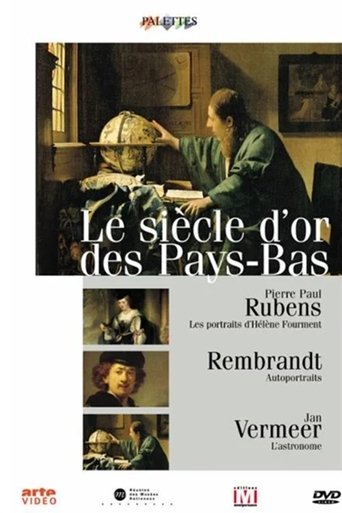 Le siècle d'or des Pays-Bas · 2002
Le siècle d'or des Pays-Bas
2002
MovieDocumentary
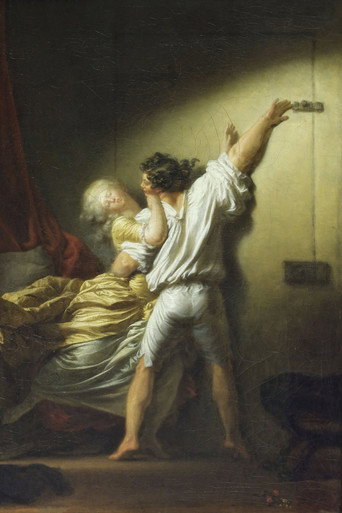 Jean Honoré Fragonard « L’amour dans les plis, Le Verrou » · 1995
Jean Honoré Fragonard « L’amour dans les plis, Le Verrou »
1995
Movie
An image that appears ordinary, with a highly explicit subject, can carry troubling undertones. Is it not most strange that this painting may have been created during a religious scene? This final variation on the opposition between sacred love and profane love brings several centuries of religious painting to a close and opens a new era: eroticism is no longer the domain of ancient gods but is shared here and now, in the most everyday setting. With Fragonard, the bedroom and the bed become the most fantastical settings, where accessories—lingerie, cushions, drapery—reshape, on the margins of the action, the folds and recesses of a new, metaphorical geography of love.
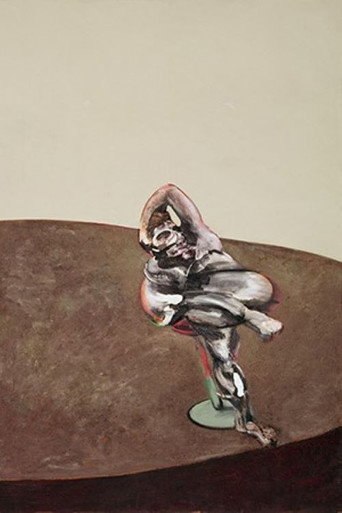 Bacon « Les figures de l’excès » · 1995
Bacon « Les figures de l’excès »
1995
Movie
A plunge into the strange and fascinating world of Francis Bacon, whose painting struggles to exorcise violence and death. The anguished and very intimate universe of one of the greatest 20th century painters reveals multiple allusions to classical painting.
 Van Eyck « Miracle dans la loggia » · 1989
Van Eyck « Miracle dans la loggia »
1989
Movie
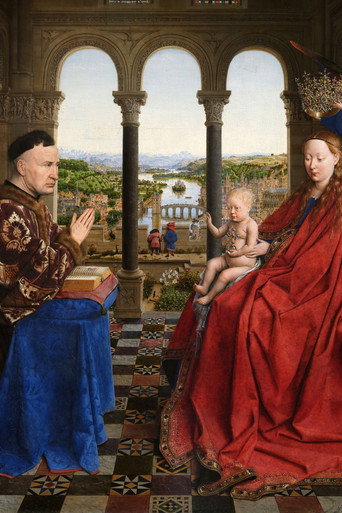
Let us travel back to the 15th century and imagine the interior of the workshop of the painter Jan van Eyck: a porter delivers a wooden panel, one assistant grinds pigments, another mixes them with linseed oil, and a third arranges them on palettes. It is in this environment that Jan van Eyck was able to paint The Virgin and Child with Chancellor Rolin, a small-scale work depicting the Virgin Mary seated on a blue cushion embroidered with gold, holding the Christ Child on her lap, facing a man in his sixties who clasps his hands in prayer.
 Grünewald « Le retable des Ardents » · 1999
Grünewald « Le retable des Ardents »
1999
Movie
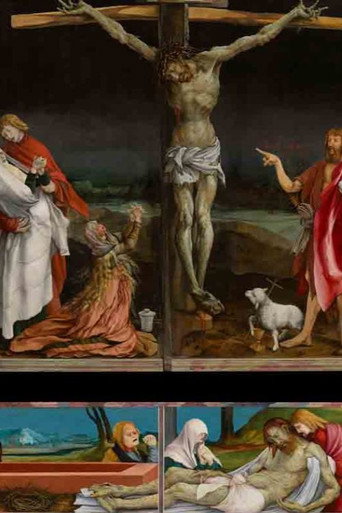
Around 1515, Master Mathis added painted panels arranged as double wings to a sculpted altarpiece created twenty years earlier for the convent-hospital of Isenheim in Alsace. Dedicated to Saint Anthony the Abbot, the work was intended for patients afflicted by ergotism—the “St. Anthony’s fire”—a scourge of poorly nourished Europe that the Order of the Antonines sought to combat under the spiritual protection of their healing patron saint.
 Francisco de Goya « La Lettre, la Flèche et le Balai » · 1992
Francisco de Goya « La Lettre, la Flèche et le Balai »
1992
Movie
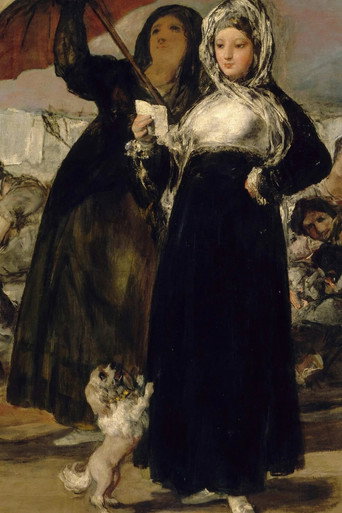
Why have these two paintings, The Young Women and The Old Women, always been presented together? Historical investigation does not provide an answer. Alain Jaubert then sets out to follow the trail, patiently gathering clues: both paintings depict a lady and her servant. But while in The Young Women a “maja” is shown in a street scene that seems to belong to the European literary tradition, in The Old Women, Goya portrays an aging coquette and her servant, rendered as caricatures. The diamond arrow worn by the coquette is a clue that helps interpret these two paintings... As this “audiovisual autopsy” unfolds, the works come together to form a kind of fable about destiny—both that of Spain, devastated by the Napoleonic wars, and that of the painter himself, aged and disillusioned, who finds renewed energy in a new love.
 Paolo Uccello « Vacarmes en Toscane, La Bataille de San Romano » · 1999
Paolo Uccello « Vacarmes en Toscane, La Bataille de San Romano »
1999
Movie
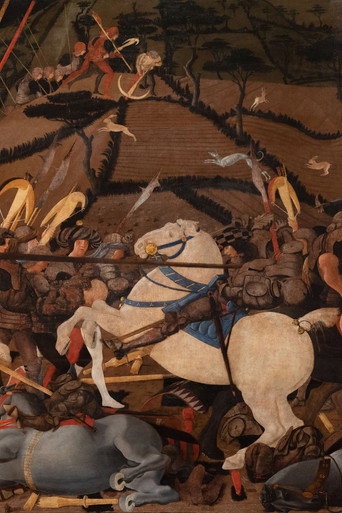
These three very big panels scattered in three different museums (London, Paris and Florence) are considered to be a sort of manifesto of the new art of the 15th century. The rediscovery of the principles of perspective of the ancient Greek treatises, the innovations of an architect like Brunelleschi or a goldsmith like Ghiberti were put to good use by painters to render space and depth. But, in Uccello’s work, in addition there is, besides the passionate quest for perspective, an intense curiosity for geometric shapes, for colour and above all for movement. The subject of The Battles of San Romano : an obscure battle in the Tuscan hills, in 1432, between the mercenaries of Florence and those of Sienna. Paolo made it into a feast for the eyes and the mind and invented paradoxical images which had consequences right up to the cubist and surrealist painters.
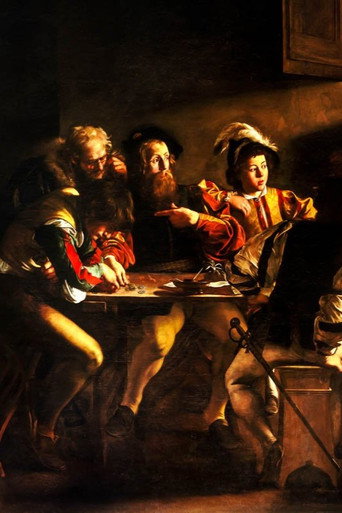 Le Caravage « Anges et bourreaux » · 1998
Le Caravage « Anges et bourreaux »
1998
Movie
It was a French prelate who commissioned the decoration of the Contarelli Chapel in the Church of Saint Louis of the French in Rome, dedicated to his patron saint, Matthew. But he died long before he could know that the result would be three paintings, executed with astonishing speed around 1600 by a young Lombard painter known as Caravaggio, who was thereby creating his first religious cycle. The faithful enter between two large canvases facing one another: The Calling and The Martyrdom of Saint Matthew. On the high altar is a third, smaller work: Saint Matthew and the Angel. Three episodes intended to edify the Catholic conscience of the French pilgrim and to inspire emulation through the power of the image, in accordance with the principles of the Counter-Reformation during this era of religious wars.
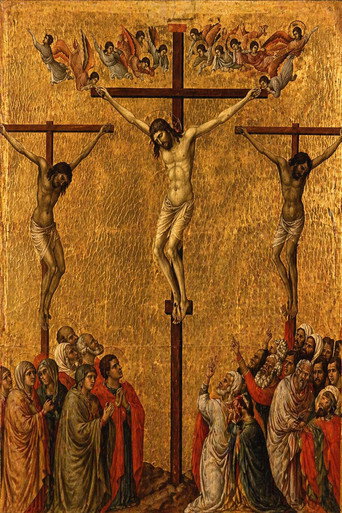 Pablo Picasso « Les couleurs de la passion » · 1993
Pablo Picasso « Les couleurs de la passion »
1993
Movie
The Crucifixion is a rather surprising painting of Picasso's. The painter has in fact very rarely painted religious subjects. And, in the place of a convertional representation of Calvary it shows very strange figures. The sacrifice becomes a sort of initiation ceremony or one of exorcism. Picasso uses, for him, unusual colours, reds, yellows, raw greens which combine in mingled shapes with violent contrasts of colours. Once again the graphic palette and special effects used in the film help to interpret the painting. The work is made up like a puzzle full of allusions and references to the profound personal crisis Picasso was living through at the time. His private and intimate life is joined to the universal drama.
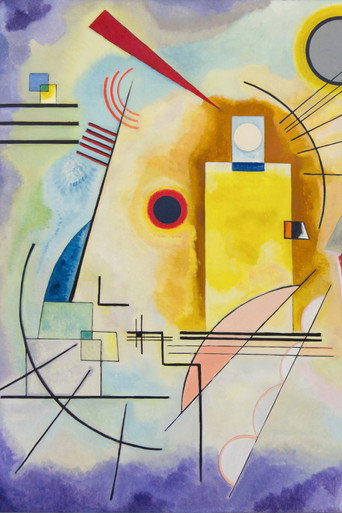 Kandinsky « Figures de l’invisible » · 1994
Kandinsky « Figures de l’invisible »
1994
Movie
At the time Wassily Kandinsky painted Yellow-Red-Blue (1925), he was a professor at the Bauhaus. In this work, the painter applies the principles of color and analytical drawing that he also taught to his students and developed in several theoretical writings. The paintings of this period are highly colorful and highly geometric. The three primary colors and the artist’s favored shapes—triangle, square, circle—become true epic characters. “Form is the outward expression of inner content,” Kandinsky said.
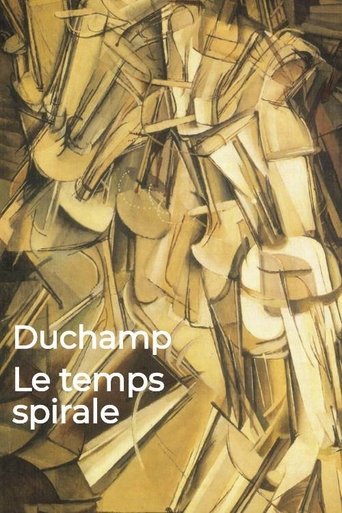 Duchamp. Le temps spirale · 1993
Duchamp. Le temps spirale
1993
MovieDocumentary
It is with regard to the painting "Nude descending the staircase" that Alain Jaubert has chosen to evoke the work of Marcel Duchamp. It is 1913, in New York, and the work of this 25-year-old young man, which depicts different moments of the action of the same character, is causing a stir. Cubists do not recognize it as one of their own, and traditionalists see it as a dangerous iconoclast.
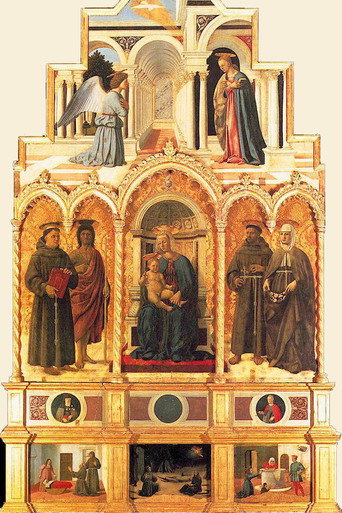 Stefano Di Giovanni dit Sassetta « Le Retable en morceaux, Polyptyque » · 1990
Stefano Di Giovanni dit Sassetta « Le Retable en morceaux, Polyptyque »
1990
Movie
Stefano Di Giovanni, nicknamed Sassetta from the 18th century onward, painted this polyptych in Siena between 1437 and 1444 before delivering it, in accordance with his contract, to the Franciscan convent of San Sepolcro near Arezzo. The altarpiece was dismantled starting in 1578, and its various fragments were sold and dispersed. Twenty-six fragments are now scattered across ten museums in London, Berlin, Moscow, and New York… The Louvre Museum holds three of the five panels that made up the main face, as well as two small panels from the predella. Each of these fragments contains numerous clues that make it possible to reconstruct the history of the polyptych and sometimes even to determine their original placement within the whole. Graphic tools and video techniques allow the puzzle to be reassembled and different hypotheses of reconstruction to be presented—hypotheses on which specialists themselves remain divided.
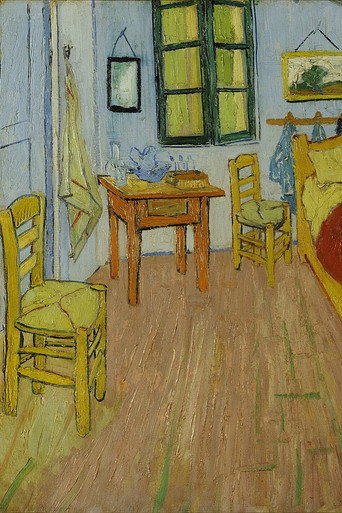 Van Gogh « La haute note jaune » · 1994
Van Gogh « La haute note jaune »
1994
Movie
In october 1888 Vincent Van Gogh who has been living for eight months in Arles, paints his room. A year later, when he is at the Saint-Paul de Mausole Hospice near Saint-Rémy, he feels compelled to paint two copies of this picture which he is especially fond of. It is deliberately simple and yet seems very strange. Vincent wanted to see it as a symbol of rest but the objects in it seem to retreat and space seems to become deformed. Detailed researchs, as in the series "Palettes" has made it possible to reconstitute exactly the room in Arles. Vincent painted it in fact with the detail which fascinated him in the work of the old Dutch Masters. But he brought to it the extraordinary gift of his brush stroke and his new range of colours. That autumn, between the sunflowers, the harvest and the room in Arles Vincent reached the "higt note in yellow".
More Like This
Couldn't load this row right now.