
Lascaux: The Prehistory of Art
1995 · 60 min · ★ 10.0 · Documentary
Documentary of a network of caves discovered in 1940 in France. Inside are hundreds of depictions of animals painted approximately 17,000 years ago. The site is no longer open to the public, but can be seen here.
Directed by Alain Jaubert
Your Rating
More from Alain JaubertSee all →
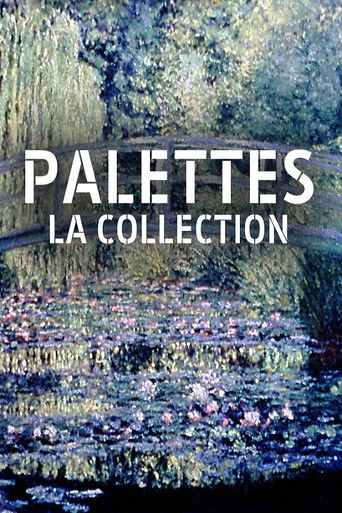 Palettes · 1995
Palettes
★ 9.01995
SeriesDocumentary
An educational French TV documentary series which goes into depth during each episode into the analysis of a single painting.
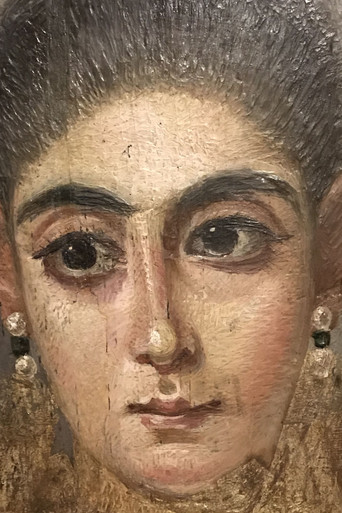 Le Dernier Regard – L’Européenne, portrait du Fayoum · 1998
Le Dernier Regard – L’Européenne, portrait du Fayoum
1998
MovieDocumentary
Using a funerary portrait from the Fayum preserved at the Louvre Museum, this documentary explores the art of portrait painting in Roman Egypt during the 2nd and 3rd centuries AD. These strikingly realistic faces, painted on wooden panels and placed on mummies, reveal a multicultural society shaped by Egyptian, Greek, and Roman traditions. Through this single portrait, the film reflects on identity, memory, and the human relationship to death.
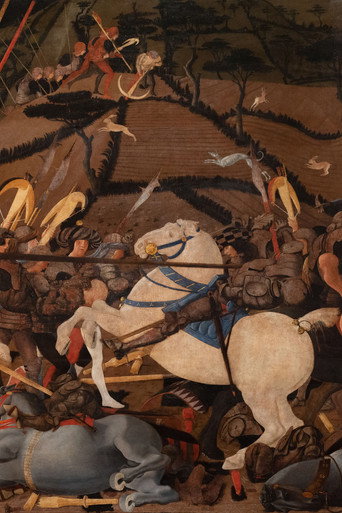 Paolo Uccello « Vacarmes en Toscane, La Bataille de San Romano » · 1999
Paolo Uccello « Vacarmes en Toscane, La Bataille de San Romano »
1999
Movie
These three very big panels scattered in three different museums (London, Paris and Florence) are considered to be a sort of manifesto of the new art of the 15th century. The rediscovery of the principles of perspective of the ancient Greek treatises, the innovations of an architect like Brunelleschi or a goldsmith like Ghiberti were put to good use by painters to render space and depth. But, in Uccello’s work, in addition there is, besides the passionate quest for perspective, an intense curiosity for geometric shapes, for colour and above all for movement. The subject of The Battles of San Romano : an obscure battle in the Tuscan hills, in 1432, between the mercenaries of Florence and those of Sienna. Paolo made it into a feast for the eyes and the mind and invented paradoxical images which had consequences right up to the cubist and surrealist painters.
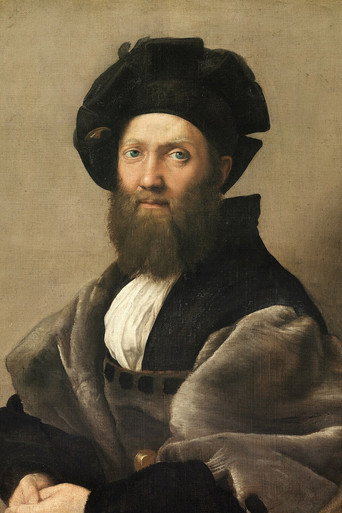 Rafaello Sanzio dit Raphaël « Portrait de l’ami en homme de cour, Portrait de Baldassare Castiglione » · 1994
Rafaello Sanzio dit Raphaël « Portrait de l’ami en homme de cour, Portrait de Baldassare Castiglione »
1994
Movie
Raphael strives to capture the open and sympathetic face of his friend and deliberately simplifies his composition. Yet the image is filled with clues and can be interpreted today using both traditional laboratory analysis and historical archives. The technical details of the pictorial surface, the choice of colors, and the hidden symmetries of the image already reveal how the painting was created. But the clothing, the hairstyle, the materials used, and even the model’s gaze—or the way the reflections are placed in his eyes—each carry a precise meaning within this composition.
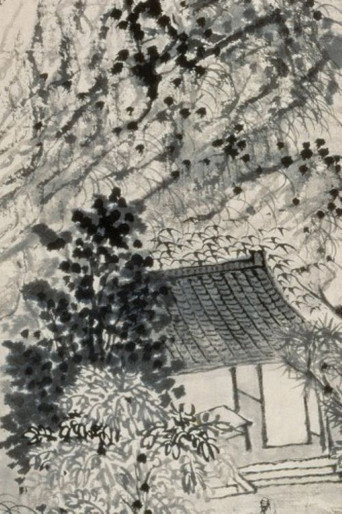 Shitao « L’Unique trait de pinceau » · 1999
Shitao « L’Unique trait de pinceau »
1999
Movie
Shitao, one of the most skilled painters of his time, was deeply imbued with Buddhist spirituality, as he was forced to take refuge in monasteries from a very young age. His painting relies on the simplicity of line and the pure white of the paper. Here, a mountain landscape is rendered in ink on rice paper mounted on a silk scroll. Beneath the apparent simplicity of the subject unfolds a whole universe of hidden correspondences that one must learn to decipher.
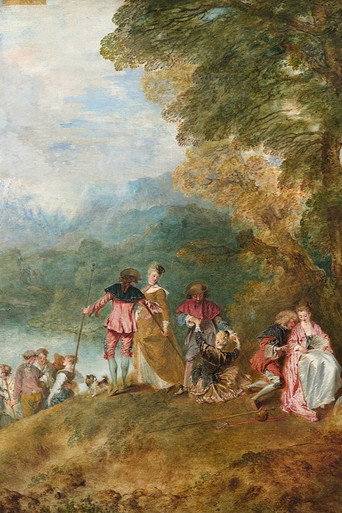 Jean Antoine Watteau « Le pèlerinage à l’île de Cythère, Les secrets de la fête galante » · 1995
Jean Antoine Watteau « Le pèlerinage à l’île de Cythère, Les secrets de la fête galante »
1995
Movie
The Pilgrimage to Cythera's island is one of the glories of the Louvre Museum. Praised by Baudelaire, Nerval and Proust, copied by countless painters, continually analysed, it is both legend and utopia. What are those dancing couples doing ? Are they leaving for or coming back from the island of love ?
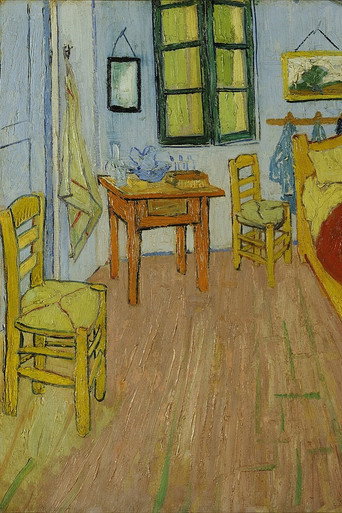 Van Gogh « La haute note jaune » · 1994
Van Gogh « La haute note jaune »
1994
Movie
In october 1888 Vincent Van Gogh who has been living for eight months in Arles, paints his room. A year later, when he is at the Saint-Paul de Mausole Hospice near Saint-Rémy, he feels compelled to paint two copies of this picture which he is especially fond of. It is deliberately simple and yet seems very strange. Vincent wanted to see it as a symbol of rest but the objects in it seem to retreat and space seems to become deformed. Detailed researchs, as in the series "Palettes" has made it possible to reconstitute exactly the room in Arles. Vincent painted it in fact with the detail which fascinated him in the work of the old Dutch Masters. But he brought to it the extraordinary gift of his brush stroke and his new range of colours. That autumn, between the sunflowers, the harvest and the room in Arles Vincent reached the "higt note in yellow".
 Rubens « La gloire de la chair » · 1995
Rubens « La gloire de la chair »
1995
Movie
In 1630, Rubens who is settled in Anvers marries in a second marriage Hélène Fourment. In the huge studio he has had built, he paints several portraits of Hélène, in the garden, in furs, in a carriage, which are minutely analysed in this film. For he does not content himself with making a simple portrait but tries to portray she whom her admirers had compared to Homer's Helen and to transcribe in allegoried form, all the attributes of the femininity.
 Pierre Bonnard « Le mimosa mimétique » · 1998
Pierre Bonnard « Le mimosa mimétique »
1998
Movie
A square format market by the rhythms of its many obliques (the frame of the glass window, the guardrail in the foreground) and its brilliant colours (ultramarine, emerald, orange, pink and the bright yellow of the mimosa), L'Atelier is one of Bonnard's last great paintings. It is also one of his masterpieces, magnificient and enigmatic, meriting in itself a detailed analysis.
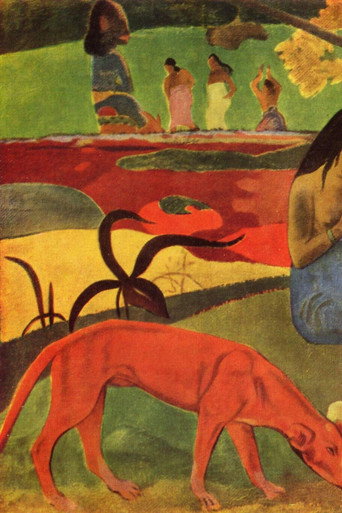 Gauguin « Harmonies sauvages » · 2003
Gauguin « Harmonies sauvages »
2003
Movie
Gauguin was a sailor and then a stockbroker at the money market. Husband of a young Danish woman, Mette Gad, he became a father. Then, he started painting. In order to reach his “shades’ poetry”, he got around in Brittany, Panama, West Indies, “lands of primal liberties”. Always looking for human beings that hadn’t been “spoiled by progress yet” and were marked by “archaic religiosity”, he’d give the best of his painting in Polynesia. The Arearea (“Amusements”) painting was painted during his first stay in Tahiti. The red dog was a particular source of curiosity during the exhibition at Durand-Ruel’s place in 1893.
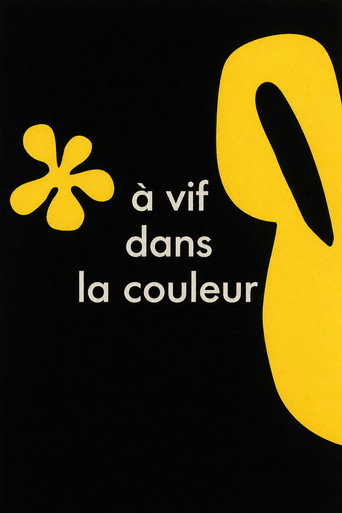 Henri Matisse « A vif dans la couleur » · 1995
Henri Matisse « A vif dans la couleur »
1995
Movie
Composed in Nice, at the Hôtel Régina where the painter had been living since 1949, The Sadness of the King, a 1952 painting nearly four meters by three, is one of the last great works of Matisse. It was created using the cut-paper technique: the painter, immobilized by illness, cuts shapes from sheets of paper previously coated with gouache. He directs an assistant who pins them and moves them on the wall until the desired balance is achieved. Scissors, handled with dexterity, thus henceforth replace pencils and brushes. The pure tones used in the composition eliminate all shading and allow the painter to play solely on the relationships between colors and, above all, on contrasts: black and white (considered by Matisse as colors in their own right), red and blue, green and yellow...
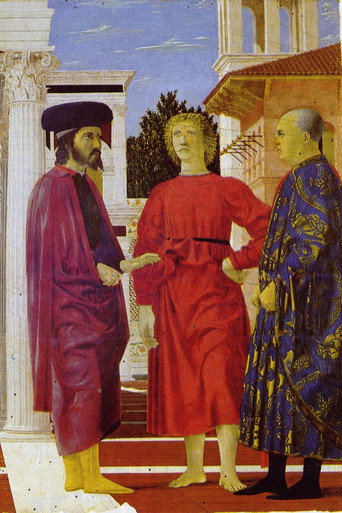 Piero Della Francesca « Le rêve de la diagonale, La Flagellation » · 1993
Piero Della Francesca « Le rêve de la diagonale, La Flagellation »
1993
Movie
This is certainly the most mysterious painting of all the history of painting. Thirty different attempts of finding out the hidden meaning of it have been made without success. The Flagellation is not only the masterpiece of a great artist telling an enigmatic story, it is also the expression of Renaissance's new ideas and art. Piero had a great reputation as a painter and as a mathematician. A few of his paintings show his vast knowledge of perspective. The architecture, the paving, the ceiling, the whole setting of The Flagellation - up to its smallest details - is governed by the laws of perspective. By computing all these datas, it was possible to recreate in three dimensions the exact space that Piero had imagined.
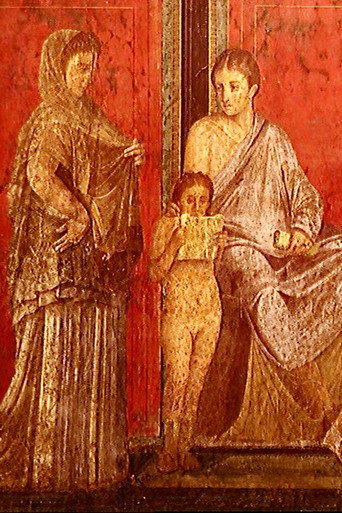 Pompéi « Cérémonies secrètes » · 2002
Pompéi « Cérémonies secrètes »
2002
Movie
In 79 AD, the eruption of Mount Vesuvius buried the city and inhabitants of Pompeii under volcanic debris and preserved—until excavations in 1909—a vast fresco painted a century and a half earlier in a suburban villa. Populated by twenty-nine life-size figures against a vivid red background, this decoration, as famous as it is enigmatic, has given rise to several interpretations, which this film seeks to clarify with the help of documentary evidence.
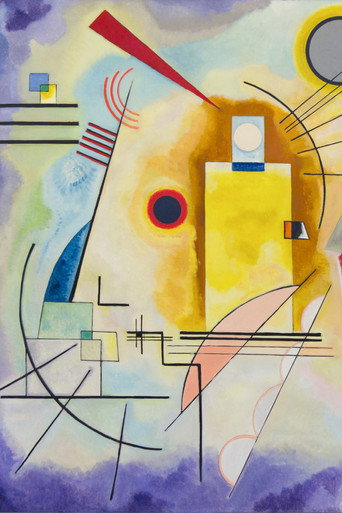 Kandinsky « Figures de l’invisible » · 1994
Kandinsky « Figures de l’invisible »
1994
Movie
At the time Wassily Kandinsky painted Yellow-Red-Blue (1925), he was a professor at the Bauhaus. In this work, the painter applies the principles of color and analytical drawing that he also taught to his students and developed in several theoretical writings. The paintings of this period are highly colorful and highly geometric. The three primary colors and the artist’s favored shapes—triangle, square, circle—become true epic characters. “Form is the outward expression of inner content,” Kandinsky said.
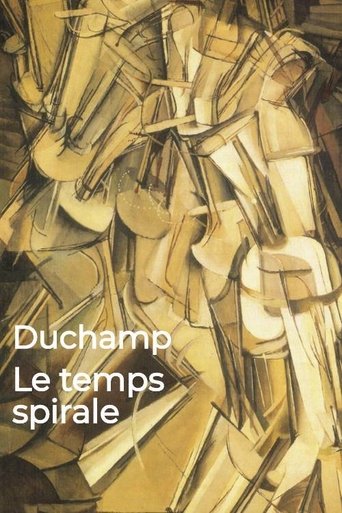 Duchamp. Le temps spirale · 1993
Duchamp. Le temps spirale
1993
MovieDocumentary
It is with regard to the painting "Nude descending the staircase" that Alain Jaubert has chosen to evoke the work of Marcel Duchamp. It is 1913, in New York, and the work of this 25-year-old young man, which depicts different moments of the action of the same character, is causing a stir. Cubists do not recognize it as one of their own, and traditionalists see it as a dangerous iconoclast.
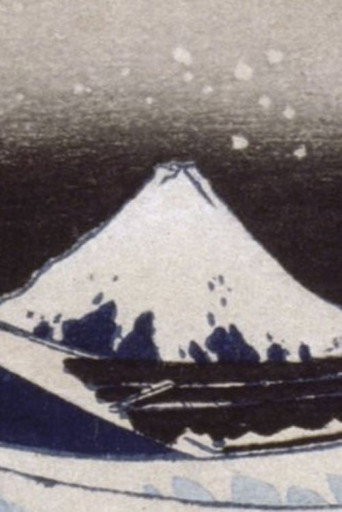 Hokusai « La Menace suspendue » · 1999
Hokusai « La Menace suspendue »
1999
Movie
The silhouette of a giant wave about to engulf fragile boats: this image of suspended fate has traveled the world in the form of postcards, posters, and advertisements. Why such success? How did an image so deeply rooted in a specific culture—that of Japanese prints—come to achieve such universality?
More Like This
Couldn't load this row right now.
