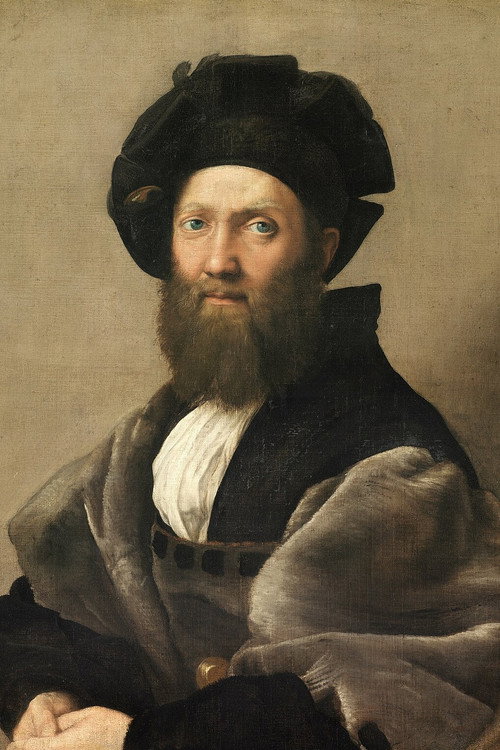
Rafaello Sanzio dit Raphaël « Portrait de l’ami en homme de cour, Portrait de Baldassare Castiglione »

Rafaello Sanzio dit Raphaël « Portrait de l’ami en homme de cour, Portrait de Baldassare Castiglione »

1994 · 30 min

Raphael strives to capture the open and sympathetic face of his friend and deliberately simplifies his composition. Yet the image is filled with clues and can be interpreted today using both traditional laboratory analysis and historical archives. The technical details of the pictorial surface, the choice of colors, and the hidden symmetries of the image already reveal how the painting was created. But the clothing, the hairstyle, the materials used, and even the model’s gaze—or the way the reflections are placed in his eyes—each carry a precise meaning within this composition.

Directed by Alain Jaubert

Your Rating

More from Alain JaubertSee all →
PalettesPalettes · 1995
Palettes
★ 9.01995
SeriesDocumentary
An educational French TV documentary series which goes into depth during each episode into the analysis of a single painting.
Le Caravage « Anges et bourreaux »Le Caravage « Anges et bourreaux » · 1998
Le Caravage « Anges et bourreaux »
1998
Movie
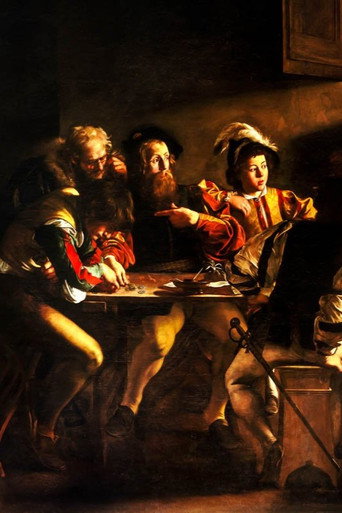
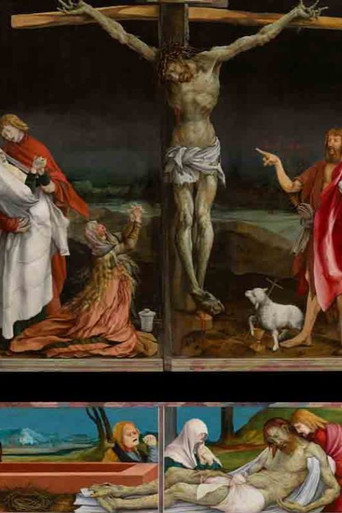
It was a French prelate who commissioned the decoration of the Contarelli Chapel in the Church of Saint Louis of the French in Rome, dedicated to his patron saint, Matthew. But he died long before he could know that the result would be three paintings, executed with astonishing speed around 1600 by a young Lombard painter known as Caravaggio, who was thereby creating his first religious cycle. The faithful enter between two large canvases facing one another: The Calling and The Martyrdom of Saint Matthew. On the high altar is a third, smaller work: Saint Matthew and the Angel. Three episodes intended to edify the Catholic conscience of the French pilgrim and to inspire emulation through the power of the image, in accordance with the principles of the Counter-Reformation during this era of religious wars.
Grünewald « Le retable des Ardents »Grünewald « Le retable des Ardents » · 1999
Grünewald « Le retable des Ardents »
1999
Movie
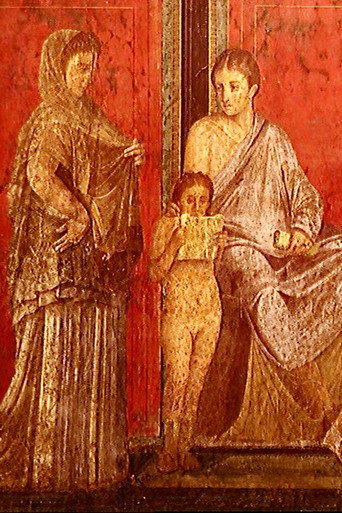
Around 1515, Master Mathis added painted panels arranged as double wings to a sculpted altarpiece created twenty years earlier for the convent-hospital of Isenheim in Alsace. Dedicated to Saint Anthony the Abbot, the work was intended for patients afflicted by ergotism—the “St. Anthony’s fire”—a scourge of poorly nourished Europe that the Order of the Antonines sought to combat under the spiritual protection of their healing patron saint.
Pompéi « Cérémonies secrètes »Pompéi « Cérémonies secrètes » · 2002
Pompéi « Cérémonies secrètes »
2002
Movie
In 79 AD, the eruption of Mount Vesuvius buried the city and inhabitants of Pompeii under volcanic debris and preserved—until excavations in 1909—a vast fresco painted a century and a half earlier in a suburban villa. Populated by twenty-nine life-size figures against a vivid red background, this decoration, as famous as it is enigmatic, has given rise to several interpretations, which this film seeks to clarify with the help of documentary evidence.
Le Dernier Regard – L’Européenne, portrait du FayoumLe Dernier Regard – L’Européenne, portrait du Fayoum · 1998
Le Dernier Regard – L’Européenne, portrait du Fayoum
1998
MovieDocumentary
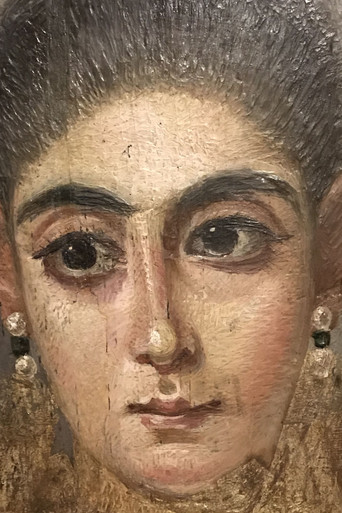
Using a funerary portrait from the Fayum preserved at the Louvre Museum, this documentary explores the art of portrait painting in Roman Egypt during the 2nd and 3rd centuries AD. These strikingly realistic faces, painted on wooden panels and placed on mummies, reveal a multicultural society shaped by Egyptian, Greek, and Roman traditions. Through this single portrait, the film reflects on identity, memory, and the human relationship to death.
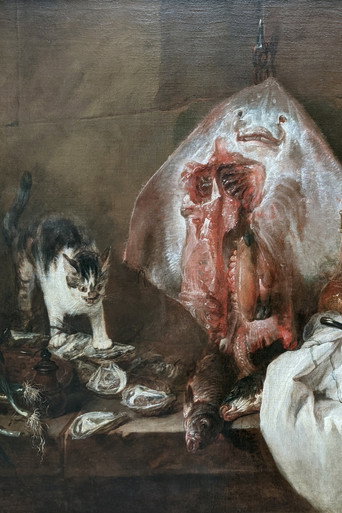
Jean-Baptiste Siméon Chardin « La saveur de l’immobile, La Raie »Jean-Baptiste Siméon Chardin « La saveur de l’immobile, La Raie » · 1995
Jean-Baptiste Siméon Chardin « La saveur de l’immobile, La Raie »
1995
Movie
A still life featuring a large fish, painted in the Dutch manner, The Ray immerses us in the quiet life of familiar objects that the artist took pleasure in depicting. The careful search for the exact placement of each kitchen utensil and each piece of fruit was a long and meticulous process through which Chardin gave his work symbolic or historical meaning.
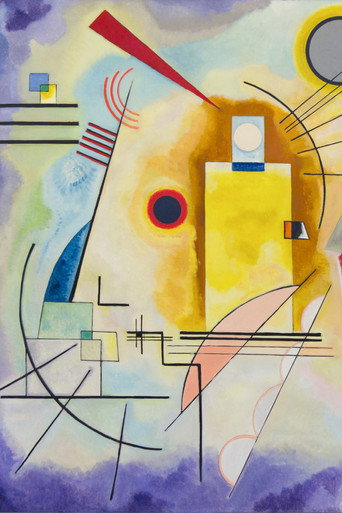
Kandinsky « Figures de l’invisible »Kandinsky « Figures de l’invisible » · 1994
Kandinsky « Figures de l’invisible »
1994
Movie
At the time Wassily Kandinsky painted Yellow-Red-Blue (1925), he was a professor at the Bauhaus. In this work, the painter applies the principles of color and analytical drawing that he also taught to his students and developed in several theoretical writings. The paintings of this period are highly colorful and highly geometric. The three primary colors and the artist’s favored shapes—triangle, square, circle—become true epic characters. “Form is the outward expression of inner content,” Kandinsky said.
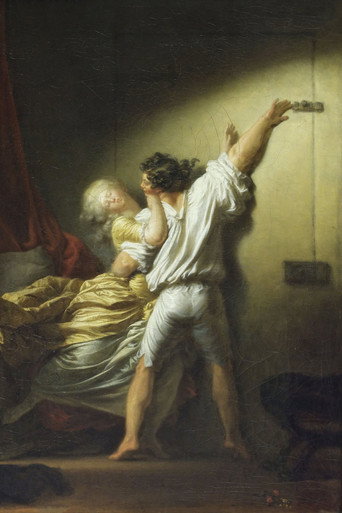
Jean Honoré Fragonard « L’amour dans les plis, Le Verrou »Jean Honoré Fragonard « L’amour dans les plis, Le Verrou » · 1995
Jean Honoré Fragonard « L’amour dans les plis, Le Verrou »
1995
Movie
An image that appears ordinary, with a highly explicit subject, can carry troubling undertones. Is it not most strange that this painting may have been created during a religious scene? This final variation on the opposition between sacred love and profane love brings several centuries of religious painting to a close and opens a new era: eroticism is no longer the domain of ancient gods but is shared here and now, in the most everyday setting. With Fragonard, the bedroom and the bed become the most fantastical settings, where accessories—lingerie, cushions, drapery—reshape, on the margins of the action, the folds and recesses of a new, metaphorical geography of love.
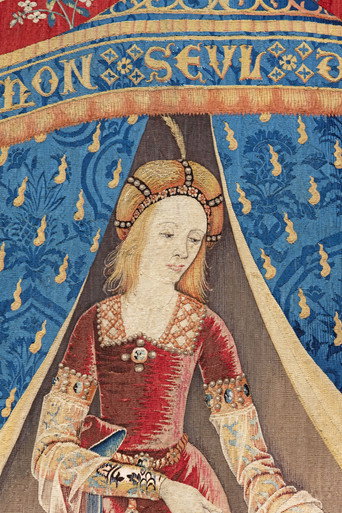
La Dame à la Licorne « Le sixième sens »La Dame à la Licorne « Le sixième sens » · 1997
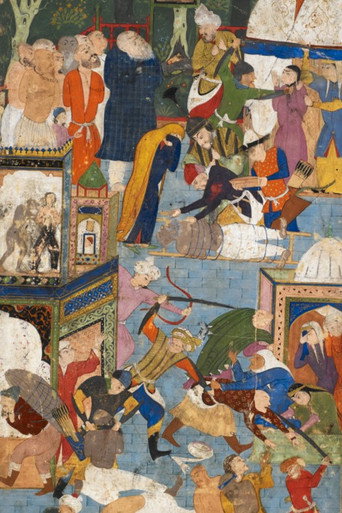
La Dame à la Licorne « Le sixième sens »
1997
Movie
A hanging composed of the six most famous tapestries in the world. These pictures, reproduced everywhere and in all possible forms, have become the emblems of a certain form of romantic art of the late Middle Ages. Beautiful ladies, fabulous animals, abundant flowers, sparkling colours, everything in these tapestries brings pleasure to the eyes. But once the first marvelling is past, the visitor asks questions. What are these blasons that are so obstinately repeated ? What scenes exactly are these hieratic ladies playing ? Why is there each time a lion and a unicorn ? What do these trees, flowers, various animals scattered all over the surface mean ? And who had these splendours woven ? And for what use? Which artist designed the models ? Questions burst out everywhere. Several of them have surprising answers.
Miniature persane « Les Jardins du Paradis »Miniature persane « Les Jardins du Paradis » · 1997
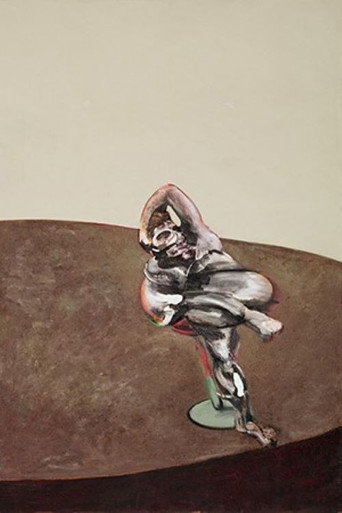
Miniature persane « Les Jardins du Paradis »
1997
Movie
From the Bagdad School (14th century) to the Qadjar School (19th century), Persian painting has always preserved an extraordinary vitality. Court art essentially involving book illustrations, it had its schools, its royal ateliers, its secret techniques, its great masters. The focus of this film is one of the finest work from the department of oriental manuscripts at the Bibliothèque nationale de France, a collection of Five Poems (Khamse) by the great 12th century Persian poet Nezâmi. The examination of papermaking techniques, make-up, calligraphy, drawing and painting affords an opportunity to discover a fascinating civilization
Bacon « Les figures de l’excès »Bacon « Les figures de l’excès » · 1995
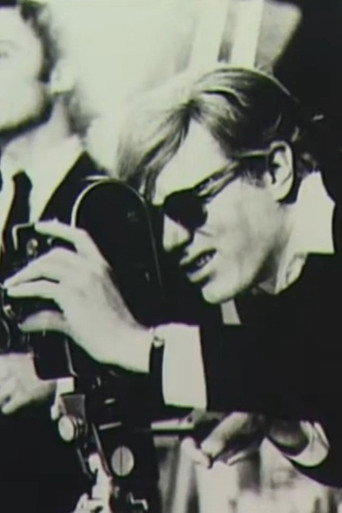
Bacon « Les figures de l’excès »
1995
Movie
A plunge into the strange and fascinating world of Francis Bacon, whose painting struggles to exorcise violence and death. The anguished and very intimate universe of one of the greatest 20th century painters reveals multiple allusions to classical painting.
Andy Warhol « Ten Lizes »Andy Warhol « Ten Lizes » · 1999
Andy Warhol « Ten Lizes »
1999
Movie
Ten similar faces are printed in black, in two rows, on a big canvas measuring 5,65 meters long by 2 high. Similar, these faces ? Not quite : the viewer can distinguish many little differences, like the variations that might come from a same mould. He can also recognise the face of a famous actress, Elizabeth Taylor, "Liz". Andy Warhol composed this picture in 1963 from a photo of the star and by repeating it ten times thanks to a screen-printing screen. Why this face ? Why this repetition ? Warhol does not reveal the keys to his work easily. He became a painter by chance and seems to choose his motifs arbitrarily. Working in New York in the 1960s, at the heart of the "pop art" movement, could he be a sort of negative reflection of consumer society ? A picture like this, which seems to break with traditional portrait art, can however be deciphered just as well as a more ancient painting...
Cézanne « La violence du motif »Cézanne « La violence du motif » · 1995
Cézanne « La violence du motif »
1995
Movie
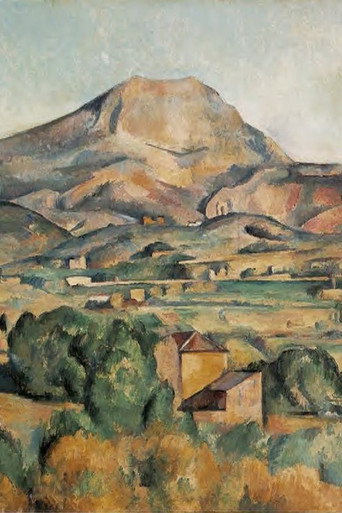
Born in Aix-en-Provence, Cézanne returns to settle there after some journeys elsewhere. He takes as his motif the Sainte-Victoire mountain close by and paints it more than sixty times in different ways and at every time of year. A strange kind of obstination which it was necessary to examine again.
Hokusai « La Menace suspendue »Hokusai « La Menace suspendue » · 1999
Hokusai « La Menace suspendue »
1999
Movie
The silhouette of a giant wave about to engulf fragile boats: this image of suspended fate has traveled the world in the form of postcards, posters, and advertisements. Why such success? How did an image so deeply rooted in a specific culture—that of Japanese prints—come to achieve such universality?
Courbet « La place du mort »Courbet « La place du mort » · 1996
Courbet « La place du mort »
1996
Movie
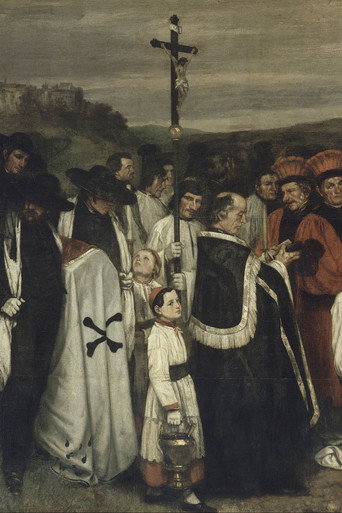
Who were they burying that day in Ornans ? A gathering of ordinary people, a priest, altor boys, all inhabitants of Courbet's native village. The secrets of a simple funeral ceremony which nevertheless created a scandal in the 1851 Salon.
Yves Klein « Traces de l’époque bleue »Yves Klein « Traces de l’époque bleue » · 1997
Yves Klein « Traces de l’époque bleue »
1997
Movie
Blue period, blue traces, blue sponges... Yves Klein deserved his nickname of "Yves the monochrome". Even though he used many other colours, it is the colour of the sky that he chose above all, used over and over again and that he made into not just a mode of expression but a sort of spiritual energy. Klein had the idea of using directly the naked bodies of his models as "living paintbrushes", inventing by his strange sessions, between ritual and striptease, a whole catalogue of new forms. At the same time, intuitively, almost naively, he went through both the history of legendary pictures, the history of the peculiarities of nature and the noble history of nudes in painting. The Anthropométries are both a meditation on imprint, trace, disappearance and coloured variations on the theme of incarnation.

More Like This

Couldn't load this row right now.

Rate this film

Your ratings make Midnight smarter