The Masseurs

The Masseurs

1963 · 20 min · Documentary

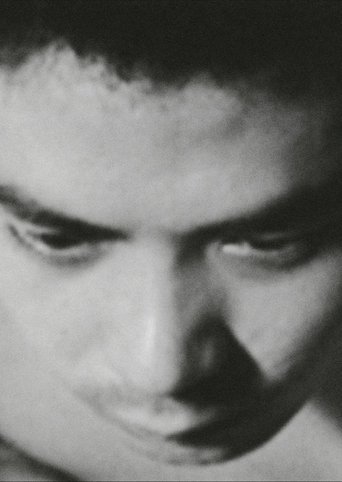
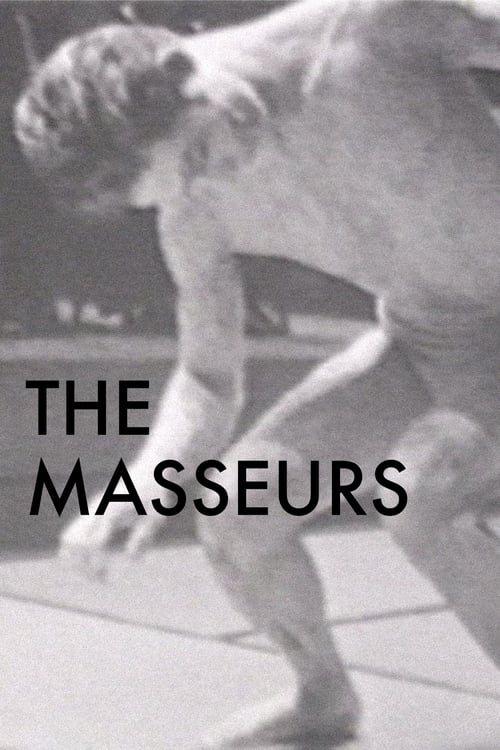
Anma (The Masseurs) is a representative and historical work by the creator of Butoh dance, Tatsumi Hijikata in his early period in the 1960s. The film is realized not only as a dance document but also as a Cine-Dance, a term made by Iimura, that is meant to be a choreography of film. The filmmaker "performed" with a camera on the stage in front of the audience. With the main performers: Tatsumi Hijikata and Kazuo Ohno, the film has the highlights such as Butohs of a soldier by Hijikata & a mad woman by Ohno. There is a story of the mad woman, first outcast and ignored, at the end joins to the community through her dance. Inserted descriptions of Anma (The Masseurs) are made for the film by the filmmaker, but were not in the original Butoh. The film, the only document taken of the performance, must be seen for the understanding of Hijikata Butoh and the foundation of Butoh.

Directed by Takahiko Iimura · Written by Takahiko Iimura

Your Rating

Cast

Make it a double feature

2h 19m together
A close match in mood and era.

More from Takahiko IimuraSee all →
Rose Color DanceRose Color Dance · 1965
Rose Color Dance
10.01965
MovieDocumentary
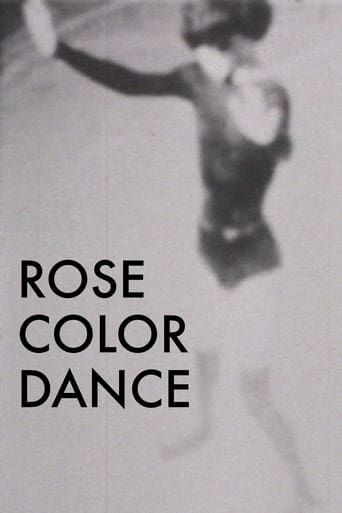
A document of Tatsumi Hijikata's Butoh dance with Kazuo Ohno as the guest dancer shot in Hijikata's early period when he was emerging as the originator of Butoh. All of the male dancers are dressed up with evening suits and move gracefully, yet an intruder breaks up the whole scene abruptly. The film is worth seeing, even if just to see a memorable gay duet of Hijikata and Ohno. Overexposed, washed out images are sandwiched among normal ones.
OnanOnan · 1963
Onan
9.01963
MovieFantasy
“ONAN is a work about desire (masturbation) which has no object but itself. The appearance of the large egg objectifies the man's desires. After colliding with the other (a girl), the hero falls down while still holding the egg, thus caricaturing the desire of the hero.” —Takahiko Iimura (takaiimura.com)
LoveLove · 1962
Love
8.01962
Movie
"10 minutes of the act of creation itself run through close up and magnifying lenses. " -T.I.
Yoko Ono: This Is Not HereYoko Ono: This Is Not Here · 1972
Yoko Ono: This Is Not Here
6.01972
MovieDocumentary
On John's 31st birthday, Yoko held an art exhibit, "This Is Not Here", at the Everson Museum of Art in Syracuse, N.Y.. The show was taped and aired on U.S. TV on May 11, 1972 as "John and Yoko in Syracuse, New York.
A Dance Party in the Kingdom of LilliputA Dance Party in the Kingdom of Lilliput · 1964
A Dance Party in the Kingdom of Lilliput
2.01964
Movie
A super-real comedy with Sho Kazakura. The film is divided in to a number of very short scenes or chapters, each with a title "A,B,C" at random. we see him lame in a crowd, see him running up stairs, see him absolutely naked, watch him urinate, etc. An anthology of discontinuous happenings and events.
On Eye RapeOn Eye Rape · 1962
On Eye Rape
1.01962
Movie
"The original film was rescued from a Tokyo trash bin. It is an American sexual education film in which plant and animal sex are explained. I, together with an artist friend, Natsuyuki Nakanishi, punched big holes in almost all of the frames. It was a protest against Japanese censorship of explicit images of sex, particularly pubic hair which the censors would cover with black marks. I inserted a few subliminal frames of pornographic imagery from magazines several times throughout the film. At the end, I even punched holes in these subliminal pictures, thereby 'censoring' the censored image." — Takahiko Iimura
Dead MovieDead Movie · 1964
Dead Movie
1.01964
Movie
Film installation by Japanese experimental filmmaker Takahiko Iimura.
DesadeDesade · 1963
Desade
1963
Movie
From the collector of Marquis de Sade in the early 1960s, still a 'dark age ' of erotic picture, even his novels were forbidden to publish in Tokyo, I burrowed the copies of the engraving taken from the 18th century edition of "The story of Juliette" and of "The story of Justine." and rearranged along a story made from of the pictures not from the novels. An exercise out of the curiosity. It was the same year I made Ai (Love) in 1962 which consists of mostly extreme close-ups of love making. I have kept DeSade for many years in my closet without looking at it myself and have forgotten about it. By a chance I re-found the film 50 years later that there is something worth to see. (T.I, 2012)
FilmmakersFilmmakers · 1969
Filmmakers
1969
Movie
Iimura creates a short self-portrait as well as brief portraits of five of his peers: Brakhage, Vanderbeek, Smith, Mekas and Warhol. In each portrait, Iimura attempts to copy the styles and traits of each artist (Vanderbeek's constantly moving camera; Mekas' experiments with film speed; Warhol's use of flashes of white against a black background), while briefly commenting on the images being shown. The film serves effectively as an introduction to the film styles of these artists.
The Making of MA in Ryoan-jiThe Making of MA in Ryoan-ji · 1989
The Making of MA in Ryoan-ji
1989
Movie
"The Making..." showed not only the process of film-making, but also the creation of "MA" as a work.
A I U E O NN Six FeaturesA I U E O NN Six Features · 1993
A I U E O NN Six Features
1993
Movie
Experimental film involving letters.
JunkJunk · 1962
Junk
1962
Movie
"It's a mixture of [dead] animals, pieces of [broken] furniture, industrial waste, kids playing. I didn't have in mind any of the kind of historical perspective, nor was I trying to make an ecological statement. I was showing the new landscape of our civilization. My point of view was animistic. I tried to revive those dead animals metaphorically and to give the junk new life."
Home Movies 1971-81Home Movies 1971-81 · 1985
Home Movies 1971-81
1985
MovieDocumentary
Home movies shot on Super 8mm by W+B Hein over 10 years.
Time TunnelTime Tunnel · 1971
Time Tunnel
1971
Movie
An attempt at time travel in a very conceptual sense.
KIKAIDE MIRUKOTO = Eye Machine / To See by Chance –The Pioneers of Japanese Video Arts–KIKAIDE MIRUKOTO = Eye Machine / To See by Chance –The Pioneers of Japanese Video Arts– · 2013
KIKAIDE MIRUKOTO = Eye Machine / To See by Chance –The Pioneers of Japanese Video Arts–
2013
MovieDocumentary
Video began as a medium that inspired discovery. This art documentary traces the expressive roots of “media art” in Japan — works of video, performances, and installations created using video technology that allowed for free and creative visual expression.
Fluxus ReplayedFluxus Replayed · 1991
Fluxus Replayed
1991
Movie
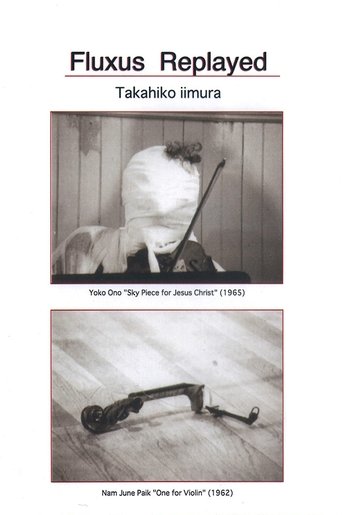
The film reproduces the historic performances by some of the iconic artists of Fluxus from the 60s: Nam June Paik, Yoko Ono, Dick Higgins, George Brecht, Alison Knowles, Ben Patterson, Jackson Mac Low etc.

More Like This

Rate this film

Your ratings make Midnight smarter