Onan

Onan

1963 · 8 min · ★ 9.0 · Fantasy

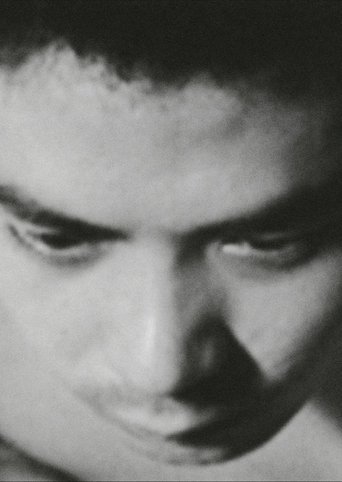
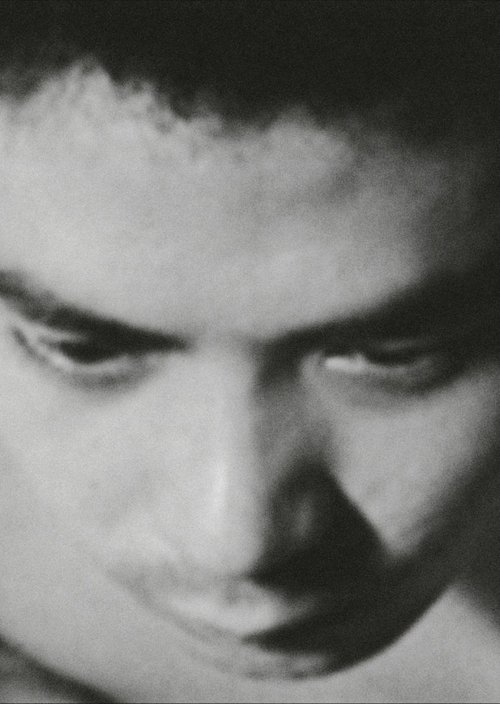
“ONAN is a work about desire (masturbation) which has no object but itself. The appearance of the large egg objectifies the man's desires. After colliding with the other (a girl), the hero falls down while still holding the egg, thus caricaturing the desire of the hero.” —Takahiko Iimura (takaiimura.com)

Directed by Takahiko Iimura

Your Rating

Cast

Make it a double feature

18m together

A close match in mood and era.

More from Takahiko IimuraSee all →

MA: Space/Time in the Garden of Ryoan-jiMA: Space/Time in the Garden of Ryoan-ji · 1989
MA: Space/Time in the Garden of Ryoan-ji
★ 9.01989
Movie
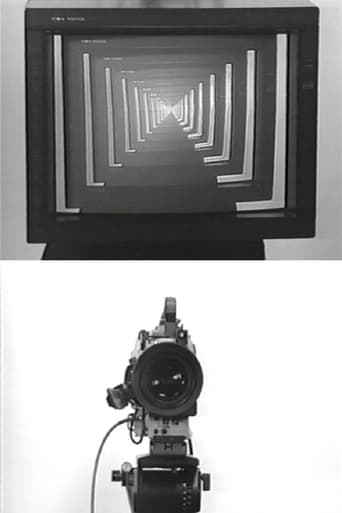
The early sixteenth-century Japanese garden in the Zen temple of Ryoan-ji, in Kyoto, is considered a masterpiece of the karesansui or "dry landscape" style... In this film, the viewer is invited to experience the garden as an embodiment of ma, a Japanese concept that conveys both time and space... The aesthetic of the film is the message, it has the quality of an experimental film, a conceptual film-an artwork in itself. Good balance of music/visuals/titles. If not as compelling for some viewers as for others, still rated as very effective. Makes one want to visit the actual garden and experience its spiritual energy. – Art on Screen
Observer / ObservedObserver / Observed · 1975
Observer / Observed
★ 8.01975
Movie
Cameras observing each other.
LoveLove · 1962
Love
★ 8.01962
Movie
"10 minutes of the act of creation itself run through close up and magnifying lenses. " -T.I.
Yoko Ono: This Is Not HereYoko Ono: This Is Not Here · 1972
Yoko Ono: This Is Not Here
★ 6.01972
MovieDocumentary
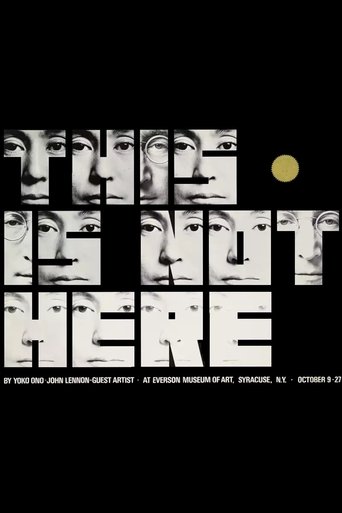
On John's 31st birthday, Yoko held an art exhibit, "This Is Not Here", at the Everson Museum of Art in Syracuse, N.Y.. The show was taped and aired on U.S. TV on May 11, 1972 as "John and Yoko in Syracuse, New York.
Dead MovieDead Movie · 1964
Dead Movie
★ 1.01964
Movie
Film installation by Japanese experimental filmmaker Takahiko Iimura.
Home Movies 1971-81Home Movies 1971-81 · 1985
Home Movies 1971-81
1985
MovieDocumentary
Home movies shot on Super 8mm by W+B Hein over 10 years.
JunkJunk · 1962
Junk
1962
Movie
"It's a mixture of [dead] animals, pieces of [broken] furniture, industrial waste, kids playing. I didn't have in mind any of the kind of historical perspective, nor was I trying to make an ecological statement. I was showing the new landscape of our civilization. My point of view was animistic. I tried to revive those dead animals metaphorically and to give the junk new life."
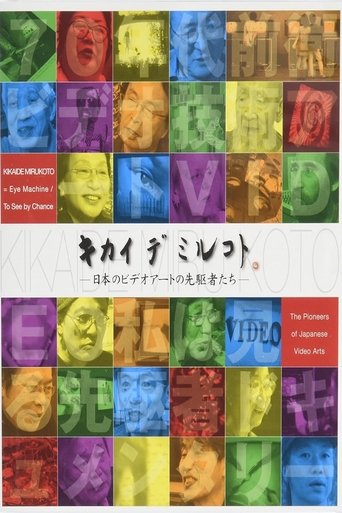
KIKAIDE MIRUKOTO = Eye Machine / To See by Chance –The Pioneers of Japanese Video Arts–KIKAIDE MIRUKOTO = Eye Machine / To See by Chance –The Pioneers of Japanese Video Arts– · 2013
KIKAIDE MIRUKOTO = Eye Machine / To See by Chance –The Pioneers of Japanese Video Arts–
2013
MovieDocumentary
Video began as a medium that inspired discovery. This art documentary traces the expressive roots of “media art” in Japan — works of video, performances, and installations created using video technology that allowed for free and creative visual expression.
DesadeDesade · 1963
Desade
1963
Movie
From the collector of Marquis de Sade in the early 1960s, still a 'dark age ' of erotic picture, even his novels were forbidden to publish in Tokyo, I burrowed the copies of the engraving taken from the 18th century edition of "The story of Juliette" and of "The story of Justine." and rearranged along a story made from of the pictures not from the novels. An exercise out of the curiosity. It was the same year I made Ai (Love) in 1962 which consists of mostly extreme close-ups of love making. I have kept DeSade for many years in my closet without looking at it myself and have forgotten about it. By a chance I re-found the film 50 years later that there is something worth to see. (T.I, 2012)
FilmmakersFilmmakers · 1969
Filmmakers
1969
Movie
Iimura creates a short self-portrait as well as brief portraits of five of his peers: Brakhage, Vanderbeek, Smith, Mekas and Warhol. In each portrait, Iimura attempts to copy the styles and traits of each artist (Vanderbeek's constantly moving camera; Mekas' experiments with film speed; Warhol's use of flashes of white against a black background), while briefly commenting on the images being shown. The film serves effectively as an introduction to the film styles of these artists.
MA (Intervals)MA (Intervals) · 1977
MA (Intervals)
1977
Movie
In the general classification, this was a complete abstract film and a kind of experimental movie as well, only black film, which blocks light, and clear film, which is totally transparent, were used as the basic materials.
Buddha AgainBuddha Again · 1970
Buddha Again
1970
Movie
Originally filmed in 8mm a little stone-made Buddha in a temple of Katmandu, the film strip in ten seconds was projected as a loop, and then the screen w as refilmed many times in 16mm at different speeds (frames per second). The original 8mm footage has been greatly expanded through refilming in 16mm. The rhythmic manipulation of "flying Buddha" in the air is realized.
BlinkingBlinking · 1970
Blinking
1970
Movie
One of the earliest minimalist video with flicker effects was produced in Tokyo in early 1970s. A flickering video with eyes, which super-impose the positive over the negative, open and close rapidly. At the same time the "blind" effects of video fast-forwarding accelerates/decelerates the picture synchronized with the sound.
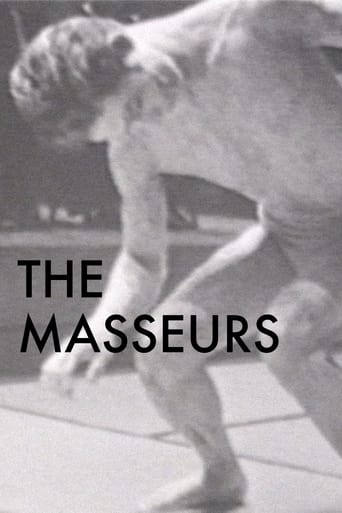
The MasseursThe Masseurs · 1963
The Masseurs
1963
MovieDocumentary
Anma (The Masseurs) is a representative and historical work by the creator of Butoh dance, Tatsumi Hijikata in his early period in the 1960s. The film is realized not only as a dance document but also as a Cine-Dance, a term made by Iimura, that is meant to be a choreography of film. The filmmaker "performed" with a camera on the stage in front of the audience. With the main performers: Tatsumi Hijikata and Kazuo Ohno, the film has the highlights such as Butohs of a soldier by Hijikata & a mad woman by Ohno. There is a story of the mad woman, first outcast and ignored, at the end joins to the community through her dance. Inserted descriptions of Anma (The Masseurs) are made for the film by the filmmaker, but were not in the original Butoh. The film, the only document taken of the performance, must be seen for the understanding of Hijikata Butoh and the foundation of Butoh.
Honey MoonHoney Moon · 1966
Honey Moon
1966
Movie
A touching portrait of his partner Akiko and the days following their wedding, Iimura's conceptual rigour loosens in favour of intimacy in Honey Moon. (Julian Ross)
Iro (Colors)Iro (Colors) · 1966
Iro (Colors)
1966
Movie
First projected onto Jiro Takamatsu's naked back at the legendary Sogetsu Art Center for the performance Screen Play, Colors is an experiment in concoction. Iimura drops paint into oil and water and melts wax as he films the colors take shape whilst simultaneously dissolving into one another. An eerie soundtrack by Yasunao Tone of Group Ongaku and Fluxus creates an impression of music being the witch behind the craft. (Julian Ross)

More Like This

Rate this film

Your ratings make Midnight smarter