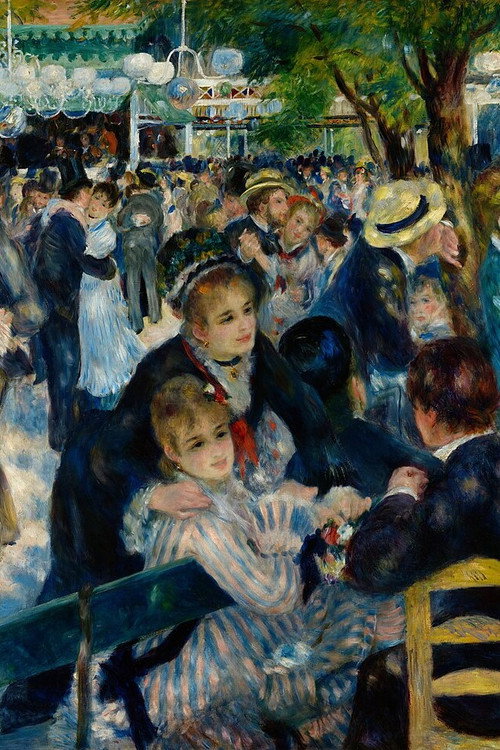
Pierre-Auguste Renoir « Les beaux dimanches d’été »
1997 · 30 min
Dedicated to one of the major paintings by Auguste Renoir, created in 1876, this documentary combines a meticulous analysis of the artwork with engravings and photographs showing the true “face” of Montmartre Hill at the end of the 19th century.
Directed by Alain Jaubert
Your Rating
More from Alain JaubertSee all →
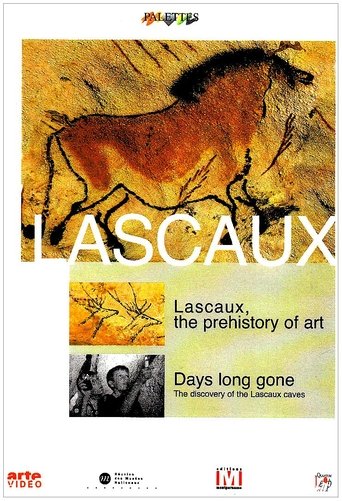 Lascaux: The Prehistory of Art · 1995
Lascaux: The Prehistory of Art
★ 10.01995
MovieDocumentary
Documentary of a network of caves discovered in 1940 in France. Inside are hundreds of depictions of animals painted approximately 17,000 years ago. The site is no longer open to the public, but can be seen here.
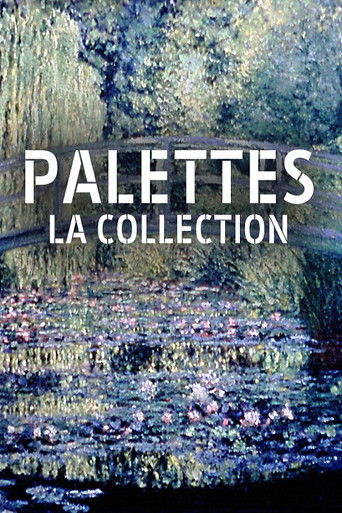 Palettes · 1995
Palettes
★ 9.01995
SeriesDocumentary
An educational French TV documentary series which goes into depth during each episode into the analysis of a single painting.
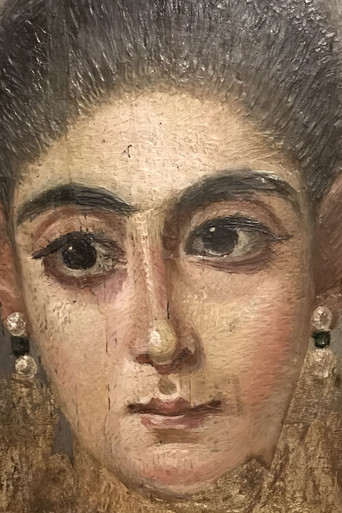 Le Dernier Regard – L’Européenne, portrait du Fayoum · 1998
Le Dernier Regard – L’Européenne, portrait du Fayoum
1998
MovieDocumentary
Using a funerary portrait from the Fayum preserved at the Louvre Museum, this documentary explores the art of portrait painting in Roman Egypt during the 2nd and 3rd centuries AD. These strikingly realistic faces, painted on wooden panels and placed on mummies, reveal a multicultural society shaped by Egyptian, Greek, and Roman traditions. Through this single portrait, the film reflects on identity, memory, and the human relationship to death.
 Pablo Picasso « Les couleurs de la passion » · 1993
Pablo Picasso « Les couleurs de la passion »
1993
Movie
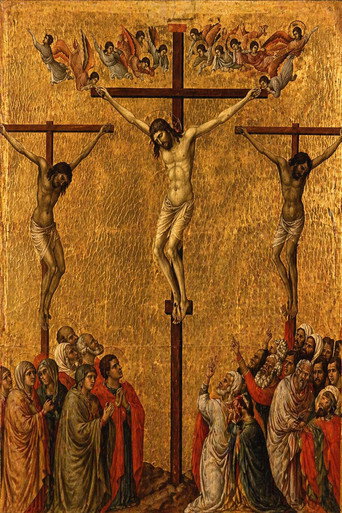
The Crucifixion is a rather surprising painting of Picasso's. The painter has in fact very rarely painted religious subjects. And, in the place of a convertional representation of Calvary it shows very strange figures. The sacrifice becomes a sort of initiation ceremony or one of exorcism. Picasso uses, for him, unusual colours, reds, yellows, raw greens which combine in mingled shapes with violent contrasts of colours. Once again the graphic palette and special effects used in the film help to interpret the painting. The work is made up like a puzzle full of allusions and references to the profound personal crisis Picasso was living through at the time. His private and intimate life is joined to the universal drama.
 Le siècle d'or des Pays-Bas · 2002
Le siècle d'or des Pays-Bas
2002
MovieDocumentary
 Louis David « Une révolution à l’antique »
Louis David « Une révolution à l’antique »
Movie
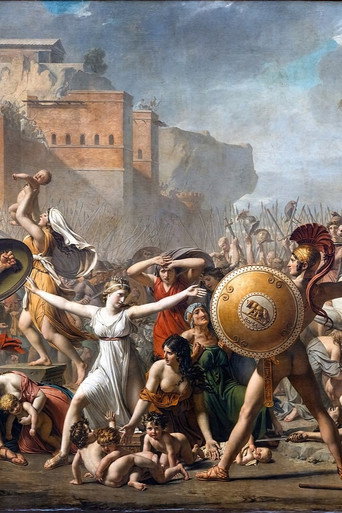
One of the Louvre’s star paintings, with a dizzying composition. August 1794: David is 46 years old and in prison. Compromised by his association with Robespierre and his allies, he risks the guillotine. He reads the classical authors, and an episode from the founding of Rome inspires the idea for a painting. Once released, he regains his studio, his students, and his former fame. The painting would not be completed until 1799. Shown as part of a paid exhibition—the first attempt of its kind in France—the canvas attracted a considerable crowd. The scene depicts the moment when the Sabine women, who had become the wives of the Romans after being abducted, intervene between Romans and Sabines and bring an end to the war between the two peoples. In this work, David incorporates not only his passion for ancient Rome, but also a strong element of political allegory.
 Duchamp. Le temps spirale · 1993
Duchamp. Le temps spirale
1993
MovieDocumentary
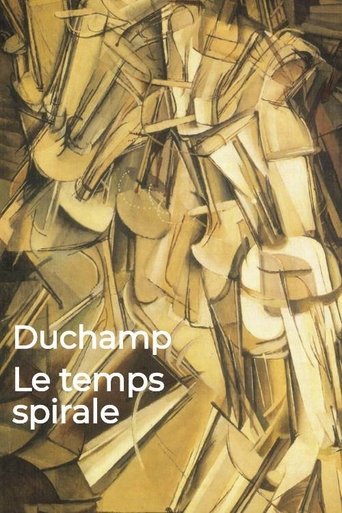
It is with regard to the painting "Nude descending the staircase" that Alain Jaubert has chosen to evoke the work of Marcel Duchamp. It is 1913, in New York, and the work of this 25-year-old young man, which depicts different moments of the action of the same character, is causing a stir. Cubists do not recognize it as one of their own, and traditionalists see it as a dangerous iconoclast.
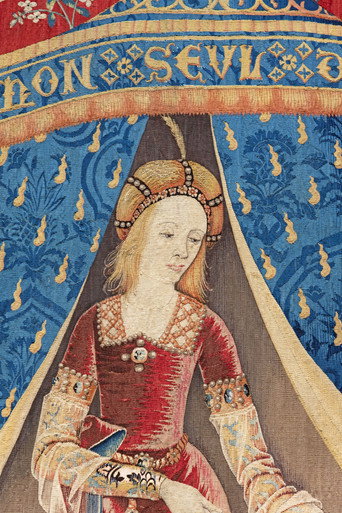 La Dame à la Licorne « Le sixième sens » · 1997
La Dame à la Licorne « Le sixième sens »
1997
Movie
A hanging composed of the six most famous tapestries in the world. These pictures, reproduced everywhere and in all possible forms, have become the emblems of a certain form of romantic art of the late Middle Ages. Beautiful ladies, fabulous animals, abundant flowers, sparkling colours, everything in these tapestries brings pleasure to the eyes. But once the first marvelling is past, the visitor asks questions. What are these blasons that are so obstinately repeated ? What scenes exactly are these hieratic ladies playing ? Why is there each time a lion and a unicorn ? What do these trees, flowers, various animals scattered all over the surface mean ? And who had these splendours woven ? And for what use? Which artist designed the models ? Questions burst out everywhere. Several of them have surprising answers.
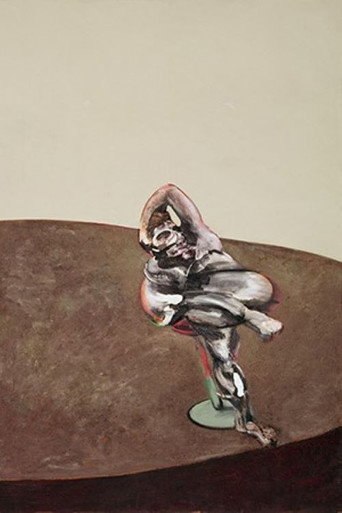 Bacon « Les figures de l’excès » · 1995
Bacon « Les figures de l’excès »
1995
Movie
A plunge into the strange and fascinating world of Francis Bacon, whose painting struggles to exorcise violence and death. The anguished and very intimate universe of one of the greatest 20th century painters reveals multiple allusions to classical painting.
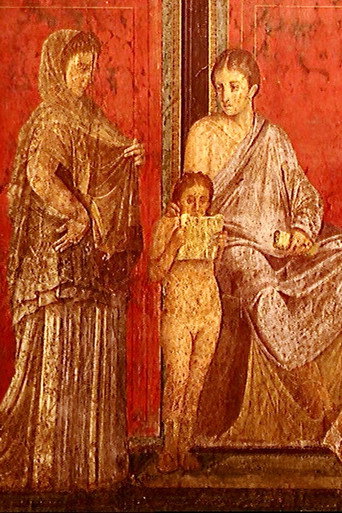 Pompéi « Cérémonies secrètes » · 2002
Pompéi « Cérémonies secrètes »
2002
Movie
In 79 AD, the eruption of Mount Vesuvius buried the city and inhabitants of Pompeii under volcanic debris and preserved—until excavations in 1909—a vast fresco painted a century and a half earlier in a suburban villa. Populated by twenty-nine life-size figures against a vivid red background, this decoration, as famous as it is enigmatic, has given rise to several interpretations, which this film seeks to clarify with the help of documentary evidence.
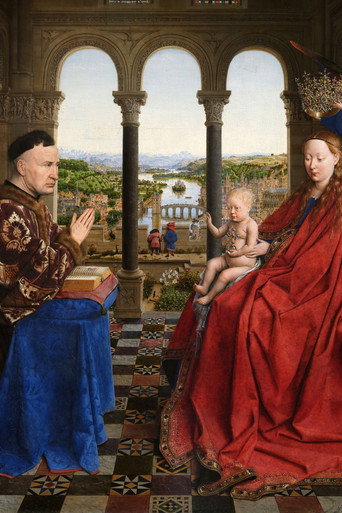 Van Eyck « Miracle dans la loggia » · 1989
Van Eyck « Miracle dans la loggia »
1989
Movie
Let us travel back to the 15th century and imagine the interior of the workshop of the painter Jan van Eyck: a porter delivers a wooden panel, one assistant grinds pigments, another mixes them with linseed oil, and a third arranges them on palettes. It is in this environment that Jan van Eyck was able to paint The Virgin and Child with Chancellor Rolin, a small-scale work depicting the Virgin Mary seated on a blue cushion embroidered with gold, holding the Christ Child on her lap, facing a man in his sixties who clasps his hands in prayer.
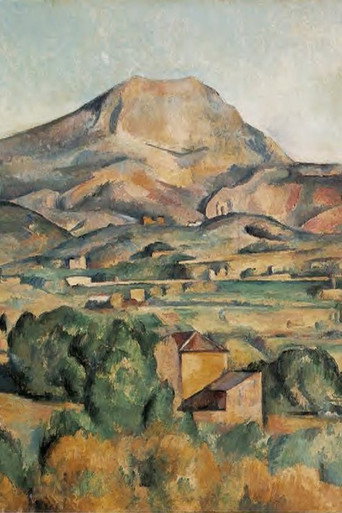 Cézanne « La violence du motif » · 1995
Cézanne « La violence du motif »
1995
Movie
Born in Aix-en-Provence, Cézanne returns to settle there after some journeys elsewhere. He takes as his motif the Sainte-Victoire mountain close by and paints it more than sixty times in different ways and at every time of year. A strange kind of obstination which it was necessary to examine again.
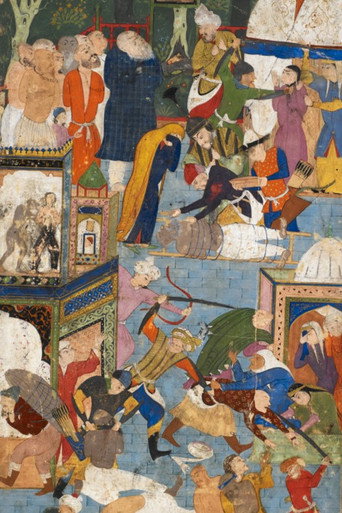 Miniature persane « Les Jardins du Paradis » · 1997
Miniature persane « Les Jardins du Paradis »
1997
Movie
From the Bagdad School (14th century) to the Qadjar School (19th century), Persian painting has always preserved an extraordinary vitality. Court art essentially involving book illustrations, it had its schools, its royal ateliers, its secret techniques, its great masters. The focus of this film is one of the finest work from the department of oriental manuscripts at the Bibliothèque nationale de France, a collection of Five Poems (Khamse) by the great 12th century Persian poet Nezâmi. The examination of papermaking techniques, make-up, calligraphy, drawing and painting affords an opportunity to discover a fascinating civilization
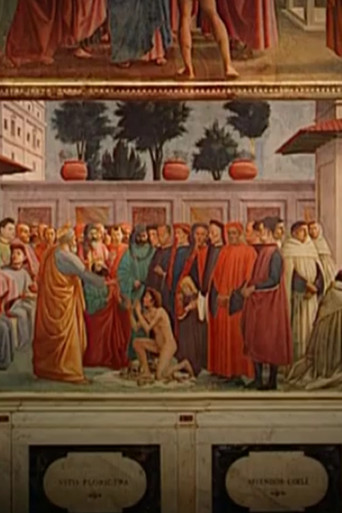 Rembrandt« Le miroir des paradoxes » · 1991
Rembrandt« Le miroir des paradoxes »
1991
Movie
From his very first paintings, Rembrandt stages himself. Thereafter, at least a hundred times, he would take his own face as the sole subject of an engraving, drawing, or painting. Such persistence, unique in the history of art, has been interpreted in many different ways. Some of Rembrandt’s self-portraits might appear to express an extravagant man. Yet the objects depicted in them can often be deciphered in quite another way. Through canvases and panels, one can indeed follow the entire history of Rembrandt’s face, but also read the full symbolism of a humanist Europe undergoing profound transformation.
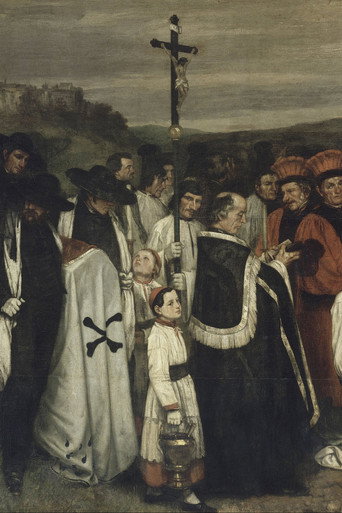 Edouard Vuillard « Les allées du souvenir » · 1990
Edouard Vuillard « Les allées du souvenir »
1990
Movie
A bit disregarded by the historians, the painter Edouard Vuillard is now finding a place of very first plan in the history of modern art. This film is more particularly interested in Jardins Publics, a serie of nine panels painted in 1874. Five panels are today in Orsay Museum, three others are exhibited somewhere else and the ninth disappeared. Under the apparent simplicity of the themes - women and children in a large park- there is a multitude of historical, technical and plastical riddles. Video tools permit to elucidate a few ones and even to recompose in its colours the panel disappeared during the second world war. And the deciphering of a Vuillard painting drag the spectator into a curious bouncing adventure...
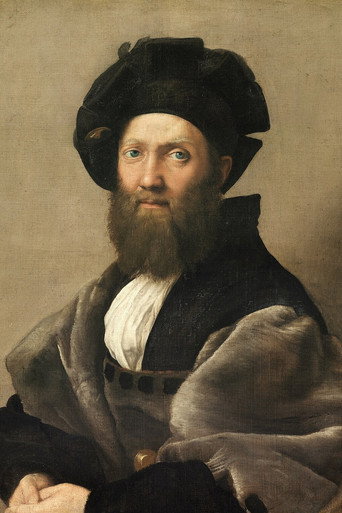 Rafaello Sanzio dit Raphaël « Portrait de l’ami en homme de cour, Portrait de Baldassare Castiglione » · 1994
Rafaello Sanzio dit Raphaël « Portrait de l’ami en homme de cour, Portrait de Baldassare Castiglione »
1994
Movie
Raphael strives to capture the open and sympathetic face of his friend and deliberately simplifies his composition. Yet the image is filled with clues and can be interpreted today using both traditional laboratory analysis and historical archives. The technical details of the pictorial surface, the choice of colors, and the hidden symmetries of the image already reveal how the painting was created. But the clothing, the hairstyle, the materials used, and even the model’s gaze—or the way the reflections are placed in his eyes—each carry a precise meaning within this composition.
More Like This
Couldn't load this row right now.
