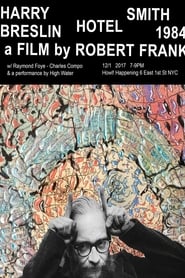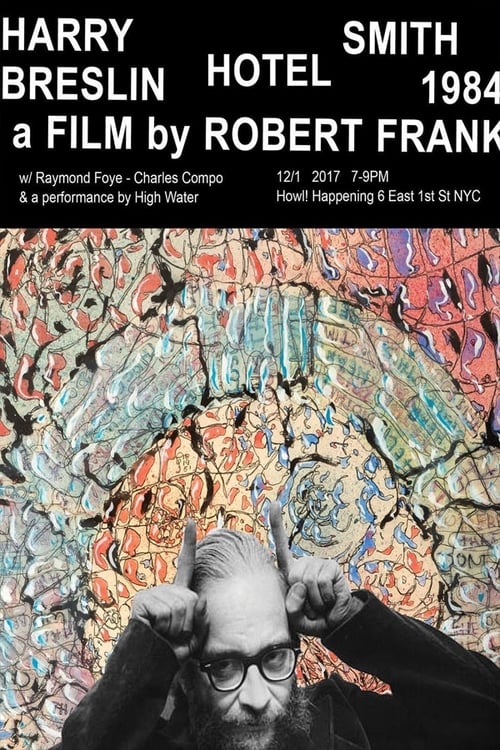
Harry Smith at the Breslin Hotel
It sucks.
2017 · 10 min · ★ 4.0 · Documentary
The 94-year-old Robert Frank’s unique recordings of his fellow artists Harry Smith and Allen Ginsberg, which he had salvaged from his own archive for Harry Smith at the Breslin Hotel.
Directed by Robert Frank
Your Rating
Cast
- H Harry Smith Self
-
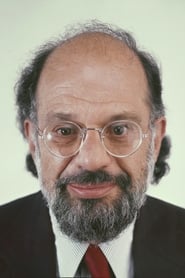 Allen Ginsberg Self (archive footage)
Make it a double feature
1h 10m together
Both from Robert Frank.
More from Robert FrankSee all →
 Home Improvements · 1985
Home Improvements
★ 10.01985
MovieDramaDocumentary
Home Improvements, Robert Frank’s first video project, is a simple and poignant diary of consequential events. It is about the relationship between Frank’s life as an artist and his personal life, and how the two are inevitably intertwined. It was made cheaply with a half-inch video porta-pak. Home Improvements takes place in New York and Nova Scotia and in the mental space between these two opposing worlds
 Last Supper · 1992
Last Supper
★ 9.01992
MovieDrama
In an empty lot in Harlem, an elite group of New Yorkers prepares for a book-signing party given in honor of a writer who never shows up. Local residents, dealing with the practicality of life, look on as the guests obsess about identity, status, and success.
 Hit Parade · 2021
Hit Parade
★ 9.02021
Series
Hit videos.
 Keep Busy · 1975
Keep Busy
★ 8.01975
Movie
The protagonists’ astounding verbal gymnastics and often incomprehensible interactions tend to descend into nonsense, and with the syncopated rhythm of its action and dialogue, this film is reminiscent of the playful and parodying elements of the Beat fantasy Pull My Daisy. The interweaving of documentary and fiction with the syncopated rhythm of its action and dialogue presents an absurd buzz of activity reminiscent of Beckett’s abstract comic grotesque.
 Food · 1972
Food
★ 8.01972
MovieDocumentary
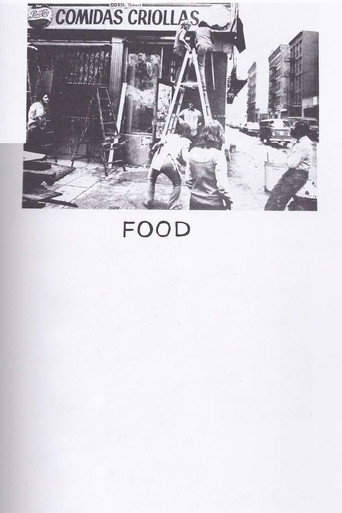
This film documents the legendary SoHo restaurant and artists' cooperative Food, which opened in 1971. Owned and operated by Caroline Goodden, Food was designed and built largely by Matta-Clark, who also organized art events and performances there. As a social space, meeting ground and ongoing art project for the emergent downtown artists' community, Food was a landmark that still resonates in the history and mythology of SoHo in the 1970s.
 Hunter · 1989
Hunter
★ 8.01989
MovieDrama
In the words of Robert Frank, Hunter is about “. . . a man whose destiny is not to find a destination. . . . A man who fears that he will never find what his imagination compels him to look for, a mystical traveler going by train and by car through . . . language and landscape.” The film was shot entirely on location in Germany’s industrial Ruhr region in September/October 1989.
 Sanyu · 2005
Sanyu
★ 7.02005
MovieDocumentary
Sanyu (1901-1964), an important Chinese artist, was a friend of Robert Frank's who died in anonymity in Paris. In this film portrait, Frank creates a requiem that includes dramatic and documentary scenes set in Paris, and a chronicle of his trip to Taipei to attend Sotheby's auction of the paintings Sanyu left him.
 One Hour · 1990
One Hour
★ 6.61990
MovieDocumentary
One of the longest handheld tracking shots in film history, It’s Real documents an hour in the street life of downtown Manhattan. Not only is it a unique record of a particular time and place—July 26, 1990, from 3:45 to 4:45 p.m. in the Lower East Side near Robert Frank’s studio (we note in a Daily News headline that after some 20 years the Zodiac killer still hasn’t been identified)—it’s also an experiment in fragmentary language, gesture, and life caught unawares. Snippets of dialogue captured in passing at phone booths and crosswalks, in alleyways, subways, and diners—chance encounters, only presumably, with people going about their day—have something of the aleatory cut-up technique of the Dadaists in the 1920s and William Burroughs and Byron Gysin in the 1950s, an effort to divine new and deeper meanings in ordinary life. — Museum of Modern Art
 Me and My Brother · 1969
Me and My Brother
★ 6.51969
MovieDrama
Julius Orlovsky, after spending years in a New York mental hospital, emerges catatonic and must rely on his brother Peter, who lives with poet Allen Ginsberg. When Julius wanders off in the middle of filming, Frank hires and actor (Joseph Chaikin) to play the character and begins a fictional version of his psychological portrait. Then, as suddenly as he vanished, Julius turns up in an institution where he and Peter must face their relationship.
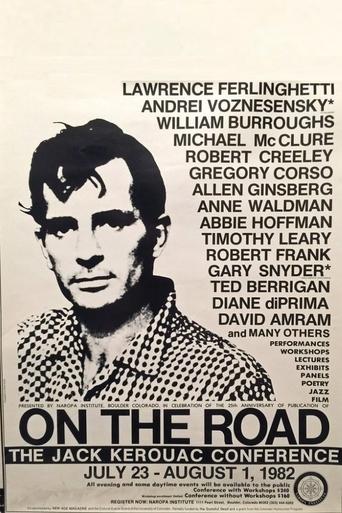 This Song for Jack · 1983
This Song for Jack
★ 6.51983
MovieDocumentary
In 1982, Robert Frank was on hand at the Naropa Institute in Boulder, Colorado, to film the Jack Kerouac Conference, a 25th-anniversary commemoration of On the Road in which poignantly aging Beats and fellow-traveling authors, activists, and composers (Allen Ginsberg, William Burroughs, Gregory Corso, Michael McClure, Herbert Huncke, Anne Waldman, Lawrence Ferlinghetti, Ken Kesey, Abbie Hoffman, David Amram) gathered on a rain-swept Chautauqua porch to recite poetry and raise a glass to their patron saint. Particularly memorable is Frank’s humorous encounter with a group of grizzled and well-lubricated onlookers. — Museum of Modern Art
 Chappaqua · 1966
Chappaqua
★ 6.21966
MovieDrama
Semi-autobiographical story of Conrad Rooks, who travels to France to undergo a drug-withdrawal cure. Flashbacks to the beginings of psychedelia in San Fran. Though initially confusing, as Rooks blends drug-illusion with reality, and cuts color with black-and-white and monochrome tinted shots, "Chappaqua" is conventionally constructed with a beginning, middle, and end.
 About Me: A Musical · 1971
About Me: A Musical
★ 6.21971
Movie
A Musical Set in New York City
 Pull My Daisy · 1959
Pull My Daisy
★ 6.11959
MovieComedyDrama
Based on an incident in the life of Beat icon Neal Cassady and his wife, the painter Carolyn, the film tells the story of a railway brakeman whose wife invites a respected bishop over for dinner. However, the brakeman's Bohemian friends crash the party, with comic results. Pull My Daisy is a film that typifies the Beat Generation. Directed by Robert Frank and Alfred Leslie, Daisy was adapted by Jack Kerouac from the third act of his play, Beat Generation; Kerouac also provided improvised narration.
 O.K. End Here · 1963
O.K. End Here
★ 6.01963
Movie
O.K. End Here is Frank’s 1963 short film about inertia in a modern relationship. The film alternates between semidocumentary scenes and shots composed with rigid formality, and appears to have been directly influenced by the French Nouvelle Vague and Michelangelo Antonioni’s films.
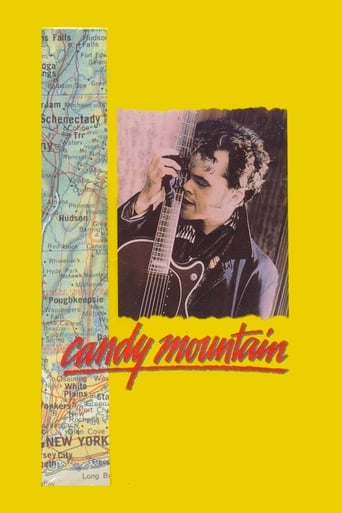 Candy Mountain · 1988
Candy Mountain
★ 5.91988
MovieMusicDrama
A mediocre musician goes on the road in search of the world's greatest guitar maker.
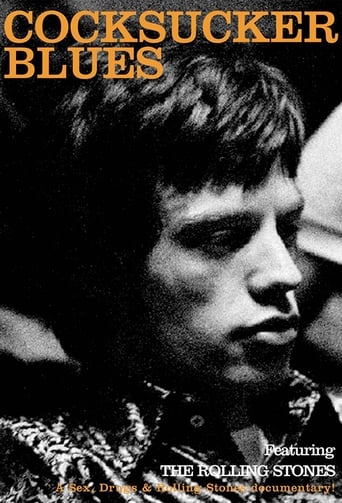 Cocksucker Blues · 1972
Cocksucker Blues
★ 5.81972
MovieDocumentaryMusic
This fly-on-the-wall documentary follows the Rolling Stones on their 1972 North American Tour, their first return to the States since the tragedy at Altamont.
More Like This
Couldn't load this row right now.