Food

Food

1972 · 43 min · ★ 8.0 · Documentary

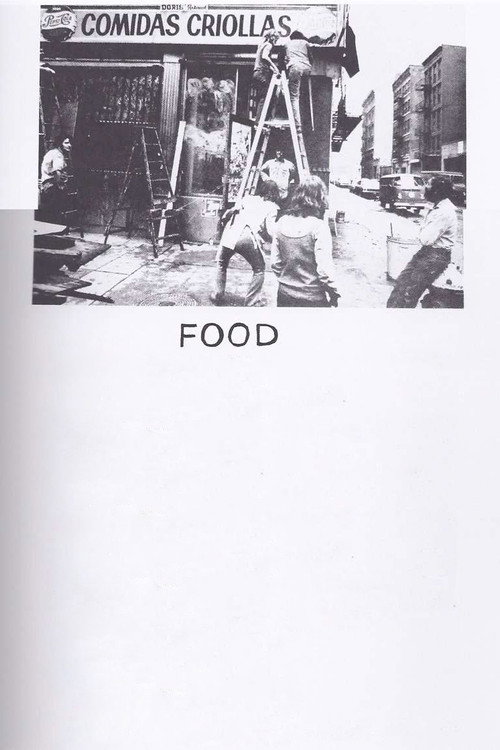
This film documents the legendary SoHo restaurant and artists' cooperative Food, which opened in 1971. Owned and operated by Caroline Goodden, Food was designed and built largely by Matta-Clark, who also organized art events and performances there. As a social space, meeting ground and ongoing art project for the emergent downtown artists' community, Food was a landmark that still resonates in the history and mythology of SoHo in the 1970s.

Directed by Gordon Matta-Clark

Your Rating

Cast

More from Gordon Matta-ClarkSee all →
ClockshowerClockshower · 1973
Clockshower
★ 5.01973
Movie
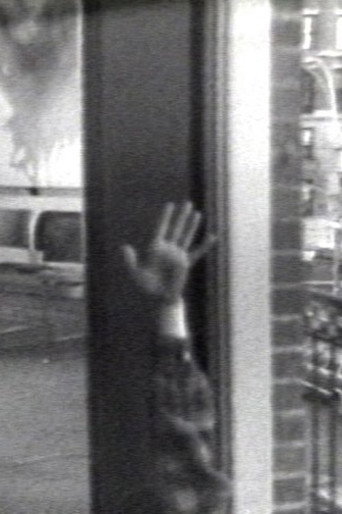
In this film of one of his most daring performances, Matta-Clark climbed to the top of the Clocktower in New York and washed, shaved and brushed his teeth while suspended over the streets in front of the huge clockface.
Automation HouseAutomation House · 1972
Automation House
1972
Movie
Automation House 1972, 32 min, b&w, sound, 16 mm film on video This tape is an exercise in spatial perception, using mirror reflections of people and their movements. Producer: Carlotta Schoolman
Sauna ViewSauna View · 1973
Sauna View
1973
Movie
Matta-Clark made a video of his friends having a sauna; he later cut a section of the sauna to reveal the structure of the wall.
Office BaroqueOffice Baroque · 1977
Office Baroque
1977
Movie
Matta-Clark made a cut in a five-story commercial building located in front of the Steen, a tourist spot in Antwerp. (On Matta-Clark's death shortly after, an attempt was made to save the work as a future museum of contemporary art, but the building was demolished.)
Chinatown VoyeurChinatown Voyeur · 1971
Chinatown Voyeur
1971
Movie
This space and texture work, created specifically for video, is a tour of the skyline and domestic interiors of New York's Chinatown.
Fresh KillFresh Kill · 1972
Fresh Kill
1972
Movie
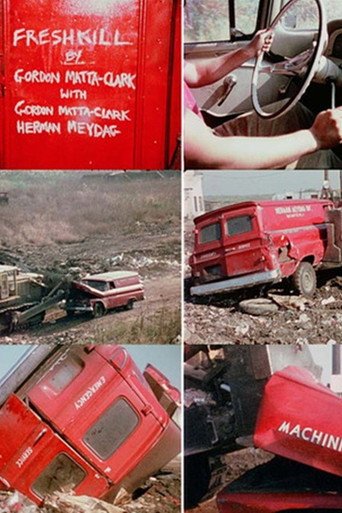
This film records the complete process of the destruction of Matta-Clark's truck (which he called "Herman Meydag") by a bulldozer in a rubbish dump. Part of 98.5, a compilation of films by Ed Baynard, George Schneemar and Charles Simons, this piece was shown in Documenta 5 in Kassel, Germany. Camera: Burt Spielvogel, Rudy Burkhardt. Producer: Holly Solomon, Burt Spielvogel.
Tree DanceTree Dance · 1971
Tree Dance
1971
Movie
For the exhibition Twenty-Six by Twenty Six at the Vassar College of Art Gallery in Poughkeepsie, New York, Matta-Clark created a performance inspired by spring fertility rituals. He performed in a structure made of ladders, ropes and other materials, which he built at the top of a large tree.
Conical IntersectConical Intersect · 1975
Conical Intersect
1975
Movie
Matta-Clark was invited to create Conical Intersect for the Paris Biennale in 1975. For this piece, he cut a giant conical shape into two adjacent seventeenth-century buildings designated for demolition as part of the urban redevelopment program that was clearing space for the Centre Georges Pompidou. Conical Intersect was filmed by Matta-Clark and Bruno Dewitt with funds from the Biennale.
City SliversCity Slivers · 1976
City Slivers
1976
Movie
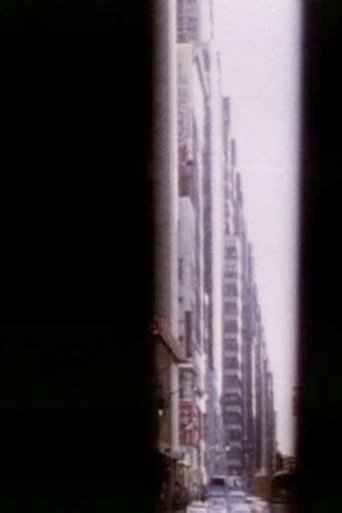
For City Slivers, which was made with a camera borrowed from Robert Rauschenberg, Matta-Clark affixed vertical matte strips in front of an anamorphic camera lens, thereby allowing only slivers of light to penetrate the film. He then rewound the film, repositioned the mattes, and reshot the same camera load. Using only in-camera editing, the light appears to slice through the film frame in a manner analogous to Matta-Clark’s architectural “cuttings.”
Fire ChildFire Child · 1971
Fire Child
1971
Movie
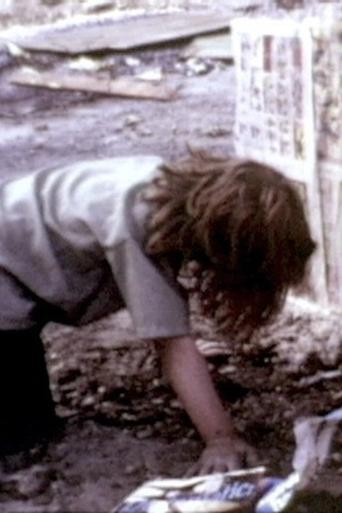
In 1971 Matta-Clark produced works for the exhibition Brooklyn Bridge Event. This film records his process of making a sculpture - a small wall made of rubbish, waste paper and tin cans collected from the area. —EAI
Bingo/NinthsBingo/Ninths · 1974
Bingo/Ninths
1974
Movie
In August 1974 Matta-Clark carried out a ‘cutting’ in a house at Niagara Falls, New York. The artist divided the north façade into nine parts. In the film you hear him ask the builders to postpone the demolition. Hence the word play Bingo/Ninths, which became beagone by ninth. The house was demolished an hour after he had finished. The segments were transported to Art Park, where some of them were dumped to be gradually swept away by the Niagara River.
The WallThe Wall · 1976
The Wall
1976
Movie
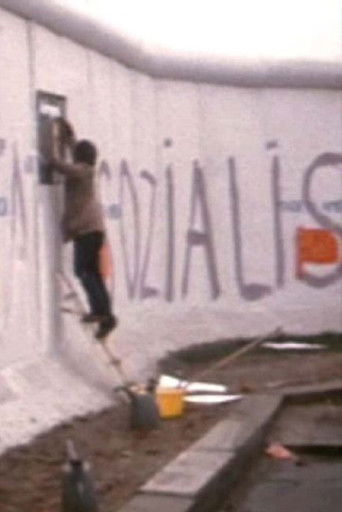
In 1976 Matta-Clark left for Berlin claiming that he intended to blow-up the Berlin Wall as his contribution to the New York–Downtown Manhattan: Soho show. Friends dissuaded him from such a suicidal action, and so instead he created Made in America, a piece that reflects on the political origins of the Berlin Wall and the West’s fascination with consumerism.
SplittingSplitting · 1974
Splitting
1974
Movie
For his 'Splitting' project, Matta-Clark found a house in Englewood, NJ (322 Humphrey Street to be precise) set for demolition, and bisected it neatly down the middle. Half-documentation, half-exploration: Splitting shows the laborious process and heady result- a house split completely in two.
Substrait (Underground Dailies)Substrait (Underground Dailies) · 1976
Substrait (Underground Dailies)
1976
MovieDocumentary
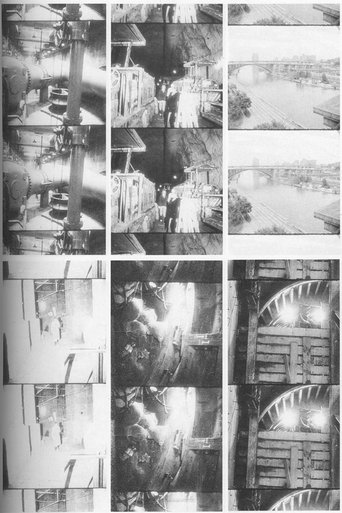
In this film, Matta-Clark explored and documented the underground spaces of New York City. The artist chose a range of sites (New York Central railroad tracks, Grand Central Station, 13th Street, Croton Aqueduct in Highgate, etc.) to show the variety and complexity of the underground spaces and tunnels in the Metropolitan area.

More Like This

Couldn't load this row right now.
Rate this film

Your ratings make Midnight smarter