Directing
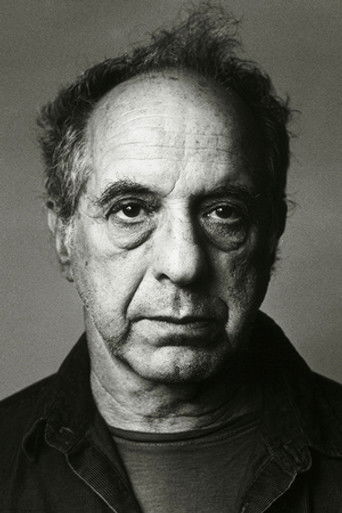
Robert Frank
Born November 9, 1924 · Zurich, Switzerland (age 101)
Robert Frank is one of the most acclaimed photographers of the 20th century. He is best known for his seminal book "The Americans", featuring photographs taken by the artist in the mid-1950s as he traveled across the U.S. on a Guggenheim fellowship. Robert Frank is also known as a filmmaker.
Known For
 Laboratorium Anthology · 1999
Laboratorium Anthology
1999
MovieDocumentary
Scenes from the life and work at Anthology Film Archives. Much of the footage in this video was shot by Auguste Varkalis.
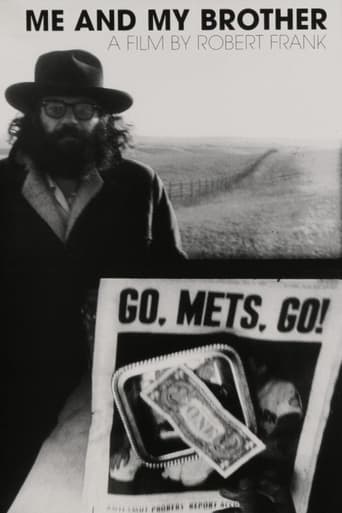 Me and My Brother · 1969
Me and My Brother
★ 6.51969
MovieDrama
Julius Orlovsky, after spending years in a New York mental hospital, emerges catatonic and must rely on his brother Peter, who lives with poet Allen Ginsberg. When Julius wanders off in the middle of filming, Frank hires and actor (Joseph Chaikin) to play the character and begins a fictional version of his psychological portrait. Then, as suddenly as he vanished, Julius turns up in an institution where he and Peter must face their relationship.
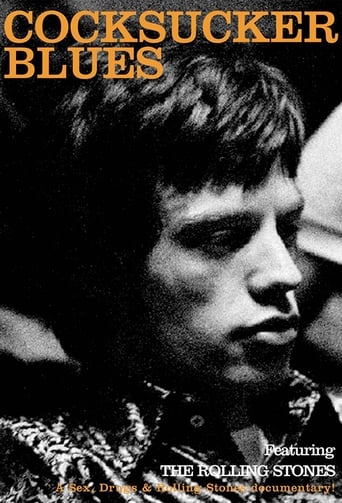 Cocksucker Blues · 1972
Cocksucker Blues
★ 5.81972
MovieDocumentaryMusic
This fly-on-the-wall documentary follows the Rolling Stones on their 1972 North American Tour, their first return to the States since the tragedy at Altamont.
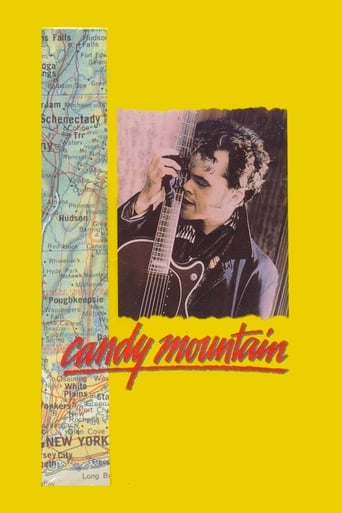 Candy Mountain · 1988
Candy Mountain
★ 5.91988
MovieMusicDrama
A mediocre musician goes on the road in search of the world's greatest guitar maker.
 Chappaqua · 1966
Chappaqua
★ 6.21966
MovieDrama
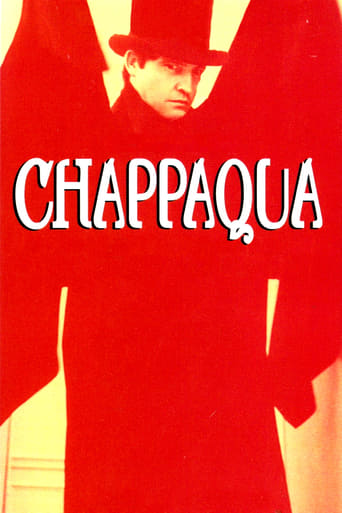
Semi-autobiographical story of Conrad Rooks, who travels to France to undergo a drug-withdrawal cure. Flashbacks to the beginings of psychedelia in San Fran. Though initially confusing, as Rooks blends drug-illusion with reality, and cuts color with black-and-white and monochrome tinted shots, "Chappaqua" is conventionally constructed with a beginning, middle, and end.
 Food · 1972
Food
★ 8.01972
MovieDocumentary
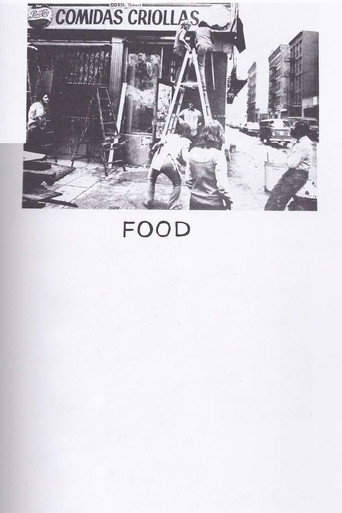
This film documents the legendary SoHo restaurant and artists' cooperative Food, which opened in 1971. Owned and operated by Caroline Goodden, Food was designed and built largely by Matta-Clark, who also organized art events and performances there. As a social space, meeting ground and ongoing art project for the emergent downtown artists' community, Food was a landmark that still resonates in the history and mythology of SoHo in the 1970s.
 Second Century · 1999
Second Century
★ 5.71999
MovieDocumentary
A small film crew goes through several locations including Europe, New York and Mexico.
 Keep Busy · 1975
Keep Busy
★ 8.01975
Movie
The protagonists’ astounding verbal gymnastics and often incomprehensible interactions tend to descend into nonsense, and with the syncopated rhythm of its action and dialogue, this film is reminiscent of the playful and parodying elements of the Beat fantasy Pull My Daisy. The interweaving of documentary and fiction with the syncopated rhythm of its action and dialogue presents an absurd buzz of activity reminiscent of Beckett’s abstract comic grotesque.
Filmography
Sort