Panels for the Walls of Heaven

Panels for the Walls of Heaven

2002 · 31 min · ★ 9.5

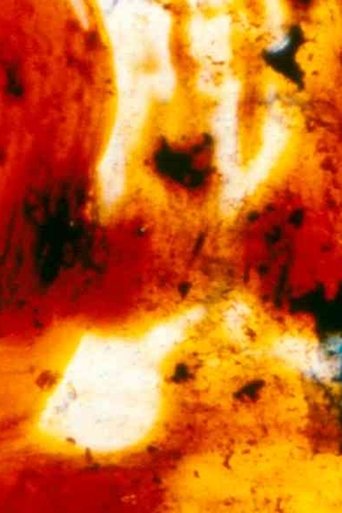
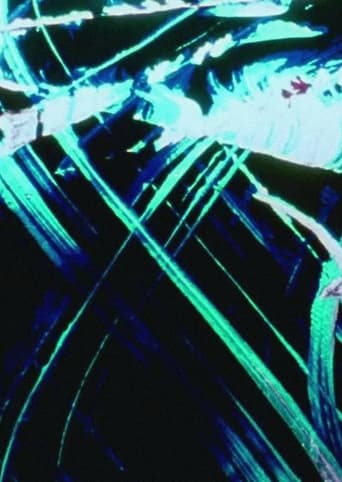
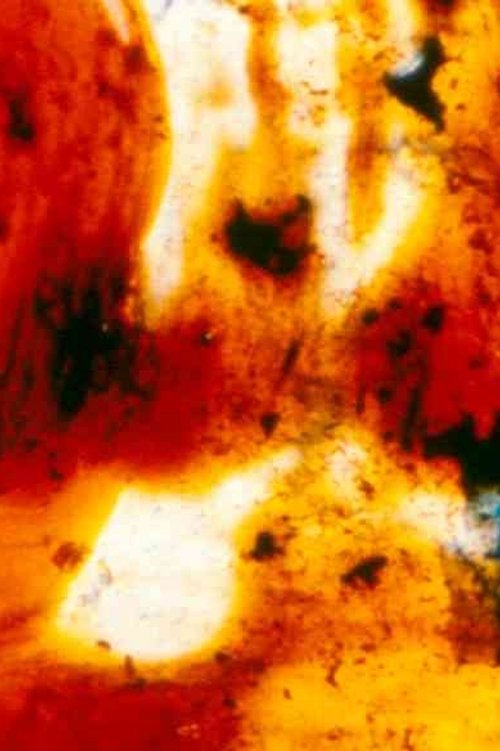
The last of Brakhage's longer works. Part of the "Vancouver Island" films. "Purple flashes are followed by a curtain of purple and blues, first seemingly static and then in motion. Close-ups of textures of paint evolve into flashes of jewel-like red, then more cascading blues and purples and white - 'falling,' seemingly, down from the top of the screen, at other times multi-directional bursts of rolling colors. Red, blue and yellow course through in an up-down motion, then blues and yellows enter from left and right in a complex medley of not solidly formed, but very vibrant pulsations of color, at times only slightly hinting at a solidity of "wallness" upon which the paint might exist. But it is a "wall" suffused with light." - Marilyn Brakhage

Directed by Stan Brakhage

Your Rating

Make it a double feature

47m together

Panels for the Walls of Heaven

Seasons...

Both from Stan Brakhage.

Vancouver Island QuartetSee all →
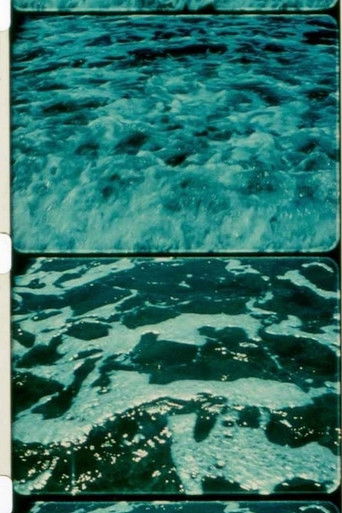
A Child’s Garden and the Serious SeaA Child’s Garden and the Serious Sea · 1991
A Child’s Garden and the Serious Sea
6.41991
MovieDocumentary
"In his description for A CHILD'S GARDEN, Brakhage quotes from poets Ronald Johnson and Charles Olson (and cites Johnson's poem "Beam 29" as inspiration). But the film also vaguely calls to mind William Blake—more perhaps for his art than his poetry: there is both a sense of darkness and of mystical transport in Brakhage's images. The first film in the loose "Vancouver Island" quartet, Brakhage films locations around the British Columbia locale where his second wife, Marilyn, grew up. He films land, sea, and sky and intercuts frequently between them. Shots are often out-of-focus, to accentuate color and light; they are hand-held, upside down, and fleeting. All of this is no surprise for those who know Brakhage's work: anything and everything is valid, as long as it works." - Cine-File.info
The Mammals of VictoriaThe Mammals of Victoria · 1994
The Mammals of Victoria
5.21994
MovieDocumentary
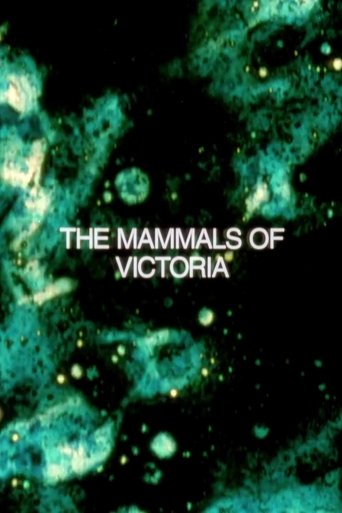
The film begins with a series of horizontally running ocean tide waves, sometimes with mountains in the background, hand-painted patterns, sometimes step-printed hand-painting, abstractions composed of distorted (jammed) TV shapes in shades of blue with occasional red, refractions of light within the camera lens, sometimes mixed with reflections of water. Increasingly closer images of water, and of light reflected off water, as well as of bursts of fire, intersperse the long shots, the seascapes and all the other interwoven imagery. Eventually a distant volleyball arcs across the sky: this is closely followed by, and interspersed with, silhouettes of a young man and woman in the sea, which leads to some extremely out-of-focus images from a front car window, an opening between soft-focus trees, a clearing. Carved wooden teeth suddenly sweep across the frame. Then the film ends on some soft-focus horizon lines, foregrounded by ocean.
The God of Day Had Gone Down Upon HimThe God of Day Had Gone Down Upon Him · 2000
The God of Day Had Gone Down Upon Him
6.82000
Movie
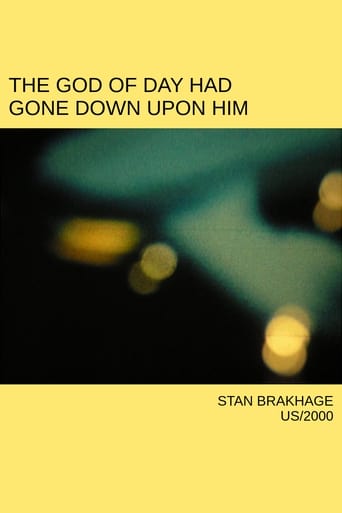
This film of single-strand photography begins with the "fire" of reflective light on water and on the barest inferences of a ship. Throughout, the interwoven play of light and water tell the inferred "tale" of the film through rhythm, the tempo, through visible textures and forms in gradual evolution, through resultant "moods" generated by these modes of making, and, then, by the increasingly distant boat images, birds, animals, fleeting silhouettes of people and their artifacts, flotsam and jetsam of the sea-dead, as well as (near end, and almost as at a funeral) flowers in bloom, swallowed by darkness midst the crumbling of the sand castles.

More from Stan BrakhageSee all →

Faust IVFaust IV · 1989
Faust IV
10.01989
Movie
Music by Rick Corrigan. This is the imaged thought process of young Faust escaping the unbearable pictures of his broken romantic idyll, mentally fleeing the particulars of his dramatized "love," Faust's mind ranging the geography of his upbringing and its structures of cultural hubris – the whole nervous system "going to ground" and finally "becoming one" with the hypnagogically visible cells of his receptive sight and inner cognition ... all that I could give him of Heaven in this current visualization of these ancient themes. Films
Window Water Baby MovingWindow Water Baby Moving · 1959
Window Water Baby Moving
6.91959
MovieDocumentary
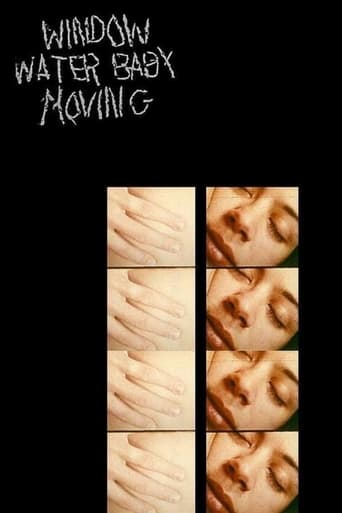
On a winter's day, a woman stretches near a window then sits in a bathtub of water. She's happy. Her lover is nearby; there are close ups of her face, her pregnant belly, and his hands caressing her. She gives birth: we see the crowning of the baby's head, then the birth itself; we watch a pair of hands tie off and cut the umbilical cord. With the help of the attending hands, the mother expels the placenta. The infant, a baby girl, nurses. We return from time to time to the bath scene. By the end, dad's excited; mother and daughter rest.
Seasons...Seasons... · 2002
Seasons...
6.72002
Movie
Brakhage's frame-by-frame hand carvings and etchings directly into the film emulsion, sometimes photographically combined with paint, are illuminated by Solomon's optical printing; this footage was then edited by Solomon into a four part 'seasonal cycle'. This film can be considered to be part of a larger, 'umbrella' work by Brakhage entitled «...» . Seasons... is inspired by the colors and textures found in the woodcuts of Hokusai and Hiroshige, and the playful sense of forms dancing in space from the film works of Robert Breer and Len Lye.
SweetgrassSweetgrass · 2009
Sweetgrass
6.72009
MovieDocumentary
An unsentimental elegy to the American West, Sweetgrass follows the last modern-day cowboys to lead their flocks of sheep up into Montana's breathtaking and often dangerous Absaroka-Beartooth mountains for summer pasture, revealing a world in which nature and culture, animals and humans, vulnerability and violence are all intimately meshed.
The Act of Seeing with One's Own EyesThe Act of Seeing with One's Own Eyes · 1972
The Act of Seeing with One's Own Eyes
6.51972
MovieDocumentary
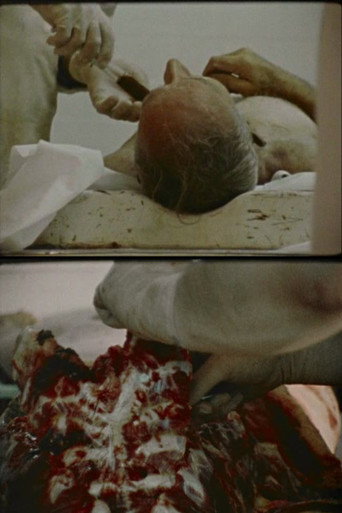
At a morgue, forensic pathologists conduct autopsies of the corpses assigned. "S. Brakhage, entering, WITH HIS CAMERA, one of the forbidden, terrific locations of our culture, the autopsy room. It is a place wherein, inversely, life is cherished, for it exists to affirm that no one of us may die without our knowing exactly why. All of us, in the person of the coroner, must see that, for ourselves, with our own eyes. It is a room full of appalling particular intimacies, the last ditch of individuation. Here our vague nightmare of mortality acquires the names and faces of OTHERS. This last is a process that requires a WITNESS; and what 'idea' may finally have inserted itself into the sensible world we can still scarcely guess, for the CAMERA would seem the perfect Eidetic Witness, staring with perfect compassion where we can scarcely bear to glance." – Hollis Frampton
Comingled ContainersComingled Containers · 1996
Comingled Containers
6.51996
Movie
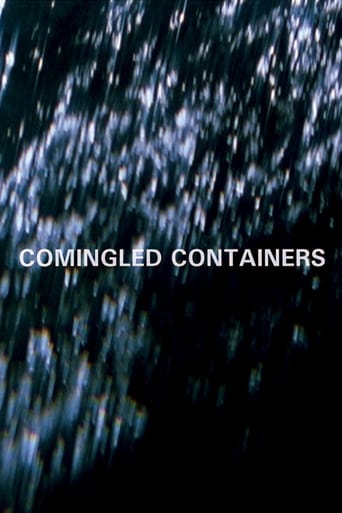
Comingled Containers is an experimental short film by Stan Brakhage. "This 'return to photography' (after several years of only painting film) was made on the eve of cancer surgery - a kind of 'last testament,' if you will… an envisionment of the fleeting complexity of worldly phenomenon."
Dog Star ManDog Star Man · 1965
Dog Star Man
6.41965
MovieFantasy
Experimental film following a cycle of seasons as well as the stretch of a single day as a man and his dog slowly ascend a mountain.
Cannibal! The MusicalCannibal! The Musical · 1996
Cannibal! The Musical
6.41996
MovieComedyWestern
Heading through Colorado Territory in search of gold and women, Alferd Packer and his group of bemused companions find themselves lost, starving and musically inspired by the obstacles they confront along the way, including a die-hard Confederate cyclops, a trio of surly trappers, a tribe of Japanese-speaking "Indians," and ultimately, each other.
Elementary PhrasesElementary Phrases · 1994
Elementary Phrases
6.11994
MovieAnimation
Colleagues at the University of Colorado at Boulder, the two began with strips of film Brakhage had painted on by hand, photographing them frame by frame with Solomon’s optical printer. They often printed two strips of film together, some of them containing images taken by Solomon, then chose from the images what Brakhage says “seemed to us natural phrases,” which Brakhage arranged into the final form. The result is a 40-minute silent film in which occasional hints of photographic images sometimes seem to peek through largely abstract shapes.
Black IceBlack Ice · 1994
Black Ice
6.01994
MovieAnimation
Inspired by a bad fall on a patch of black ice (that ultimately resulted in Brakhage's need for eye surgery), the filmmaker gives us something of a dreamlike descent through the fear and refractions of closed-eye vision regarding such an event.
20 Little Films20 Little Films · 2012
20 Little Films
6.02012
MovieDocumentary
Since 1995, the Viennale has invited renowned directors to create short, one-minute films as personal contributions to the festival. Ranging from home movies to political essays, musical sketches to abstract studies, these “little films” form a unique anthology of cinematic moments. 20 Little Films collects a selection of these works, premiering together for the Viennale’s 50th anniversary at the Locarno Film Festival.
For Life, Against the WarFor Life, Against the War · 1967
For Life, Against the War
6.01967
MovieAnimation
First shown on January 30, 1967, FOR LIFE AGAINST THE WAR was an open-call, collective statement from American independent filmmakers disparate in style and sensibility but united by their opposition to the Vietnam War. Part of the protest festival Week of the Angry Arts, the epic compilation film incorporated minute-long segments which were sent from many corners of the country, spliced together and projected. The original presentation of the works was more of an open forum with no curation or selection, and in 2000 Anthology Film Archives preserved a print featuring around 40 films from over 60 submissions.
For MarilynFor Marilyn · 1992
For Marilyn
6.01992
Movie
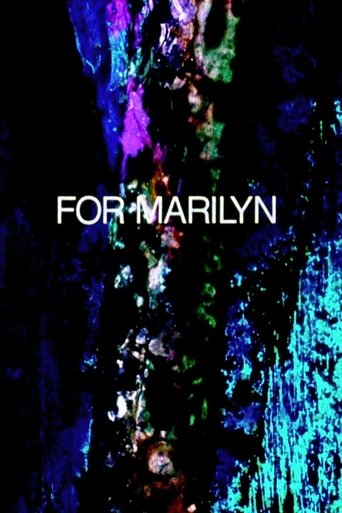
The film is officially untitled, but is referred to by the dedication that appears in place of a title card. It is dedicated to Marilyn Brakhage, the filmmaker's wife. Out of all the 350+ films that Stan Brakhage made, this was his personal favorite.
Cat's CradleCat's Cradle · 1959
Cat's Cradle
5.91959
Movie
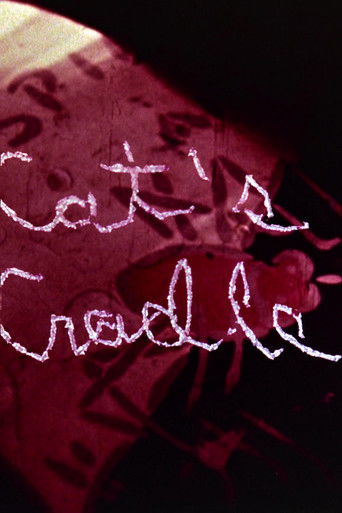
Images of two women, two men, and a gray cat form a montage of rapid bits of movement. A woman is in a bedroom, another wears an apron: they work with their hands, occasionally looking up. A man enters a room, a woman smiles. He sits, another man sits and smokes. The cat stretches. There are close-ups of each. The light is dim; a filter accentuates red. A bare foot stands on a satin sheet. A woman disrobes. She pets the cat. Preserved by the Academy Film Archive in 2006.
The Extraordinary ChildThe Extraordinary Child · 1954
The Extraordinary Child
5.91954
MovieComedy
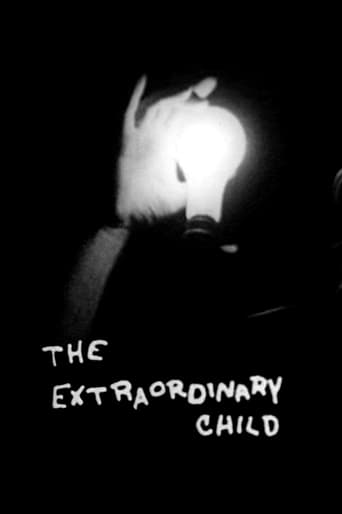
The Extraordinary Child applies his developing style to broad slapstick. His friends from the previous films and the director himself play out a riotous farce about an overgrown baby who steals his father’s cigars. Everyone mugs hilariously. The movie could be taken as another example of the Romantic notion of the artist as a monstrous child or misfit, or a parody of the same rather than the personal confessional statement seen so often in these film movements.
The Life and Times of Allen GinsbergThe Life and Times of Allen Ginsberg · 1994
The Life and Times of Allen Ginsberg
5.71994
MovieDocumentary
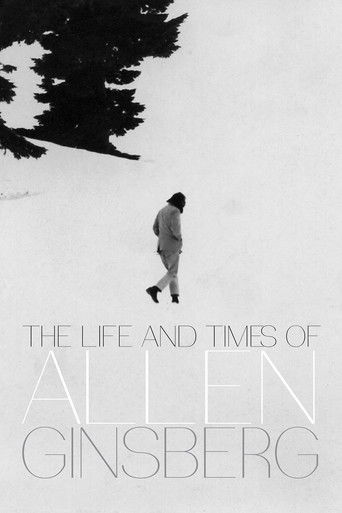
Visionary, radical, spiritual seeker, renowned poet, founding member of a major literary movement, champion of human rights, Buddhist, political activist and teacher. Extensive archival footage, interviews, and home movies cover Allen Ginsberg's life, activism, and influence on American culture through the Beat era, the 1960s, and beyond.

More Like This

Rate this film

Your ratings make Midnight smarter