Faust IV
1989 · 37 min · ★ 10.0
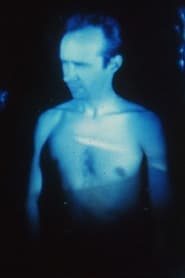
Music by Rick Corrigan. This is the imaged thought process of young Faust escaping the unbearable pictures of his broken romantic idyll, mentally fleeing the particulars of his dramatized "love," Faust's mind ranging the geography of his upbringing and its structures of cultural hubris – the whole nervous system "going to ground" and finally "becoming one" with the hypnagogically visible cells of his receptive sight and inner cognition ... all that I could give him of Heaven in this current visualization of these ancient themes. Films
Directed by Stan Brakhage
Your Rating
Make it a double feature
43m together
Both from Stan Brakhage.
Faust CollectionSee all →
 Faustfilm: An Opera · 1987
Faustfilm: An Opera
★ 7.01987
Movie
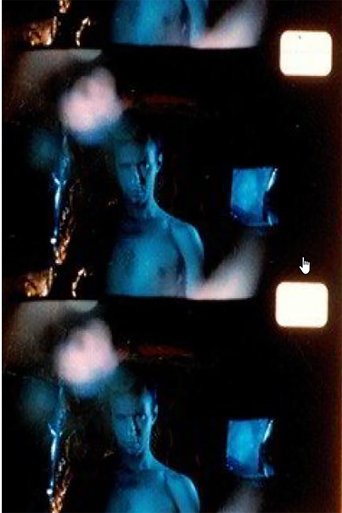
This is the realization of a 30 year old dream, a wish of the young filmmaker to film a modern Faust which finally came to a fulfillment as unpredictable and as absolute as, say, three decades of living experience. Like earlier artists who have treated the Faust legend,he uses it to explore the nature of obsession. But reversing the familiar idea of Faust as an old man yearning to be young, Brakhage makes him a world-weary young man who longs to be old... What makes the film striking is its rich imagery, superbly photographed in dark-hued tones, and its insistent visual rhythms. Brakhage is close to his peak as a bard of the camera and the editing table. – David Sterritt
 Faust's Other: An Idyll · 1988
Faust's Other: An Idyll
★ 6.81988
MovieDrama
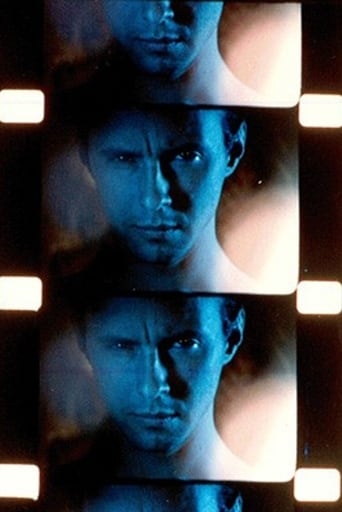
“Faust Part 2” reveals the modern Faust in a romantic interlude, an idyll (from the Greek idein, "to see"); also, a journey of the id. A sense of story is inferred through the complex interweaving of human gesture, expression, and bodily movement within vibrantly shifting colours and rhythmic development, creating multiple levels of metaphorical meaning. A collaborative work with paintings by Emily Ripley and soundtrack by Joel Haertling.
 Faust 3: Candida Albacore · 1988
Faust 3: Candida Albacore
★ 6.51988
Movie
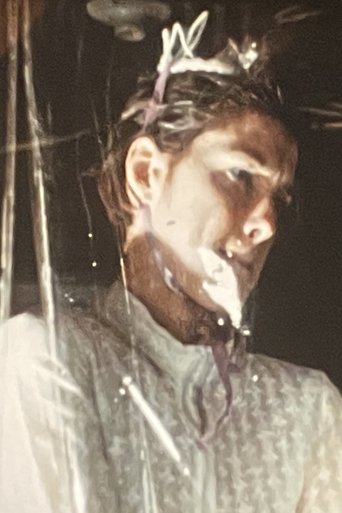
Just as the word Idyll of Faust's Part 2 is rooted in the Greek idein/to see, so is "candida" in candidatus, as used in the white robed army of martyrs' of the Te Deum, as well as Albicare/to be white or Albicore out of the Portuguese (or Arabic origin) designating a kind of tunny (or white man): thus, Faust's 3 is white/white as well as (from sugar's white) candy, and fish: it is the modern Walpurgisnacht to Faust, but the day-dream of his Emily: it exists that a woman has, finally, something of her ritual included in the myth of Faust..... and that muthos/mouth become a vision.
More from Stan BrakhageSee all →
 Arabic Numeral Series 7 · 1981
Arabic Numeral Series 7
★ 7.71981
Movie
“With some exceptions, the Arabics take the idea of the void as their ground. That is, the light we do see almost always seems to be set against darkness, or occasionally against white, these momentary flickers that materialize tenuously out of emptiness. But the darkness is not ‘night,’ or even simply some more abstract absence of light, but a more profound vacuum: it represents a world stripped of all the coordinates of the known, an unmeasurable absence. […] These lushly sensual, pleasurable-to-view films are also terrifying: their unpredictability, continually enacting new dramas of surprise, alternatively swamps the viewer in light and leaves him adrift in darkness.”
 Window Water Baby Moving · 1959
Window Water Baby Moving
★ 6.91959
MovieDocumentary
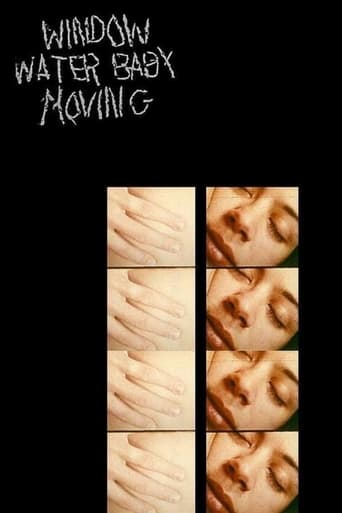
On a winter's day, a woman stretches near a window then sits in a bathtub of water. She's happy. Her lover is nearby; there are close ups of her face, her pregnant belly, and his hands caressing her. She gives birth: we see the crowning of the baby's head, then the birth itself; we watch a pair of hands tie off and cut the umbilical cord. With the help of the attending hands, the mother expels the placenta. The infant, a baby girl, nurses. We return from time to time to the bath scene. By the end, dad's excited; mother and daughter rest.
 Sweetgrass · 2009
Sweetgrass
★ 6.72009
MovieDocumentary
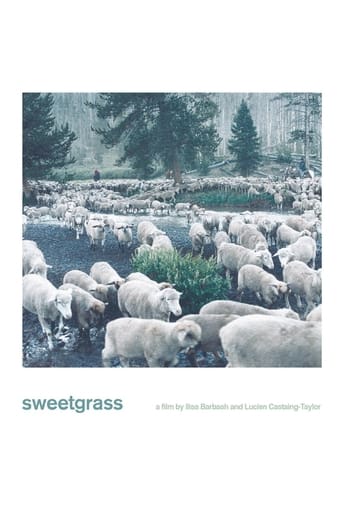
An unsentimental elegy to the American West, Sweetgrass follows the last modern-day cowboys to lead their flocks of sheep up into Montana's breathtaking and often dangerous Absaroka-Beartooth mountains for summer pasture, revealing a world in which nature and culture, animals and humans, vulnerability and violence are all intimately meshed.
 Seasons... · 2002
Seasons...
★ 6.72002
Movie
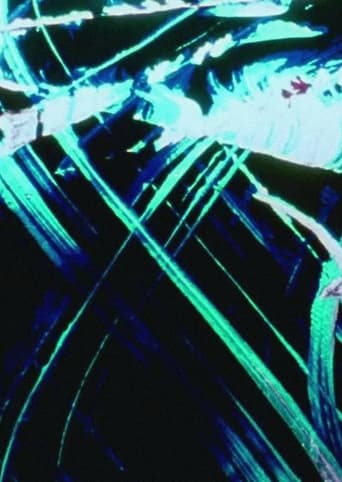
Brakhage's frame-by-frame hand carvings and etchings directly into the film emulsion, sometimes photographically combined with paint, are illuminated by Solomon's optical printing; this footage was then edited by Solomon into a four part 'seasonal cycle'. This film can be considered to be part of a larger, 'umbrella' work by Brakhage entitled «...» . Seasons... is inspired by the colors and textures found in the woodcuts of Hokusai and Hiroshige, and the playful sense of forms dancing in space from the film works of Robert Breer and Len Lye.
 Anticipation of the Night · 1958
Anticipation of the Night
★ 6.61958
Movie
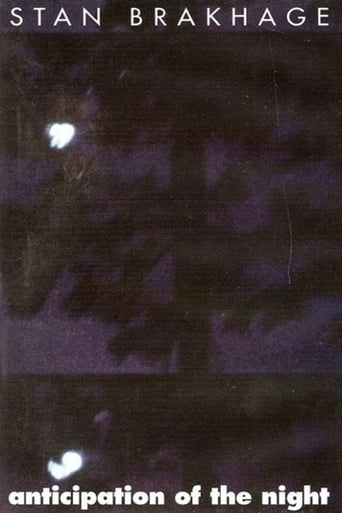
First person view of a man, seen only in shadow, attempting to connect with the world around him.
Faust 3: Candida Albacore · 1988Faust 3: Candida Albacore
★ 6.51988
Movie
Just as the word Idyll of Faust's Part 2 is rooted in the Greek idein/to see, so is "candida" in candidatus, as used in the white robed army of martyrs' of the Te Deum, as well as Albicare/to be white or Albicore out of the Portuguese (or Arabic origin) designating a kind of tunny (or white man): thus, Faust's 3 is white/white as well as (from sugar's white) candy, and fish: it is the modern Walpurgisnacht to Faust, but the day-dream of his Emily: it exists that a woman has, finally, something of her ritual included in the myth of Faust..... and that muthos/mouth become a vision.
 The Act of Seeing with One's Own Eyes · 1972
The Act of Seeing with One's Own Eyes
★ 6.51972
MovieDocumentary
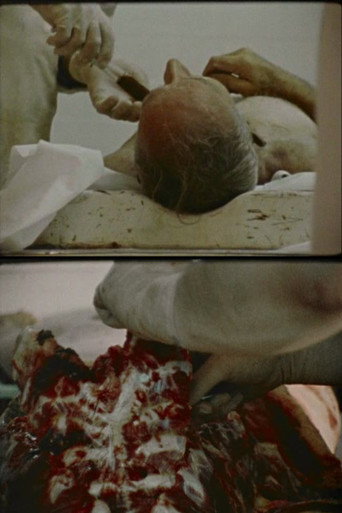
At a morgue, forensic pathologists conduct autopsies of the corpses assigned. "S. Brakhage, entering, WITH HIS CAMERA, one of the forbidden, terrific locations of our culture, the autopsy room. It is a place wherein, inversely, life is cherished, for it exists to affirm that no one of us may die without our knowing exactly why. All of us, in the person of the coroner, must see that, for ourselves, with our own eyes. It is a room full of appalling particular intimacies, the last ditch of individuation. Here our vague nightmare of mortality acquires the names and faces of OTHERS. This last is a process that requires a WITNESS; and what 'idea' may finally have inserted itself into the sensible world we can still scarcely guess, for the CAMERA would seem the perfect Eidetic Witness, staring with perfect compassion where we can scarcely bear to glance." – Hollis Frampton
 Cannibal! The Musical · 1996
Cannibal! The Musical
★ 6.41996
MovieComedyWestern
Heading through Colorado Territory in search of gold and women, Alferd Packer and his group of bemused companions find themselves lost, starving and musically inspired by the obstacles they confront along the way, including a die-hard Confederate cyclops, a trio of surly trappers, a tribe of Japanese-speaking "Indians," and ultimately, each other.
 Dog Star Man · 1965
Dog Star Man
★ 6.41965
MovieFantasy
Described as a "cosmological epic" and "creation myth", Dog Star Man illustrates the odyssey of a bearded woodsman climbing through a snow-covered mountain with his dog to chop down a tree. While doing so, he witnesses various mystical visions with various recurring imagery such as a woman, child, nature, and the cosmos while making his ascent.
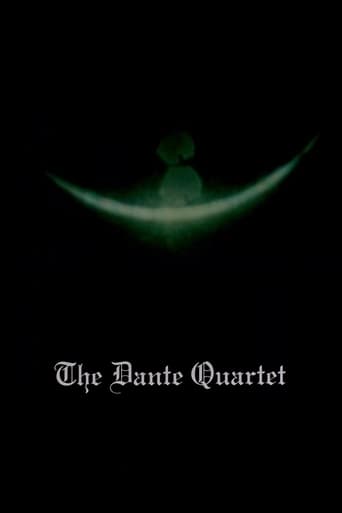 The Dante Quartet · 1987
The Dante Quartet
★ 6.31987
MovieAnimation
A visual representation, in four parts, of one man's internalization of "The Divine Comedy." Hell is a series of multicolored brush strokes against a white background; the speed of the changing images varies. "Hell Spit Flexion," or springing out of Hell, is on smaller film stock, taking the center of the frame. Montages of color move rapidly with a star and the edge of a lighted moon briefly visible. Purgation is back to full frame; blurs of color occasionally slow down then freeze. From time to time, an image, such as a window or a face, is distinguishable for a moment. In "existence is song," colors swirl then flash in and out of view. Behind the vivid colors are momentary glimpses of volcanic activity.
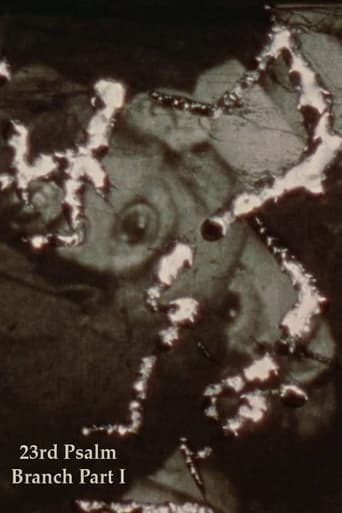 23rd Psalm Branch: Part I · 1967
23rd Psalm Branch: Part I
★ 6.21967
Movie
In this haunting but lyrical meditation on war, Brakhage intercuts 8-mm footage of Colorado with imagery from WWII newsreels. He responds to the violence and nightmare of war by painting directly on the filmstrip.
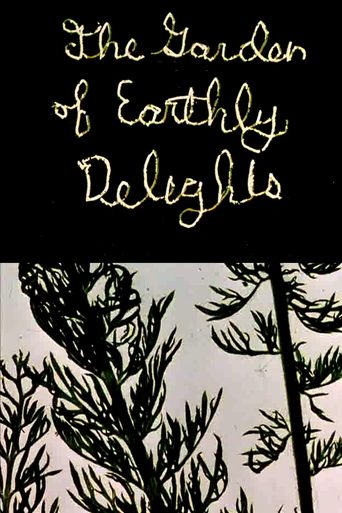 The Garden of Earthly Delights · 1981
The Garden of Earthly Delights
★ 6.21981
MovieAnimation
A collage of two-dimensional images of vegetation, each appearing only for a moment, sometimes as a single image, more often with other bits of stem, leaf, bud, or petal. Often we see only the outline of objects against a black background. Black and green are occasionally joined by fragments of orange or of white and blue. The objects in the frame don't move but they are quickly replaced by another collage, giving the feel of rapid motion. Each collage is crisp, its lines etched against the background of black and later of white. Whitman anyone, or Hieronymus Bosch? Although there is no soundtrack, the rapidity of changing images and colors suggests a riot.
 Dog Star Man: Part III · 1964
Dog Star Man: Part III
★ 6.11964
MovieDrama
Sexual intimacy. Three kinds of images race past, superimposed on each other sometimes: two bodies, a man and a woman's, close up, nude - patches of skin, wisps of hair, glimpses of a face and genitalia; strips of celluloid with lines and squiggles scratched on them; and, close-up shots of what appear to be the insides of living bodies - a heart beating, muscle and sinew and tissue wet with fluids. The exterior and interior of desire.
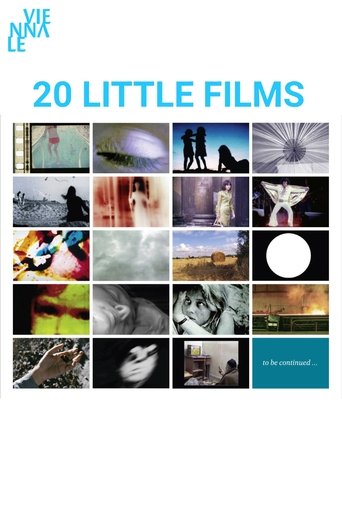 20 Little Films · 2012
20 Little Films
★ 6.02012
MovieDocumentary
Since 1995, the Viennale has invited renowned directors to create short, one-minute films as personal contributions to the festival. Ranging from home movies to political essays, musical sketches to abstract studies, these “little films” form a unique anthology of cinematic moments. 20 Little Films collects a selection of these works, premiering together for the Viennale’s 50th anniversary at the Locarno Film Festival.
 For Marilyn · 1992
For Marilyn
★ 6.01992
Movie
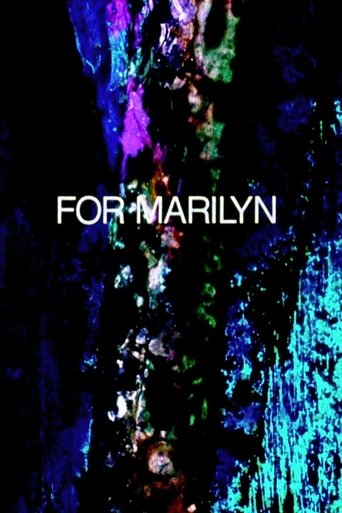
The film is officially untitled, but is referred to by the dedication that appears in place of a title card. It is dedicated to Marilyn Brakhage, the filmmaker's wife. Out of all the 350+ films that Stan Brakhage made, this was his personal favorite.
 The Life and Times of Allen Ginsberg · 1994
The Life and Times of Allen Ginsberg
★ 5.71994
MovieDocumentary
Visionary, radical, spiritual seeker, renowned poet, founding member of a major literary movement, champion of human rights, Buddhist, political activist and teacher. Extensive archival footage, interviews, and home movies cover Allen Ginsberg's life, activism, and influence on American culture through the Beat era, the 1960s, and beyond.
More Like This
Couldn't load this row right now.