Camera
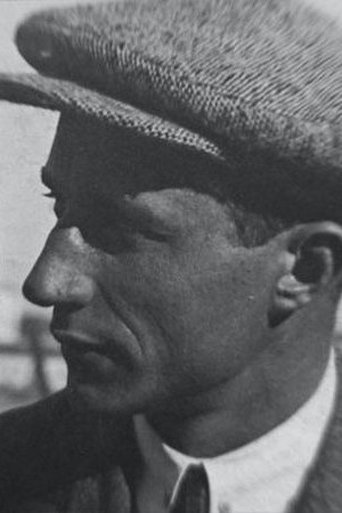
Eduard Tisse
Born April 1, 1897 · Liepāja, Latvia
Died November 18, 1961 · aged 64
Eduard Tisse (13 April 1897 – 18 November 1961) was a Soviet cinematographer. In 1921, Tisse became a professor at Gerasimov Institute of Cinematography. His career took off when he worked with director Sergei Eisenstein on the film Strike. Tisse would become Eisenstein's standard cinematographer for the next twenty years.
Known For
 Strike · 1925
Strike
★ 7.41925
MovieDrama
Workers in a factory in pre-revolutionary Russia go on strike and are met by violent suppression.
 Battleship Potemkin · 1925
Battleship Potemkin
★ 7.61925
MovieDramaHistory
A dramatized account of a great Russian naval mutiny and a resultant public demonstration, showing support, which brought on a police massacre.
 Ivan the Terrible, Part I · 1944
Ivan the Terrible, Part I
★ 7.31944
MovieDramaHistory
Set during the early part of his reign, Ivan faces betrayal from the aristocracy and even his closest friends as he seeks to unite the Russian people. Sergei Eisenstein's final film, this is the first part of a three-part biopic of Tsar Ivan IV of Russia, which was never completed due to the producer's dissatisfaction with Eisenstein's attempts to use forbidden experimental filming techniques and excessive cost overruns. The second part was completed but not released for a decade after Eisenstein's death and a change of heart in the USSR government toward his work; the third part was only in its earliest stage of filming when shooting was stopped altogether.
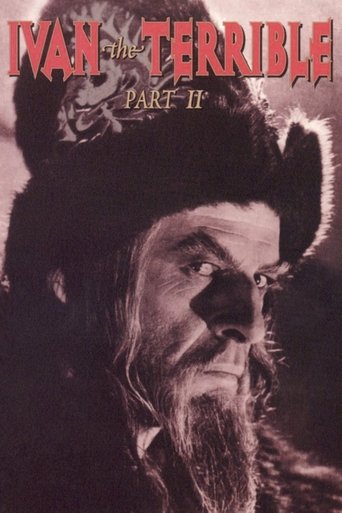 Ivan the Terrible, Part II: The Boyars' Plot · 1958
Ivan the Terrible, Part II: The Boyars' Plot
★ 7.31958
MovieHistoryDrama
This is the second part of a projected three-part epic biopic of Russian Czar Ivan Grozny, undertaken by Soviet film-maker Sergei Eisenstein at the behest of Josef Stalin. Production of the epic was stopped before the third part could be filmed, due to producer dissatisfaction with Eisenstein's introducing forbidden experimental filming techniques into the material, more evident in this part than the first part. As it was, this second part was banned from showings until after the deaths of both Eisenstein and Stalin, and a change of attitude by the subsequent heads of the Soviet government. In this part, as Ivan the Terrible attempts to consolidate his power by establishing a personal army, his political rivals, the Russian boyars, plot to assassinate him.
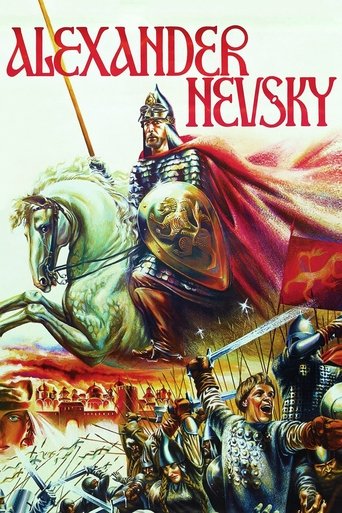 Alexander Nevsky · 1938
Alexander Nevsky
★ 7.11938
MovieDramaHistory
When German knights invade Russia, Prince Alexander Nevsky must rally his people to resist the formidable force. After the Teutonic soldiers take over an eastern Russian city, Alexander stages his stand at Novgorod, where a major battle is fought on the ice of frozen Lake Chudskoe. While Alexander leads his outnumbered troops, two of their number, Vasili and Gavrilo, begin a contest of bravery to win the hand of a local maiden.
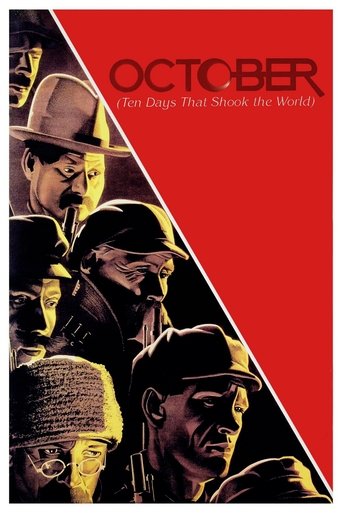 October (Ten Days that Shook the World) · 1928
October (Ten Days that Shook the World)
★ 6.91928
MovieDramaHistory
Sergei M. Eisenstein's docu-drama about the 1917 October Revolution in Russia. Made ten years after the events and edited in Eisenstein's 'Soviet Montage' style, it re-enacts in celebratory terms several key scenes from the revolution.
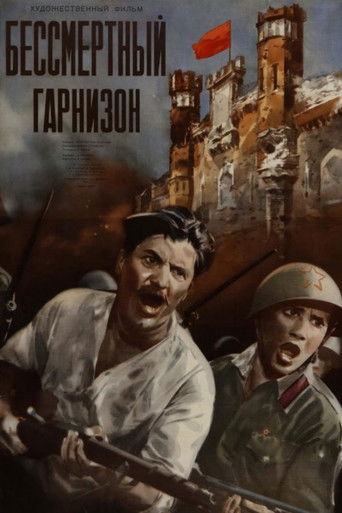 The Immortal Garrison · 1956
The Immortal Garrison
★ 4.71956
MovieWarDrama
In June of 1941, at the outset of the Nazi invasion of Russia, a group of Soviet servicemen languidly biding their time at the Brest fortress on the Polish border, are suddenly galvanized into action. All desires to return home to their wives and sweethearts are swept aside as the courageous garrison unites to thwart a common enemy.
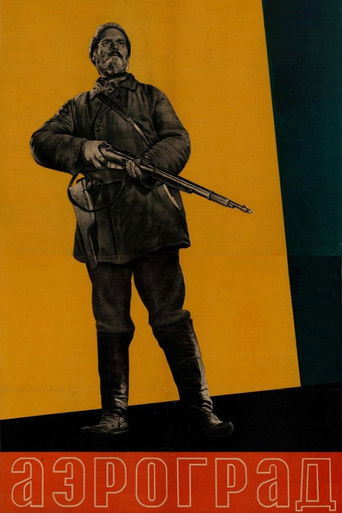 Aerograd · 1935
Aerograd
★ 5.01935
MovieDramaAction
A Russian outpost in Eastern Siberia comes under threat of attack by the Japanese. Aerograd is a new town with a strategically located airfield of vital interest to the government. Work on the new outpost is complicated when tensions develop between workers and a religious sect. Relations between the two countries are further strained in the days before World War II, dating back to the Russo-Japanese War of 1905.
Filmography
Sort
Strike · 1925Strike
★ 7.41925
MovieDrama
Workers in a factory in pre-revolutionary Russia go on strike and are met by violent suppression.
Director of Photography


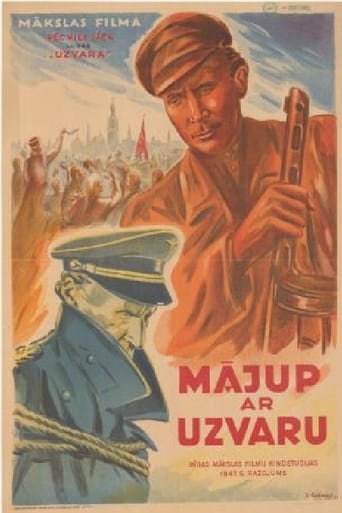 Mājup ar uzvaru · 1948
Mājup ar uzvaru
★ 9.01948
MovieWarDrama
Director of Photography

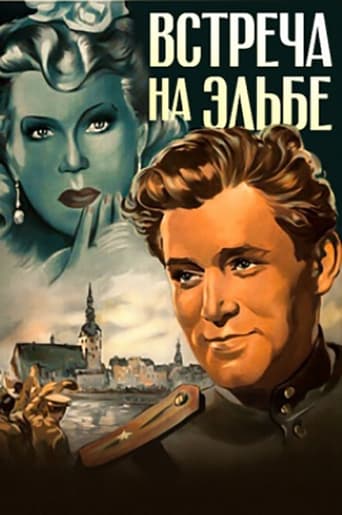 Meeting on the Elbe · 1949
Meeting on the Elbe
★ 4.91949
MovieDramaWar
Soviet and American soldiers are meeting on the shores of the Elbe river in Germany in 1945.
Director of Photography
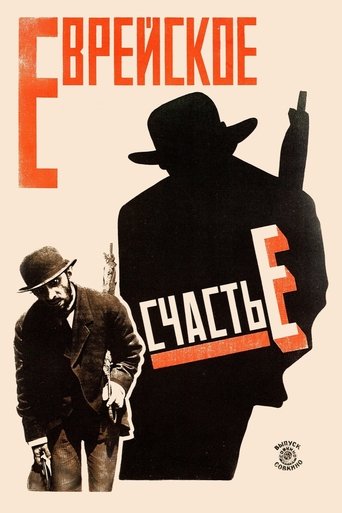 Jewish Luck · 1925
Jewish Luck
★ 5.61925
MovieRomanceComedy
The story of a Jewish entrepreneur ins Tsarist Russia always look for a get rich quick scheme.
Director of Photography