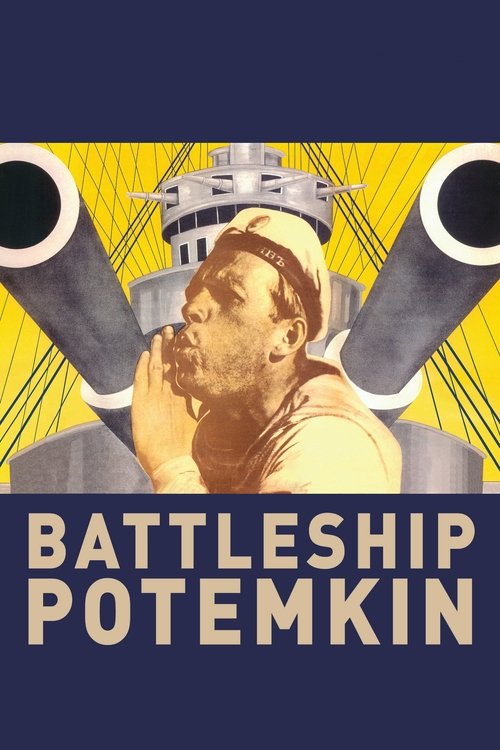
Battleship Potemkin
Revolution is the only lawful, equal, effectual war. It was in Russia that this war was declared and begun.
NR 1925 · 75 min · ★ 7.6 (1K) · Drama, History, War
A dramatized account of a great Russian naval mutiny and a resultant public demonstration, showing support, which brought on a police massacre.
Directed by Sergei Eisenstein · Written by Sergei Tretyakov
Your Rating
Cast
-
 Aleksandr Antonov Grigory Vakulinchuk
 -
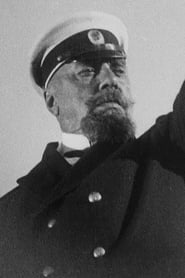 Vladimir Barsky Commander Golikov
 -
 Grigori Aleksandrov Chief Officer Giliarovsky
 -
 Ivan Bobrov Young Sailor Flogged While Sleeping
 -
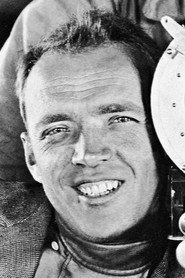 Mikhail Gomorov Militant Sailor
 - A Aleksandr Levshin Petty Officer
- N Nina Poltavtseva Woman with Pince-nez
- K Konstantin Feldman Student Agitator
- P Prokhorenko Mother Carrying Wounded Boy
- A A. Glauberman Wounded Boy
- B Beatrice Vitoldi Woman with Baby Carriage
-
 Danylo Antonovych Sailor
Trailers & Videos
Make it a double feature
2h 44m together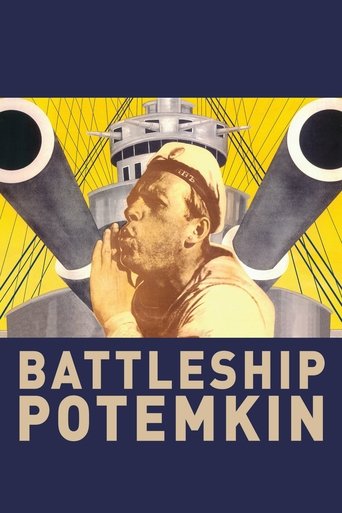
Both from Sergei Eisenstein.
More from Sergei EisensteinSee all →
 Our Cinema · 1940
Our Cinema
★ 9.01940
MovieDocumentary
 Eisenstein’s Mexican Film: Episodes for Study · 1955
Eisenstein’s Mexican Film: Episodes for Study
★ 8.51955
MovieDocumentary
"Eisenstein journeyed to Mexico in late 1930 to begin shooting a film. With backing provided by Upton and Mary Craig Sinclair, the great Soviet auteur planned to make an epoch-spanning pageant of Mexico’s political history and cultural iconography, moving from the pre-Columbian era through colonization and, finally, revolution ... with the project running over budget the film was shut down. Sinclair eventually deposited the film materials at MoMA in 1953, at which point the scholar Jay Leyda assembled and annotated the shots, ordering them according to the filmmaker’s plans and presenting the images just as they had been shot, unedited ... here one is given the opportunity to attend to Eisenstein in an entirely different way, and aspects that might otherwise be overshadowed come to the fore: the way he works with nonprofessional actors, for example, or the striking mise-en-scène." - MoMA
 Strike · 1925
Strike
★ 7.41925
MovieDrama
Workers in a factory in pre-revolutionary Russia go on strike and are met by violent suppression.
 Ivan the Terrible, Part II: The Boyars' Plot · 1958
Ivan the Terrible, Part II: The Boyars' Plot
★ 7.31958
MovieHistoryDrama
This is the second part of a projected three-part epic biopic of Russian Czar Ivan Grozny, undertaken by Soviet film-maker Sergei Eisenstein at the behest of Josef Stalin. Production of the epic was stopped before the third part could be filmed, due to producer dissatisfaction with Eisenstein's introducing forbidden experimental filming techniques into the material, more evident in this part than the first part. As it was, this second part was banned from showings until after the deaths of both Eisenstein and Stalin, and a change of attitude by the subsequent heads of the Soviet government. In this part, as Ivan the Terrible attempts to consolidate his power by establishing a personal army, his political rivals, the Russian boyars, plot to assassinate him.
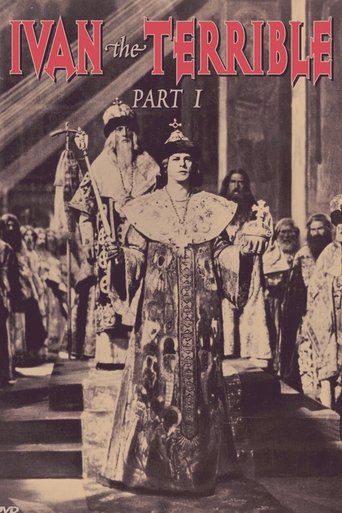 Ivan the Terrible, Part I · 1944
Ivan the Terrible, Part I
★ 7.31944
MovieDramaHistory
Set during the early part of his reign, Ivan faces betrayal from the aristocracy and even his closest friends as he seeks to unite the Russian people. Sergei Eisenstein's final film, this is the first part of a three-part biopic of Tsar Ivan IV of Russia, which was never completed due to the producer's dissatisfaction with Eisenstein's attempts to use forbidden experimental filming techniques and excessive cost overruns. The second part was completed but not released for a decade after Eisenstein's death and a change of heart in the USSR government toward his work; the third part was only in its earliest stage of filming when shooting was stopped altogether.
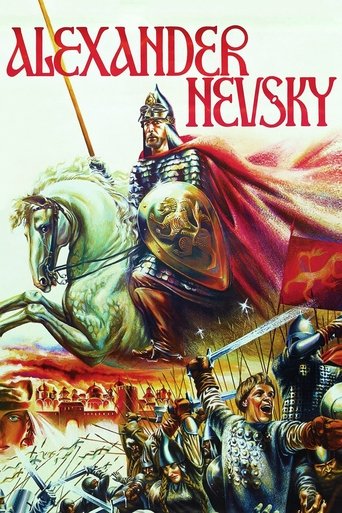 Alexander Nevsky · 1938
Alexander Nevsky
★ 7.11938
MovieDramaHistory
When German knights invade Russia, Prince Alexander Nevsky must rally his people to resist the formidable force. After the Teutonic soldiers take over an eastern Russian city, Alexander stages his stand at Novgorod, where a major battle is fought on the ice of frozen Lake Chudskoe. While Alexander leads his outnumbered troops, two of their number, Vasili and Gavrilo, begin a contest of bravery to win the hand of a local maiden.
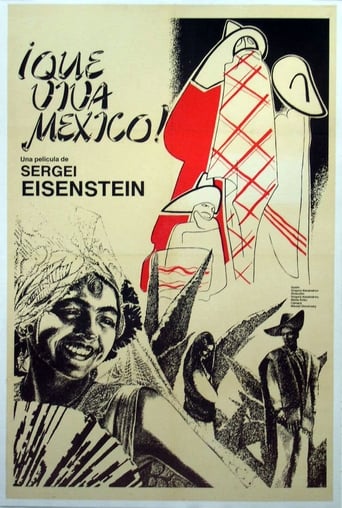 Hurray Mexico! · 1932
Hurray Mexico!
★ 7.11932
MovieDocumentary
Unedited film that Sergei Eisenstein, Grigoriy Aleksandrov and Eduard Tisse shot in Mexico 1931-32. This record only represents the 200,000-plus feet of unedited film that Sergei Eisenstein, Grigoriy Aleksandrov and Eduard Tisse shot in Mexico 1931/32 for Mary and Upton Sinclair and three American co-financiers. It was Eisenstein's vision to end up with movie about Mexico in six parts called "Calavera", "Sandunga", "Maguey", "Fiesta", "Soldadera", and "Epilogue". The project was canceled before it was completed due to cost overruns and months-delayed completion, and the producers refused to let Eisenstein attempt to edit anything from the material he had finished after Iosif Stalin called him back to the USSR. From this footage the following pictures were subsequently edited by other hands: Thunder Over Mexico (1933), Eisenstein in Mexico (1933), Death Day (1934), Time in the Sun (1940), and Que Viva Mexico (1979).
 Sergei Eisenstein: Mexican Fantasy · 1998
Sergei Eisenstein: Mexican Fantasy
★ 7.01998
MovieDocumentary
Eisenstein shot 50 hours of footage on location in Mexico in 1931 and 32 for what would have become ¡Que viva México!, but was not able to finish the film. Following two wildly different reconstruction attempts in 1939 (Marie Seton's 'Time in the Sun') and 1979 (Grigori Alexandrov's '¡Que viva México!') Kovalov has here compiled another hypothetical version of what Eisenstein's film might have been.
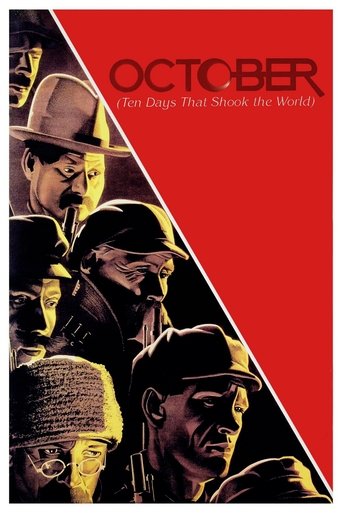 October (Ten Days that Shook the World) · 1928
October (Ten Days that Shook the World)
★ 6.91928
MovieDramaHistory
Sergei M. Eisenstein's docu-drama about the 1917 October Revolution in Russia. Made ten years after the events and edited in Eisenstein's 'Soviet Montage' style, it re-enacts in celebratory terms several key scenes from the revolution.
 ¡Qué Viva México! · 1979
¡Qué Viva México!
★ 6.81979
MovieDocumentaryDrama
Having revolutionized film editing through such masterworks of montage as Potemkin and Strike, Soviet director Sergei Eisenstein emigrated West in hopes of testing the capabilities of the American film industry. Quickly ostracized from Hollywood, Eisenstein, Grigory Alexandrov, and photographer Eduard Tisse (at the urging of author Upton Sinclair) wandered south of the border, where they began filming a highly stylized documentary about the people and volatile social climate of Mexico. Unfortunately, a lack of funds prohibited the film's completion, and the famed director was unable to edit the film. In 1979, by referring to Eisenstein's extensive notes and sketches, Alexandrov assembled the most definitive version of the film; as close to Eisenstein's vision as one is ever likely to see.
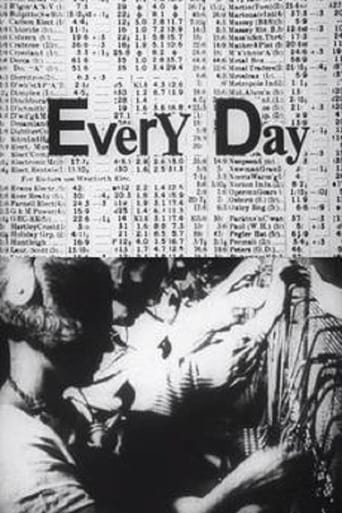 Every Day · 1929
Every Day
★ 6.81929
Movie
Experimental documentary focusing on a day in the life of city workers, featuring montage sequences and repetition to emphasise the monotony of routine office work.
 Misery and Fortune of Woman · 1930
Misery and Fortune of Woman
★ 6.51930
MovieDramaDocumentary
This film shows contrasting views of women with problematic pregnancies and the outcomes resulting when they seek out a back-alley abortionist, a trained and licensed abortion provider in a clinic, or an obstetrician capable of performing a Caesarian Section. The full film appears to be lost, but shortened versions, including one with dialogue scenes added in Germany in 1935, can be found on the internet. Additionally, Eisenstein's role in making the picture remains unclear: did he direct some or all of it, just edit it, or merely leave it to Alexandrov and Tisse to make? Released in the USA 1930 in a 65 minute (5800 ft.) version with English intertitles and a music track under the title BIRTH.
 The General Line · 1929
The General Line
★ 6.41929
MovieDrama
Also known as The Old and the New, The General Line illustrates Lenin’s stated imperative that the nation move from agrarian to industrial culture in an epic ode to farm-collectivization progress.
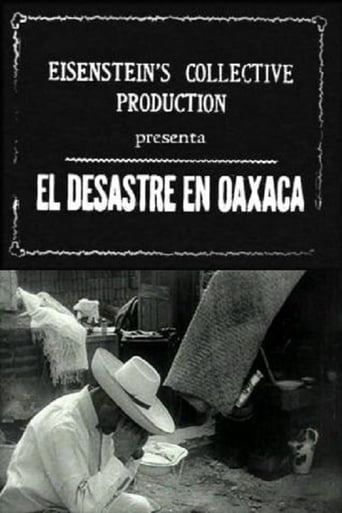 The Disaster in Oaxaca · 1931
The Disaster in Oaxaca
★ 6.21931
MovieDocumentary
Footage of the aftermath of the January 14 1931 earthquake in Oaxaca, Mexico.
 Time in the Sun · 1940
Time in the Sun
★ 6.01940
MovieDocumentary
Second attempt to create a feature film out of the 200,000-plus feet of film which Soviet film-maker Sergei Eisenstein shot during 1931-32 in Mexico for American socialist author Upton Sinclair, his wife and a small company of investors. The projected film, to be called "Que Viva Mexico", was never completed due to exhaustion of funds and Stalin's demand that Eisenstein return to the USSR (he had been absent since 1929). The first attempt at editing the footage, in the USA, resulted in "Thunder Over Mexico", released in 1934. In 1940, Marie Seton, from the UK, acquired some of the footage from the Sinclairs in an attempt to make a better cutting according to Eisenstein's skeletal outline for the proposed film. This film has apparently been lost.
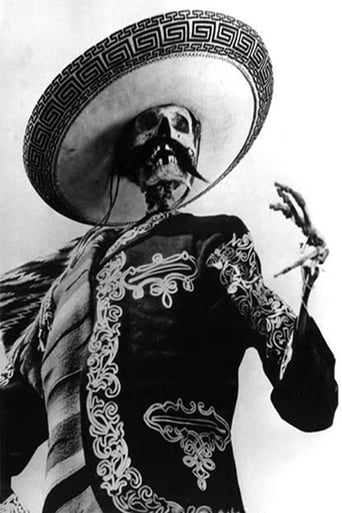 Death Day · 1934
Death Day
★ 6.01934
MovieDocumentary
During his adventure in Mexico, Sergei Eisenstein made footage of a Mexican "Death Day" celebration for inclusion in his "Que Viva Mexico!" film project. When the 200,000-plus feet of film he eventually exposed in Mexico was first attempted to be made into a feature film, "Thunder Over Mexico", the producers excluded the Death Day material for subsequent compilation as an independent short subject. Silent with music track and explanatory English intertitles.
More Like This
 Eternal Sunshine of the Spotless Mind · 2004
Eternal Sunshine of the Spotless Mind
★ 8.12004
MovieScience FictionDrama
Joel Barish, heartbroken that his girlfriend underwent a procedure to erase him from her memory, decides to do the same. However, as he watches his memories of her fade away, he realises that he still loves her, and may be too late to correct his mistake.
 A History of Violence · 2005
A History of Violence
★ 7.22005
MovieDramaThriller
An average family is thrust into the spotlight after the father commits a seemingly self-defense murder at his diner.
 Gladiator · 2000
Gladiator
★ 8.22000
MovieActionDrama
After the death of Emperor Marcus Aurelius, his devious son takes power and demotes Maximus, one of Rome's most capable generals who Marcus preferred. Eventually, Maximus is forced to become a gladiator and battle to the death against other men for the amusement of paying audiences.
 Scarface · 1983
Scarface
★ 8.21983
MovieActionCrime
After getting a green card in exchange for assassinating a Cuban government official, Tony Montana stakes a claim on the drug trade in Miami. Viciously murdering anyone who stands in his way, Tony eventually becomes the biggest drug lord in the state, controlling nearly all the cocaine that comes through Miami. But increased pressure from the police, wars with Colombian drug cartels and his own drug-fueled paranoia serve to fuel the flames of his eventual downfall.
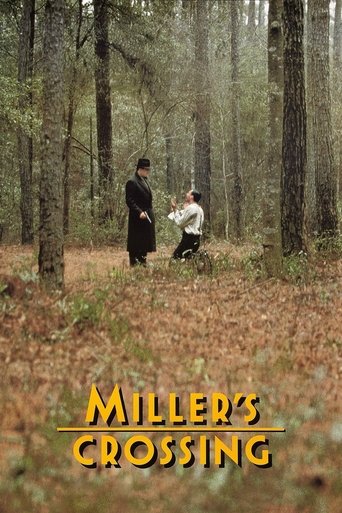 Miller's Crossing · 1990
Miller's Crossing
★ 7.41990
MovieDramaThriller
Set in 1929, a political boss and his advisor have a parting of the ways when they both fall for the same woman.
 Das Boot · 1981
Das Boot
★ 8.11981
MovieDramaHistory
A German submarine hunts allied ships during the Second World War, but it soon becomes the hunted. The crew tries to survive below the surface, while stretching both the boat and themselves to their limits.
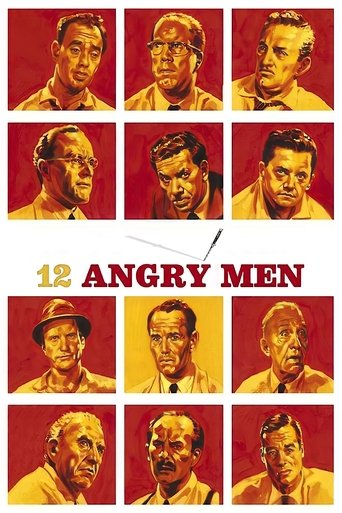 12 Angry Men · 1957
12 Angry Men
★ 8.61957
MovieDrama
The defense and the prosecution have rested and the jury is filing into the jury room to decide if a young Spanish-American is guilty or innocent of murdering his father. What begins as an open and shut case soon becomes a mini-drama of each of the jurors' prejudices and preconceptions about the trial, the accused, and each other.
 Billy Elliot · 2000
Billy Elliot
★ 7.62000
MovieDramaComedy
County Durham, England, 1984. The miners' strike has started and the police have started coming up from Bethnal Green, starting a class war with the lower classes suffering. Caught in the middle of the conflict is 11-year old Billy Elliot, who, after leaving his boxing club for the day, stumbles upon a ballet class and finds out that he's naturally talented. He practices with his teacher Mrs. Wilkinson for an upcoming audition in Newcastle-upon Tyne for the royal Ballet school in London.
 People on Sunday · 1930
People on Sunday
★ 7.21930
MovieDrama
A semi-documentary experimental 1930 German silent film created by amateurs with a small budget. With authentic scenes of the metropolis city of Berlin, it's the first film from the later famous screenwriters/directors Billy Wilder and Fred Zinnemann.
 Natural Born Killers · 1994
Natural Born Killers
★ 7.01994
MovieCrimeThriller
Two victims of traumatized childhoods become lovers and serial murderers irresponsibly glorified by the mass media.
 Zatoichi · 2003
Zatoichi
★ 7.22003
MovieAdventureDrama
Blind traveler Zatoichi is a master swordsman and a masseur with a fondness for gambling on dice games. When he arrives in a village torn apart by warring gangs, he sets out to protect the townspeople.
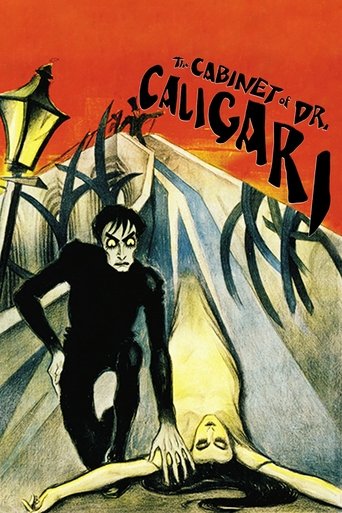 The Cabinet of Dr. Caligari · 1920
The Cabinet of Dr. Caligari
★ 7.91920
MovieDramaHorror
Francis, a young man, recalls in his memory the horrible experiences he and his fiancée Jane recently went through. Francis and his friend Alan visit The Cabinet of Dr. Caligari, an exhibit where the mysterious doctor shows the somnambulist Cesare, and awakens him for some moments from his death-like sleep.
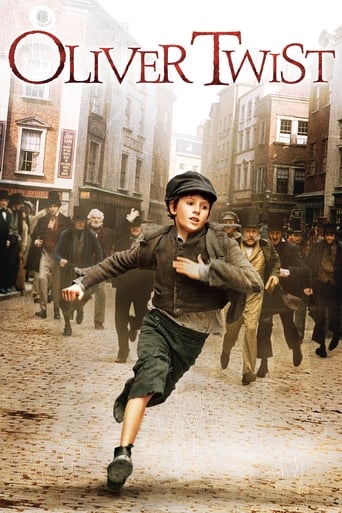 Oliver Twist · 2005
Oliver Twist
★ 6.82005
MovieCrimeDrama
An orphan endures a harsh life in a workhouse before fleeing to London, where he falls in with a gang of juvenile pickpockets led by the criminal Fagin, and eventually finds a better life, exposing the cruelties of poverty and child labor in Victorian England.
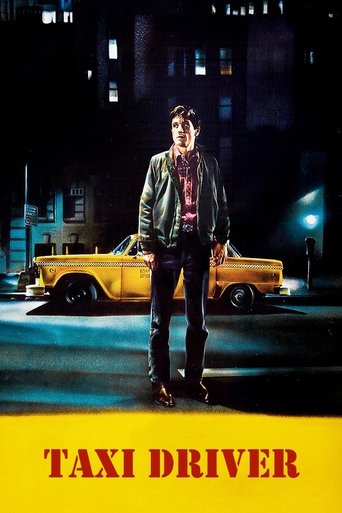 Taxi Driver · 1976
Taxi Driver
★ 8.11976
MovieCrimeDrama
Suffering from insomnia, disturbed loner Travis Bickle takes a job as a New York City cabbie, haunting the streets nightly, growing increasingly detached from reality as he dreams of cleaning up the filthy city.
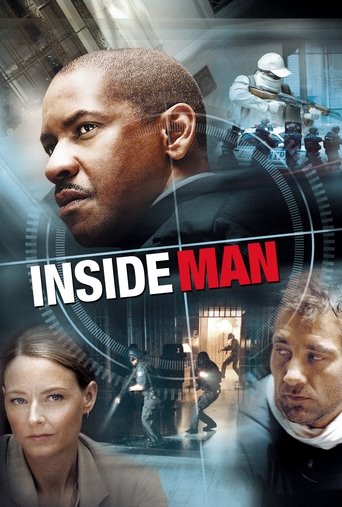 Inside Man · 2006
Inside Man
★ 7.42006
MovieCrimeDrama
When an armed, masked gang enter a Manhattan bank, lock the doors and take hostages, the detective assigned to effect their release enters negotiations preoccupied with corruption charges he is facing.
 Things to Do in Denver When You're Dead · 1995
Things to Do in Denver When You're Dead
★ 6.41995
MovieDramaCrime
Five different criminals face imminent death after botching a job quite badly.