Sentimental Romance
1931 · 20 min · ★ 6.7 · Music
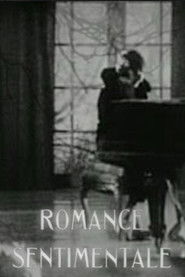
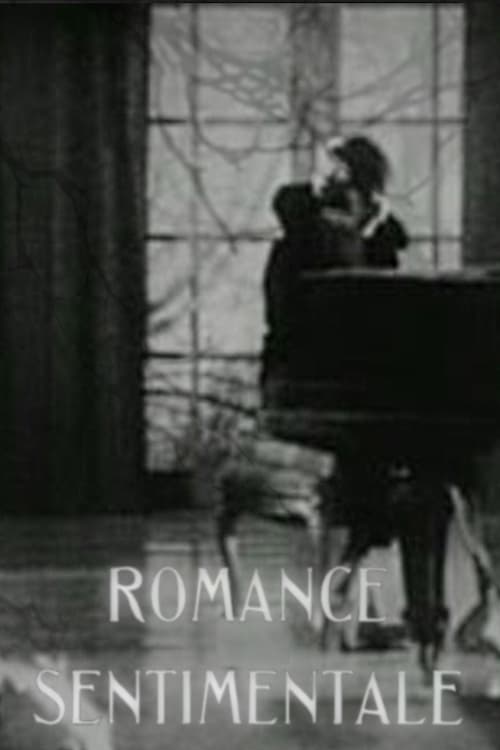
Romance sentimentale is a 1930 French film directed by Grigori Aleksandrov and Sergei M. Eisenstein. A short, experimental, slightly poetic montage of city and abstract images.
Directed by Sergei Eisenstein · Written by Grigori Aleksandrov
Your Rating
Cast
- M Mara Griy La chanteuse / The singer
Make it a double feature
1h 48m together
Both from Sergei Eisenstein.
More from Sergei EisensteinSee all →
 Sergei Eisenstein: Autobiography · 1996
Sergei Eisenstein: Autobiography
★ 8.71996
MovieDocumentary
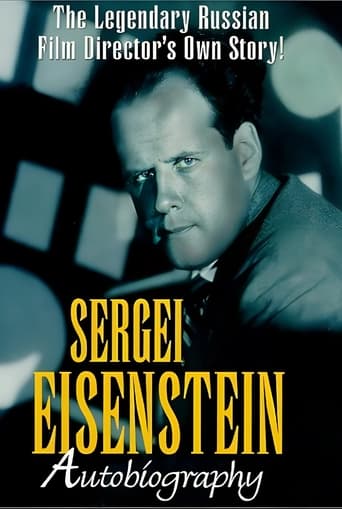
A free film adaptation of the director's memoirs. In form, this is the "stream of consciousness" that attracted Sergei Eisenstein after getting acquainted with the experiments of James Joyce. The outer outline of the film is a long foreign trip of the director, which began in 1929, during which he recalls his past life and considers creative ideas. The film is constructed as a free alternation of reality, dreams, and fantasies. The material for it is fragments from the films of Sergei Eisenstein and his fellow contemporaries, documentary footage depicting the director and his time. The wide coverage of the faces and events reflected in the film shows the special role of Sergei Eisenstein in the culture of the twentieth century…
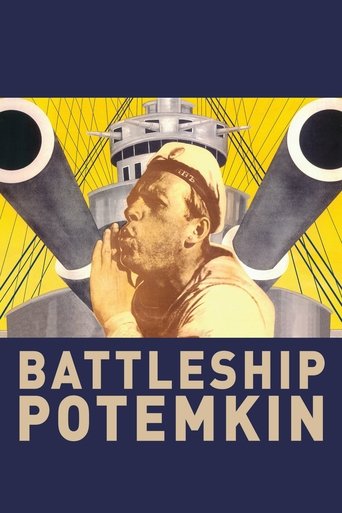 Battleship Potemkin · 1925
Battleship Potemkin
★ 7.61925
MovieDramaHistory
In the midst of the Russian Revolution of 1905, the crew of the battleship Potemkin revolt against the brutal, tyrannical regime of the vessel's officers. The resulting street demonstration in Odessa brings on a police massacre.
 Strike · 1925
Strike
★ 7.41925
MovieDrama
Just before the 1905 Bolshevik Revolution, factory workers strike against their oppressive factory bosses. When a worker is accused of stealing a piece of machinery, he commits suicide, and his colleagues revolt against the overarching Czarist regime. As the strike drags on and government officials grow increasingly desperate to end it, their methods of dealing with the rebellious workers become more and more aggressive.
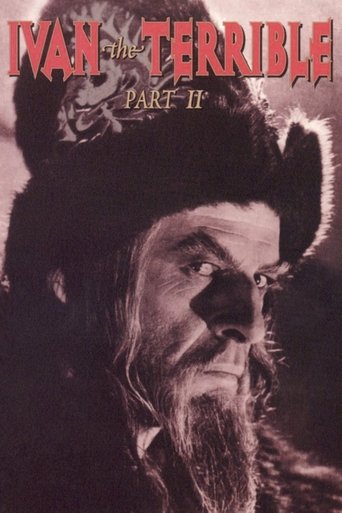 Ivan the Terrible, Part II: The Boyars' Plot · 1958
Ivan the Terrible, Part II: The Boyars' Plot
★ 7.31958
MovieHistoryDrama
This is the second part of a projected three-part epic biopic of Russian Czar Ivan Grozny, undertaken by Soviet film-maker Sergei Eisenstein at the behest of Josef Stalin. Production of the epic was stopped before the third part could be filmed, due to producer dissatisfaction with Eisenstein's introducing forbidden experimental filming techniques into the material, more evident in this part than the first part. As it was, this second part was banned from showings until after the deaths of both Eisenstein and Stalin, and a change of attitude by the subsequent heads of the Soviet government. In this part, as Ivan the Terrible attempts to consolidate his power by establishing a personal army, his political rivals, the Russian boyars, plot to assassinate him.
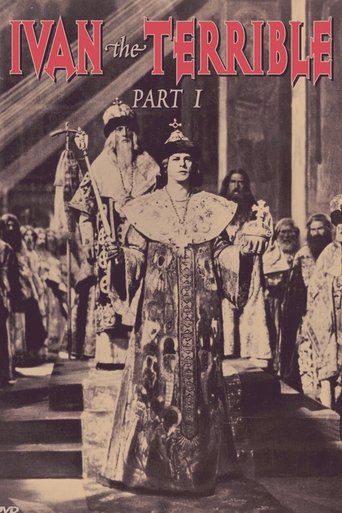 Ivan the Terrible, Part I · 1944
Ivan the Terrible, Part I
★ 7.31944
MovieDramaHistory
Set during the early part of his reign, Ivan faces betrayal from the aristocracy and even his closest friends as he seeks to unite the Russian people. Sergei Eisenstein's final film, this is the first part of a three-part biopic of Tsar Ivan IV of Russia, which was never completed due to the producer's dissatisfaction with Eisenstein's attempts to use forbidden experimental filming techniques and excessive cost overruns. The second part was completed but not released for a decade after Eisenstein's death and a change of heart in the USSR government toward his work; the third part was only in its earliest stage of filming when shooting was stopped altogether.
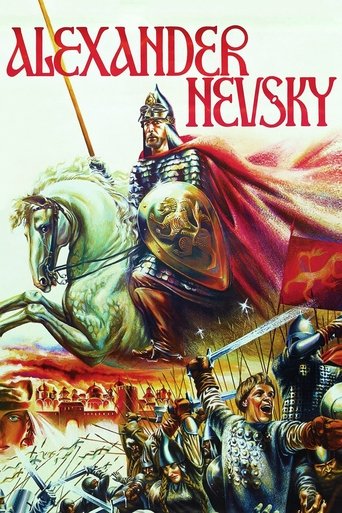 Alexander Nevsky · 1938
Alexander Nevsky
★ 7.11938
MovieDramaHistory
When German knights invade Russia, Prince Alexander Nevsky must rally his people to resist the formidable force. After the Teutonic soldiers take over an eastern Russian city, Alexander stages his stand at Novgorod, where a major battle is fought on the ice of frozen Lake Chudskoe. While Alexander leads his outnumbered troops, two of their number, Vasili and Gavrilo, begin a contest of bravery to win the hand of a local maiden.
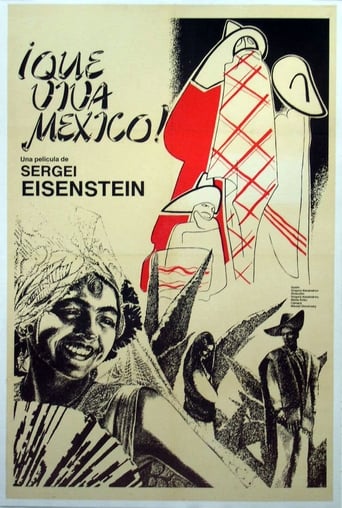 Hurray Mexico! · 1932
Hurray Mexico!
★ 7.11932
MovieDocumentary
Unedited film that Sergei Eisenstein, Grigoriy Aleksandrov and Eduard Tisse shot in Mexico 1931-32. This record only represents the 200,000-plus feet of unedited film that Sergei Eisenstein, Grigoriy Aleksandrov and Eduard Tisse shot in Mexico 1931/32 for Mary and Upton Sinclair and three American co-financiers. It was Eisenstein's vision to end up with movie about Mexico in six parts called "Calavera", "Sandunga", "Maguey", "Fiesta", "Soldadera", and "Epilogue". The project was canceled before it was completed due to cost overruns and months-delayed completion, and the producers refused to let Eisenstein attempt to edit anything from the material he had finished after Iosif Stalin called him back to the USSR. From this footage the following pictures were subsequently edited by other hands: Thunder Over Mexico (1933), Eisenstein in Mexico (1933), Death Day (1934), Time in the Sun (1940), and Que Viva Mexico (1979).
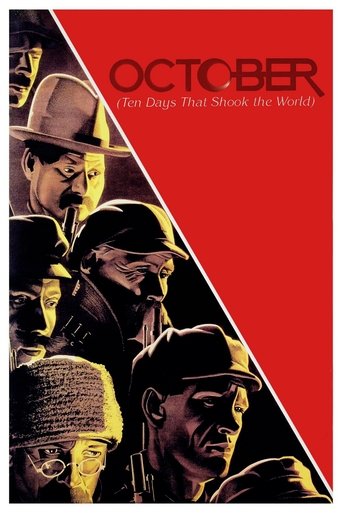 October (Ten Days that Shook the World) · 1928
October (Ten Days that Shook the World)
★ 6.91928
MovieDramaHistory
As the Russian monarchy crumbles, conflicts at Petrograd intensify, with Soviet hero V.I. Lenin leading the rebellion that overthrows the tsar's Winter Palace.
 ¡Qué Viva México! · 1979
¡Qué Viva México!
★ 6.81979
MovieDocumentaryDrama
Having revolutionized film editing through such masterworks of montage as Potemkin and Strike, Soviet director Sergei Eisenstein emigrated West in hopes of testing the capabilities of the American film industry. Quickly ostracized from Hollywood, Eisenstein, Grigory Alexandrov, and photographer Eduard Tisse (at the urging of author Upton Sinclair) wandered south of the border, where they began filming a highly stylized documentary about the people and volatile social climate of Mexico. Unfortunately, a lack of funds prohibited the film's completion, and the famed director was unable to edit the film. In 1979, by referring to Eisenstein's extensive notes and sketches, Alexandrov assembled the most definitive version of the film; as close to Eisenstein's vision as one is ever likely to see.
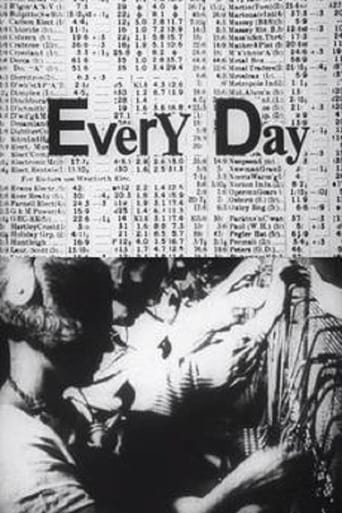 Every Day · 1929
Every Day
★ 6.81929
Movie
Experimental documentary focusing on a day in the life of city workers, featuring montage sequences and repetition to emphasise the monotony of routine office work.
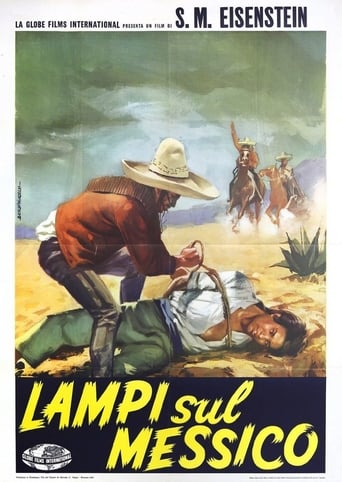 Thunder Over Mexico · 1933
Thunder Over Mexico
★ 6.71933
MovieDramaDocumentary
As was common in Diaz's Mexico, a young hacienda worker finds his betrothed imprisoned and his life threatened by his master for confronting a hacienda guest for raping the girl. This film is the first of several attempts to make a feature-length motion picture out of the 200,000-plus feet of film shot by Sergei Eisenstein, on photographic expedition in Mexico during 1931-32 for Upton Sinclair and a cadre of private American producer-investors. Silent with music and English intertitles.
 Misery and Fortune of Woman · 1930
Misery and Fortune of Woman
★ 6.51930
MovieDramaDocumentary
This film shows contrasting views of women with problematic pregnancies and the outcomes resulting when they seek out a back-alley abortionist, a trained and licensed abortion provider in a clinic, or an obstetrician capable of performing a Caesarian Section. The full film appears to be lost, but shortened versions, including one with dialogue scenes added in Germany in 1935, can be found on the internet. Additionally, Eisenstein's role in making the picture remains unclear: did he direct some or all of it, just edit it, or merely leave it to Alexandrov and Tisse to make? Released in the USA 1930 in a 65 minute (5800 ft.) version with English intertitles and a music track under the title BIRTH.
 The General Line · 1929
The General Line
★ 6.41929
MovieDrama
100.000.000 peasants – illiterate, poor, hungry. There comes a day when one woman decides that she can live the old life no longer. Using ways of new Soviet state and industrial progress, she changes the lives and labours of her village.
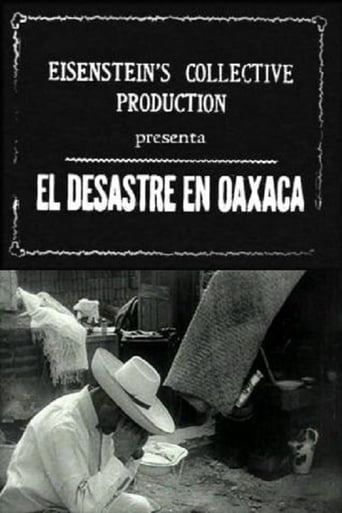 The Disaster in Oaxaca · 1931
The Disaster in Oaxaca
★ 6.21931
MovieDocumentary
Footage of the aftermath of the January 14 1931 earthquake in Oaxaca, Mexico.
 Time in the Sun · 1940
Time in the Sun
★ 6.01940
MovieDocumentary
Second attempt to create a feature film out of the 200,000-plus feet of film which Soviet film-maker Sergei Eisenstein shot during 1931-32 in Mexico for American socialist author Upton Sinclair, his wife and a small company of investors. The projected film, to be called "Que Viva Mexico", was never completed due to exhaustion of funds and Stalin's demand that Eisenstein return to the USSR (he had been absent since 1929). The first attempt at editing the footage, in the USA, resulted in "Thunder Over Mexico", released in 1934. In 1940, Marie Seton, from the UK, acquired some of the footage from the Sinclairs in an attempt to make a better cutting according to Eisenstein's skeletal outline for the proposed film. This film has apparently been lost.
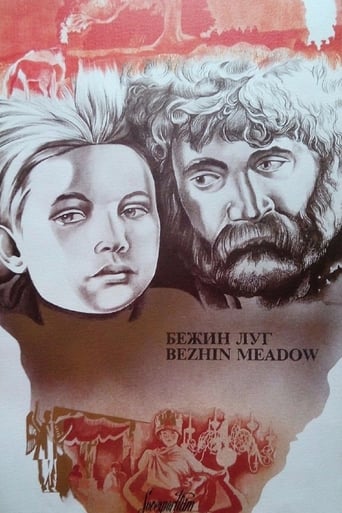 Bezhin Meadow: Sequences from an Unfinished Film · 1968
Bezhin Meadow: Sequences from an Unfinished Film
★ 6.01968
MovieDrama
Bezhin Lug (Bezhin Meadow) was to be a Soviet film about a young farm boy whose father attempts to betray the government for political reasons by sabotaging the year's harvest, and the son's efforts to stop his own father to protect the Soviet state, culminating in the boy's murder and a social uprising. Assigned to Soviet film-maker Sergei Eisenstein, the filming followed the same path as with his previous effort, "Que Viva Mexico", into cost overrun and over-shooting of footage. Furthermore, Eisenstein's usage of forbidden experimental film techniques outraged his government superiors, who ordered the film destroyed before it was even completed. All that survives are the first and last frames of each shot, preserved by Sergei Eisenstein’s wife, Pera Atasheva. The 1967 reconstruction, by Naum Kleiman of the Eisenstein Museum and Sergei Yutkevich of Gosfilmofond, places these frames in order, approximating the original film.
More Like This
Couldn't load this row right now.