Eye Myth
1967 · 1 min · ★ 5.5 · Animation
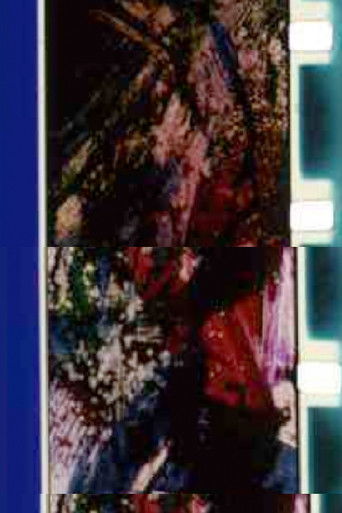
After the title, a white screen gives way to a series of frames suggestive of abstract art, usually with one or two colors dominating and rapid change in the images. Two figures emerge from this jungle of color: the first, a shirtless man, appears twice, coming into focus, then disappearing behind the bursts and patterns of color, then reappearing; the second figure appears later, in the right foreground. This figure suggests someone older, someone of substance. The myth? Preserved by the Academy Film Archive in 2012.
Directed by Stan Brakhage
Your Rating
Make it a double feature
1h 19m togetherBoth from Stan Brakhage.
More from Stan BrakhageSee all →
Christ Mass Sex Dance · 1991Christ Mass Sex Dance
★ 10.01991
MovieMusic
This work, composed of six rolls of superimposed images set to Tenney’s electronic music track ‘Blue Suede’, is a celebration of the balletic restraints of adolescent sexuality — (shaped in this instance) by ‘The Nutcracker Suite’ of Tchaikovsky as well as the gristly roots of Elvis Presley. – S.B.
Window Water Baby Moving · 1959Window Water Baby Moving
★ 6.91959
MovieDocumentary
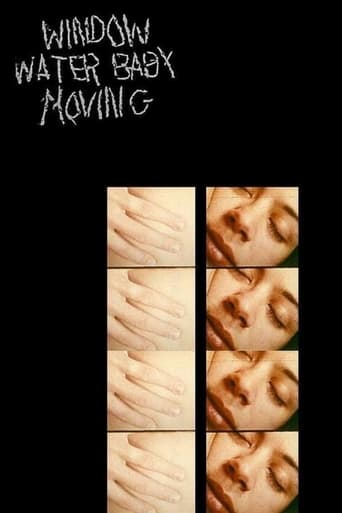
On a winter's day, a woman stretches near a window then sits in a bathtub of water. She's happy. Her lover is nearby; there are close ups of her face, her pregnant belly, and his hands caressing her. She gives birth: we see the crowning of the baby's head, then the birth itself; we watch a pair of hands tie off and cut the umbilical cord. With the help of the attending hands, the mother expels the placenta. The infant, a baby girl, nurses. We return from time to time to the bath scene. By the end, dad's excited; mother and daughter rest.
Sweetgrass · 2009Sweetgrass
★ 6.82009
MovieDocumentary
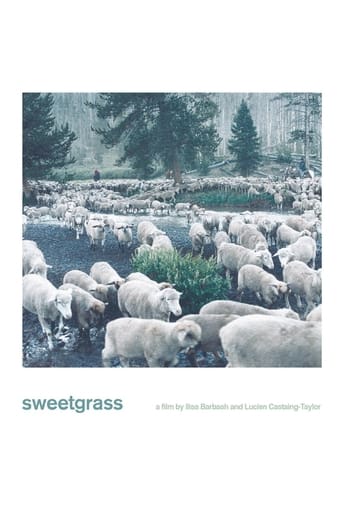
An unsentimental elegy to the American West, Sweetgrass follows the last modern-day cowboys to lead their flocks of sheep up into Montana's breathtaking and often dangerous Absaroka-Beartooth mountains for summer pasture, revealing a world in which nature and culture, animals and humans, vulnerability and violence are all intimately meshed.
Seasons... · 2002Seasons...
★ 6.72002
Movie
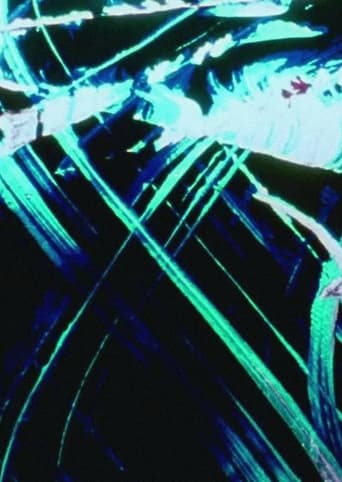
Brakhage's frame-by-frame hand carvings and etchings directly into the film emulsion, sometimes photographically combined with paint, are illuminated by Solomon's optical printing; this footage was then edited by Solomon into a four part 'seasonal cycle'. This film can be considered to be part of a larger, 'umbrella' work by Brakhage entitled «...» . Seasons... is inspired by the colors and textures found in the woodcuts of Hokusai and Hiroshige, and the playful sense of forms dancing in space from the film works of Robert Breer and Len Lye.
Comingled Containers · 1996Comingled Containers
★ 6.51996
Movie
Comingled Containers is an experimental short film by Stan Brakhage. "This 'return to photography' (after several years of only painting film) was made on the eve of cancer surgery - a kind of 'last testament,' if you will… an envisionment of the fleeting complexity of worldly phenomenon."
The Act of Seeing with One's Own Eyes · 1972The Act of Seeing with One's Own Eyes
★ 6.41972
MovieDocumentary
At a morgue, forensic pathologists conduct autopsies of the corpses assigned. "S. Brakhage, entering, WITH HIS CAMERA, one of the forbidden, terrific locations of our culture, the autopsy room. It is a place wherein, inversely, life is cherished, for it exists to affirm that no one of us may die without our knowing exactly why. All of us, in the person of the coroner, must see that, for ourselves, with our own eyes. It is a room full of appalling particular intimacies, the last ditch of individuation. Here our vague nightmare of mortality acquires the names and faces of OTHERS. This last is a process that requires a WITNESS; and what 'idea' may finally have inserted itself into the sensible world we can still scarcely guess, for the CAMERA would seem the perfect Eidetic Witness, staring with perfect compassion where we can scarcely bear to glance." – Hollis Frampton
Dog Star Man · 1965Dog Star Man
★ 6.41965
MovieFantasy
Experimental film following a cycle of seasons as well as the stretch of a single day as a man and his dog slowly ascend a mountain.
Cannibal! The Musical · 1996Cannibal! The Musical
★ 6.41996
MovieComedyWestern
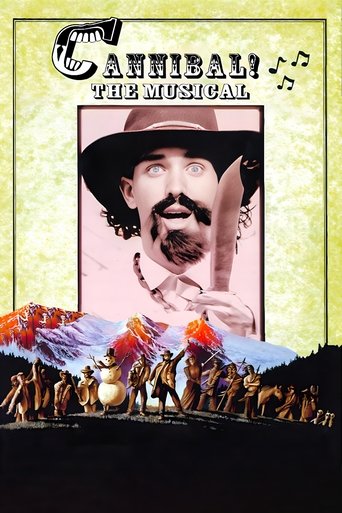
Heading through Colorado Territory in search of gold and women, Alferd Packer and his group of bemused companions find themselves lost, starving and musically inspired by the obstacles they confront along the way, including a die-hard Confederate cyclops, a trio of surly trappers, a tribe of Japanese-speaking "Indians," and ultimately, each other.
The Dante Quartet · 1987The Dante Quartet
★ 6.31987
MovieAnimation
A visual representation, in four parts, of one man's internalization of "The Divine Comedy." Hell is a series of multicolored brush strokes against a white background; the speed of the changing images varies. "Hell Spit Flexion," or springing out of Hell, is on smaller film stock, taking the center of the frame. Montages of color move rapidly with a star and the edge of a lighted moon briefly visible. Purgation is back to full frame; blurs of color occasionally slow down then freeze. From time to time, an image, such as a window or a face, is distinguishable for a moment. In "existence is song," colors swirl then flash in and out of view. Behind the vivid colors are momentary glimpses of volcanic activity.
Dog Star Man: Part I · 1963Dog Star Man: Part I
★ 6.21963
Movie
From a murky landscape, a wooded mountain emerges. We watch the sun. We see a bearded man climbing up the mountain through the snow. He carries an ax, and he's accompanied by a dog. His labors continue. There is no soundtrack. Images rush past - water, trees, and surfaces too close up to distinguish. He struggles. A fire burns. Nature, in long shots and magnified, is formidable and silent. It's tough going; he carries on. In a capillary, blood flows.
Prelude: Dog Star Man · 1962Prelude: Dog Star Man
★ 6.11962
MovieDramaFantasy
A creation myth realized in light, patterns, images superimposed, rapid cutting, and silence. A black screen, then streaks of light, then an explosion of color and squiggles and happenstance. Next, images of small circles emerge then of the Sun. Images of our Earth appear, woods, a part of a body, a nude woman perhaps giving birth. Imagery evokes movement across time. Part of the Dog Star Man series of experimental films.
20 Little Films · 201220 Little Films
★ 6.02012
MovieDocumentary
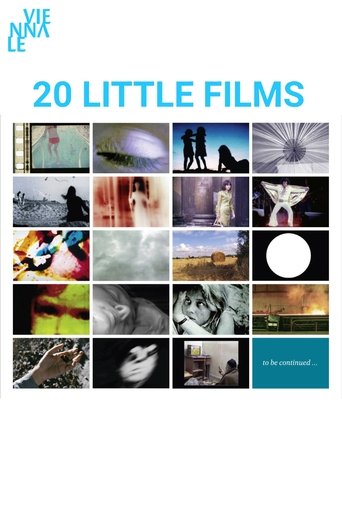
Since 1995, the Viennale has invited renowned directors to create short, one-minute films as personal contributions to the festival. Ranging from home movies to political essays, musical sketches to abstract studies, these “little films” form a unique anthology of cinematic moments. 20 Little Films collects a selection of these works, premiering together for the Viennale’s 50th anniversary at the Locarno Film Festival.
For Marilyn · 1992For Marilyn
★ 6.01992
Movie
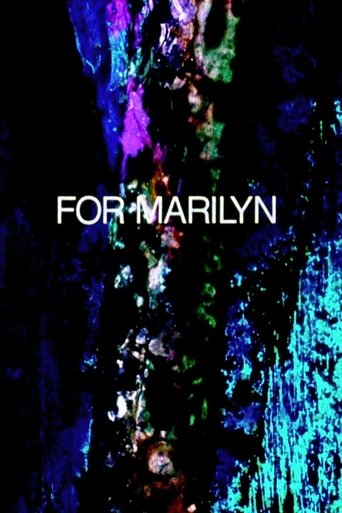
The film is officially untitled, but is referred to by the dedication that appears in place of a title card. It is dedicated to Marilyn Brakhage, the filmmaker's wife. Out of all the 350+ films that Stan Brakhage made, this was his personal favorite.
For Life, Against the War · 1967For Life, Against the War
★ 6.01967
MovieAnimation
First shown on January 30, 1967, FOR LIFE AGAINST THE WAR was an open-call, collective statement from American independent filmmakers disparate in style and sensibility but united by their opposition to the Vietnam War. Part of the protest festival Week of the Angry Arts, the epic compilation film incorporated minute-long segments which were sent from many corners of the country, spliced together and projected. The original presentation of the works was more of an open forum with no curation or selection, and in 2000 Anthology Film Archives preserved a print featuring around 40 films from over 60 submissions.
Cat's Cradle · 1959Cat's Cradle
★ 5.91959
Movie
Images of two women, two men, and a gray cat form a montage of rapid bits of movement. A woman is in a bedroom, another wears an apron: they work with their hands, occasionally looking up. A man enters a room, a woman smiles. He sits, another man sits and smokes. The cat stretches. There are close-ups of each. The light is dim; a filter accentuates red. A bare foot stands on a satin sheet. A woman disrobes. She pets the cat. Preserved by the Academy Film Archive in 2006.
The Extraordinary Child · 1954The Extraordinary Child
★ 5.91954
MovieComedy
The Extraordinary Child applies his developing style to broad slapstick. His friends from the previous films and the director himself play out a riotous farce about an overgrown baby who steals his father’s cigars. Everyone mugs hilariously. The movie could be taken as another example of the Romantic notion of the artist as a monstrous child or misfit, or a parody of the same rather than the personal confessional statement seen so often in these film movements.