Cartoons: The Autobiography of Benjamin Franklin
1974 · 4 min · ★ 10.0
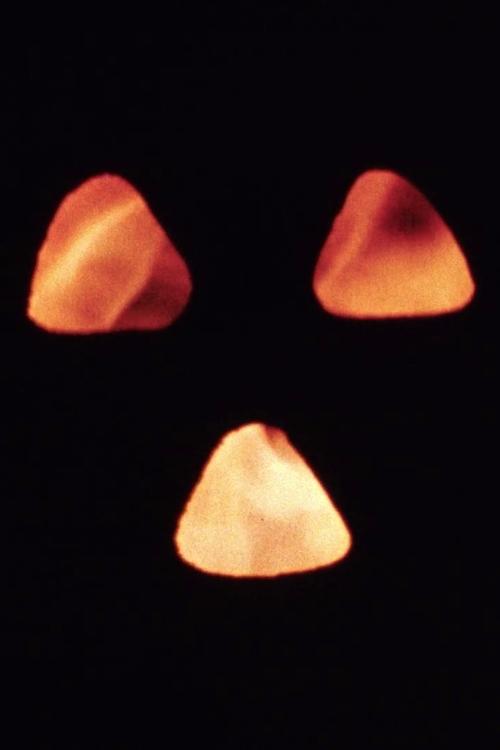
Flickering flames viewed through air vents of a wood burning pot belly stove resemble the shutter of a film projector.
Directed by Bill Brand
Your Rating
More from Bill BrandSee all →
 Cartoons: Before the Fact · 1974
Cartoons: Before the Fact
★ 10.01974
Movie
Made at S.U.N.Y. at Binghamton as a class exercise, filmmaker Saul Levine performs with students who each try to mimic his previously recorded phrase and then try to imitate each other imitating the recording.
 Cartoons: New York State Primaries · 1975
Cartoons: New York State Primaries
★ 10.01975
MovieAnimation
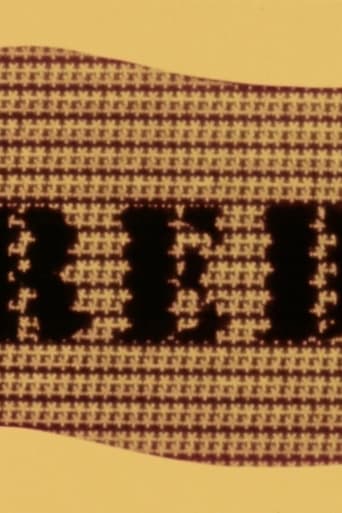
New York State Primaries shows stenciled lettering that dissolve between the words, “red,” “blue,” and “green” but don’t create secondary colors. The film is a response to Saul Levine’s 1972 NOTE: CHICAGO REDS AND BLUES.
 Cartoons: The Central Finger · 1974
Cartoons: The Central Finger
★ 10.01974
Movie
The Central Finger (16mm, silent, 5 1/2 minutes, 1974).
 Cartoons: Still at Work · 1975
Cartoons: Still at Work
★ 10.01975
Movie
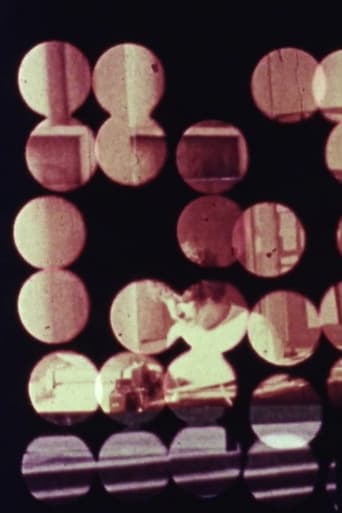
Still at Work, a self-portrait of the artist in his places of work: the studio in Lower Manhattan and Sarah Lawrence College, the school where he taught. The film animates a still photograph through a grid of random dots.
 Cartoons: It Dawn Down · 1974
Cartoons: It Dawn Down
★ 10.01974
Movie
In It Dawn Down an ordinary take-up reel spins to make colorful and delicate patterns even though the film is black and white.
 Split Decision · 1979
Split Decision
★ 10.01979
MovieDramaAnimation
This film is a scrambled narrative that illustrates, in soap opera fashion, life of artists in Lower Manhattan and at the same time dramatizes questions about the nature of filmic representation. Split decision is a boxing term used when the judges divide their votes in finding a winner. In this case the fight is between the two heroes of the film who are seen intermittently in a bar, negotiating a pick-up, and at home, breaking up in a domestic quarrel. The fight is also in the telling, between modes of conventional representation and modes of radical representation - between conventional continuity editing, and abstraction created through computer generated grids. The film features an appearance by Carolee Schneemann and digital imaging from before the era of personal computers.
 Rate of Change · 1972
Rate of Change
★ 8.81972
MovieAnimation
This film has no literal subject, no frames, only slow continuously shifting colours, cycling around the perimeter of the spectrum. The changes are so slow as to be unseen, yet they alter our perception of colour. Part of a trilogy (Acts of Light), which develops a study of pure colour, based on the notion that film is essentially change and not motion.
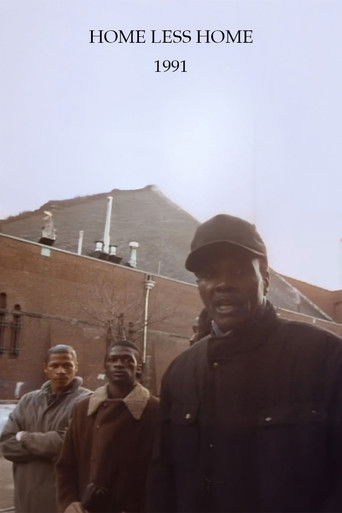 Home Less Home · 1991
Home Less Home
★ 8.01991
MovieDocumentary
People who are homeless reveal homelessness from their own experiences dispelling common misconceptions and prejudices. Told as a personal journey, the film gives a broad analysis of the causes and conditions of homelessness while it analyzes news, TV reports and historical images of poverty. This film presents new ways to look at homelessness, displacing the debate from questions of charity to ones of social justice.
 Huevos a la mexicana · 2018
Huevos a la mexicana
★ 7.52018
Movie
This is my digital/analog contribution to “Xochimilco Treasure Hunting” in Mexico City on the final day of "HAZLO TU MISMO," Do-it-Yourself Independent Analog Film Laboratory Encounter, Sept. 9, 2018.
 Sound Strip/Film Strip · 1972
Sound Strip/Film Strip
★ 3.01972
Movie
Sound Strip / Film Strip is Paul Sharits' first "Locational" work, made in collaboration with Bill Brand. The piece was commissioned for the 1972 opening exhibition of the Contemporary Arts Museum, Houston,Texas. “...Sound Strip / Film Strip consists of four film loops simultaneously projected sideways so that the four images abut one another horizontally. Sharits made each loop by filming colored surfaces, scratching the film, projecting it so that the sprocket holes showed on the screen; he then filmed that projection, scratched the result, and projects that as the final object. The resulting image is a continuous flicker of various color ranges with both actual and ‘virtual’ scratches and sprocket holes running horizontally (normally vertically) across the screen. Thus, Sharits is working with filmic abstraction which employs no image save for that inherent in the medium itself....”
 Home Movies 1971-81 · 1985
Home Movies 1971-81
1985
MovieDocumentary
Home movies shot on Super 8mm by W+B Hein over 10 years.
 Touch Tone Phone Film · 1973
Touch Tone Phone Film
1973
Movie
TOUCH TONE PHONE FILM scrambles the system by which film represents time and motion. In the film, a phone rings and a woman gets up to answer it. Although the event is recorded on film, we only see it as a sliding strip.
 Always Open/Never Closed · 1971
Always Open/Never Closed
1971
Movie
A woman wakes up, gets dressed, makes breakfast and walks down the street. This daily ritual becomes extraordinary seen in a trance-like structure of continuous lap dissolves and continuous spectral color shifts.
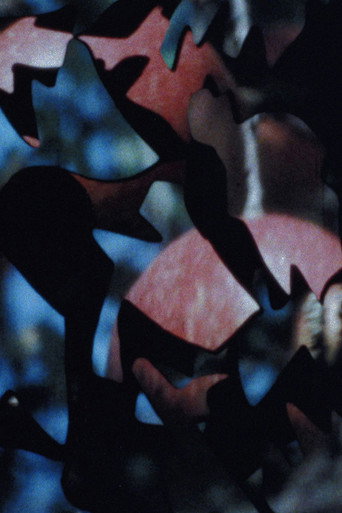 Chuck's Will's Widow · 1982
Chuck's Will's Widow
1982
Movie
Chuck's Will's Widow is a eulogy for my father and mother whose ashes are spread in the Adirondack mountain woods where the film is shot. Visualized through a field of swirling shapes, the fragmented landscapes weave an emotional fabric containing inexplicable personifications and associations.
 Suite: My Father's Leg · 1998
Suite: My Father's Leg
1998
Movie
My Father's Leg is a self-portrait where I imagine the disease and pain that caused my father's death twenty-five years earlier. Having become older than he at his death, I found, in images of my own body complex feelings of love, guilt, grief and regret.
 The Trail to Koskimo: His First Hunt · 1976
The Trail to Koskimo: His First Hunt
1976
Movie
This film chronicles an artistic and personal quest through an assortment of in-camera and optical printing experiments. Shutter effects and swarming dots fragment the filmic surface so the picture oscillates between abstraction and recognition. The soundtrack quotes excerpts from anthropologist Franz Boas’ 1930 text about a Kwakiutl Indian shaman. The story serves as a metaphor for the struggle of the artist practicing a new visual language. In the Boas text, a man relates his learning the ways of a shaman. Doubting the magic in shamanistic practice, he strives to understand traditional methods in order to discover the truth. Though he learns the secrets of his teachers and finds only tricks, he nonetheless becomes a powerful and famous shaman himself. This film is about the desire to master the magic of the image while following a path of doubt and skepticism.
More Like This
Couldn't load this row right now.