Directing
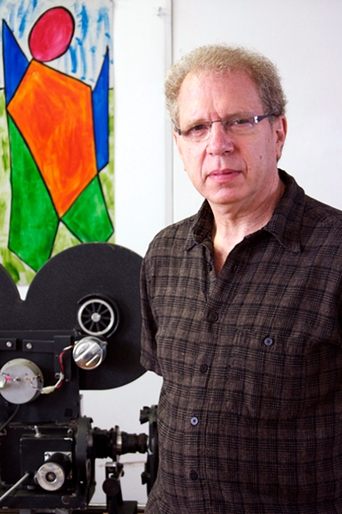
Bill Brand
Born March 27, 1949 · Rochester, New York, USA (age 77)
Bill Brand is a multi-disciplinary artist whose films, public artwork, installations, paintings and works-on-paper have exhibited worldwide in museums, galleries microcinemas and on television. His 1980 Masstransiscope, an animated mural installed in the New York City subway, is in the MTA Arts and Design permanent collection. Bill Brand’s artwork has been featured at Museum of Modern Art, Whitne…
Known For
 Home Movies 1971-81 · 1985
Home Movies 1971-81
1985
MovieDocumentary
Home movies shot on Super 8mm by W+B Hein over 10 years.
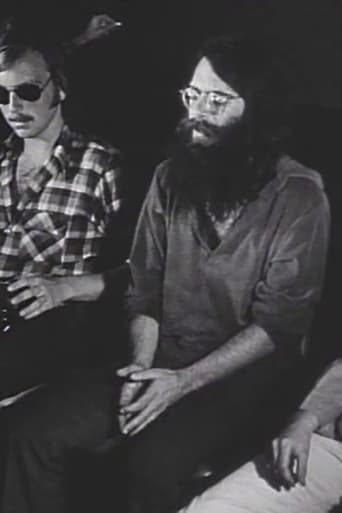 Cartoons: Before the Fact · 1974
Cartoons: Before the Fact
★ 10.01974
Movie
Made at S.U.N.Y. at Binghamton as a class exercise, filmmaker Saul Levine performs with students who each try to mimic his previously recorded phrase and then try to imitate each other imitating the recording.
 Sound Strip/Film Strip · 1972
Sound Strip/Film Strip
★ 3.01972
Movie
Sound Strip / Film Strip is Paul Sharits' first "Locational" work, made in collaboration with Bill Brand. The piece was commissioned for the 1972 opening exhibition of the Contemporary Arts Museum, Houston,Texas. “...Sound Strip / Film Strip consists of four film loops simultaneously projected sideways so that the four images abut one another horizontally. Sharits made each loop by filming colored surfaces, scratching the film, projecting it so that the sprocket holes showed on the screen; he then filmed that projection, scratched the result, and projects that as the final object. The resulting image is a continuous flicker of various color ranges with both actual and ‘virtual’ scratches and sprocket holes running horizontally (normally vertically) across the screen. Thus, Sharits is working with filmic abstraction which employs no image save for that inherent in the medium itself....”
 Rate of Change · 1972
Rate of Change
★ 8.81972
MovieAnimation
This film has no literal subject, no frames, only slow continuously shifting colours, cycling around the perimeter of the spectrum. The changes are so slow as to be unseen, yet they alter our perception of colour. Part of a trilogy (Acts of Light), which develops a study of pure colour, based on the notion that film is essentially change and not motion.
 Home Less Home · 1991
Home Less Home
★ 8.01991
MovieDocumentary
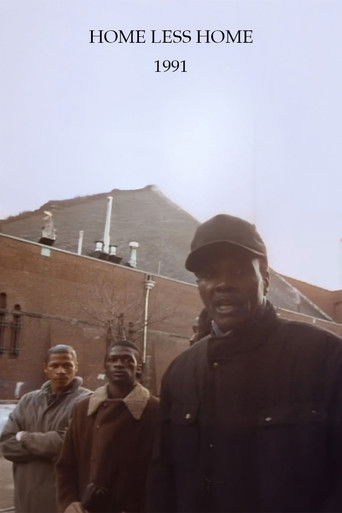
People who are homeless reveal homelessness from their own experiences dispelling common misconceptions and prejudices. Told as a personal journey, the film gives a broad analysis of the causes and conditions of homelessness while it analyzes news, TV reports and historical images of poverty. This film presents new ways to look at homelessness, displacing the debate from questions of charity to ones of social justice.
 Cartoons: New York State Primaries · 1975
Cartoons: New York State Primaries
★ 10.01975
MovieAnimation
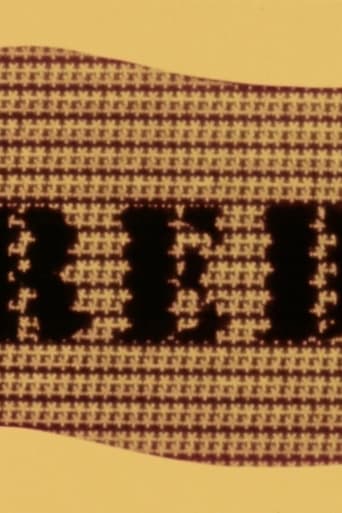
New York State Primaries shows stenciled lettering that dissolve between the words, “red,” “blue,” and “green” but don’t create secondary colors. The film is a response to Saul Levine’s 1972 NOTE: CHICAGO REDS AND BLUES.
 Touch Tone Phone Film · 1973
Touch Tone Phone Film
1973
Movie
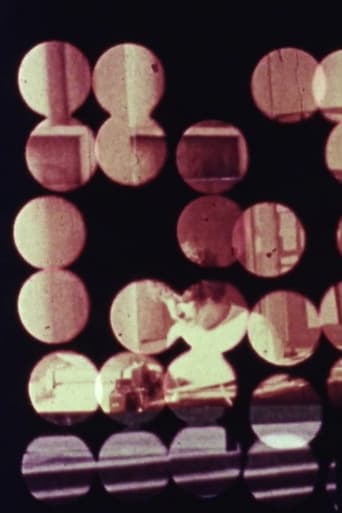
TOUCH TONE PHONE FILM scrambles the system by which film represents time and motion. In the film, a phone rings and a woman gets up to answer it. Although the event is recorded on film, we only see it as a sliding strip.
 Huevos a la mexicana · 2018
Huevos a la mexicana
★ 7.52018
Movie
This is my digital/analog contribution to “Xochimilco Treasure Hunting” in Mexico City on the final day of "HAZLO TU MISMO," Do-it-Yourself Independent Analog Film Laboratory Encounter, Sept. 9, 2018.
Filmography
Sort