Zorns Lemma

Zorns Lemma

NR 1970 · 60 min · ★ 6.4 · Documentary

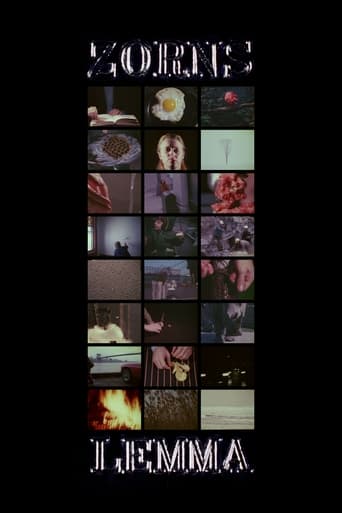
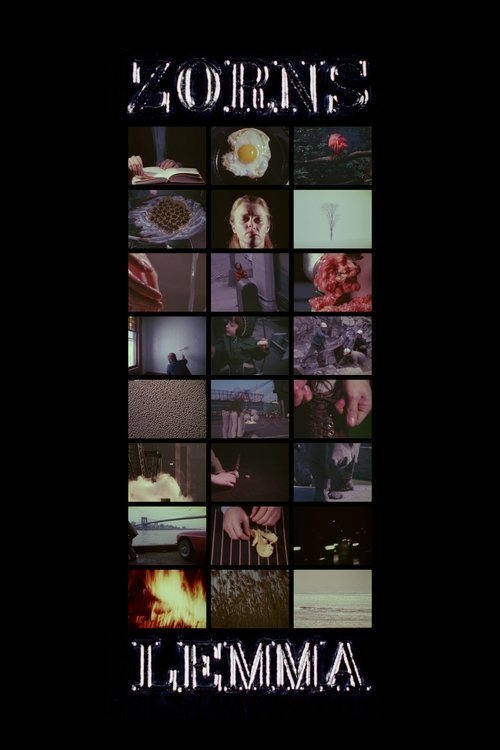
Zorns Lemma is a 1970 American structuralist film by Hollis Frampton. It is named after Zorn's lemma (also known as the Kuratowski–Zorn lemma), a proposition of set theory formulated by mathematician Max Zorn in 1935. Zorns Lemma is prefaced with a reading from an early grammar textbook. The remainder of the film, largely silent, shows the viewer an evolving 24-part "alphabet" (where i & j and u & v are interchanged) which is cycled through, replaced and expanded upon. The film's conclusion shows a man, woman and dog walking through snow as several voices read passages from On Light, or the Ingression of Forms by Robert Grosseteste.

Directed by Hollis Frampton

Your Rating

Where to Watch

Streaming

Criterion Channel

Cast

More from Hollis FramptonSee all →

Grand Opera: An Historical RomanceGrand Opera: An Historical Romance · 1979
Grand Opera: An Historical Romance
7.51979
MovieDocumentary
Grand Opera marks a stock-taking of Benning's work and his life, presenting a personal and artistic autobiography woven together with a series of events dealing with the historical development of the number pi, Benning's travels, and homages to Michael Snow, Hollis Frampton, George Landow (Owen Land), and Yvonne Rainer.
InformationInformation · 1966
Information
7.01966
Movie
Frampton on Information: "Hypothetical 'first film' for a synthetic tradition constructed from scratch on reasonable principles, given: 1) camera; 2) rawstock; 3) a single bare lightbulb. I admit to having made a number of splices."
Artificial LightArtificial Light · 1969
Artificial Light
6.41969
Movie
Artificial Light repeats variations on a single filmic utterance twenty times. The same phrase is a series of portrait shots of a group of young New York artists talking, drinking wine, laughing, smoking, informally. The individual portrait-shots follow each other with almost academic smoothness in lap-dissolves ending in two shots of the entire group followed by a dolly shot into a picture of the moon... There is a chasm between the phrase and its formal inflections. That chasm is intellectual as well as formal. Frampton loves an outrageous hypothesis; his films, all of them, take the shape of logical formulae. -- P. Adams Sitney, Film Culture Reader
PalindromePalindrome · 1969
Palindrome
6.01969
MovieAnimation
While working at a photo lab, Frampton found that the waste at both ends of the rolls of processed film—where chemicals worked on the emulsion through clips used to attach the film to the machine—produced images far too interesting to be discarded. For Palindrome, Frampton selected images which he described as “tending towards the biomorphic,” resembling abstract surrealist painting. However, the rigid palindromic structure that Frampton imposes on the images—a motorized sequence based on “twelve variations on each of forty congruent phrases”—deviates from the subjective aesthetic of the expressive, demonstrating Frampton’s interest in the “generative power” of films composed by rules and principles.
Surface TensionSurface Tension · 1968
Surface Tension
5.51968
Movie
A film in three parts: a man talking while a telephone rings, a walking tour of New York, and a goldfish swimming.
WavelengthWavelength · 1967
Wavelength
5.41967
MovieDrama
In a Lower Manhattan industrial loft, a camera very slowly zooms into a photograph on a wall while various people occasionally enter and exit.
Winter SolsticeWinter Solstice · 1974
Winter Solstice
5.11974
MovieDocumentary
Shot at a steel mill, Winter Solstice is full of outpourings of fire, of smoke, of sparks, of molten metal — all erupting against an otherwise black background in an activated pictorial space.
HeterodyneHeterodyne · 1967
Heterodyne
5.01967
MovieDocumentaryAnimation
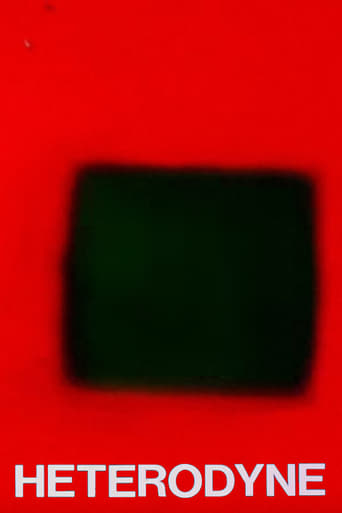
“Geometric animation made entirely by sculptural methods: cutting, punching, welding colored leader. HETERODYNE is related to some of my other work as RNA to a protein or polypeptide. It was made in abject (if blissful) ignorance of Paul Sharits’ early work.” –Hollis Frampton
Pan 3Pan 3 · 1974
Pan 3
5.01974
MovieDocumentary
A journey through a field of corn.
LemonLemon · 1969
Lemon
4.91969
MovieDocumentary
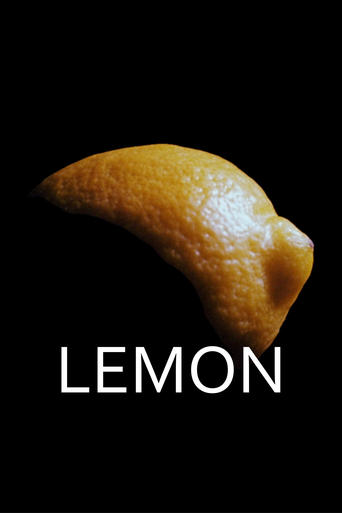
Light begins to illuminate the small, nipple-like end of a lemon on the right edge of the frame and gradually spreads until the entire lemon is clearly visible. Then the light recedes across the frame.
Process RedProcess Red · 1966
Process Red
4.91966
Movie
An experimental short film by Hollis Frampton of contrasting colours.
Gloria!Gloria! · 1979
Gloria!
4.91979
MovieDocumentary
In GLORIA! Frampton juxtaposes nineteenth-century concerns with contemporary forms through the interfacing of a work of early cinema with a videographic display of textual material. These two formal components (the film and the texts) in turn relate to a nineteenth-century figure, Frampton's maternal grandmother, and to a twentieth-century one, her grandson (filmmaker Frampton himself). In attempting to recapture their relationship, GLORIA! becomes a somewhat comic, often touching meditation on death, on memory and on the power of image, music and text to resurrect the past.
SnowblindSnowblind · 1968
Snowblind
4.81968
Movie
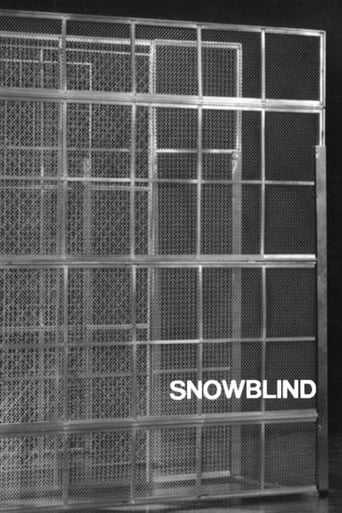
"Homage to Michael Snow's environmental sculpture 'Blind.' The film proposes analogies, in imitation of three historic montage styles, for three perceptual modes mimed by that work." -HF
Pan 4Pan 4 · 1974
Pan 4
4.71974
MovieDocumentary
A series of papers flutter in the wind.
Pan 1Pan 1 · 1974
Pan 1
4.41974
MovieDocumentary
A pendulum swings by until it comes to a complete stop.
LessLess · 1973
Less
4.11973
Movie
"Near the end of 1973, Frampton realized that he had not finished a single film over the course of a year. He promptly conceived and executed LESS, a doubly punning work in which a minimalist Frampton generates a twenty-four frame (one-second) loop of the incremental blacking out of a nude image by photographer Les Krims." - Bruce Jenkins

More Like This

Couldn't load this row right now.

Rate this film

Your ratings make Midnight smarter