Directing
Robert Huot
Some painters and sculptors approach our art with a kind of chauvinistic arrogance. Their use of film, however interesting as documentation, is fundamentally exploitative. Robert Huot has been one of the most inventive and rigorous of the younger generation of radical painters. He brings the same attributes to film, along with an inquisitiveness that is by no means cautious. He tries, not to explo…
Known For
 Zorns Lemma · 1970
Zorns Lemma
★ 6.41970
MovieDocumentary
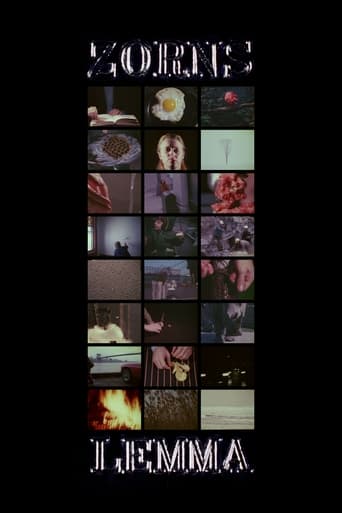
Zorns Lemma is a 1970 American structural film by Hollis Frampton. It is named after Zorn's lemma (also known as the Kuratowski–Zorn lemma), a proposition of set theory formulated by mathematician Max Zorn in 1935. Zorns Lemma is prefaced with a reading from an early grammar textbook. The remainder of the film, largely silent, shows the viewer an evolving 24-part "alphabet" (where i & j and u & v are interchanged) which is cycled through, replaced and expanded upon. The film's conclusion shows a man, woman and dog walking through snow as several voices read passages from On Light, or the Ingression of Forms by Robert Grosseteste.
 Scratch · 1967
Scratch
1967
Movie
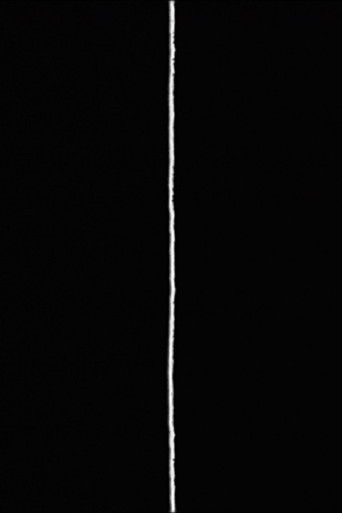
LEADER and SCRATCH are extensions of Huot's early interest in minimalism. They are successful in reducing the number of filmic variables so completely that essential qualities and potentials of the materials of film can be felt. While SCRATCH is nothing more than eleven minutes of dark leader with a continuous handmade scratch, the resulting imagery varies a good deal, depending on how deeply Huot dug into the emulsion: when the scratch is shallow, for example, it seems to bead and move up through the image; when the scratch is deep, it seems to remain within the frame, vibrating horizontally.
 Spray · 1967
Spray
1967
MovieAnimation
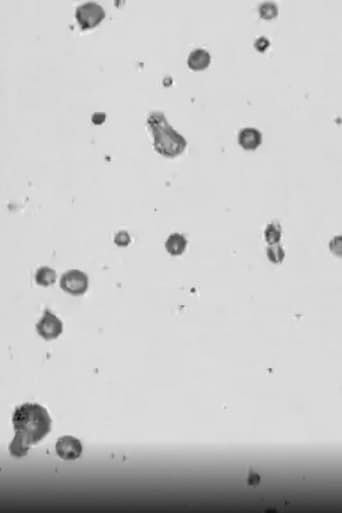
“An extraordinary ebbing and flowing, dotting and pulsing ‘abstract’ field film. The filmmaker-painter Huot painted this film by spray painting a 12 minute length of clear film. When projected this single gesture contains a fascinating atomized space.”—Michael Snow
 Manual of Arms · 1966
Manual of Arms
★ 5.01966
MovieDocumentary
In this "fourteen-part drill for the camera," Frampton created a portrait gallery of his art-world friends engaging in a variety of ordinary activities.
 Black and White Film · 1969
Black and White Film
1969
MovieRomance
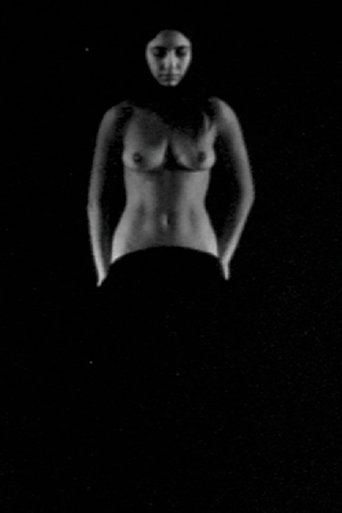
“For Black and White Film, Huot created his own photographic imagery for the first time. After a few moments of darkness, a young woman (Sheila Raj) lowers a covering of some kind, slowly revealing her naked body. She reaches outside the circle of light, which illuminates only her silvery form, scoops up dark paint, and, beginning with her feet, gradually paints her entire body. When she has become invisible except for the faint sheen of the paint, she drops her arms, looks straight ahead, and the film fades to total darkness. The serenity of the film, which is structurally reflected by Huot’s presentation of the action from a single position in a single take, its sensuality, and the aura of ritual it creates (Raj always moves in a formal way and, except when she needs to look for the paint, looks modestly down) make Black and White Film a quietly haunting work.”—Scott MacDonald, “The Films of Robert Huot: 1967 to 1972”, Quarterly Review of Film Studies, Summer 1980.
 One Year · 1970
One Year
★ 6.01970
Movie
One Year (1970) is a series of forty-nine rolls of 16mm film, nearly all of them unedited except in the camera, and all of them silent. The flares at the beginnings and ends of the rolls are not eliminated and, as a result, become a form of visual punctuation. The rolls are arranged so that, as title implies, we move gradually through an entire year, from winter to winter. The most interesting aspect of the overall organization, however, involves the fact that the first quarter of One Year (1970) is very different from the final three-quarters: this change reflects a fundamental alteration in Huot's approach to film.
 Cum Foo · 1981
Cum Foo
1981
Movie
A punk spoof with music by Georg Deitl, lyrics by Robert Huot, performed by George A and The Super Connie featuring Bobby Beethoven. Plus electronic music by Brendt Conrad. Starring the beautiful Ama Zeena and sinister Dick Darth.
 Snow · 1971
Snow
1971
Movie
A section from ROLLS: 1971, which I feel stands well on its own. The continuous field of falling snow appears to break into three planes or zones of different density and speed. I think of Snow in some sense as nature's answer to SPRAY. - Robert Huot
Filmography
Sort