Hapax Legomena II: Poetic Justice

Hapax Legomena II: Poetic Justice

1972 · 32 min · ★ 5.2 · Romance, Documentary

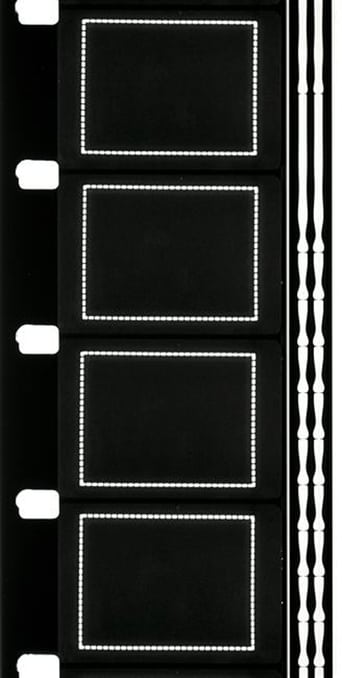
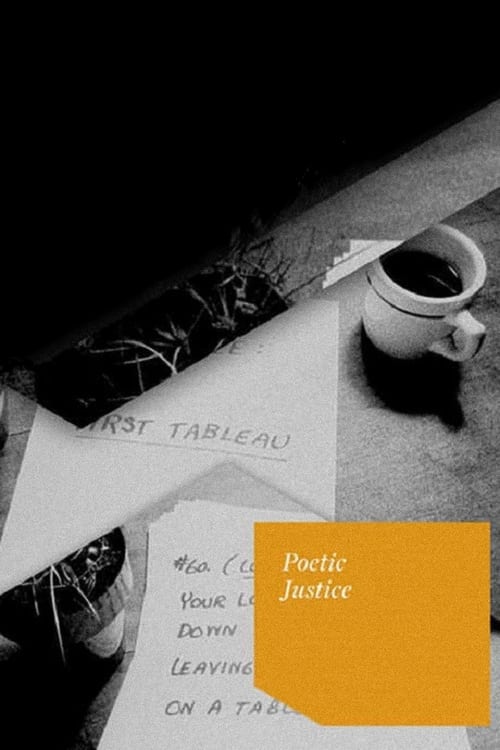
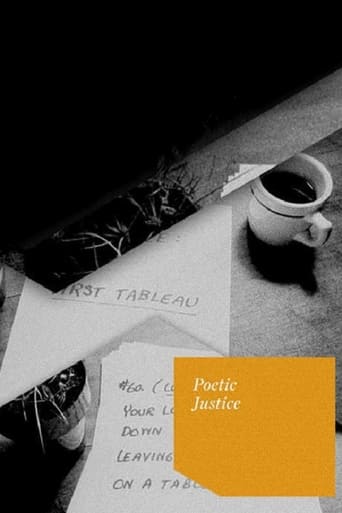
Poetic Justice presents the viewer with an ordinary domestic scene: a stack of papers, a cup of coffee, and a potted cactus on a table. The sheets of paper compose a script that provides handwritten, frame-by-frame instructions for a film that unfolds only in the mind of the viewer.

Directed by Hollis Frampton

Your Rating

Where to Watch

Streaming
Criterion Channel

Make it a double feature

1h 32m together
Hapax Legomena II: Poetic Justice
Zorns Lemma

Both from Hollis Frampton.

Hapax Legomena 7-Part SeriesSee all →
Hapax Legomena I: (nostalgia)Hapax Legomena I: (nostalgia) · 1971
Hapax Legomena I: (nostalgia)
★ 6.61971
MovieDrama
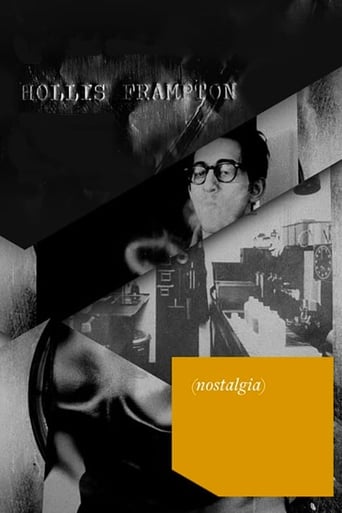
Michael Snow narrates a series of Hollis Frampton's photographs (speaking as Frampton, in the first person)—as each picture catches fire on a hot plate.
Hapax Legomena III: Critical MassHapax Legomena III: Critical Mass · 1971
Hapax Legomena III: Critical Mass
★ 6.21971
MovieDrama
A man and a woman have been living together for six months. After disappearing for two days, the man returns and acts as if nothing has happened, refusing to say where he was.
Hapax Legomena IV: Travelling MatteHapax Legomena IV: Travelling Matte · 1971
Hapax Legomena IV: Travelling Matte
★ 6.41971
Movie
“This film metaphors an entire human life: birth, sex, death – the framing device is the fingers and palm of the maker’s hand, wherein others only attempt to read the future.” – Stan Brakhage
Hapax Legomena V: Ordinary MatterHapax Legomena V: Ordinary Matter · 1972
Hapax Legomena V: Ordinary Matter
★ 6.61972
MovieDocumentary
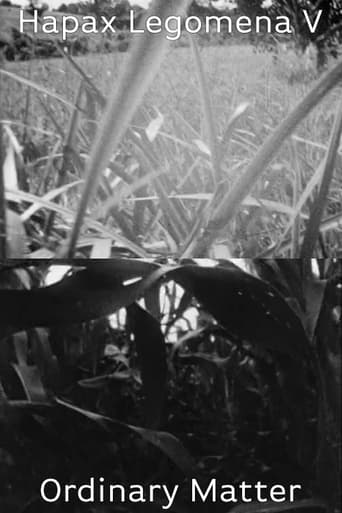
"A vision of a journey, during which the eye of the mind drives headlong through Salisbury Cloister (a monument to enclosure), Brooklyn Bridge (a monument to connection), Stonehenge (a monument to the intercourse between consciousness and LIGHT)... visiting along the way diverse meadows, barns, waters where I now live; and ending in the remembered cornfields of my childhood. The soundtrack annexes, as mantram, the Wade-Giles syllabary of the Chinese language." (H.F.)
Hapax Legomena VI: Remote ControlHapax Legomena VI: Remote Control · 1972
Hapax Legomena VI: Remote Control
★ 7.91972
Movie
“A ‘baroque’ summary of film’s historic internal conflicts, chiefly those between narrative and metric/plastic montage; and between illusionist and graphic space.” – HF
Hapax Legomena VII: Special EffectsHapax Legomena VII: Special Effects · 1972
Hapax Legomena VII: Special Effects
★ 7.81972
Movie
“The frame itself, which divides what is present to consciousness from what is absolutely elsewhere, is tempered here by the breath, tremor, heartbeat of the perceiver. People this given space, if you will, with images of your own devising.” – HF

More from Hollis FramptonSee all →

Hapax Legomena VII: Special EffectsHapax Legomena VII: Special Effects · 1972
Hapax Legomena VII: Special Effects
★ 7.81972
Movie
“The frame itself, which divides what is present to consciousness from what is absolutely elsewhere, is tempered here by the breath, tremor, heartbeat of the perceiver. People this given space, if you will, with images of your own devising.” – HF
Grand Opera: An Historical RomanceGrand Opera: An Historical Romance · 1979
Grand Opera: An Historical Romance
★ 7.51979
MovieDocumentary
Grand Opera marks a stock-taking of Benning's work and his life, presenting a personal and artistic autobiography woven together with a series of events dealing with the historical development of the number pi, Benning's travels, and homages to Michael Snow, Hollis Frampton, George Landow (Owen Land), and Yvonne Rainer.
Hapax Legomena V: Ordinary MatterHapax Legomena V: Ordinary Matter · 1972
Hapax Legomena V: Ordinary Matter
★ 6.61972
MovieDocumentary
"A vision of a journey, during which the eye of the mind drives headlong through Salisbury Cloister (a monument to enclosure), Brooklyn Bridge (a monument to connection), Stonehenge (a monument to the intercourse between consciousness and LIGHT)... visiting along the way diverse meadows, barns, waters where I now live; and ending in the remembered cornfields of my childhood. The soundtrack annexes, as mantram, the Wade-Giles syllabary of the Chinese language." (H.F.)
Zorns LemmaZorns Lemma · 1970
Zorns Lemma
★ 6.41970
MovieDocumentary
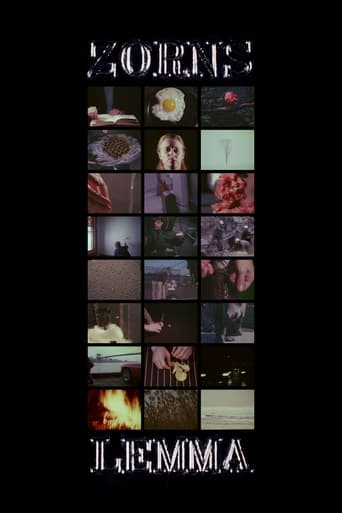
Zorns Lemma is a 1970 American structural film by Hollis Frampton. It is named after Zorn's lemma (also known as the Kuratowski–Zorn lemma), a proposition of set theory formulated by mathematician Max Zorn in 1935. Zorns Lemma is prefaced with a reading from an early grammar textbook. The remainder of the film, largely silent, shows the viewer an evolving 24-part "alphabet" (where i & j and u & v are interchanged) which is cycled through, replaced and expanded upon. The film's conclusion shows a man, woman and dog walking through snow as several voices read passages from On Light, or the Ingression of Forms by Robert Grosseteste.
Hapax Legomena IV: Travelling MatteHapax Legomena IV: Travelling Matte · 1971
Hapax Legomena IV: Travelling Matte
★ 6.41971
Movie
“This film metaphors an entire human life: birth, sex, death – the framing device is the fingers and palm of the maker’s hand, wherein others only attempt to read the future.” – Stan Brakhage
PalindromePalindrome · 1969
Palindrome
★ 6.01969
MovieAnimation
While working at a photo lab, Frampton found that the waste at both ends of the rolls of processed film—where chemicals worked on the emulsion through clips used to attach the film to the machine—produced images far too interesting to be discarded. For Palindrome, Frampton selected images which he described as “tending towards the biomorphic,” resembling abstract surrealist painting. However, the rigid palindromic structure that Frampton imposes on the images—a motorized sequence based on “twelve variations on each of forty congruent phrases”—deviates from the subjective aesthetic of the expressive, demonstrating Frampton’s interest in the “generative power” of films composed by rules and principles.
WavelengthWavelength · 1967
Wavelength
★ 5.41967
MovieDrama
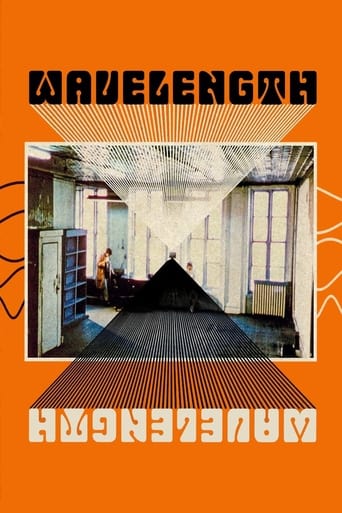
In a Lower Manhattan industrial loft, a camera very slowly zooms into a photograph on a wall while various people occasionally enter and exit.
Manual of ArmsManual of Arms · 1966
Manual of Arms
★ 5.01966
MovieDocumentary
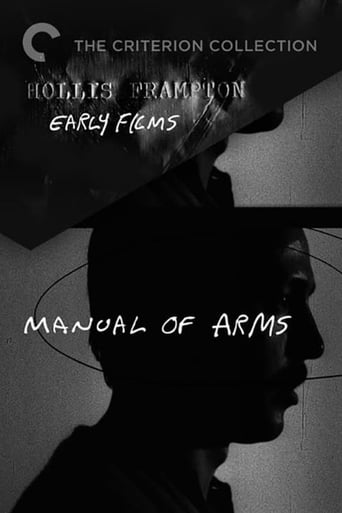
In this "fourteen-part drill for the camera," Frampton created a portrait gallery of his art-world friends engaging in a variety of ordinary activities.
HeterodyneHeterodyne · 1967
Heterodyne
★ 5.01967
MovieDocumentaryAnimation
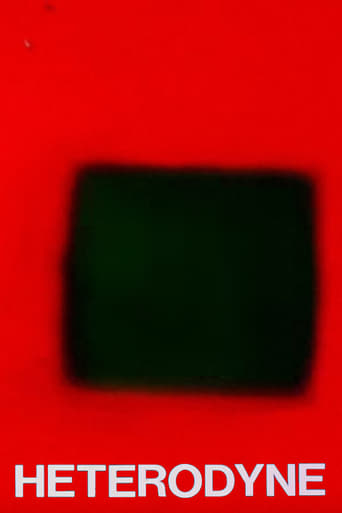
“Geometric animation made entirely by sculptural methods: cutting, punching, welding colored leader. HETERODYNE is related to some of my other work as RNA to a protein or polypeptide. It was made in abject (if blissful) ignorance of Paul Sharits’ early work.” –Hollis Frampton
LemonLemon · 1969
Lemon
★ 4.91969
MovieDocumentary
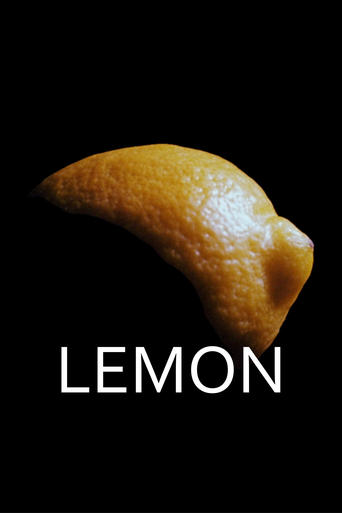
Light begins to illuminate the small, nipple-like end of a lemon on the right edge of the frame and gradually spreads until the entire lemon is clearly visible. Then the light recedes across the frame.
SnowblindSnowblind · 1968
Snowblind
★ 4.81968
Movie
"Homage to Michael Snow's environmental sculpture 'Blind.' The film proposes analogies, in imitation of three historic montage styles, for three perceptual modes mimed by that work." -HF
Pan 4Pan 4 · 1974
Pan 4
★ 4.71974
MovieDocumentary
A series of papers flutter in the wind.
Pan 1Pan 1 · 1974
Pan 1
★ 4.41974
MovieDocumentary
A pendulum swings by until it comes to a complete stop.
Pan 698Pan 698 · 1974
Pan 698
★ 3.91974
MovieDocumentary
The camera pans across a field of flowers at extreme speeds.
Home Movies 1971-81Home Movies 1971-81 · 1985
Home Movies 1971-81
1985
MovieDocumentary
Home movies shot on Super 8mm by W+B Hein over 10 years.
Notes on the Buffalo Conference: “Autobiography in American Independent Cinema”Notes on the Buffalo Conference: “Autobiography in American Independent Cinema” · 1973
Notes on the Buffalo Conference: “Autobiography in American Independent Cinema”
1973
MovieDocumentary
During the 1970s I shot, helped to make, or commissioned about ten document films, mainly about film-makers. This film is one of them. It was made with Dan Ochiva, who acted as cameraman on about half of the footage. I shot the rest, and then edited the film. It is a record of a conference held at the State University of New York at Buffalo on March 22-25, 1973. Among the participants filmed were Gerald O'Grady (who organized the conference), Will Hindle, Stan Brakhage, Jonas Mekas, Robert Creeley, Bruce Baillie, Scott Bartlett, Hollis Frampton, Ken Jacobs, Ed Pincus, Stan Vanderbeek, Ed Emshwiller, Sally Dixon, James Cox. This footage will eventually become part of my film PEOPLE, PLACES, THE 1970S. –R. H.

More Like This

Couldn't load this row right now.

Rate this film

Your ratings make Midnight smarter