My Mother Wang Pei Ying

My Mother Wang Pei Ying

2011 · 68 min · Documentary

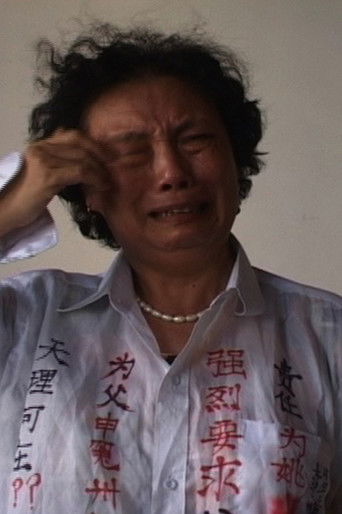
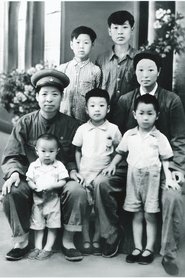
Wang Peiying, a widow with seven children, was a worker at the Ministry of Railways. The famine precipitated by the Great Leap Forward, which killed perhaps 30 million people by the early 1960s, had horrified her, and as political turmoil began again only a few years later, she publicly called on China’s leader, Mao Zedong, to take responsibility for his mistakes and resign. Ms. Wang was sent to a psychiatric hospital and drugged. Released and paraded around the capital, she refused to recant. Instead, she repeated her accusations. Her jaw was broken to stop her from talking. After a mass trial at the Workers’ Stadium on Jan. 27, 1970, she was executed.

Directed by Hu Jie

Your Rating

Make it a double feature

2h 14m together

My Mother Wang Pei Ying

Though I Am Gone

Both from Hu Jie.

More from Hu JieSee all →
Garden in HeavenGarden in Heaven · 2007
Garden in Heaven
★ 10.02007
MovieDocumentary
By following the case of Huang Jing, a woman teacher who died of date rape, this documentary captures changes in China between 2003 and 2005, before and after the injunction to respect and protect human rights was incorporated into the constitution. By highlighting grassroots activity by women, the film illustrates awareness of human rights, women’s struggle against judicial corruption, and women taking action against domestic violence in China.
The East Wind State FarmThe East Wind State Farm · 2010
The East Wind State Farm
★ 9.02010
MovieDocumentary
In 1957, two hundred teachers, students, and cadres were labeled as "Rightists" for voicing criticism of the Communist Party and sent to the East Wind State Farm in southwest China. As part of China's disastrous Great Leap Forward, these inmates were forced to take part in ill-conceived deforestation, agricultural and industrial projects that led to wide-scale famine. Later they endured the Cultural Revolution when their camp was visited by large groups of "sent-down" youth from the cities. After 21 years of "remolding," the "Rightists" were finally "rehabilitated" in 1978 and allowed to leave in 1978. THE EAST WIND STATE FARM re-examines the tragic events of Chinese modern history during the height of Maoist rule. Director Hu Jie collects dozens of extensive interviews with both inmates and staff who served through three decades of the camp's existence.
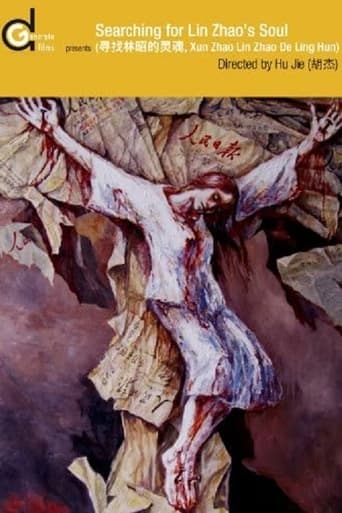
Searching for Lin Zhao's SoulSearching for Lin Zhao's Soul · 2004
Searching for Lin Zhao's Soul
★ 8.72004
MovieDocumentary
This landmark documentary reveals the tragic life of a gifted young woman who was executed for speaking out during the height of Chairman Mao’s rule.
SparkSpark · 2013
Spark
★ 8.02013
MovieDocumentary
Spark was an underground publication that emerged in Gansu province in 1960, and was centered on the ongoing famine and the Great Leap Forward. Ultimately, 43 people, including the Rightist teachers and students who were connected with the publication, the peasants and the rural cadres who sympathized with them, were arrested and given long prison terms. Among them, three key figures were executed during the Cultural Revolution.
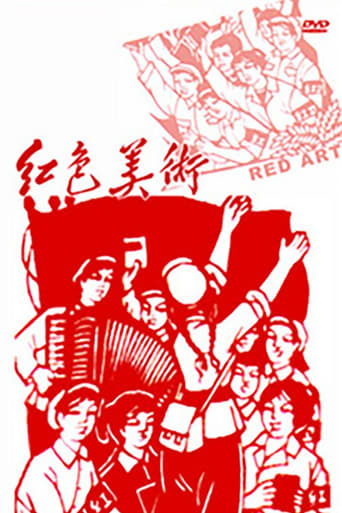
Red ArtRed Art · 2008
Red Art
★ 8.02008
MovieDocumentary
The launch and development of the Great Proletarian Cultural Revolution not only has a series of CCP Central Committee documents that have promoted wave after wave of movements, but also has various propaganda methods. A large number of different types of literary and artistic products have been produced in a collective form and with the input of the State. As a weapon of revolutionary struggle, works of art are important representatives of this period. Art was a tool for the Cultural Revolution; it fully embodies its aesthetic characteristics, actively cooperating with the development of various movements and the popularization of ideas. It has cultivated the values ​​and visual experience of a generation of Chinese people — the paintings of the Cultural Revolution have been regarded as treasures by Chinese collectors. This film shows the characteristics of the Cultural Revolution paintings through a large number of paintings, as well as the bloody violence and despotism behind them.
Though I Am GoneThough I Am Gone · 2006
Though I Am Gone
★ 7.52006
MovieDocumentary
Filmmaker Hu Jie uncovers the tragic story of a teacher beaten to death by her students during the Cultural Revoution. In 1966, the Cultural Revolution exploded throughout China, as Mao's Red Guards persecuted suspected Rightists. Bian Zhongyun, the vice principal of a prestigious school in Beijing, was beaten to death by her own students, becoming one of the first victims of the revolutionary violence that would engulf the entire nation.
The Epic Of The Central PlainsThe Epic Of The Central Plains · 2006
The Epic Of The Central Plains
★ 7.02006
MovieDocumentary
In the late 1980s and early 1990s, in an attempt to stop the spread of AIDS, the Chinese government sought a “purer” blood supply from its rural population. Burdened by agricultural taxes and rising costs of education and health care, many peasants sold blood to state and private blood-collectors. Due to lack of sanitary control, a large number of blood-sellers were infected with HIV. Starting from the mid-1990s, AIDS villages multiplied.
MigrationMigration · 1995
Migration
1995
MovieDocumentary
A group of ancient Tibetan nomads live in the Qilian Mountains in western China. Their home is a tent made of yak hair. They change their location with the seasons — to allow their cattle and sheep to eat the best grass, while protecting the vegetation of the pasture. They stick to their traditional beliefs. The women chant scriptures from time to time while turning prayer wheels. In the evening, devout rituals are performed in front of small portraits of the Panchen Lama and the Dalai Lama. During migration, the families help each other pack their belongings and load them onto yaks; they ride horses, sing pastoral songs, and drive cattle and sheep along the ancient nomadic route. This film documents their journey — from the spring to the autumn. It is a spiritual and a practical life: Sheep are exchanged for yaks, wool for tea, fried noodles for money. Every cloud over the mountain has a divine nature; the sun and the moon are the Panchen Lama and the Dalai Lama. (Shot June 1995.)
The Woman MatchmakerThe Woman Matchmaker · 2003
The Woman Matchmaker
2003
MovieDocumentary
In order to find such a fittingly inspiring matchmaker, the director visited nearly 10 matchmakers and finally selected the matchmaker in the film. The director then followed the matchmaker and witnessed the vicissitudes of life. In addition to the land, there is no form of art that can describe the heaviness of life and emotion. (Shot August 1995)
Holy LightHoly Light · 1998
Holy Light
1998
MovieDocumentary
The melody of the hymn echoes in the old streets and alleys of the city. This is strange in a country that regards religion as a spiritual opium. The small, messy street was full of old people, and they began to pray with the sound of the room on the street. On the roof, a simple cross gleamed in the sun. During the Cultural Revolution, Christianity was completely eradicated. In China's political environment, Christianity has always been regarded as an extremely reactionary and evil thing, and openly believing in God would bring prison sentences. After the reform and opening up, Christianity also resumed activities. Although the Three-Self Church under official control is orthodox, house churches that are not under official control have also emerged in various cities. This film documents the activities of a house church in Nanjing.
TayuanTayuan · 2007
Tayuan
2007
MovieDocumentary
Tayuan is the location of the first museum of the Cultural Revolution in China. However, this important Cultural Revolution museum was established with private funds. The reason for its construction here is that there is a tomb of the victims of the Cultural Revolution. This film documents the little-known massacre and the construction of the Cultural Revolution Museum in Shantou, Guangdong during the Cultural Revolution. However, a few years later, this museum was banned by the government.
Looking Back on the West MarchLooking Back on the West March · 2011
Looking Back on the West March
2011
MovieDocumentary
This film tells the story of a war in Tibet in 1912 through information and descendants of the Western Expeditionary Army.
Remote MountainRemote Mountain · 2003
Remote Mountain
2003
MovieDocumentary
This is a documentary about coal miners. In the Qilian mountains of Qinghai Province, where the altitude is over 3,600 meters and the air thin, there are numerous small coal mines in which work around 200 miners aged 17 to 50. Every day, they must crawl through pits 60 to 70 metres deep just to carry out 30 loads of coal. Each load weighs 50 kilograms. The miners earn 500 yuan a month, without insurance. Miners normally suffer from pneumoconiosis after working four or five years in the mine and cannot work thereafter. They usually spend their wages on building houses, marriage, and tuition fees for their children. If they die in an accident, their family receives a 5,000 yuan pension. This film is a record of these working conditions, and of human labour. (Shot June 1995.)
Painting For The Revolution: Peasants Paintings from HU CountyPainting For The Revolution: Peasants Paintings from HU County · 2005
Painting For The Revolution: Peasants Paintings from HU County
2005
MovieDocumentary
Hu County, in suburban Xi’an, is famous for its peasant paintings, produced in 1958 during the Great Leap Forward. It became particularly famous during the Cultural Revolution, when these works were hailed as model paintings. In 2005, the directors visited the county and interviewed both the painters and their teachers. Comparing different political languages and artistic imaginings across the ages, the film draws on diverse sources: old documentary film clips, new propaganda paintings, Beijing Opera in the local “Qin” accent, and traces of the old amongst the new. All these elements are engaged to help us better understand the painters and the phenomenon of propaganda paintings
InjusticeInjustice · 2006
Injustice
2006
MovieDocumentary
This is a short documentary about a daughter who has been searching for the truth about her father’s death during the Cultural Revolution, but whom has found nothing.
Folk Song on the PlainFolk Song on the Plain · 2003
Folk Song on the Plain
2003
MovieDocumentary
A folk song echoed on the Shandong Plain. This is the song of Luo Xiaojia, a Yunnan Yi girl who was trafficked to the Shandong Plain at the age of 17, and now she has lived in rural Shandong for seven years. After coming to Shandong, she was forced to marry a young farmer and received a marriage certificate. The film documents her family life in the unfamiliar Shandong countryside, her thoughts about her hometown and her views on destiny. Luo Xiaojia's tenth year in Shandong Province, she finally won the right to go home. After a journey of 4,000 kilometers, she returned to her hometown of Yunnan and saw her mother who she missed day and night. But she was caught in a contradiction. Finally, she asked her mother to sing a lot of folk songs for her, and she returned to Shandong with those sad folk songs.

More Like This

Couldn't load this row right now.
Rate this film

Your ratings make Midnight smarter