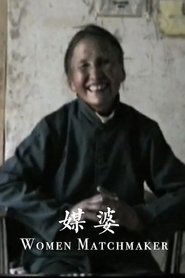
The Woman Matchmaker
2003 · 48 min · Documentary
In order to find such a fittingly inspiring matchmaker, the director visited nearly 10 matchmakers and finally selected the matchmaker in the film. The director then followed the matchmaker and witnessed the vicissitudes of life. In addition to the land, there is no form of art that can describe the heaviness of life and emotion. (Shot August 1995)
Directed by Hu Jie
Your Rating
Make it a double feature
1h 54m together
Both from Hu Jie.
More from Hu JieSee all →
 The East Wind State Farm · 2010
The East Wind State Farm
★ 9.02010
MovieDocumentary
In 1957, two hundred teachers, students, and cadres were labeled as "Rightists" for voicing criticism of the Communist Party and sent to the East Wind State Farm in southwest China. As part of China's disastrous Great Leap Forward, these inmates were forced to take part in ill-conceived deforestation, agricultural and industrial projects that led to wide-scale famine. Later they endured the Cultural Revolution when their camp was visited by large groups of "sent-down" youth from the cities. After 21 years of "remolding," the "Rightists" were finally "rehabilitated" in 1978 and allowed to leave in 1978. THE EAST WIND STATE FARM re-examines the tragic events of Chinese modern history during the height of Maoist rule. Director Hu Jie collects dozens of extensive interviews with both inmates and staff who served through three decades of the camp's existence.
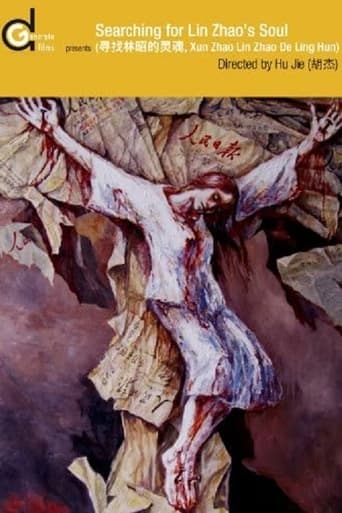 Searching for Lin Zhao's Soul · 2004
Searching for Lin Zhao's Soul
★ 8.72004
MovieDocumentary
This landmark documentary reveals the tragic life of a gifted young woman who was executed for speaking out during the height of Chairman Mao’s rule.
 Spark · 2013
Spark
★ 8.02013
MovieDocumentary
Spark was an underground publication that emerged in Gansu province in 1960, and was centered on the ongoing famine and the Great Leap Forward. Ultimately, 43 people, including the Rightist teachers and students who were connected with the publication, the peasants and the rural cadres who sympathized with them, were arrested and given long prison terms. Among them, three key figures were executed during the Cultural Revolution.
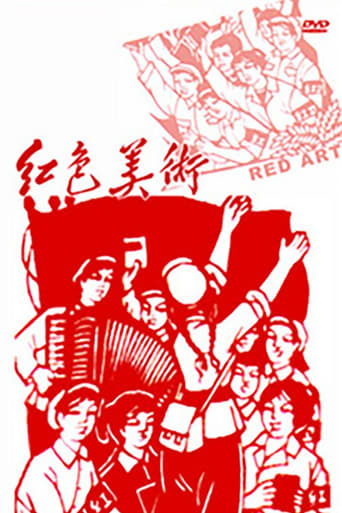 Red Art · 2008
Red Art
★ 8.02008
MovieDocumentary
The launch and development of the Great Proletarian Cultural Revolution not only has a series of CCP Central Committee documents that have promoted wave after wave of movements, but also has various propaganda methods. A large number of different types of literary and artistic products have been produced in a collective form and with the input of the State. As a weapon of revolutionary struggle, works of art are important representatives of this period. Art was a tool for the Cultural Revolution; it fully embodies its aesthetic characteristics, actively cooperating with the development of various movements and the popularization of ideas. It has cultivated the values and visual experience of a generation of Chinese people — the paintings of the Cultural Revolution have been regarded as treasures by Chinese collectors. This film shows the characteristics of the Cultural Revolution paintings through a large number of paintings, as well as the bloody violence and despotism behind them.
 Though I Am Gone · 2006
Though I Am Gone
★ 7.52006
MovieDocumentary
Filmmaker Hu Jie uncovers the tragic story of a teacher beaten to death by her students during the Cultural Revoution. In 1966, the Cultural Revolution exploded throughout China, as Mao's Red Guards persecuted suspected Rightists. Bian Zhongyun, the vice principal of a prestigious school in Beijing, was beaten to death by her own students, becoming one of the first victims of the revolutionary violence that would engulf the entire nation.
 Tayuan · 2007
Tayuan
2007
MovieDocumentary
Tayuan is the location of the first museum of the Cultural Revolution in China. However, this important Cultural Revolution museum was established with private funds. The reason for its construction here is that there is a tomb of the victims of the Cultural Revolution. This film documents the little-known massacre and the construction of the Cultural Revolution Museum in Shantou, Guangdong during the Cultural Revolution. However, a few years later, this museum was banned by the government.
 The Man Who Reached Heaven · 2012
The Man Who Reached Heaven
2012
MovieDocumentary
This film tells the story of the translator Wang Tiesheng. Before 1949, Wang graduated from Tongji University in Shanghai. He was a student with good morals, intelligence and health. He then served as an assistant professor in the Economics Department of Renmin University. However, he was labelled a “Rightist” in 1957 and was sent to a farm in Tianjin to undertake forced labour. There, he underwent extreme humiliating “reform” and suffered starvation. Later, on a bumpy road as he was being sent to be buried, he miraculously discovered that he was actually alive.
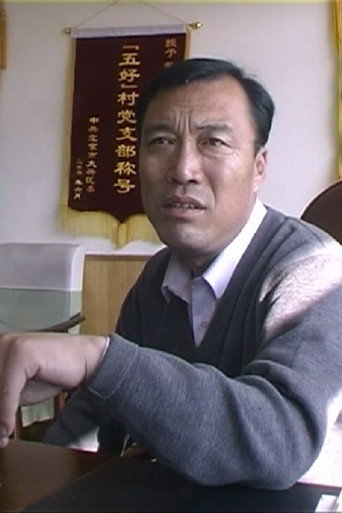 The Democratically Elected Village Chief · 2004
The Democratically Elected Village Chief
2004
MovieDocumentary
With the opening up of the economy, grassroots democracy has come. But since the land is owned by the state, the local government actually has absolute control. The so-called democratically elected village chief quickly learns that his role is to cooperate with the government in using land to develop the economy. Power-to-money transactions are open secrets. Due to the uneven economic development in the villages, each has a different story, but the use of land for profit is a constant theme. The filming location is a rural village in the outside Beijing. Less of focus is how villages elect than the mutation after. Faced with huge land assets and overseeing relationships between land, power, economics, social systems, how does a hard-working, upright peasant conduct himself? This film documents the pain: the experience of soul sublimation and degeneration. We see 'birth defects' in this "democracy" — one without checks and balances, grafted onto autocracy.
 Beside the Sea · 2003
Beside the Sea
2003
Movie
Because of difficulties where they live in the north east of China, a husband and wife go back to their hometown in Shandong Province and settle in their hometown by the sea with three children. With no land of their own, they have to face the sea, and start their life again.
 Remote Mountain · 2003
Remote Mountain
2003
MovieDocumentary
This is a documentary about coal miners. In the Qilian mountains of Qinghai Province, where the altitude is over 3,600 meters and the air thin, there are numerous small coal mines in which work around 200 miners aged 17 to 50. Every day, they must crawl through pits 60 to 70 metres deep just to carry out 30 loads of coal. Each load weighs 50 kilograms. The miners earn 500 yuan a month, without insurance. Miners normally suffer from pneumoconiosis after working four or five years in the mine and cannot work thereafter. They usually spend their wages on building houses, marriage, and tuition fees for their children. If they die in an accident, their family receives a 5,000 yuan pension. This film is a record of these working conditions, and of human labour. (Shot June 1995.)
 My Mother Wang Pei Ying · 2011
My Mother Wang Pei Ying
2011
MovieDocumentary
Wang Peiying, a widow with seven children, was a worker at the Ministry of Railways. The famine precipitated by the Great Leap Forward, which killed perhaps 30 million people by the early 1960s, had horrified her, and as political turmoil began again only a few years later, she publicly called on China’s leader, Mao Zedong, to take responsibility for his mistakes and resign. Ms. Wang was sent to a psychiatric hospital and drugged. Released and paraded around the capital, she refused to recant. Instead, she repeated her accusations. Her jaw was broken to stop her from talking. After a mass trial at the Workers’ Stadium on Jan. 27, 1970, she was executed.
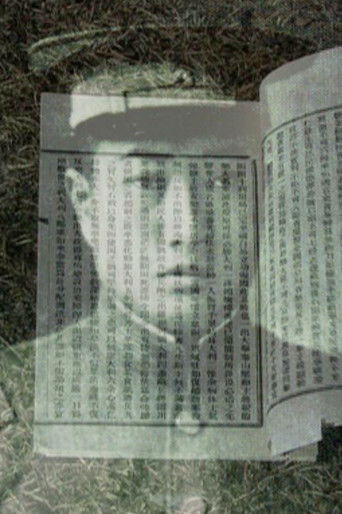 Looking Back on the West March · 2011
Looking Back on the West March
2011
MovieDocumentary
This film tells the story of a war in Tibet in 1912 through information and descendants of the Western Expeditionary Army.
 You and Me · 2008
You and Me
2008
Movie
This is a poem that asks about human nature, the world, friendship, love and faith.
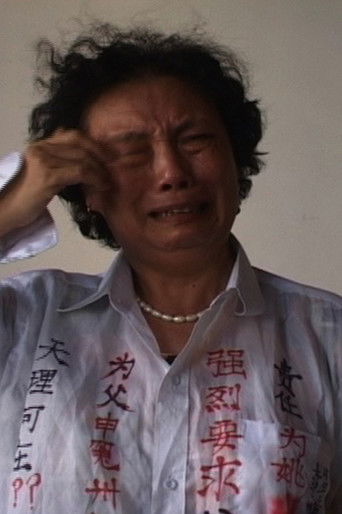 Injustice · 2006
Injustice
2006
MovieDocumentary
This is a short documentary about a daughter who has been searching for the truth about her father’s death during the Cultural Revolution, but whom has found nothing.
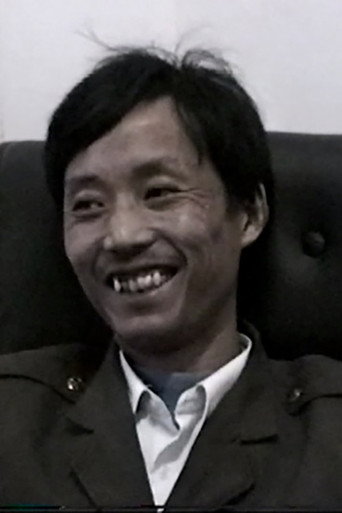 Peasant-Run Factory · 1998
Peasant-Run Factory
1998
Movie
One of Hu Jie's 'Farmers Working in the City' films. The city is developing rapidly, with tall buildings and highways. Behind this bustling city, there is such a group of people. They come from the countryside. Maybe they are not dressed well, or they have only finished elementary school, but they work hard with their own work. The piece of prosperity pays its youth and sweat. (Shot between 1997 and 1998)
 Holy Light · 1998
Holy Light
1998
MovieDocumentary
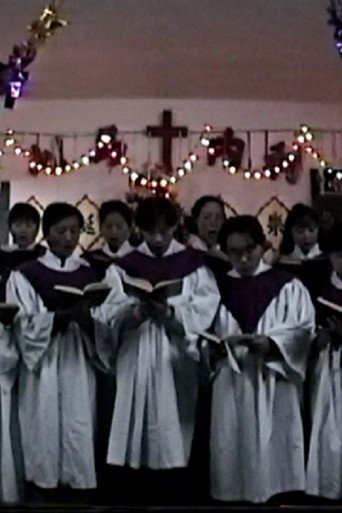
The melody of the hymn echoes in the old streets and alleys of the city. This is strange in a country that regards religion as a spiritual opium. The small, messy street was full of old people, and they began to pray with the sound of the room on the street. On the roof, a simple cross gleamed in the sun. During the Cultural Revolution, Christianity was completely eradicated. In China's political environment, Christianity has always been regarded as an extremely reactionary and evil thing, and openly believing in God would bring prison sentences. After the reform and opening up, Christianity also resumed activities. Although the Three-Self Church under official control is orthodox, house churches that are not under official control have also emerged in various cities. This film documents the activities of a house church in Nanjing.
More Like This
Couldn't load this row right now.