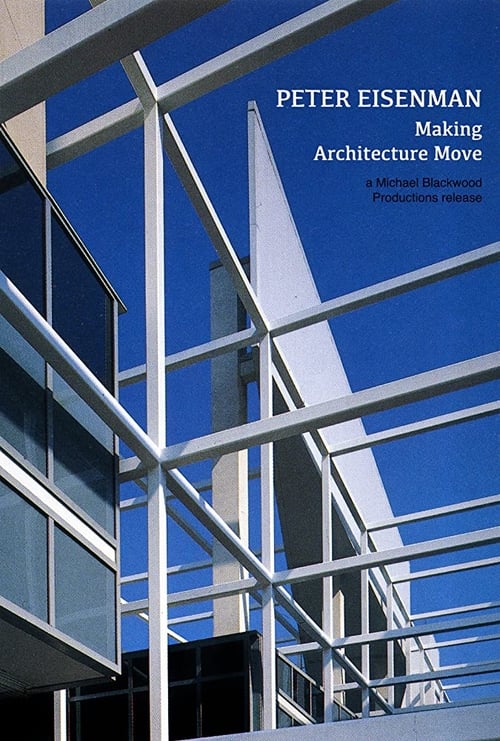
Peter Eisenman: Making Architecture Move

Peter Eisenman: Making Architecture Move

1995 · 56 min · ★ 7.0 · Documentary

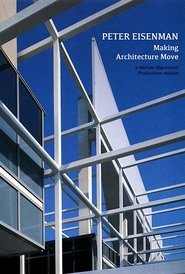
With the participation of famed architects such as Frank Gehry, Daniel Libeskind and Zaha Hadid, Peter Eisenman: Making Architecture Move provides an intimate look into the work of the daring and controversial creator. Filmed in the U.S. and Germany, Eisenman takes the viewer through several of his buildings, including the Wexner Center in Columbus, Ohio, while explaining his upcoming projects such as the Rebstockpark community in Frankfurt and the Max Reinhardt monument in Berlin. His predecessors and contemporaries offer praise and commentary on Eisenman's complex body of work including their own thoughts and theories surrounding his unique style.

Directed by Michael Blackwood

Your Rating

Where to Watch

Rent or Buy

Amazon Video

Cast

Make it a double feature

1h 54m together
Peter Eisenman: Making Architecture Move
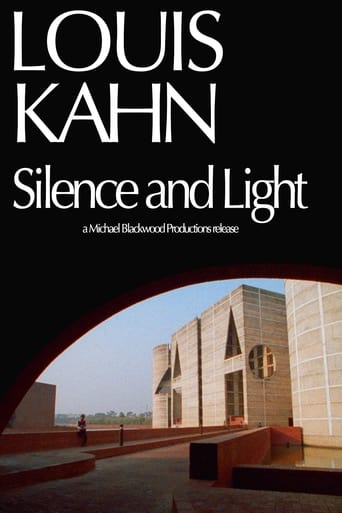
Louis Kahn: Silence and Light

Both from Michael Blackwood.

More from Michael BlackwoodSee all →
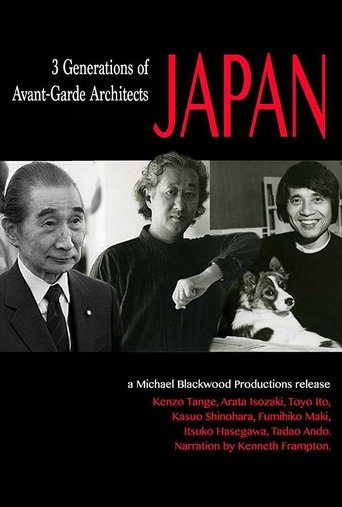
Japan: 3 Generations of Avant-Garde ArchitectsJapan: 3 Generations of Avant-Garde Architects · 1989
Japan: 3 Generations of Avant-Garde Architects
10.01989
MovieDocumentary
Japan's establishment as an economic superpower led to a Golden Age of Japanese architecture. Six innovators stand out particularly, fusing Japanese traditions with modern materials and technology.
Louis Kahn: Silence and LightLouis Kahn: Silence and Light · 1996
Louis Kahn: Silence and Light
9.51996
MovieDocumentary
As an architect, educator, and philosopher, Louis Kahn played a prominent role in the history of 20th century architecture. An examination of six of his most significant buildings: The Salk Institute; the Kimbell Art Museum; the Center for British Art; the library at Philips Exeter Academy; the Indian Institute of Management; and the Parliament Buildings of Bangladesh.
Empire CityEmpire City · 1985
Empire City
9.01985
MovieDocumentaryHistory
A film essay contrasting the modern metropolis with its "golden age" from 1830-1930, with the participation of some of New York's leading political and cultural figures. Made at a time when the city was experiencing unprecedented real estate development on the one hand and unforeseen displacement of population and deterioration on the other. Empire City is the story of two New Yorks. The film explores the precarious coexistence of the service-based midtown Manhattan corporate headquarters with the peripheral New York of undereducated minorities living in increasing alienation.
Butoh: Body on the Edge of CrisisButoh: Body on the Edge of Crisis · 1990
Butoh: Body on the Edge of Crisis
8.01990
MovieDocumentary
"Butoh: Body on the Edge of Crisis" is a visually striking film portrait shot on location in Japan with the participation of the major Butoh choreographers and their companies. Although Butoh is often viewed as Japan's equivalent of modern dance, in actuality it has little to do with the rational principles of modernism. Butoh is a theater of improvisation which places the personal experiences of the dancer on center-stage. By reestablishing the ancient Japanese connection of dance, music, and masks, and by recalling the Buddhist death dances of rural Japan, Butoh incorporates much traditional theater. At the same time, it is a movement of resistance against the abandonment of traditional culture to a highly organized consumer-oriented society.
Hütet eure Töchter!Hütet eure Töchter! · 1964
Hütet eure Töchter!
8.01964
MovieDrama
A film consisting of seven episodes directed by young West German filmmakers, some of whom were signatories of the famous Oberhausen Manifesto. The film focuses on the sometimes highly dramatic fates of young girls.
Andy WarholAndy Warhol · 1972
Andy Warhol
7.01972
MovieDocumentary
With a rambling, unstructured style that echoes Andy Warhol’s own approach to filmmaking, this documentary profiles his career, showing him to be a brilliant manipulator, dedicated voyeur and person of astute commercial judgment.
Working with EinsteinWorking with Einstein · 1979
Working with Einstein
7.01979
MovieDocumentaryTV Movie
Filmed during the commemoration of Einstein's centennial at Princeton's Institute for Advanced Studies, with former colleagues who provide insight and recollection. The panel includes Banesh Hoffman, Peter Bergman, Valentine Bargmann, and Ernst Straus. An understanding of Albert Einstein emerges, giving the audience a sense of the personal side of one of the 20th century's greatest thinkers.
The Artist's Studio: E.W. NAYThe Artist's Studio: E.W. NAY · 2012
The Artist's Studio: E.W. NAY
3.82012
MovieDocumentary
A visit to the studio of Ernst Wilhelm Nay, a remarkable, if somewhat solitary German artist, who established his status at age 30, just before the advent of the Nazi takeover. Nay belonged to the persecuted generation of German artists who, just as their work began to blossom, were forced out by Hitler's art dictatorship. Labeling the art "decadent", the Hitler regime called for the removal of Nay's paintings from museum collections and the artist was banned from showcasing his new work. After the end of World War II, Nay returned to painting and worked tirelessly to make up for lost time, producing new pieces year after year and quickly becoming one of Germany's leading painters. Ernst Wilhelm Nay died in 1968 at the age of 65 yet his studio, still intact, offers a retrospective of his work starting from the 1920s. His wife, Elisabeth Nay walks us through the studio, offering insights into her husband's process and creative intent.
Gregory Crewdson: The Aesthetics of RepressionGregory Crewdson: The Aesthetics of Repression · 2005
Gregory Crewdson: The Aesthetics of Repression
2.02005
MovieDocumentary
Crewdson is observed and questioned closely during his work on ten new images in as many different sets.
MiesMies · 1986
Mies
1986
MovieDocumentary
No understanding of the modern movement in architecture is possible without knowledge of its master builder, Mies van der Rohe. Together with documentation of his life, this film shows all his major buildings, as well as rare film footage of Mies explaining his philosophy. Phyllis Lambert relates her choice of Mies as the architect for the Seagram building. Mies's achievements and continuing influence are debated by architects Robert A.M. Stern, Robert Venturi, and Philip Johnson, by former students and by architectural historians. Mies is seen in rare documentary footage.
George SegalGeorge Segal · 2016
George Segal
2016
MovieDocumentary
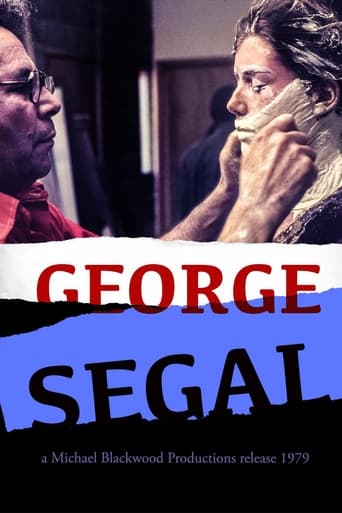
George Segal constructs a type of human form and vulnerability that feels rare in the world of sculpture. As we follow his process at the isolated New Jersey farmhouse that serves as his studio, the intimacy between Segal and his art is contagious. He casts people who he knows, respects and admires, making the final outcome of the piece seep with personality and humanity. Segal is focused on creating a mold that does not necessarily subscribe to society’s notion of beauty. Originally released in 1979.
4 Artists: Robert Ryman, Eva Hesse, Bruce Nauman, Susan Rothenberg4 Artists: Robert Ryman, Eva Hesse, Bruce Nauman, Susan Rothenberg · 1988
4 Artists: Robert Ryman, Eva Hesse, Bruce Nauman, Susan Rothenberg
1988
Movie
4 Artists: Robert Ryman, Eva Hesse, Bruce Nauman, Susan Rothenberg acts as a collective portrait of creators linked only by their stated intention of expressing ideas through art. Unconnected to traditional concepts of beauty, storytelling or pictorial representation, the artists discuss the context of their art and how their work and the public's perception of it have changed over time. This film offers the rare opportunity to see a large body of work in their studios.—Michael Blackwood Productions
Hans Bethe꞉ Prophet of EnergyHans Bethe꞉ Prophet of Energy · 1980
Hans Bethe꞉ Prophet of Energy
1980
MovieDocumentary
A portrait of the eminent Nobel Prize winning physicist who greatly advanced our knowledge of the atom. Bethe discusses the milestones of his career: his student work in Germany, his flight from the Nazis, his work on the Los Alamos Atomic Bomb project under Robert Oppenheimer, and his research on the energy production in stars. In working to help solve the energy crisis of the 1970’s, Bethe established himself as one of the country’s leading spokesmen for a safe way to use nuclear energy. Speaking in support of a sensible use, he represents a side of this controversial issue that deserves more attention. The film provides crucial insight into this complex issue by one of the world’s authorities.
Deconstructivist ArchitectsDeconstructivist Architects · 1990
Deconstructivist Architects
1990
Movie
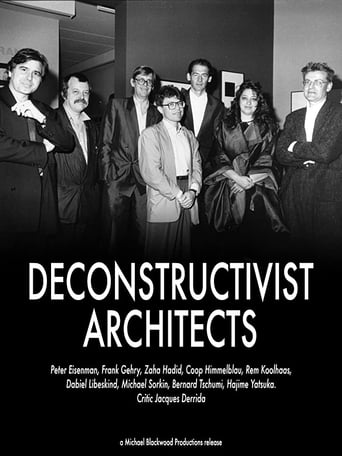
By the end of the 1980's a new architectural sensibility challenged the prevailing post-Modern attitude and brought forth new and daring designs. Driven by the philosophy and theory of Jacques Derrida, the architects of Deconstructivism are rooted in a movement that urges us to examine the space we move through. Deconstructivist Architects documents explosive and seemingly chaotic structures from Vienna to L.A., and interviews those who pursue its aesthetic issues. Filmed on location with the architects and at the Museum of Modern Art's exhibition Deconstructivist Architecture, which was curated by Philip Johnson.
Arata Isozaki II: International ProjectsArata Isozaki II: International Projects · 1990
Arata Isozaki II: International Projects
1990
MovieDocumentary
Through a blend of Japanese history and Western influence, Arata Isozaki has built a career around his boldly distinctive architectural style. Constantly challenging the concepts of space, form and tradition, Isozaki’s work dares us to imagine a merging of cultures where artistic movements and methods bind together in riveting new forms. "ARATA ISOZAKI II: INTERNATIONAL PROJECTS" follows the architect to many of his most famous sites including the Barcelona Olympic Sports Palace, Disney’s Team Building in Orlando, New York’s Palladium nightclub, as well as the newly completed Museum of Contemporary Art in Los Angeles.
Tadao AndoTadao Ando · 1988
Tadao Ando
1988
MovieDocumentary
Tadao Ando, a self-taught architect, proposes an international architecture that he believes can only be conceived by someone Japanese. His architecture mixes Piranesian drama with contemplative spaces in urban complexes, residences and chapels. This film presents the formative years of his impressive career before he embarked on projects in Europe and the United States.

More Like This

Couldn't load this row right now.
Rate this film

Your ratings make Midnight smarter