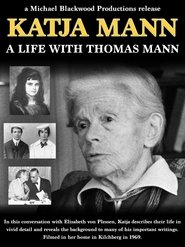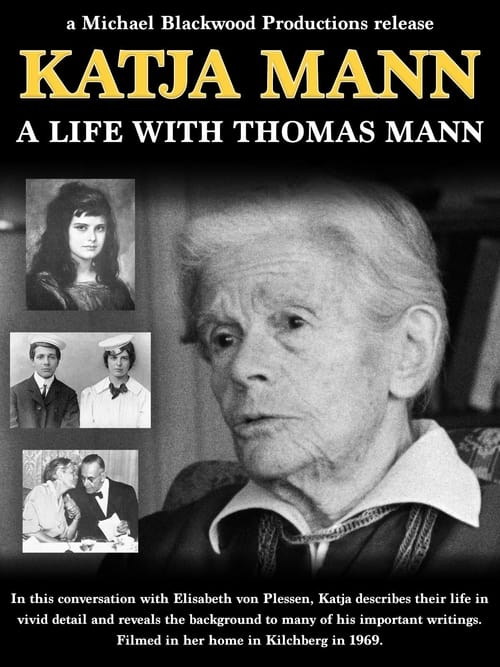
Katja Mann: A Life with Thomas Mann
1969 · 80 min · Documentary
Directed by Michael Blackwood
Your Rating
Where to Watch
Rent or Buy

Cast
- E Erika Mann Self
- G Golo Mann Self
- K Katia Mann Self
Make it a double feature
2h 49m together
Both from Michael Blackwood.
More from Michael BlackwoodSee all →
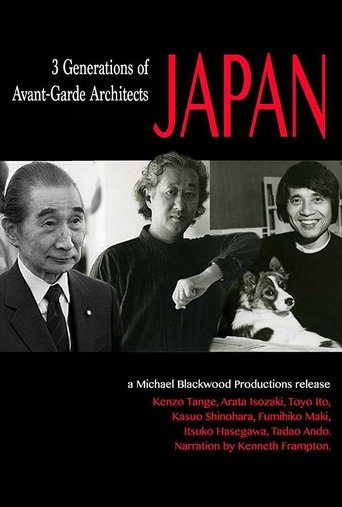 Japan: 3 Generations of Avant-Garde Architects · 1989
Japan: 3 Generations of Avant-Garde Architects
★ 10.01989
MovieDocumentary
Japan's establishment as an economic superpower led to a Golden Age of Japanese architecture. Six innovators stand out particularly, fusing Japanese traditions with modern materials and technology.
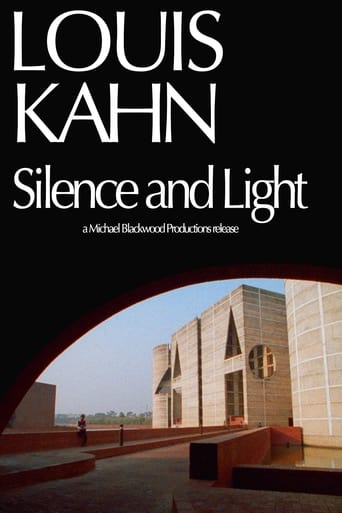 Louis Kahn: Silence and Light · 1996
Louis Kahn: Silence and Light
★ 9.51996
MovieDocumentary
As an architect, educator, and philosopher, Louis Kahn played a prominent role in the history of 20th century architecture. An examination of six of his most significant buildings: The Salk Institute; the Kimbell Art Museum; the Center for British Art; the library at Philips Exeter Academy; the Indian Institute of Management; and the Parliament Buildings of Bangladesh.
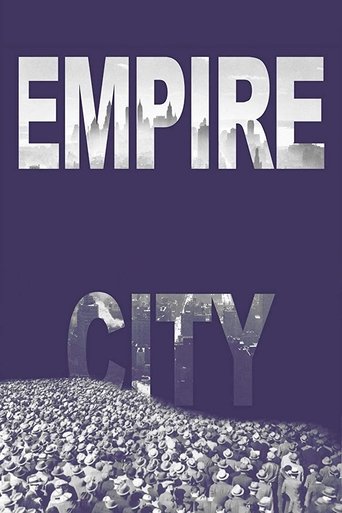 Empire City · 1985
Empire City
★ 9.01985
MovieDocumentaryHistory
A film essay contrasting the modern metropolis with its "golden age" from 1830-1930, with the participation of some of New York's leading political and cultural figures. Made at a time when the city was experiencing unprecedented real estate development on the one hand and unforeseen displacement of population and deterioration on the other. Empire City is the story of two New Yorks. The film explores the precarious coexistence of the service-based midtown Manhattan corporate headquarters with the peripheral New York of undereducated minorities living in increasing alienation.
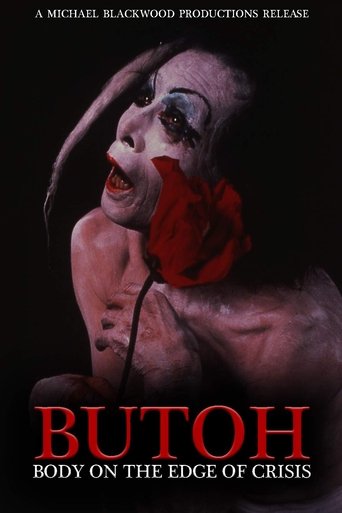 Butoh: Body on the Edge of Crisis · 1990
Butoh: Body on the Edge of Crisis
★ 8.01990
MovieDocumentary
"Butoh: Body on the Edge of Crisis" is a visually striking film portrait shot on location in Japan with the participation of the major Butoh choreographers and their companies. Although Butoh is often viewed as Japan's equivalent of modern dance, in actuality it has little to do with the rational principles of modernism. Butoh is a theater of improvisation which places the personal experiences of the dancer on center-stage. By reestablishing the ancient Japanese connection of dance, music, and masks, and by recalling the Buddhist death dances of rural Japan, Butoh incorporates much traditional theater. At the same time, it is a movement of resistance against the abandonment of traditional culture to a highly organized consumer-oriented society.
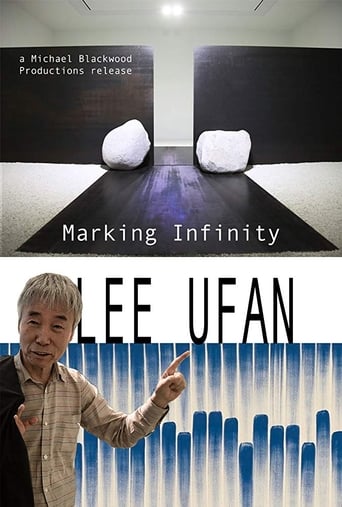 Lee Ufan: Marking Infinity · 2012
Lee Ufan: Marking Infinity
★ 8.02012
MovieDocumentary
"Marking Infinity", Lee Ufan's recent retrospective exhibition at the Guggenheim charts the artist's creation of a visual, conceptual, and theoretical language that has radically expanded the possibilities for sculpture and painting over the past forty years. Deeply versed in modern philosophy, Lee is also an influential writer and is recognized as the key theorist of Mono-ha, an anti-formalist, materials-based art movement that developed in Tokyo in the late 1960s. Active internationally over the last four decades, Lee is acclaimed for an innovative body of Post-Minimalist work that promotes process and the experiential engagement of viewer and site.
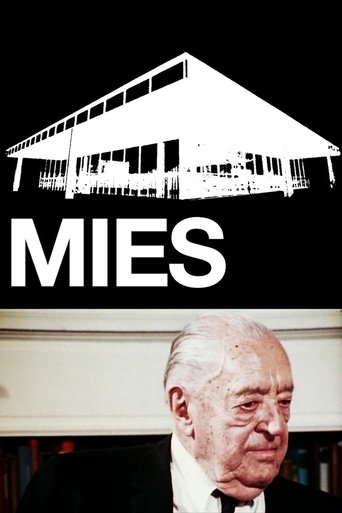 Mies · 1986
Mies
1986
MovieDocumentary
No understanding of the modern movement in architecture is possible without knowledge of its master builder, Mies van der Rohe. Together with documentation of his life, this film shows all his major buildings, as well as rare film footage of Mies explaining his philosophy. Phyllis Lambert relates her choice of Mies as the architect for the Seagram building. Mies's achievements and continuing influence are debated by architects Robert A.M. Stern, Robert Venturi, and Philip Johnson, by former students and by architectural historians. Mies is seen in rare documentary footage.
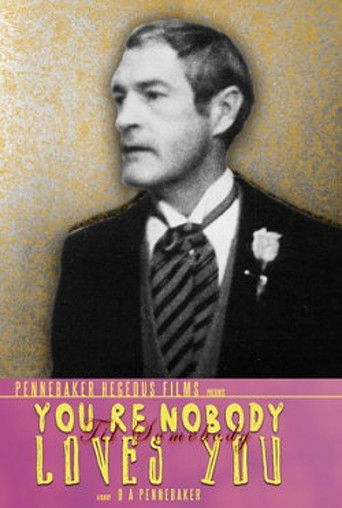 You’re Nobody Till Somebody Loves You · 1964
You’re Nobody Till Somebody Loves You
1964
MovieDocumentary
Description by D.A Pennebaker: "This movie is something of a mystery. Timothy Leary was getting married to a model named Nena Von Schlebrugge up in Millbrook, New York at the Hitchcock house, where Leary had been carrying on his hallucinogenic revelries for the past year or so after leaving Harvard. It was rumored that this was going to be the wedding of the season, the wedding of Mr. And Mrs. Swing as Cab Calloway put it. Blackwood took me downtown to meet Monte Rock III who was singing at Trudy Heller’s but who was also a very pricey and off-the-wall hairdresser and was in fact going to be doing the bride’s hair. Nena’s brother, Bjorn, known as the “Baron” was a friend of the Hitchcock’s, as was I, and the idea of going along and filming the wedding seemed not unwarranted. I’ve always wanted to film someone getting married."
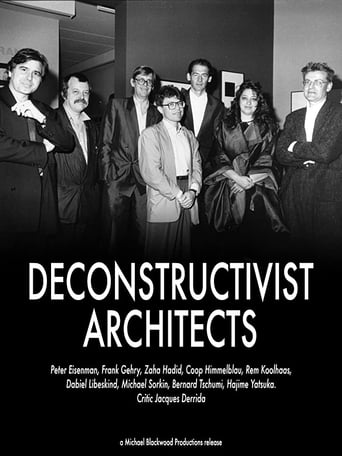 Deconstructivist Architects · 1990
Deconstructivist Architects
1990
Movie
By the end of the 1980's a new architectural sensibility challenged the prevailing post-Modern attitude and brought forth new and daring designs. Driven by the philosophy and theory of Jacques Derrida, the architects of Deconstructivism are rooted in a movement that urges us to examine the space we move through. Deconstructivist Architects documents explosive and seemingly chaotic structures from Vienna to L.A., and interviews those who pursue its aesthetic issues. Filmed on location with the architects and at the Museum of Modern Art's exhibition Deconstructivist Architecture, which was curated by Philip Johnson.
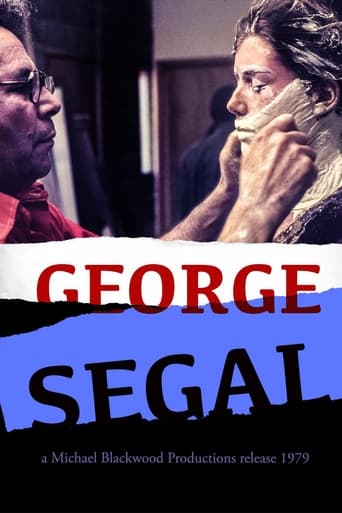 George Segal · 2016
George Segal
2016
MovieDocumentary
George Segal constructs a type of human form and vulnerability that feels rare in the world of sculpture. As we follow his process at the isolated New Jersey farmhouse that serves as his studio, the intimacy between Segal and his art is contagious. He casts people who he knows, respects and admires, making the final outcome of the piece seep with personality and humanity. Segal is focused on creating a mold that does not necessarily subscribe to society’s notion of beauty. Originally released in 1979.
 After Modernism: The Dilemma of Influence · 1992
After Modernism: The Dilemma of Influence
1992
Movie
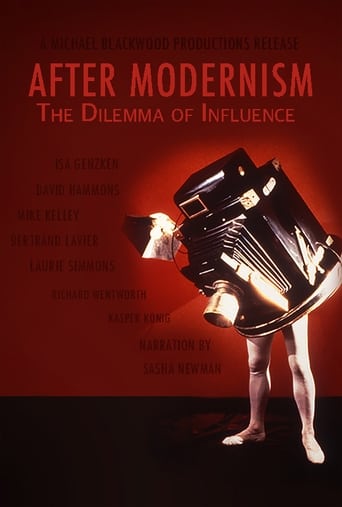
Since the 1960s, other disciplines, cultures, and artists previously excluded from modernism's privileged canons have become absorbed into an ever expanding field of activity and influence. Younger artists are a new breed of cultural scavengers, anything or anyone is fair game for appropriation or reinterpretation. Fascinated by notions of space, time and the human body, artists such as David Hammons, Laurie Simmons and Richard Wentworth have carved their own path through conceptual art.
 American Art in the 1960s · 1972
American Art in the 1960s
1972
MovieDocumentary
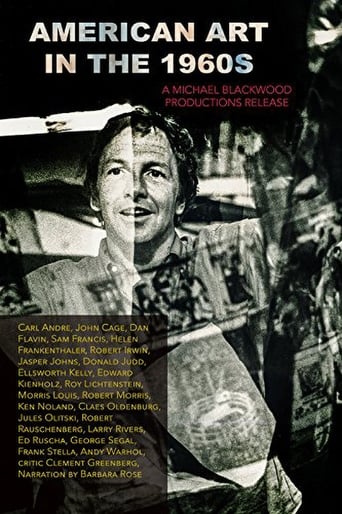
During this critical decade in American life, artists built on the styles of the 1950s. An explosion of artistic energy produced Pop Art, Minimalism, color-field painting, and hard-edged abstraction. Sculptors and painters on both coasts explored new methods and new subject matter. American Art in the Sixties examines the key figures of that decade including Rauschenberg and Johns, two crucial transitional figures between Abstract Expressionism and the sensibilities of the new decade. The art of that time mirrors the optimism and the affluence, and the technology and the vulgarity of those boom years.
 Robert Rauschenberg: Retrospective · 1979
Robert Rauschenberg: Retrospective
1979
MovieDocumentary
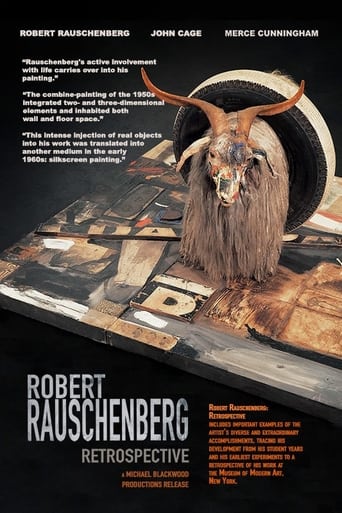
This film includes important examples of the Robert Rauschenberg's diverse and extraordinary accomplishments, tracing his development from his student years and his earliest experiments to a retrospective of his work at the Museum of Modern Art in New York. It features Rauschenberg, John Cage and Merce Cunningham, and was released in 1979.
 4 Artists: Robert Ryman, Eva Hesse, Bruce Nauman, Susan Rothenberg · 1988
4 Artists: Robert Ryman, Eva Hesse, Bruce Nauman, Susan Rothenberg
1988
Movie
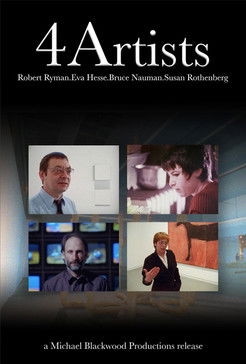
4 Artists: Robert Ryman, Eva Hesse, Bruce Nauman, Susan Rothenberg acts as a collective portrait of creators linked only by their stated intention of expressing ideas through art. Unconnected to traditional concepts of beauty, storytelling or pictorial representation, the artists discuss the context of their art and how their work and the public's perception of it have changed over time. This film offers the rare opportunity to see a large body of work in their studios.—Michael Blackwood Productions
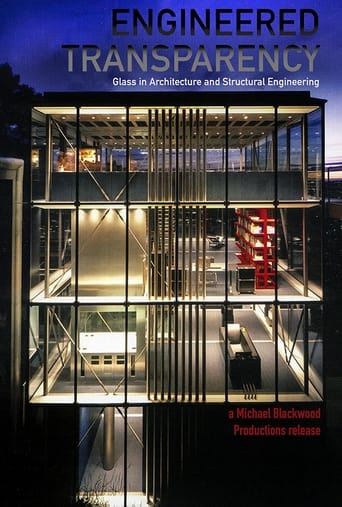 Engineered Transparency: Glass in Architecture and Structural Engineering · 2008
Engineered Transparency: Glass in Architecture and Structural Engineering
2008
MovieDocumentary
Accentuating the effects of space, light and structure, glass has become an architectural staple that encourages transparency and visibility throughout a variety of landscapes. After its role in the last century's call to a radical new architecture and urban life, glass architecture is today more ubiquitous than ever.
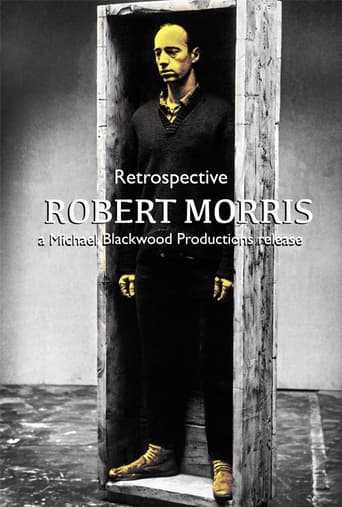 Robert Morris: Retrospective · 1994
Robert Morris: Retrospective
1994
MovieDocumentary
This retrospective exhibition gives brilliant insight into the artist’s work of the last 4 decades. Credit for this highly sensitive selection of Morris’ work goes to Rosalind Krauss, who curated the exhibition. We invited artist and curator to come back to the Guggenheim Museum for a second look at the exhibition. The filmed walk-through gives a vivid sense of the artist’s progress and documents the views of the artist and Rosalind Krauss, one of the most significant critics of our time.
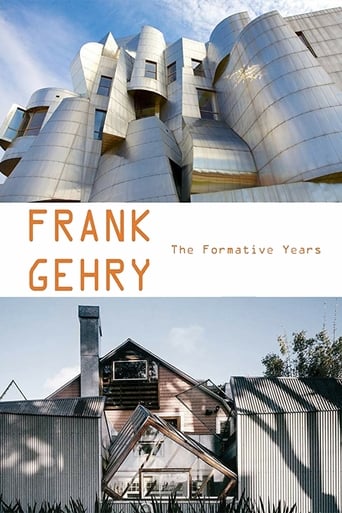 Frank Gehry: The Formative Years · 1988
Frank Gehry: The Formative Years
1988
MovieDocumentary
Narrated by the architect himself, Frank Gehry: The Formative Years explores his long standing career and unique eye. The film looks at a number of Gehry's projects from private homes to complex public institutions, all of which echo his experimental style and vision. Works such as The Norton House, The Aerospace Museum and Loyola Law School demonstrate Gehry's eccentric and distinctive touch. The Formative Years is a survey of his beginnings when Gehry experimented with his own house in Santa Monica, giving him notoriety in the architecture scene.
More Like This
Couldn't load this row right now.