Michael Blackwood

Directing

Michael Blackwood

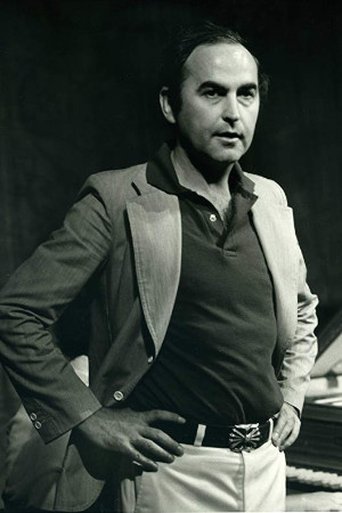
Michael Blackwood Productions is an independent production company that has produced over 150 documentaries on the arts and its contributors, with a focus on architecture and architects, art and artists, dance and choreographers, and music and composers. The collection features over 1,000 participants or subjects, and spans over six decades of documentation, beginning in the 1960s and including ea…

Known For
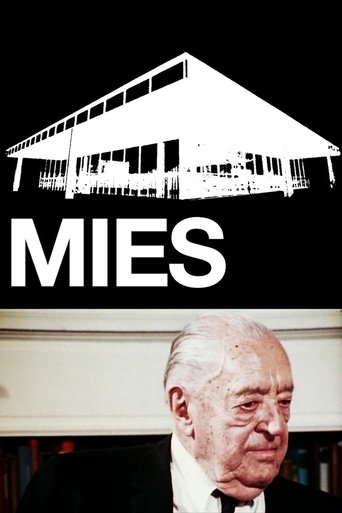
MiesMies · 1986
Mies
1986
MovieDocumentary
No understanding of the modern movement in architecture is possible without knowledge of its master builder, Mies van der Rohe. Together with documentation of his life, this film shows all his major buildings, as well as rare film footage of Mies explaining his philosophy. Phyllis Lambert relates her choice of Mies as the architect for the Seagram building. Mies's achievements and continuing influence are debated by architects Robert A.M. Stern, Robert Venturi, and Philip Johnson, by former students and by architectural historians. Mies is seen in rare documentary footage.
Empire CityEmpire City · 1985
Empire City
9.01985
MovieDocumentaryHistory
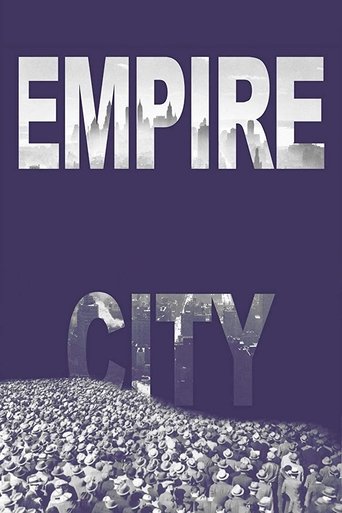
A film essay contrasting the modern metropolis with its "golden age" from 1830-1930, with the participation of some of New York's leading political and cultural figures. Made at a time when the city was experiencing unprecedented real estate development on the one hand and unforeseen displacement of population and deterioration on the other. Empire City is the story of two New Yorks. The film explores the precarious coexistence of the service-based midtown Manhattan corporate headquarters with the peripheral New York of undereducated minorities living in increasing alienation.
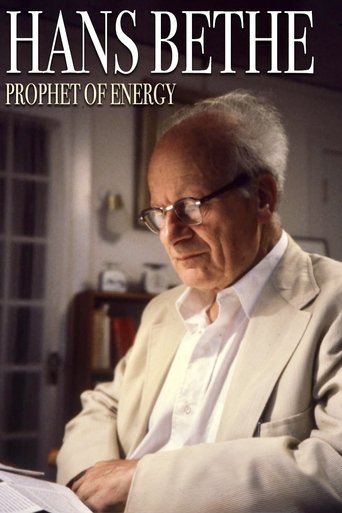
Hans Bethe꞉ Prophet of EnergyHans Bethe꞉ Prophet of Energy · 1980
Hans Bethe꞉ Prophet of Energy
1980
MovieDocumentary
A portrait of the eminent Nobel Prize winning physicist who greatly advanced our knowledge of the atom. Bethe discusses the milestones of his career: his student work in Germany, his flight from the Nazis, his work on the Los Alamos Atomic Bomb project under Robert Oppenheimer, and his research on the energy production in stars. In working to help solve the energy crisis of the 1970’s, Bethe established himself as one of the country’s leading spokesmen for a safe way to use nuclear energy. Speaking in support of a sensible use, he represents a side of this controversial issue that deserves more attention. The film provides crucial insight into this complex issue by one of the world’s authorities.
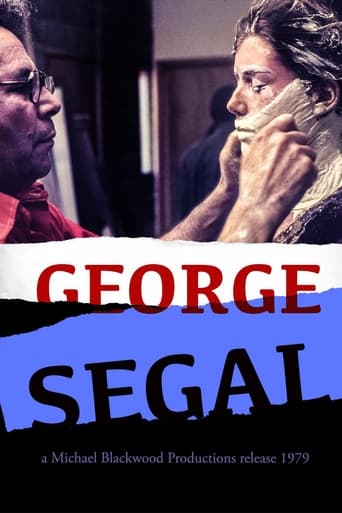
George SegalGeorge Segal · 2016
George Segal
2016
MovieDocumentary
George Segal constructs a type of human form and vulnerability that feels rare in the world of sculpture. As we follow his process at the isolated New Jersey farmhouse that serves as his studio, the intimacy between Segal and his art is contagious. He casts people who he knows, respects and admires, making the final outcome of the piece seep with personality and humanity. Segal is focused on creating a mold that does not necessarily subscribe to society’s notion of beauty. Originally released in 1979.
Butoh: Body on the Edge of CrisisButoh: Body on the Edge of Crisis · 1990
Butoh: Body on the Edge of Crisis
8.01990
MovieDocumentary
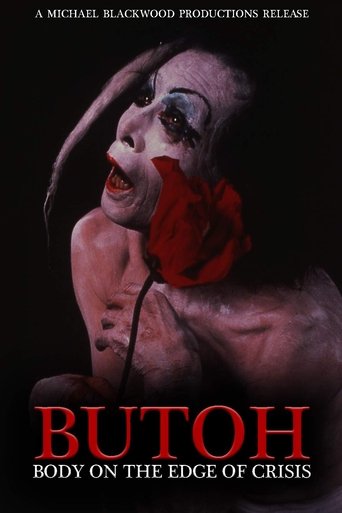
"Butoh: Body on the Edge of Crisis" is a visually striking film portrait shot on location in Japan with the participation of the major Butoh choreographers and their companies. Although Butoh is often viewed as Japan's equivalent of modern dance, in actuality it has little to do with the rational principles of modernism. Butoh is a theater of improvisation which places the personal experiences of the dancer on center-stage. By reestablishing the ancient Japanese connection of dance, music, and masks, and by recalling the Buddhist death dances of rural Japan, Butoh incorporates much traditional theater. At the same time, it is a movement of resistance against the abandonment of traditional culture to a highly organized consumer-oriented society.
David Chipperfield: Form MattersDavid Chipperfield: Form Matters · 2012
David Chipperfield: Form Matters
2012
MovieDocumentary
When the Tuscan city of Pisa commissioned David Chipperfield to create a master plan that would bring new vitality to this historic spot on the Arno, an exhibition of selected works produced by him in the last 25 years was also invited. "David Chipperfield: Form Matters" documents the architect as he leads the way through his models, drawings and photographs, explaining his designs in the process. Chipperfield's vast array of international work spans over Europe, China, Japan, the United States and Mexico and as he guides us through his career Chipperfield offers a detailed accounts of his creative direction at every stop.
Peter Eisenman: Building Germany's Holocaust MemorialPeter Eisenman: Building Germany's Holocaust Memorial · 2009
Peter Eisenman: Building Germany's Holocaust Memorial
2009
MovieDocumentary
This documentary explores the creation of the Holocaust Memorial in Berlin as designed by architect Peter Eisenman. Reaction of the German public to the completed memorial is also shown.
Louis Kahn: Silence and LightLouis Kahn: Silence and Light · 1996
Louis Kahn: Silence and Light
9.51996
MovieDocumentary
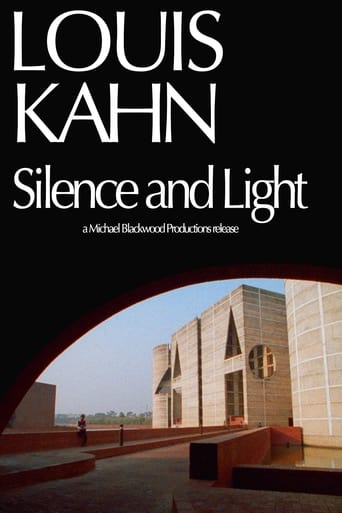
As an architect, educator, and philosopher, Louis Kahn played a prominent role in the history of 20th century architecture. An examination of six of his most significant buildings: The Salk Institute; the Kimbell Art Museum; the Center for British Art; the library at Philips Exeter Academy; the Indian Institute of Management; and the Parliament Buildings of Bangladesh.

Filmography

Sort
Hans Bethe꞉ Prophet of EnergyHans Bethe꞉ Prophet of Energy · 1980
Hans Bethe꞉ Prophet of Energy
1980
MovieDocumentary
A portrait of the eminent Nobel Prize winning physicist who greatly advanced our knowledge of the atom. Bethe discusses the milestones of his career: his student work in Germany, his flight from the Nazis, his work on the Los Alamos Atomic Bomb project under Robert Oppenheimer, and his research on the energy production in stars. In working to help solve the energy crisis of the 1970’s, Bethe established himself as one of the country’s leading spokesmen for a safe way to use nuclear energy. Speaking in support of a sensible use, he represents a side of this controversial issue that deserves more attention. The film provides crucial insight into this complex issue by one of the world’s authorities.

Director

Butoh: Body on the Edge of CrisisButoh: Body on the Edge of Crisis · 1990
Butoh: Body on the Edge of Crisis
8.01990
MovieDocumentary
"Butoh: Body on the Edge of Crisis" is a visually striking film portrait shot on location in Japan with the participation of the major Butoh choreographers and their companies. Although Butoh is often viewed as Japan's equivalent of modern dance, in actuality it has little to do with the rational principles of modernism. Butoh is a theater of improvisation which places the personal experiences of the dancer on center-stage. By reestablishing the ancient Japanese connection of dance, music, and masks, and by recalling the Buddhist death dances of rural Japan, Butoh incorporates much traditional theater. At the same time, it is a movement of resistance against the abandonment of traditional culture to a highly organized consumer-oriented society.

Director

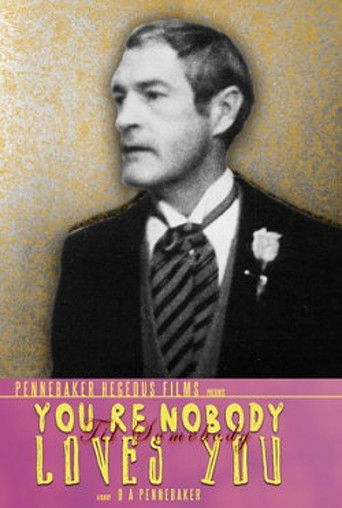
You’re Nobody Till Somebody Loves YouYou’re Nobody Till Somebody Loves You · 1964
You’re Nobody Till Somebody Loves You
1964
MovieDocumentary
Description by D.A Pennebaker: "This movie is something of a mystery. Timothy Leary was getting married to a model named Nena Von Schlebrugge up in Millbrook, New York at the Hitchcock house, where Leary had been carrying on his hallucinogenic revelries for the past year or so after leaving Harvard. It was rumored that this was going to be the wedding of the season, the wedding of Mr. And Mrs. Swing as Cab Calloway put it. Blackwood took me downtown to meet Monte Rock III who was singing at Trudy Heller’s but who was also a very pricey and off-the-wall hairdresser and was in fact going to be doing the bride’s hair. Nena’s brother, Bjorn, known as the “Baron” was a friend of the Hitchcock’s, as was I, and the idea of going along and filming the wedding seemed not unwarranted. I’ve always wanted to film someone getting married."
Camera Operator

Speaking of Abstraction: A Universal LanguageSpeaking of Abstraction: A Universal Language · 1999
Speaking of Abstraction: A Universal Language
1999
MovieDocumentary
At the beginning of the twenty-first century, abstraction - that most quintessentially modernist innovation - maintains a peculiarly contradictory position. Used, on one hand, by post-modernist artists as just one more quotable style amongst many, it is on the other hand still considered an elitist or hermetic language by audiences intimidated by its lack of recognizable subject matter. Yet ultimately, abstraction continues to be a viable creative path for contemporary artists of all generations, many of whom embrace it as the most inclusive and fundamentally resonant of artistic languages. Filmed at the artists' studios, the Dia Center for the Arts, and the Guggenheim Museum during their exhibition, "Abstraction in the Twentieth Century."

Director

The New York SchoolThe New York School · 1972
The New York School
1972
MovieDocumentary
The band of American artists known as the New York School toyed with tradition and rebelled against the Renaissance.Feeling as though free association yielded their best results, the painters, poets and performers of the New York School took a surrealist approach that was concerned less with aesthetic and more with expression. Those associated with the School were unified by their desire to create from within. They created a monumental, dramatic art that remains a singular expression of the crucial modern quest for individuality and personal freedom." Never knowing exactly how their pieces would turn out, the artists of the New York School embraced their own complex humanity and worked from a place of bold, sporadic realness.

Director

14 Americans: Directions of the 1970s14 Americans: Directions of the 1970s · 1981
14 Americans: Directions of the 1970s
1981
Movie
The multiple means of making art after the end of illusionism led these artists to create performances, sculptures, earthworks, tableaux, furniture, shaped canvases, and more, using unusual materials. They explore the process of making forms and giving meanings to those forms. In this idea art, their focus is as often social and psychological as artistic. Some of their activities enlist engineering and construction techniques, others compose texts or scripts that are central to their art. Some cast the viewer in the role of a spectator, while the others demand active participation. The sources for their concepts and art works are equally diverse; the delicate proportions and balance of Early Renaissance painting, the exploration of the surface of the moon, the structure and inventions of vernacular architects, to name only a few.

Director

Frank Gehry: An Architecture of JoyFrank Gehry: An Architecture of Joy · 2000
Frank Gehry: An Architecture of Joy
2000
MovieDocumentary
"Frank Gehry: An Architecture of Joy" illustrates the unique intertwining of art and architecture throughout Gehry's spectacularly eclectic career. In this portrait, Gehry explores his work of the 1990's including The Guggenheim Museum in Bilbao and the Frederick R. Weisman Museum in Minneapolis, as well as his first European commission, the EMR Communication and Technology Center in Bad Oeynhausen, Germany. Seeing himself as an artist first, Gehry discusses his early relationships in the art world and how sculpture, painting and small scale work has influenced his architectural style. Like Rauschenberg, Johns, and Warhol, he has introduced "bad taste" into his concepts, while keeping himself outside of the contemporary dialogue between modernism and post-modernism. He has translated the vocabulary of contemporary art into an architectural language of his own, disobeying the rules of his profession and questioning its historic conventions.

Director