Eisenstein’s Mexican Film: Episodes for Study
Eisenstein’s Mexican Film: Episodes for Study

1955 · 228 min · ★ 8.5 · Documentary

"Eisenstein journeyed to Mexico in late 1930 to begin shooting a film. With backing provided by Upton and Mary Craig Sinclair, the great Soviet auteur planned to make an epoch-spanning pageant of Mexico’s political history and cultural iconography, moving from the pre-Columbian era through colonization and, finally, revolution ... with the project running over budget the film was shut down. Sinclair eventually deposited the film materials at MoMA in 1953, at which point the scholar Jay Leyda assembled and annotated the shots, ordering them according to the filmmaker’s plans and presenting the images just as they had been shot, unedited ... here one is given the opportunity to attend to Eisenstein in an entirely different way, and aspects that might otherwise be overshadowed come to the fore: the way he works with nonprofessional actors, for example, or the striking mise-en-scène." - MoMA

Directed by Sergei Eisenstein

Your Rating

Make it a double feature

Eisenstein’s Mexican Film: Episodes for Study

Our Cinema

Both from Sergei Eisenstein.

More from Sergei EisensteinSee all →
Eisenstein en MéxicoEisenstein en México · 1984
Eisenstein en México
10.01984
MovieHistory
Inspired by the social changes that the Revolution brought to our country and the admiration he felt for Mexican art, the Russian filmmaker Sergei M. Eisenstein traveled to Mexico with the intention of filming a film mosaic that culminated in the most beautiful non-existent film. The details of this odyssey are exposed in this episode of the classic television series Those Who Made Our Cinema.
Our CinemaOur Cinema · 1940
Our Cinema
9.01940
MovieDocumentary
Sergei Eisenstein: AutobiographySergei Eisenstein: Autobiography · 1996
Sergei Eisenstein: Autobiography
8.71996
MovieDocumentary
A free film adaptation of the director's memoirs. In form, this is the "stream of consciousness" that attracted Sergei Eisenstein after getting acquainted with the experiments of James Joyce. The outer outline of the film is a long foreign trip of the director, which began in 1929, during which he recalls his past life and considers creative ideas. The film is constructed as a free alternation of reality, dreams, and fantasies. The material for it is fragments from the films of Sergei Eisenstein and his fellow contemporaries, documentary footage depicting the director and his time. The wide coverage of the faces and events reflected in the film shows the special role of Sergei Eisenstein in the culture of the twentieth century…
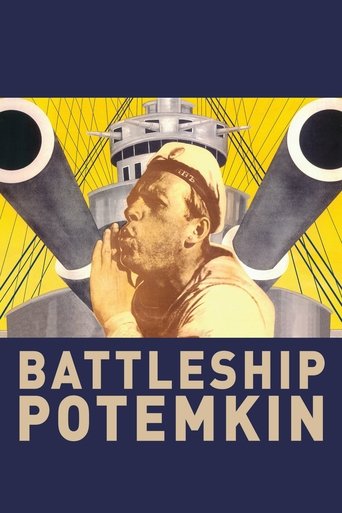
Battleship PotemkinBattleship Potemkin · 1925
Battleship Potemkin
7.61925
MovieDramaHistory
A dramatized account of a great Russian naval mutiny and a resultant public demonstration, showing support, which brought on a police massacre.
StrikeStrike · 1925
Strike
7.41925
MovieDrama
Workers in a factory in pre-revolutionary Russia go on strike and are met by violent suppression.
Ivan the Terrible, Part IIvan the Terrible, Part I · 1944
Ivan the Terrible, Part I
7.31944
MovieDramaHistory
Set during the early part of his reign, Ivan faces betrayal from the aristocracy and even his closest friends as he seeks to unite the Russian people. Sergei Eisenstein's final film, this is the first part of a three-part biopic of Tsar Ivan IV of Russia, which was never completed due to the producer's dissatisfaction with Eisenstein's attempts to use forbidden experimental filming techniques and excessive cost overruns. The second part was completed but not released for a decade after Eisenstein's death and a change of heart in the USSR government toward his work; the third part was only in its earliest stage of filming when shooting was stopped altogether.
Ivan the Terrible, Part II: The Boyars' PlotIvan the Terrible, Part II: The Boyars' Plot · 1958
Ivan the Terrible, Part II: The Boyars' Plot
7.31958
MovieHistoryDrama
This is the second part of a projected three-part epic biopic of Russian Czar Ivan Grozny, undertaken by Soviet film-maker Sergei Eisenstein at the behest of Josef Stalin. Production of the epic was stopped before the third part could be filmed, due to producer dissatisfaction with Eisenstein's introducing forbidden experimental filming techniques into the material, more evident in this part than the first part. As it was, this second part was banned from showings until after the deaths of both Eisenstein and Stalin, and a change of attitude by the subsequent heads of the Soviet government. In this part, as Ivan the Terrible attempts to consolidate his power by establishing a personal army, his political rivals, the Russian boyars, plot to assassinate him.
Hurray Mexico!Hurray Mexico! · 1932
Hurray Mexico!
7.11932
MovieDocumentary
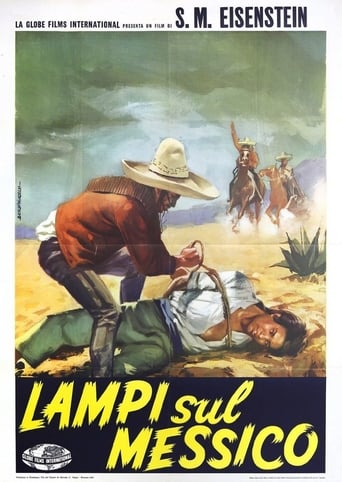
Unedited film that Sergei Eisenstein, Grigoriy Aleksandrov and Eduard Tisse shot in Mexico 1931-32. This record only represents the 200,000-plus feet of unedited film that Sergei Eisenstein, Grigoriy Aleksandrov and Eduard Tisse shot in Mexico 1931/32 for Mary and Upton Sinclair and three American co-financiers. It was Eisenstein's vision to end up with movie about Mexico in six parts called "Calavera", "Sandunga", "Maguey", "Fiesta", "Soldadera", and "Epilogue". The project was canceled before it was completed due to cost overruns and months-delayed completion, and the producers refused to let Eisenstein attempt to edit anything from the material he had finished after Iosif Stalin called him back to the USSR. From this footage the following pictures were subsequently edited by other hands: Thunder Over Mexico (1933), Eisenstein in Mexico (1933), Death Day (1934), Time in the Sun (1940), and Que Viva Mexico (1979).
Sergei Eisenstein: Mexican FantasySergei Eisenstein: Mexican Fantasy · 1998
Sergei Eisenstein: Mexican Fantasy
7.01998
MovieDocumentary
Eisenstein shot 50 hours of footage on location in Mexico in 1931 and 32 for what would have become ¡Que viva México!, but was not able to finish the film. Following two wildly different reconstruction attempts in 1939 (Marie Seton's 'Time in the Sun') and 1979 (Grigori Alexandrov's '¡Que viva México!') Kovalov has here compiled another hypothetical version of what Eisenstein's film might have been.
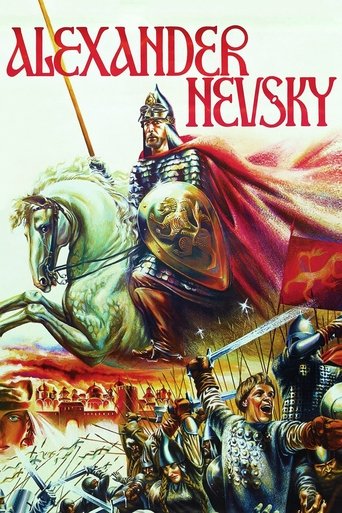
Alexander NevskyAlexander Nevsky · 1938
Alexander Nevsky
7.01938
MovieDramaHistory
When German knights invade Russia, Prince Alexander Nevsky must rally his people to resist the formidable force. After the Teutonic soldiers take over an eastern Russian city, Alexander stages his stand at Novgorod, where a major battle is fought on the ice of frozen Lake Chudskoe. While Alexander leads his outnumbered troops, two of their number, Vasili and Gavrilo, begin a contest of bravery to win the hand of a local maiden.
Every DayEvery Day · 1929
Every Day
6.91929
Movie
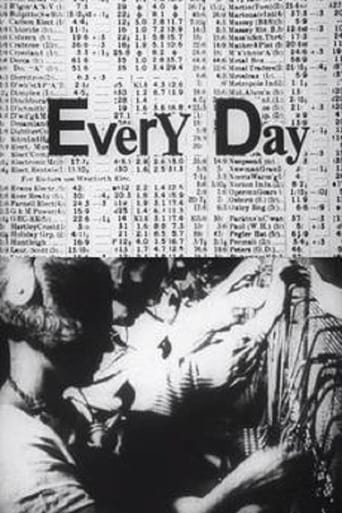
Experimental documentary focusing on a day in the life of city workers, featuring montage sequences and repetition to emphasise the monotony of routine office work.
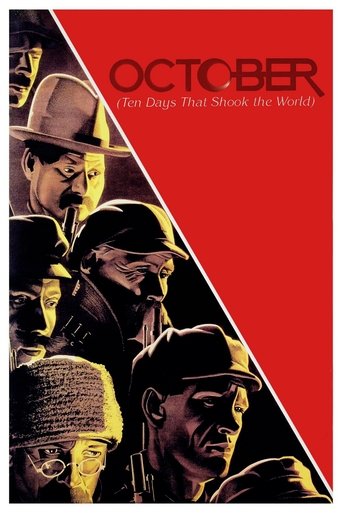
October (Ten Days that Shook the World)October (Ten Days that Shook the World) · 1928
October (Ten Days that Shook the World)
6.91928
MovieDramaHistory
Sergei M. Eisenstein's docu-drama about the 1917 October Revolution in Russia. Made ten years after the events and edited in Eisenstein's 'Soviet Montage' style, it re-enacts in celebratory terms several key scenes from the revolution.
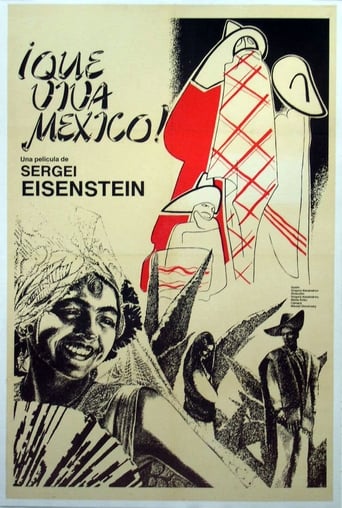
¡Qué Viva México!¡Qué Viva México! · 1979
¡Qué Viva México!
6.71979
MovieDocumentaryDrama
Eisenstein shows us Mexico in this movie, its history and its culture. He believes, that Mexico can become a modern state.
Misery and Fortune of WomanMisery and Fortune of Woman · 1930
Misery and Fortune of Woman
6.51930
MovieDramaDocumentary
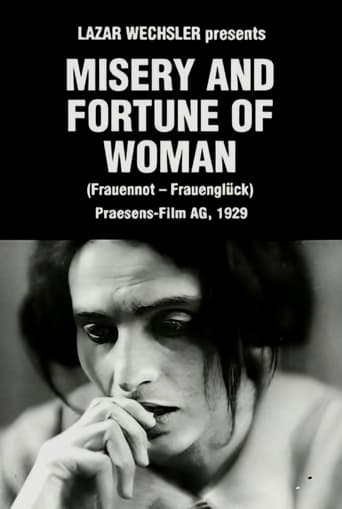
This film shows contrasting views of women with problematic pregnancies and the outcomes resulting when they seek out a back-alley abortionist, a trained and licensed abortion provider in a clinic, or an obstetrician capable of performing a Caesarian Section. The full film appears to be lost, but shortened versions, including one with dialogue scenes added in Germany in 1935, can be found on the internet. Additionally, Eisenstein's role in making the picture remains unclear: did he direct some or all of it, just edit it, or merely leave it to Alexandrov and Tisse to make? Released in the USA 1930 in a 65 minute (5800 ft.) version with English intertitles and a music track under the title BIRTH.
The General LineThe General Line · 1929
The General Line
6.41929
MovieDrama
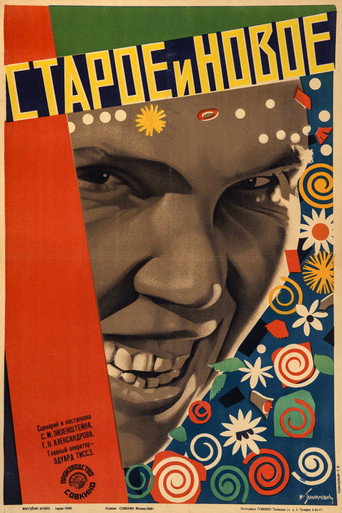
Also known as The Old and the New, The General Line illustrates Lenin’s stated imperative that the nation move from agrarian to industrial culture in an epic ode to farm-collectivization progress.
Bezhin Meadow: Sequences from an Unfinished FilmBezhin Meadow: Sequences from an Unfinished Film · 1968
Bezhin Meadow: Sequences from an Unfinished Film
6.01968
MovieDrama
Bezhin Lug (Bezhin Meadow) was to be a Soviet film about a young farm boy whose father attempts to betray the government for political reasons by sabotaging the year's harvest, and the son's efforts to stop his own father to protect the Soviet state, culminating in the boy's murder and a social uprising. Assigned to Soviet film-maker Sergei Eisenstein, the filming followed the same path as with his previous effort, "Que Viva Mexico", into cost overrun and over-shooting of footage. Furthermore, Eisenstein's usage of forbidden experimental film techniques outraged his government superiors, who ordered the film destroyed before it was even completed. All that survives are the first and last frames of each shot, preserved by Sergei Eisenstein’s wife, Pera Atasheva. The 1967 reconstruction, by Naum Kleiman of the Eisenstein Museum and Sergei Yutkevich of Gosfilmofond, places these frames in order, approximating the original film.

More Like This

Couldn't load this row right now.
Rate this film

Your ratings make Midnight smarter