Frits Van den Berghe
1977 · 72 min · ★ 8.0 · Documentary
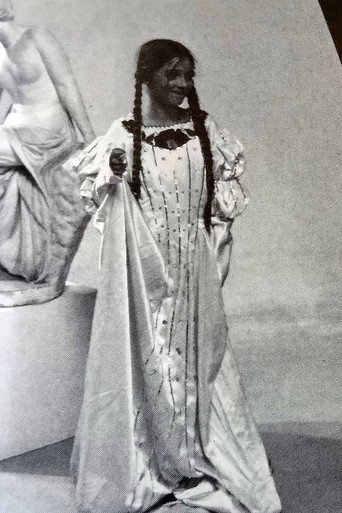
A compilation film, divided into four separate segments, that explores the life and work of the Flemish expressionist painter Frits Van den Berghe (1883–1939). What makes this inspired art film special is that director Buyens does not use a voice-over or commentary text, a deliberate choice intended to give the viewer the opportunity to discover and interpret the painter’s world on their own. Another striking feature is its stripped-down soundtrack, featuring music by Arsène Souffriau.
Directed by Frans Buyens · Written by Frans Buyens
Your Rating
More from Frans BuyensSee all →
Ieder van ons · 1971Ieder van ons
★ 10.01971
Movie
The deeply socially engaged documentary filmmaker Frans Buyens had long dreamed of making the transition to fiction filmmaking. The experimental Ieder van Ons was a first attempt in that direction. In essence, it was an inquiry film shot in a cinéma vérité style about appearance and reality in social commitment. With Ieder van Ons, Buyens wanted to jolt the viewer’s conscience and make them aware of the duty to face the truth and to act accordingly. To achieve this, he combined a fictional plot with documentary scenes. On the one hand, the film contains acted sequences about the awakening conscience of a ruthless political figure; on the other hand, Buyens himself appears before the camera to introduce several actors, their characters, and the situations in which they are about to become involved.
Less Dead Than the Others · 1992Less Dead Than the Others
★ 10.01992
MovieDrama
Frans Buyens's moving and inventive film is based on his own autobiographical novel, which deals in the most sensitive terms possible with the subject of euthanasia.
Wondershop · 1974Wondershop
★ 9.01974
MovieFantasy
A bitter, miserable man runs a chaotic secondhand store, mistreating both his assistant and his customers. One day, a young brother and sister enter his shop, hoping to sell a cherished golden watch. Their arrival disrupts the owner's stingy routines, plunging the children into a surreal, unpredictable world managed by eccentric adults. Frans Buyens’ mid-length feature is a whimsical, satirical fable exploring the clash between childhood innocence and adult greed.
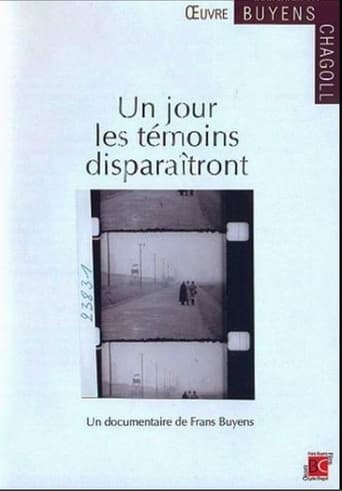
Un jour les témoins disparaîtront · 1979Un jour les témoins disparaîtront
★ 9.01979
MovieDocumentary
Following the archival horror of the liberation of Nazi concentration camps, this poignant documentary chronicles a study trip organized by the Belgian Auschwitz-Birkenau Association. The film follows 120 young university students and 10 Holocaust survivors as they journey back to Auschwitz and Birkenau. Standing on the historic grounds, the youth confront the devastating past. Through deeply personal dialogues, survivors and students openly debate ethics, institutional racism, and the dangers of dictatorship.
In naam van de Führer · 1978In naam van de Führer
★ 9.01978
MovieDocumentary
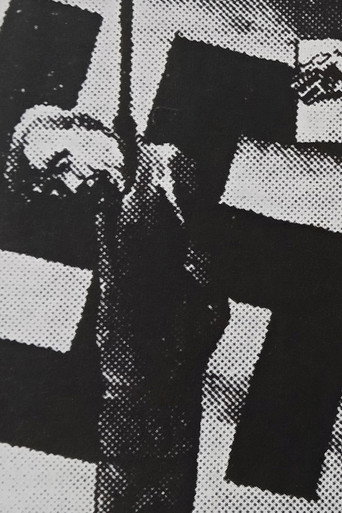
This film deals with the fate of children during the Second World War. The Nazis divided children into two categories: “the good ones,” the Aryan children, and “the bad ones,” the others. In the name of ultranationalism, Nazism, the theory of the Übermensch, and racism, Aryan children were mentally indoctrinated, while the others were imprisoned in camps and physically destroyed.
These “others” were mainly children from non-Aryan and supposedly impure races: Jews, Poles, Russians, Yugoslavs, and Roma.
For this film, Lydia Chagoll conducted research in World War II documentation centers, museums, and concentration camp archives in several countries, collecting texts, documents, and photographs. The film consists of a montage of photos and footage filmed by the Nazis themselves, accompanied by voice-over commentary based entirely on quotations from Nazi publications, laws, decrees, directives, newspapers, schoolbooks, reports, and political texts.
Talking with Germans · 1965Talking with Germans
★ 8.01965
MovieDocumentary
The Belgian documentarian Frans Buyens interviewed passers-by in East Berlin and Dresden, factory workers and technical draftswomen at the Warnow shipyard in Stralsund, small business owners in Chemnitz, LPG farmers in the countryside, foreign students at the Gottfried Herder Institute in Leipzig and industrial workers in Magdeburg and Eisenhuettenstadt. "The GDR seen through the eyes of a foreigner" was the original title of the film. A few years after the Wall was built, Buyens documented the approval, disapproval and fears of the interviewees.
Will o' the Wisp · 1973Will o' the Wisp
★ 7.01973
MovieDrama
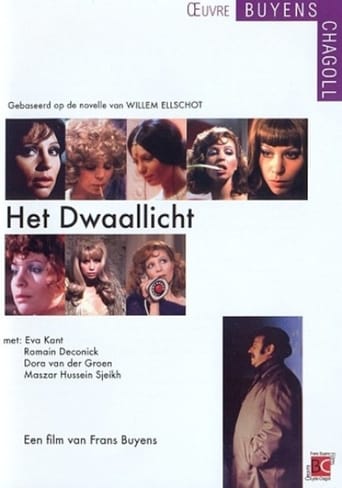
A rainy evening in the harbor of Antwerp. A man named Laarmans is on his way home even though he doesn't want to. Three lost Eastern sailors are looking for a woman named Maria Van Dam and ask Laermans to show them the way. He decides to help them find this mysterious woman.
Waar de vogeltjes hoesten · 1974Waar de vogeltjes hoesten
1974
MovieFantasy
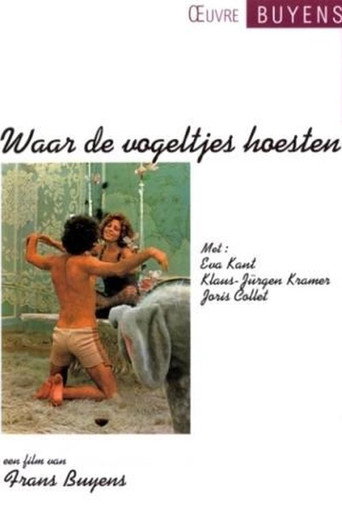
'Waar de vogelstjes hoesten' is a rare, satirical fable presented as a fantasy musical. The film tells the surreal love story of a flower girl and a scarecrow who leave their rural home for the big city. Upon arrival, they quickly become corrupted by industrial capitalism and victims of their own growing greed. Featuring unique choreography by Lydia Chagoll, this experimental production serves as a powerful artistic critique. It explicitly warns against the degradation of the environment and the spiritual pollution of modern human society.
Sarah dit... Leïla dit... · 1983Sarah dit... Leïla dit...
1983
Movie
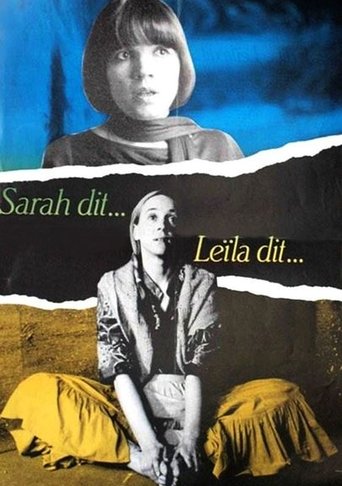
This film deals with the experiences of children in concentration camps. The more so because it discloses, above all, circumstances that have hitherto been almost completely untold, namely the fate of children in the camps under the Japanese occupation during World War II. It's a meeting between two women who, when children, were prisoners in concentration camps. One of them was deported to Auschwitz when she was 13 and remained there for two years; the other was interned in a Japanese camp in Indonesia when she was 11 and stayed there for more than three years. The two women talk, each reliving their experiences through a child's heart and soul.
Open Dialoog · 1971Open Dialoog
1971
MovieDocumentary
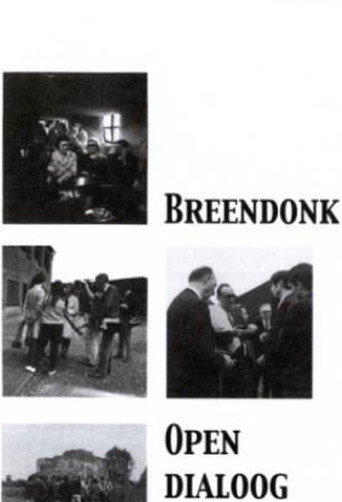
Commemoration of the 25th anniversary of the liberation of the SS camp Breendonk. Students meet resistance fighters who were imprisoned there. Discussions arise about the past, present, and future.
Vechten voor onze rechten · 1962Vechten voor onze rechten
1962
Movie
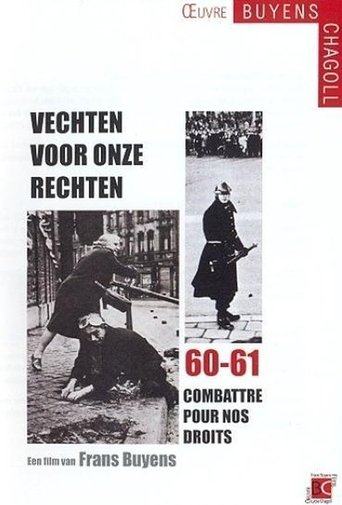
Self-taught filmmaker Frans Buyens captures in Fighting for Our Rights the monumental Belgian workers’ strike of 1960–61, protesting the Eykens III government’s Unification Law. This collage-style documentary is a heartfelt tribute to the workers and sparked significant controversy in Belgium. While several festivals at home rejected the film, Buyens’ work received acclaim at festivals across Germany, Italy, and beyond. Through precise, dialectical editing combined with music and voice-over, Buyens vividly portrays both the power and the setbacks of the Belgian labor movement.
La petite peau blanche...La petite peau blanche...
Movie
More Like This
Happier Than Ever: A Love Letter to Los Angeles · 2021Happier Than Ever: A Love Letter to Los Angeles
★ 7.82021
MovieMusicDocumentary
Fresh off the heels of her brand-new album, "Happier Than Ever," this cinematic concert experience features an intimate performance of every song in the album's sequential order – for the first and only time – from the stage of the legendary Hollywood Bowl.
Burden of Dreams · 1982Burden of Dreams
★ 7.61982
MovieDocumentary
The Amazon rain forest, 1979. The crew of Fitzcarraldo (1982), a film directed by German director Werner Herzog, soon finds itself with problems related to casting, tribal struggles and accidents, among many other setbacks; but nothing compared to dragging a huge steamboat up a mountain, while Herzog embraces the path of a certain madness to make his vision come true.