Seven Intellectuals in Bamboo Forest, Part IV

Seven Intellectuals in Bamboo Forest, Part IV

2006 · 79 min

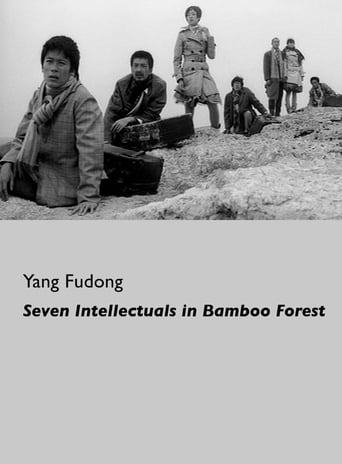
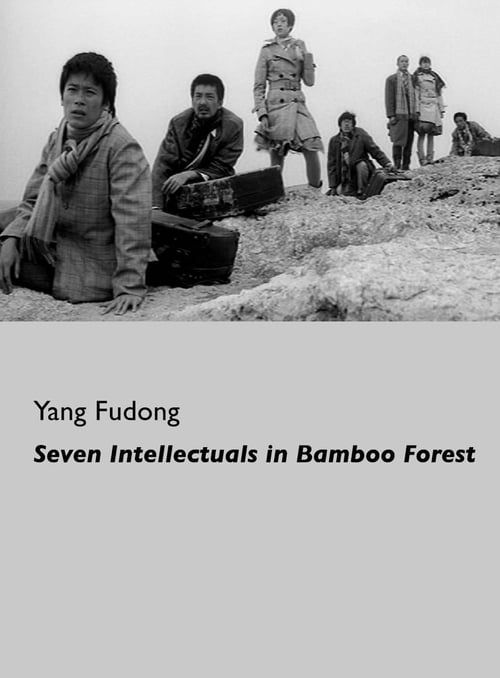
The film 'Seven Intellectuals In Bamboo Forest' is based on the history of seven talented intellectuals from the ancient Chinese Wei and Jin Dynasties. Ruan Ji, Ji Kang, Shan Tao, Liu Ling, Ruan Yan, Xiang Xiu and Wang Rong were famous poets and artists at that time. Open and unruly, they used to gather and drink in the bamboo forest, singing songs and playing traditional Chinese musical instruments, in the hope of escaping from earthly life. They pursued individuality, freedom, and liberty. Their remarkable talent and passion made them a notable group in Chinese history. Part 4 is about the idea of living on an island with no one else, avoiding the hustle and bustle of the busy metropolis. In Chinese legend, there is an island of Peach Blossoms - the very ideal place to live, where one's thoughts can fly freely.

Directed by Yang Fudong · Written by Yang Fudong

Your Rating

Cast

More from Yang FudongSee all →

Seven Intellectuals in Bamboo Forest, Part VSeven Intellectuals in Bamboo Forest, Part V · 2007
Seven Intellectuals in Bamboo Forest, Part V
2007
Movie
The film 'Seven Intellectuals In Bamboo Forest' is based on the history of seven talented intellectuals from the ancient Chinese Wei and Jin Dynasties. Ruan Ji, Ji Kang, Shan Tao, Liu Ling, Ruan Yan, Xiang Xiu and Wang Rong were famous poets and artists at that time. Open and unruly, they used to gather and drink in the bamboo forest, singing songs and playing traditional Chinese musical instruments, in the hope of escaping from earthly life. They pursued individuality, freedom, and liberty. Their remarkable talent and passion made them a notable group in Chinese history. Part 5 is about the return to the city and to reality. We live in the city and belong to it. If any problem arises, we are able to solve it.
Seven Intellectuals in Bamboo Forest, Part ISeven Intellectuals in Bamboo Forest, Part I · 2003
Seven Intellectuals in Bamboo Forest, Part I
2003
Movie
Seven Intellectuals in Bamboo Forest has five parts. The series was finished in 2007 and shown as whole in the Venice Biennale the same year. Yang Fudong uses myths, individual memories and experiences as means to study identity and how it may be formed. In his films the spectator can sense the contradictions in the present and past China. Seven Intellectuals in Bamboo Forest, Part 1, was filmed on the Yellow Mountain. The mountain has a significant status in the traditional Chinese painting. The scenery, the not so clear motives of each character in the film combined with the music creates an almost poetic atmosphere.
Seven Intellectuals in Bamboo Forest, Part IISeven Intellectuals in Bamboo Forest, Part II · 2004
Seven Intellectuals in Bamboo Forest, Part II
2004
Movie
The film 'Seven Intellectuals In Bamboo Forest' is based on the history of seven talented intellectuals from the ancient Chinese Wei and Jin Dynasties. Ruan Ji, Ji Kang, Shan Tao, Liu Ling, Ruan Yan, Xiang Xiu and Wang Rong were famous poets and artists at that time. Open and unruly, they used to gather and drink in the bamboo forest, singing songs and playing traditional Chinese musical instruments, in the hope of escaping from earthly life. They pursued individuality, freedom, and liberty. Their remarkable talent and passion made them a notable group in Chinese history. Part 2 exposes closed city life in a noisy metropolis, such as Shanghai. The 7 young people live in the city, but seem to have little connection with the city.
Seven Intellectuals in Bamboo Forest, Part IIISeven Intellectuals in Bamboo Forest, Part III · 2005
Seven Intellectuals in Bamboo Forest, Part III
2005
Movie
The film 'Seven Intellectuals In Bamboo Forest' is based on the history of seven talented intellectuals from the ancient Chinese Wei and Jin Dynasties. Ruan Ji, Ji Kang, Shan Tao, Liu Ling, Ruan Yan, Xiang Xiu and Wang Rong were famous poets and artists at that time. Open and unruly, they used to gather and drink in the bamboo forest, singing songs and playing traditional Chinese musical instruments, in the hope of escaping from earthly life. They pursued individuality, freedom, and liberty. Their remarkable talent and passion made them a notable group in Chinese history. In Part 3 these 7 young people try to change their identity and have a different life. They choose to live in China's Southwestern villages, where they can get closer to nature, and to their own hearts.
Art, Art, Art.Art, Art, Art. · 2021
Art, Art, Art.
2021
Movie
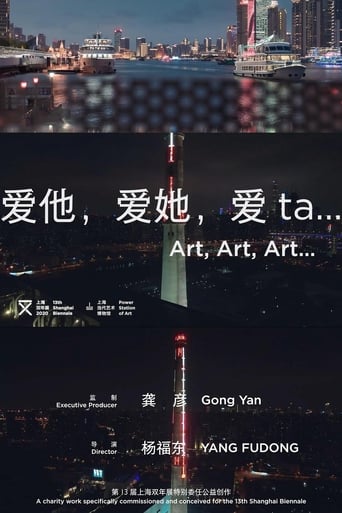
The 13th Shanghai Biennale cooperated with the artist Yang Fudong in a public welfare short film - "Art, Art, Art...".
Lock AgainLock Again · 2004
Lock Again
2004
Movie
Two young men wear the uniform of 70’s policeman, sometimes they look like runaway criminal. They want to escape reality which is impossible to cast off. They yearn for the bright sunshine life, expecting the time to be captured, to exchange for a calmness of the heart.
Liu LanLiu Lan · 2003
Liu Lan
2003
Movie
Liu Lan tells a story about the break with tradition in China. An intellectual in a white suit meets a traditionally dressed woman in the countryside. Despite their mutual love, their lives seem incompatible. A woman’s voice sings a folksong, Why are people in love always separated from one another?’ The film’s atmosphere is melancholy and the landscape veiled in mist. Here Yang Fudong shows his connections with Chinese landscape painting.
Dawn BreakingDawn Breaking · 2018
Dawn Breaking
2018
Movie
Dawn Breaking is the opening chapter of Yang Fudong’s Museum Film Project. "The film in its final version is something different from the dailies showing the process of making it."
A Resolute WomanA Resolute Woman · 2016
A Resolute Woman
2016
Movie
A Resolute Woman // A Mother // Buffalos Gift // A Lonely Fat Man/ Lost Box // Seven Ribs // Waiting for Her to Come // The Power of Being // Calls from the Intellectuals // Brothers // The Only Pine
Moving MountainsMoving Mountains · 2016
Moving Mountains
2016
Movie
Yang Fudong, one of the most influential contemporary artists in China, is known for his epic black-and-white films and photographs, which straddle the worlds of contemporary art installation and cinema. Moving Mountains is a 46-minute, black-and-white film, accompanied by photographs from the film set, drawings and props. The film is inspired by the ancient tale of a man, seeking to move a mountain, and extolls the virtues of perseverance and collective action. The artist makes this story a poetic reflection upon human nature and the shifting values to which it can be subjected.
XiānghéXiānghé · 2025
Xiānghé
2025
MovieHistoryRomance
A 15 part film featuring scenes from Xianghe, running from the mundane to the surreal: people parade in opera costumes, slaughter pigs in public and dine on the fields; they bury the dead and get married, tickling the bride and groom, everything done without speech. Sitting somewhere between intimate personal reels and detached ethnographic records, the work creates a simultaneous sense of immersion and distance – of the type you might associate with end-of-life flashbacks. Yang gives nostalgia a fantastic, mystical bent, as if to suggest that to revel in memory is a creative act.
An Estranged ParadiseAn Estranged Paradise · 2002
An Estranged Paradise
2002
MovieDrama
Set in the city of Hangzhou, the film takes as its focal point a restless young man, Zhu Zi, following him as he aimlessly wanders through the city. Through a series of distinct vignettes, Yang depicts Zhu Zi's inability to find comfort in friends, lovers or environment as a reflection of the existential difficulty of China's "nameless generation," cast adrift during the rapid changes at the turn of the millennium.
The Half Hitching PostThe Half Hitching Post · 2005
The Half Hitching Post
2005
MovieDocumentaryMystery
An Sai, Shanbei, An isolated village on the Loess Plateau, Northern China. Two young outsiders are moving in, While two young locals are struggling to escape. Comes into view a donkey full of luggage, Comes also into view a young couple, He carries her on a bike...
New WomenNew Women · 2013
New Women
2013
Movie
Multi-channel video, 35mm, B&W, 8-11 mins...She rises gently, her hair tousled by the wind; gracefully, she picks up a handkerchief and wipes her brow; sunlight catches the wall across from her and lingers there for a while.
East of Que VillageEast of Que Village · 2007
East of Que Village
2007
MovieHistoryDocumentary
Shot in the rural Chinese province of Hebei, this work captures a pack of wild dogs scavenging in an arid desolate landscape. East of Que Village considers the impact of Chinese industrialisation and urbanisation on rural communities, casting fresh light on those neglected by the new social-economic paradigm. The dogs, which literally have to eat each other to survive are juxtaposed with a group of villagers who struggle in the same ways. The work reflects the sense of isolation and loss increasingly present in Chinese society as communities are scattered, traditional rural villages are dissolved, and the fight for survival takes hold. The work's title signals to the only road leading from the village to the outside world.
Su XiaoxiaoSu Xiaoxiao · 2001
Su Xiaoxiao
2001
Movie
Multi-channel video installation (4 overhead projectors, 19 TV sets). Yang Fudong captures the poetic sentiment that arises in moments of individual encounter with the real world, and his own expression of the world inside him. His artistic practice engages in a temperamental dialogue with the traditional culture and literature of China. Yang Fudong constructs a potential platform for dialogue and negotiation between the self and external reality. In so doing, he does not propagate ?xed believes or dogmas. His work is based on process, on what he learns from ceaseless study, observation, and involvement with his social environment and the way it relates to the individual.

More Like This

Couldn't load this row right now.
Rate this film

Your ratings make Midnight smarter