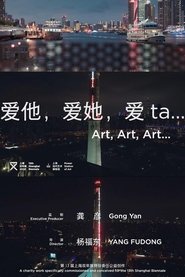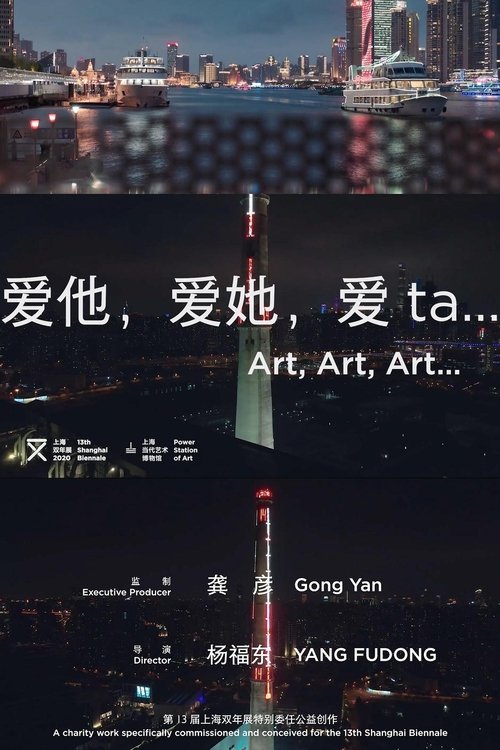
Art, Art, Art.
2021 · 12 min
The 13th Shanghai Biennale cooperated with the artist Yang Fudong in a public welfare short film - "Art, Art, Art...".
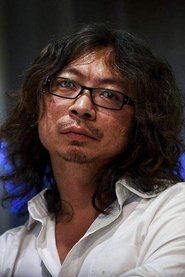
Directed by Yang Fudong
Your Rating
Cast
 Tan Zhuo
  Jackson Wang
  Xu Zhiyuan
 More from Yang FudongSee all →
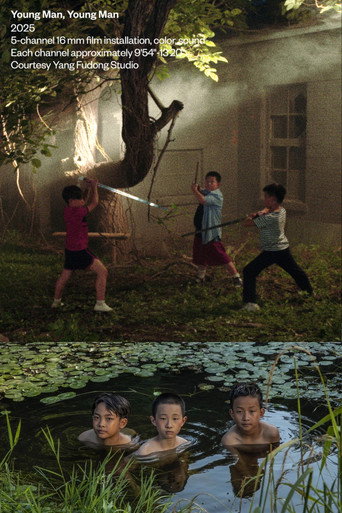 Young Man, Young Man · 2025
Young Man, Young Man
2025
MovieDocumentary
Young Man, Young Man unfolds in a fragmented structure, reconstructing Yang Fudong’s recollections of his 1980s adolescence in a Beijing military compound, along with scattered memories of collective life in the post-socialist era. In the film, young boys run, practice martial arts, wait for the bus, splash in water, and play in cornfields. There is no fixed narrative; instead, the boys seem to drift through an endless summer. Yet an undercurrent of distance and estrangement suggests that childhood has already quietly slipped away. These moments of adolescent innocence and loneliness, crystalized within the film, form a dreamlike allegory.
 At The Summer Palace · 2025
At The Summer Palace
2025
MovieDocumentaryHistory
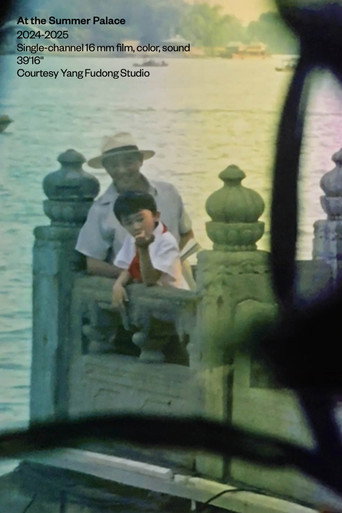
At the Summer Palace follows a mysterious man and a young boy as they wander through the Summer Palace, clad in clothing recalling styles from the 1980s and 1990s. The work unfolds like a hazy moment between dreaming and wakefulness, recalling the stillness of a languid afternoon. The era-specific details present in the setting seem to anachronistically clash with their pair’s clothing and behavior. Through this dislocation of time and space, Yang Fudong evokes the complex emotions of childhood, specifically the mixture of curiosity and unease a child feels upon encountering the strange and unknown.
 The Nightman Cometh · 2011
The Nightman Cometh
2011
MovieHistoryDocumentary
Yejiang / The Nightman Cometh features a cast of strange figures who slip between historical eras. Strewn with symbols of past and future, civilisation and wilderness, dream and reality, the work is laden with filmic, artistic and literary meanings but surrenders to none. An ancient warrior is seen wounded and forlorn after battle, in conflict about his path in life. Yang dramatises the clash between the hero's social role or 'mask', and the more authentic face of his instincts and aspirations. For Yang, the visible world presented in this work is not an objective one but rather the externalisation of internal sentiments.
 Xiānghé · 2025
Xiānghé
2025
MovieHistoryRomance
A 15 part film featuring scenes from Xianghe, running from the mundane to the surreal: people parade in opera costumes, slaughter pigs in public and dine on the fields; they bury the dead and get married, tickling the bride and groom, everything done without speech. Sitting somewhere between intimate personal reels and detached ethnographic records, the work creates a simultaneous sense of immersion and distance – of the type you might associate with end-of-life flashbacks. Yang gives nostalgia a fantastic, mystical bent, as if to suggest that to revel in memory is a creative act.
 Dawn Breaking · 2018
Dawn Breaking
2018
Movie
Dawn Breaking is the opening chapter of Yang Fudong’s Museum Film Project. "The film in its final version is something different from the dailies showing the process of making it."
 Seven Intellectuals in Bamboo Forest, Part V · 2007
Seven Intellectuals in Bamboo Forest, Part V
2007
Movie
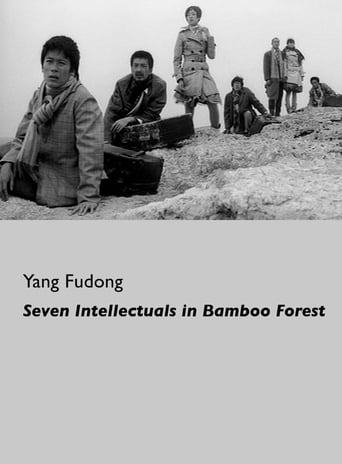
The film 'Seven Intellectuals In Bamboo Forest' is based on the history of seven talented intellectuals from the ancient Chinese Wei and Jin Dynasties. Ruan Ji, Ji Kang, Shan Tao, Liu Ling, Ruan Yan, Xiang Xiu and Wang Rong were famous poets and artists at that time. Open and unruly, they used to gather and drink in the bamboo forest, singing songs and playing traditional Chinese musical instruments, in the hope of escaping from earthly life. They pursued individuality, freedom, and liberty. Their remarkable talent and passion made them a notable group in Chinese history. Part 5 is about the return to the city and to reality. We live in the city and belong to it. If any problem arises, we are able to solve it.
 Moving Mountains · 2016
Moving Mountains
2016
Movie
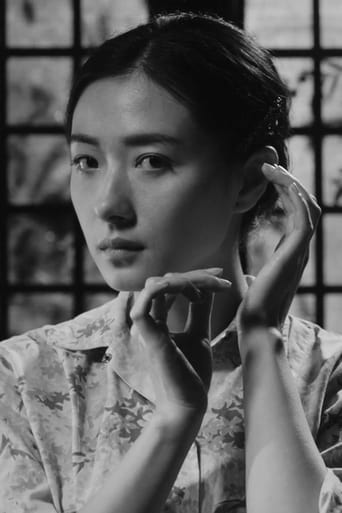
Yang Fudong, one of the most influential contemporary artists in China, is known for his epic black-and-white films and photographs, which straddle the worlds of contemporary art installation and cinema. Moving Mountains is a 46-minute, black-and-white film, accompanied by photographs from the film set, drawings and props. The film is inspired by the ancient tale of a man, seeking to move a mountain, and extolls the virtues of perseverance and collective action. The artist makes this story a poetic reflection upon human nature and the shifting values to which it can be subjected.
 New Women · 2013
New Women
2013
Movie
Multi-channel video, 35mm, B&W, 8-11 mins...She rises gently, her hair tousled by the wind; gracefully, she picks up a handkerchief and wipes her brow; sunlight catches the wall across from her and lingers there for a while.
 films4peace · 2012
films4peace
2012
Movie
“For my work for films4peace, I considered certain visual metaphors. Compared with the eternity of the universe, human life is short, very short. Our existence is like a grain of sand in a desert or a speck of stone on the rock that makes the world. Conflict and destruction seems absurd if you consider the insignificance of our time on earth. Let us distance ourselves from oppression and slaughter. The creation of world peace is more important for all humankind. In my film, huge boulders slowly rise up amidst a chaotic noise that drifts in and out. Human life is not always beautiful, more often than not, we are simply trying to survive, allowing our lives to continue and nothing more.” —Yang Fudong
Seven Intellectuals in Bamboo Forest, Part IV · 2006Seven Intellectuals in Bamboo Forest, Part IV
2006
Movie
The film 'Seven Intellectuals In Bamboo Forest' is based on the history of seven talented intellectuals from the ancient Chinese Wei and Jin Dynasties. Ruan Ji, Ji Kang, Shan Tao, Liu Ling, Ruan Yan, Xiang Xiu and Wang Rong were famous poets and artists at that time. Open and unruly, they used to gather and drink in the bamboo forest, singing songs and playing traditional Chinese musical instruments, in the hope of escaping from earthly life. They pursued individuality, freedom, and liberty. Their remarkable talent and passion made them a notable group in Chinese history. Part 4 is about the idea of living on an island with no one else, avoiding the hustle and bustle of the busy metropolis. In Chinese legend, there is an island of Peach Blossoms - the very ideal place to live, where one's thoughts can fly freely.
 Seven Intellectuals in Bamboo Forest, Part I · 2003
Seven Intellectuals in Bamboo Forest, Part I
2003
Movie
Seven Intellectuals in Bamboo Forest has five parts. The series was finished in 2007 and shown as whole in the Venice Biennale the same year. Yang Fudong uses myths, individual memories and experiences as means to study identity and how it may be formed. In his films the spectator can sense the contradictions in the present and past China. Seven Intellectuals in Bamboo Forest, Part 1, was filmed on the Yellow Mountain. The mountain has a significant status in the traditional Chinese painting. The scenery, the not so clear motives of each character in the film combined with the music creates an almost poetic atmosphere.
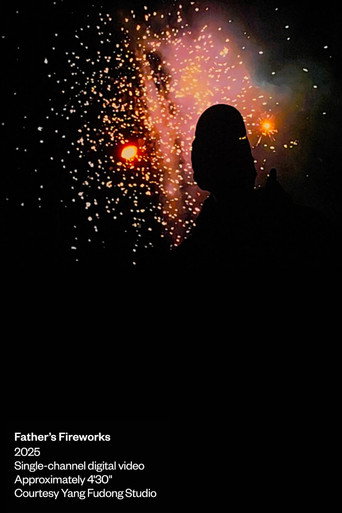 Father's Fireworks · 2025
Father's Fireworks
2025
MovieDocumentaryFamily
Father’s Fireworks is a short film the artist edited out of footage of daily life that he had previously shot. The film first depicts a worrisome and loving letter written by Yang Fudong's father to Yang Fudong through textual still frames, after which it shows the artist’s father setting off fireworks in celebration of the New Year.
Seven Intellectuals in Bamboo Forest, Part III · 2005Seven Intellectuals in Bamboo Forest, Part III
2005
Movie
The film 'Seven Intellectuals In Bamboo Forest' is based on the history of seven talented intellectuals from the ancient Chinese Wei and Jin Dynasties. Ruan Ji, Ji Kang, Shan Tao, Liu Ling, Ruan Yan, Xiang Xiu and Wang Rong were famous poets and artists at that time. Open and unruly, they used to gather and drink in the bamboo forest, singing songs and playing traditional Chinese musical instruments, in the hope of escaping from earthly life. They pursued individuality, freedom, and liberty. Their remarkable talent and passion made them a notable group in Chinese history. In Part 3 these 7 young people try to change their identity and have a different life. They choose to live in China's Southwestern villages, where they can get closer to nature, and to their own hearts.
 After All, I Didn't Force You · 1998
After All, I Didn't Force You
1998
Movie
Implicitly a reaction to the forms of individualism in a developing modern mass society. Yang Fudong strings together takes with different characters so quickly one after the other that they “lose face.” A man explains to a woman the sentence"I didn't force you". Separate movements of 12-14 people are combined/cut to form a fictive man who repeats the words "I didn't force you" to a woman.
 Lock Again · 2004
Lock Again
2004
Movie
Two young men wear the uniform of 70’s policeman, sometimes they look like runaway criminal. They want to escape reality which is impossible to cast off. They yearn for the bright sunshine life, expecting the time to be captured, to exchange for a calmness of the heart.
 Su Xiaoxiao · 2001
Su Xiaoxiao
2001
Movie
Multi-channel video installation (4 overhead projectors, 19 TV sets). Yang Fudong captures the poetic sentiment that arises in moments of individual encounter with the real world, and his own expression of the world inside him. His artistic practice engages in a temperamental dialogue with the traditional culture and literature of China. Yang Fudong constructs a potential platform for dialogue and negotiation between the self and external reality. In so doing, he does not propagate ?xed believes or dogmas. His work is based on process, on what he learns from ceaseless study, observation, and involvement with his social environment and the way it relates to the individual.
More Like This
Couldn't load this row right now.