Yang Fudong

Directing

Yang Fudong

No biography available.

Known For
Seven Intellectuals in Bamboo Forest, Part IVSeven Intellectuals in Bamboo Forest, Part IV · 2006
Seven Intellectuals in Bamboo Forest, Part IV
2006
Movie
The film 'Seven Intellectuals In Bamboo Forest' is based on the history of seven talented intellectuals from the ancient Chinese Wei and Jin Dynasties. Ruan Ji, Ji Kang, Shan Tao, Liu Ling, Ruan Yan, Xiang Xiu and Wang Rong were famous poets and artists at that time. Open and unruly, they used to gather and drink in the bamboo forest, singing songs and playing traditional Chinese musical instruments, in the hope of escaping from earthly life. They pursued individuality, freedom, and liberty. Their remarkable talent and passion made them a notable group in Chinese history. Part 4 is about the idea of living on an island with no one else, avoiding the hustle and bustle of the busy metropolis. In Chinese legend, there is an island of Peach Blossoms - the very ideal place to live, where one's thoughts can fly freely.
Seven Intellectuals in Bamboo Forest, Part VSeven Intellectuals in Bamboo Forest, Part V · 2007
Seven Intellectuals in Bamboo Forest, Part V
2007
Movie
The film 'Seven Intellectuals In Bamboo Forest' is based on the history of seven talented intellectuals from the ancient Chinese Wei and Jin Dynasties. Ruan Ji, Ji Kang, Shan Tao, Liu Ling, Ruan Yan, Xiang Xiu and Wang Rong were famous poets and artists at that time. Open and unruly, they used to gather and drink in the bamboo forest, singing songs and playing traditional Chinese musical instruments, in the hope of escaping from earthly life. They pursued individuality, freedom, and liberty. Their remarkable talent and passion made them a notable group in Chinese history. Part 5 is about the return to the city and to reality. We live in the city and belong to it. If any problem arises, we are able to solve it.
Seven Intellectuals in Bamboo Forest, Part ISeven Intellectuals in Bamboo Forest, Part I · 2003
Seven Intellectuals in Bamboo Forest, Part I
2003
Movie
Seven Intellectuals in Bamboo Forest has five parts. The series was finished in 2007 and shown as whole in the Venice Biennale the same year. Yang Fudong uses myths, individual memories and experiences as means to study identity and how it may be formed. In his films the spectator can sense the contradictions in the present and past China. Seven Intellectuals in Bamboo Forest, Part 1, was filmed on the Yellow Mountain. The mountain has a significant status in the traditional Chinese painting. The scenery, the not so clear motives of each character in the film combined with the music creates an almost poetic atmosphere.
Seven Intellectuals in Bamboo Forest, Part IIISeven Intellectuals in Bamboo Forest, Part III · 2005
Seven Intellectuals in Bamboo Forest, Part III
2005
Movie
The film 'Seven Intellectuals In Bamboo Forest' is based on the history of seven talented intellectuals from the ancient Chinese Wei and Jin Dynasties. Ruan Ji, Ji Kang, Shan Tao, Liu Ling, Ruan Yan, Xiang Xiu and Wang Rong were famous poets and artists at that time. Open and unruly, they used to gather and drink in the bamboo forest, singing songs and playing traditional Chinese musical instruments, in the hope of escaping from earthly life. They pursued individuality, freedom, and liberty. Their remarkable talent and passion made them a notable group in Chinese history. In Part 3 these 7 young people try to change their identity and have a different life. They choose to live in China's Southwestern villages, where they can get closer to nature, and to their own hearts.
Liu LanLiu Lan · 2003
Liu Lan
2003
Movie
Liu Lan tells a story about the break with tradition in China. An intellectual in a white suit meets a traditionally dressed woman in the countryside. Despite their mutual love, their lives seem incompatible. A woman’s voice sings a folksong, Why are people in love always separated from one another?’ The film’s atmosphere is melancholy and the landscape veiled in mist. Here Yang Fudong shows his connections with Chinese landscape painting.
Seven Intellectuals in Bamboo Forest, Part IISeven Intellectuals in Bamboo Forest, Part II · 2004
Seven Intellectuals in Bamboo Forest, Part II
2004
Movie
The film 'Seven Intellectuals In Bamboo Forest' is based on the history of seven talented intellectuals from the ancient Chinese Wei and Jin Dynasties. Ruan Ji, Ji Kang, Shan Tao, Liu Ling, Ruan Yan, Xiang Xiu and Wang Rong were famous poets and artists at that time. Open and unruly, they used to gather and drink in the bamboo forest, singing songs and playing traditional Chinese musical instruments, in the hope of escaping from earthly life. They pursued individuality, freedom, and liberty. Their remarkable talent and passion made them a notable group in Chinese history. Part 2 exposes closed city life in a noisy metropolis, such as Shanghai. The 7 young people live in the city, but seem to have little connection with the city.
Dawn BreakingDawn Breaking · 2018
Dawn Breaking
2018
Movie
Dawn Breaking is the opening chapter of Yang Fudong’s Museum Film Project. "The film in its final version is something different from the dailies showing the process of making it."
Art, Art, Art.Art, Art, Art. · 2021
Art, Art, Art.
2021
Movie
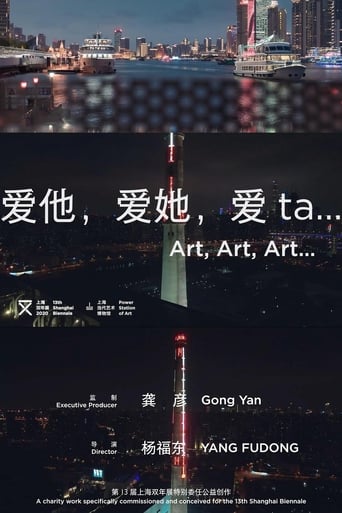
The 13th Shanghai Biennale cooperated with the artist Yang Fudong in a public welfare short film - "Art, Art, Art...".

Filmography

Sort
Seven Intellectuals in Bamboo Forest, Part IVSeven Intellectuals in Bamboo Forest, Part IV · 2006
Seven Intellectuals in Bamboo Forest, Part IV
2006
Movie
The film 'Seven Intellectuals In Bamboo Forest' is based on the history of seven talented intellectuals from the ancient Chinese Wei and Jin Dynasties. Ruan Ji, Ji Kang, Shan Tao, Liu Ling, Ruan Yan, Xiang Xiu and Wang Rong were famous poets and artists at that time. Open and unruly, they used to gather and drink in the bamboo forest, singing songs and playing traditional Chinese musical instruments, in the hope of escaping from earthly life. They pursued individuality, freedom, and liberty. Their remarkable talent and passion made them a notable group in Chinese history. Part 4 is about the idea of living on an island with no one else, avoiding the hustle and bustle of the busy metropolis. In Chinese legend, there is an island of Peach Blossoms - the very ideal place to live, where one's thoughts can fly freely.

Director

Seven Intellectuals in Bamboo Forest, Part VSeven Intellectuals in Bamboo Forest, Part V · 2007
Seven Intellectuals in Bamboo Forest, Part V
2007
Movie
The film 'Seven Intellectuals In Bamboo Forest' is based on the history of seven talented intellectuals from the ancient Chinese Wei and Jin Dynasties. Ruan Ji, Ji Kang, Shan Tao, Liu Ling, Ruan Yan, Xiang Xiu and Wang Rong were famous poets and artists at that time. Open and unruly, they used to gather and drink in the bamboo forest, singing songs and playing traditional Chinese musical instruments, in the hope of escaping from earthly life. They pursued individuality, freedom, and liberty. Their remarkable talent and passion made them a notable group in Chinese history. Part 5 is about the return to the city and to reality. We live in the city and belong to it. If any problem arises, we are able to solve it.

Director

Seven Intellectuals in Bamboo Forest, Part IIISeven Intellectuals in Bamboo Forest, Part III · 2005
Seven Intellectuals in Bamboo Forest, Part III
2005
Movie
The film 'Seven Intellectuals In Bamboo Forest' is based on the history of seven talented intellectuals from the ancient Chinese Wei and Jin Dynasties. Ruan Ji, Ji Kang, Shan Tao, Liu Ling, Ruan Yan, Xiang Xiu and Wang Rong were famous poets and artists at that time. Open and unruly, they used to gather and drink in the bamboo forest, singing songs and playing traditional Chinese musical instruments, in the hope of escaping from earthly life. They pursued individuality, freedom, and liberty. Their remarkable talent and passion made them a notable group in Chinese history. In Part 3 these 7 young people try to change their identity and have a different life. They choose to live in China's Southwestern villages, where they can get closer to nature, and to their own hearts.

Director

Seven Intellectuals in Bamboo Forest, Part IISeven Intellectuals in Bamboo Forest, Part II · 2004
Seven Intellectuals in Bamboo Forest, Part II
2004
Movie
The film 'Seven Intellectuals In Bamboo Forest' is based on the history of seven talented intellectuals from the ancient Chinese Wei and Jin Dynasties. Ruan Ji, Ji Kang, Shan Tao, Liu Ling, Ruan Yan, Xiang Xiu and Wang Rong were famous poets and artists at that time. Open and unruly, they used to gather and drink in the bamboo forest, singing songs and playing traditional Chinese musical instruments, in the hope of escaping from earthly life. They pursued individuality, freedom, and liberty. Their remarkable talent and passion made them a notable group in Chinese history. Part 2 exposes closed city life in a noisy metropolis, such as Shanghai. The 7 young people live in the city, but seem to have little connection with the city.

Director

Close to the SeaClose to the Sea · 2004
Close to the Sea
2004
Movie
10-channel video installation. Sound by Jin Wang. A concert is being staged at the seaside. Accompanied by various musical instruments, the love story of a young couple is unfolded on the same location. The videos set on the centre display two scenarios taking place simultaneously: one shows a young couple riding a horse along the sea and the other a pair of lovers struggling for survival from a ship accident. The other eight screens deliver at the same time the performance of diverse instruments, a trumpet and a cello played on the rocks, for example. The background music, which is hallucinatory, dreamlike and even uncoordinated, reflects the conflicts between ideals and reality. The young lovers, despite the threat of death, continue with their discussion of ideal, faith and anticipation.

Director

No Snow on the Broken BridgeNo Snow on the Broken Bridge · 2006
No Snow on the Broken Bridge
2006
Movie
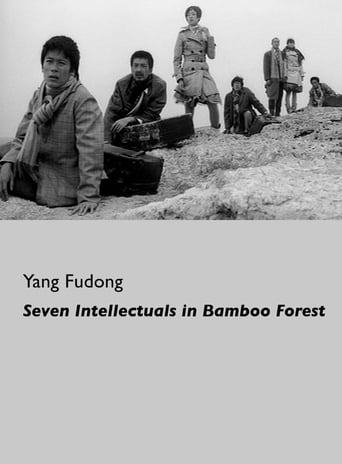
8-channel video installation, 35mm b&w film transferred to DVD. Music by Jin Wang. A freeze-frame tableau in which seven young men and women, dressed in a haberdasher’s ?nest, look outward from a rocky outcrop; boats slowly drifting across placid waters; lush, unpopulated landscapes dominated by mountains. Like all of Yang Fudong’s work, the narrative is loosely structured, favoring centripetal forces over linear paths. Here, glamorous young men and women are slowly pulled together as, alone or in pairs and quartets, they wend their way toward the eponymous bridge to catch a last glimpse of winter snow; the rabbits, parrots, and stubborn goats on leashes that accompany them hint at the dandyish excess of a bygone era.

Director

County Magistrate, County MagistrateCounty Magistrate, County Magistrate · 2025
County Magistrate, County Magistrate
2025
MovieDocumentary
County Magistrate, County Magistrate depicts a collective migration unfolding in an indeterminate time and place. Men, women, and children from a village move through mountains as the sky gradually grows dark, walking resolutely into the distance until they arrive at a new settlement. The abandoned courtyards they leave behind still bear traces of daily life: a steaming kettle, unfinished bowls of food, an old television flickering with static, and worn-out pieces of furniture. The camera then slowly pans to an outdoor movie screen showing After Armistice, a black-and-white film released in 1962. In the film, a man draws a business card from his pocket and introduces himself as Xianghe’s newly appointed county magistrate. At this moment, the story slips into another layer of fictional time and space.

Director