Lust

Lust

1988 · 14 min

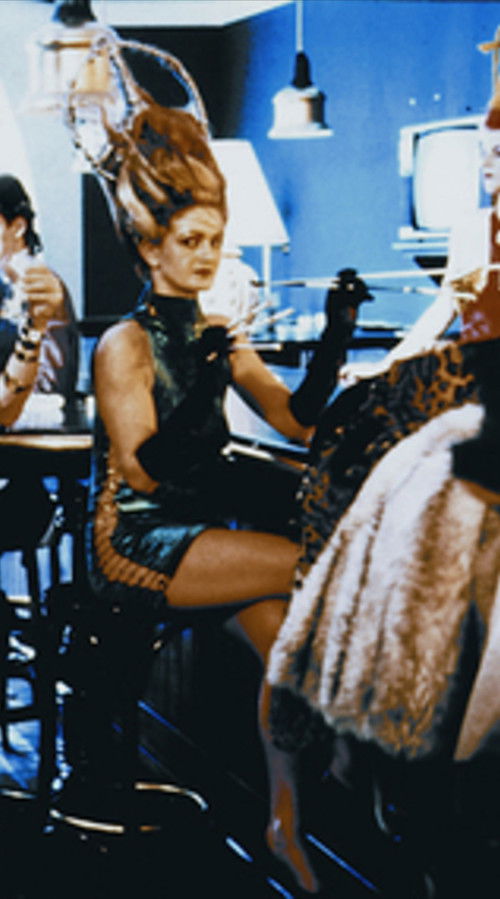
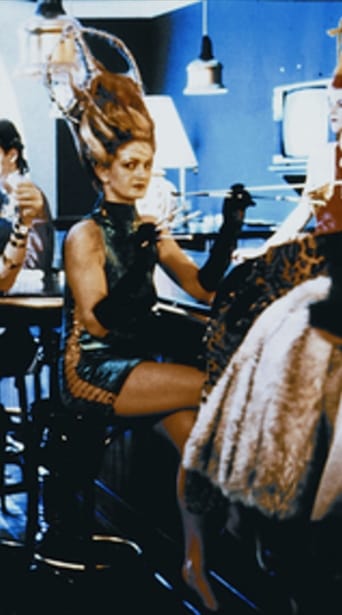
"This video film shows indecency in its modern form. While peddling naked female flesh was considered indecent in the past, we can see by the examples of today´s star athletes that skin full of advertising sells better. The same applies to politicians, of course, though in a more subtle way. Advertising on skin as the new indecency! I consider this film to be a continuation of my previous work with the body as a vehicle for social codes. While in the past it was religion that dictated male and female behaviour, which was also expressed in their physical appearance, business has now assumed this role. Business dictates physical behaviour, physical pressure in its most direct form, and even sets standards for how our bodies are to be represented. Religion no longer prescribes morality, that is now done by the global power of business, with its products and codes. Morality has found a new patron." (Valie Export)

Directed by Valie Export · Written by Valie Export

Your Rating

Cast

Make it a double feature

1h 40m together
Both from Valie Export.

More from Valie ExportSee all →
Interrupted LineInterrupted Line · 1972
Interrupted Line
★ 10.01972
Movie
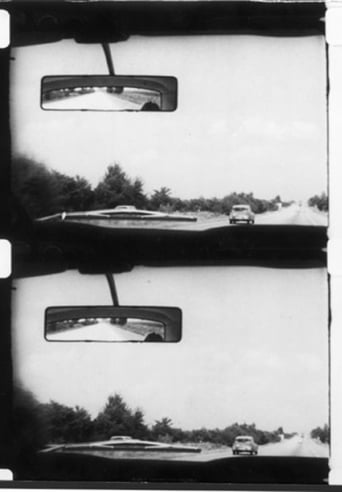
"The middle line marking of the road is filmed through the windscreen of a moving car simultaneously with its own reflection in the driving mirror. The repeated interruptions of the space/time line are as big as a car. The car as a connecting link in time. The cinema as interruption of normal time flow.” – VALIE EXPORT
HernalsHernals · 1967
Hernals
★ 10.01967
Movie
Documentary and pseudo-documentary procedures were filmed simultaneously by two cameras from different viewpoints. The material was then divided into phases of movement. In the montage each phase was doubled. The techniques used in this process vary. Also the sound was doubled, again using different techniques. Two realities, differently perceived according to the conditions of this film, were edited into one synthetic reality, where everything is repeated. This doubling up destroys the postulate: identity of copy and image.
The Total FamilyThe Total Family · 1981
The Total Family
★ 9.01981
Movie
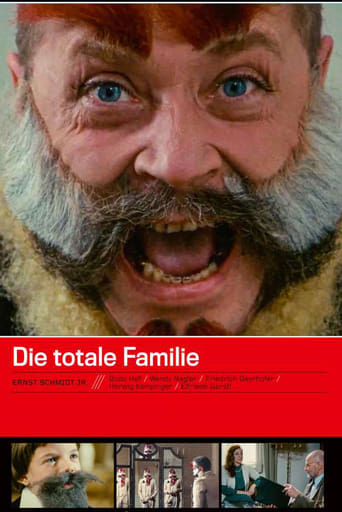
Baron Childerich III of Bartenbruch considers himself to be a descendant of the Merovingian dynasty and he has drawn up a chart of marriages and adoptions which show that he is his own father, grandfather, father-in-law, and son-in-law. He aims at achieving the "total family" based on one man. He persuades his french relative, Pippin, to help him. But the latter lets him down and breaks up the family... Among those who belong to the (surrounding) world of the Baron are Dr. Döblinger, a writer, who has formed a band of muggers and Professor Horn, a psychiatrist, who quiets his patients by leading them on nose rings and beating them up... Family satire with numerous personal and literary allusions based on the novel of the Austrian writer, Heimito von Doderer.
MenschenfrauenMenschenfrauen · 1980
Menschenfrauen
★ 7.01980
MovieDramaTV Movie
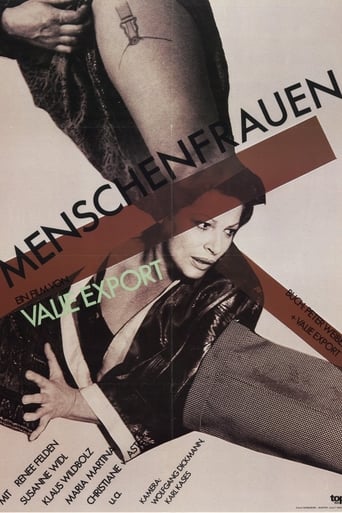
A journalist runs a strict, scheduled routine to date four different women simultaneously, while keeping them completely separated from one another. His charade slowly starts falling apart.
Invisible AdversariesInvisible Adversaries · 1977
Invisible Adversaries
★ 6.71977
MovieDramaScience Fiction
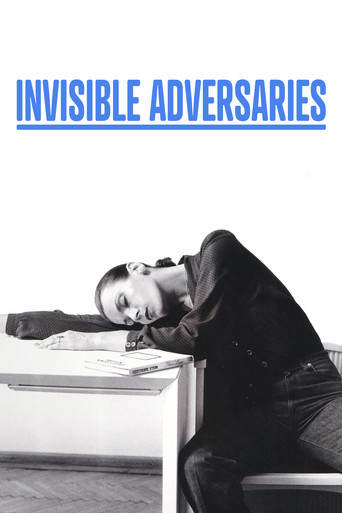
Set in contemporary Vienna, the film involves a photographer, Anna, who discovers that extraterrestrial beings are colonizing the minds of her fellow citizens by raising the human aggression quotient. The outer world immediately becomes disjointed, yet the inner world does too, as Anna and her lover, Peter, try to hang onto their deteriorating relationship.
SyntagmaSyntagma · 1983
Syntagma
★ 6.41983
Movie
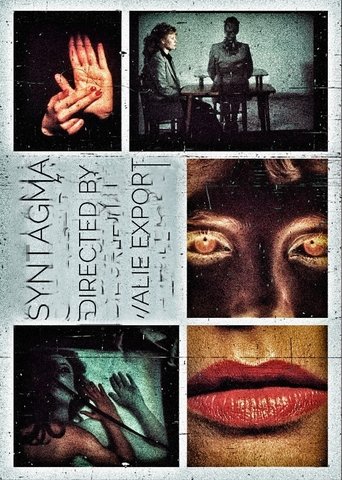
The body and specifically the "woman's body" is often used as a focus for questions of origin, subject-object relations, political resistance and sexuality. Valie Export's notion of "body language" poses an ironic relation to these questions that acknowledges "the end of the body" or at least the final break with the way in which we understand it to be a biological, existential, or metaphysical entity. Export has broken away from any notion of unity - either body, space, or time - into the fragmented world of doubling and difference that is caught in representation.
...Remote..... Remote.......Remote..... Remote.... · 1973
...Remote..... Remote....
★ 6.31973
MovieDocumentary
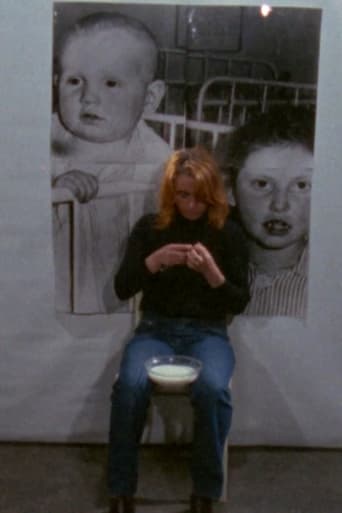
With sometimes painful directness, Valie Export conducts a psychological investigation of the body in this film performance, externalizes an internal state. In front of a police photo showing two children who were sexually abused by their parents, she tortuously cuts into her cuticles until blood drips into a bowl of milk on her lap. On top of the symbolic plane of blood and milk, the physical effect on the viewer of her destructive act of self-mutilation is extreme.
Seven Women, Seven SinsSeven Women, Seven Sins · 1986
Seven Women, Seven Sins
★ 5.51986
MovieDrama
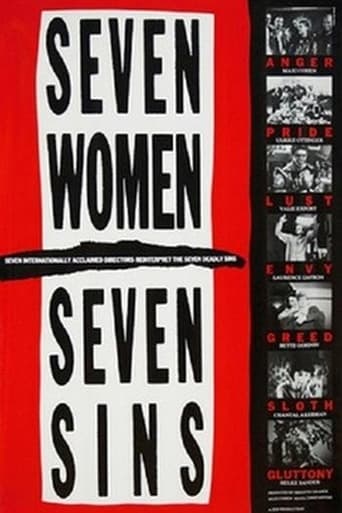
Seven Women, Seven Sins (1986) represents a quintessential moment in film history. The women filmmakers invited to direct for the seven sins were amongst the world's most renown: Helke Sander (Gluttony), Bette Gordon (Greed), Maxi Cohen (Anger), Chantal Akerman (Sloth), Valie Export (Lust), Laurence Gavron (Envy), and Ulrike Ottinger (Pride). Each filmmaker had the liberty of choosing a sin to interpret as they wished. The final film reflected this diversity, including traditional narrative fiction, experimental video, a musical, a radical documentary, and was delivered in multiple formats from 16, super 16, video and 35mm.
The Practice of LoveThe Practice of Love · 1985
The Practice of Love
★ 5.01985
MovieDrama
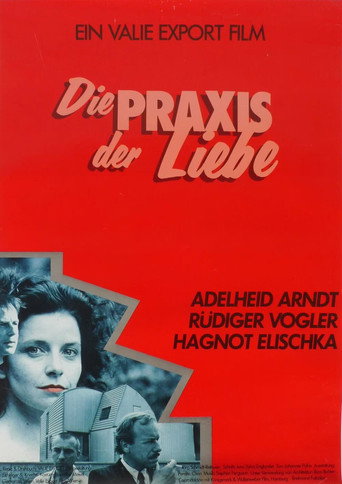
Judith is a maverick reporter who is also seeking a satisfying relationship with various men. She finds corruption and power-games everywhere.
Seven Easy PiecesSeven Easy Pieces · 2007
Seven Easy Pieces
★ 2.02007
MovieDocumentary
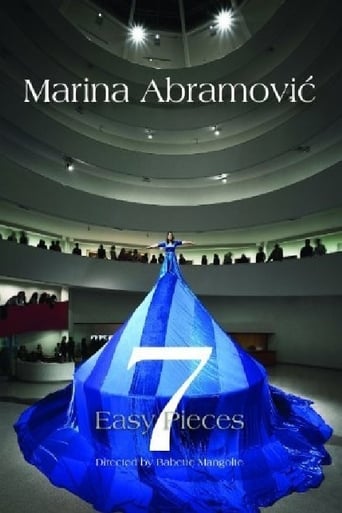
For Seven Easy Pieces Marina Abramovic reenacted five seminal performance works by her peers, dating from the 1960's and 70's, and two of her own, interpreting them as one would a musical score. The project confronted the fact that little documentation exists from this critical early period and one often has to rely upon testimony from witnesses or photographs that show only portions of any given performance. The seven works were performed for seven hours each, over the course of seven consecutive days, November 9 –15, 2005 at the Guggenheim Museum, in New York City. Seven Easy Pieces examines the possibilities of representing and preserving an art form that is, by nature, ephemeral.
Home Movies 1971-81Home Movies 1971-81 · 1985
Home Movies 1971-81
1985
MovieDocumentary
Home movies shot on Super 8mm by W+B Hein over 10 years.
Aktionskunst International. Dokumente zum Internationalen AktionismusAktionskunst International. Dokumente zum Internationalen Aktionismus · 1989
Aktionskunst International. Dokumente zum Internationalen Aktionismus
1989
MovieDocumentary
A comprehensive documentation of new art movements from 1945 to the present day. Beginning with the "Internationale Situationniste," "Cobra," "Spur," and "Wiener Gruppe" groups in Europe, and moving on to the international Happening and Fluxus movements, including the Viennese Actionists, and from 1970 onward to international Body and Performance Art, which also encompassed media art—film and video—the documentary presents film and photographic material from these art movements.
Body PoliticsBody Politics · 1974
Body Politics
1974
Movie
Tethered to one another by a rope, two figures standing on parallel escalators perform five ways of being together—“against each other,” “with each other,” “to each other,” “for each other,” and “each other”—challenging expectations of how people can and should coexist in public space.
Abstract Film No. 1Abstract Film No. 1 · 1967
Abstract Film No. 1
1967
Movie
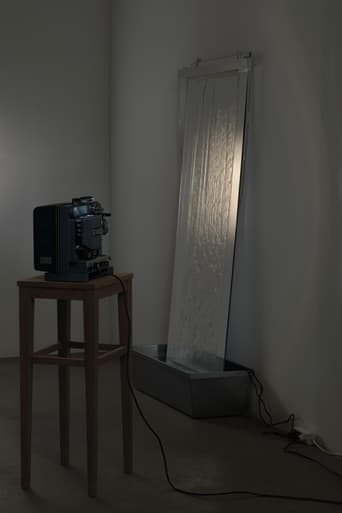
The concept of “expanded” cinema developed by Export and Peter Weibel involved radical experiments with the filmic apparatus and materialist investigations of the production of illusion. Abstract Film No. 1 is an example of this critical investigation of the technology of image production. A film projector casts light on a mirror with tinted liquids running across it. The actual image appears as a reflection on a screen—or an abstract film. —Christian Kravagna
HyperbulieHyperbulie · 1973
Hyperbulie
1973
Movie
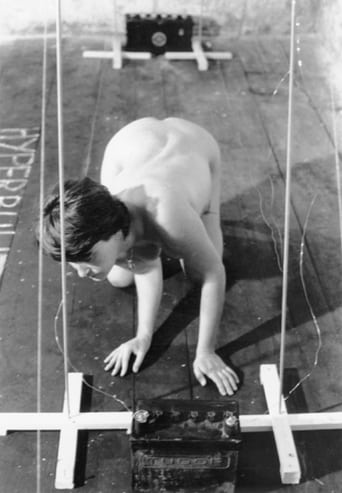
“The narrow passage or dangerous passage is a common motif in both funerary and initiation mythologies. I step inside and move through a corridor of electrically charged wires, constantly experiencing painful shocks and sinking to the floor. But I accept the challenge and, in a somewhat pathological increase in willpower, I press my head against the wires again and again. Society is a closed, structured space, which regulates all human energy through painful barriers. Only through an effort of will to overcome the pain (which is at the core of society) is one able to achieve a state of free expression.” – VALIE EXPORT
Adjunct DislocationsAdjunct Dislocations · 1973
Adjunct Dislocations
1973
Movie
“This film deals with exploring one´s surroundings by means of the body, and the exploration of the surrounding body. Not only is something shown in this film, showing itself is shown, not only is something portrayed, portrayal itself is portrayed. A sense of space is created in a way possible only with film: seeing oneself from the front and back simultaneously, from above and below, and from outside in the center of the space. The film combines opposite parts of the space, which form the body´s imperceptible time-space continuum. Space is carried along, just like the camera.” – VALIE EXPORT

More Like This

Couldn't load this row right now.
Rate this film

Your ratings make Midnight smarter