Valie Export

Directing

Valie Export

Born May 17, 1940 · Linz, Austria

Died May 14, 2026 · aged 85

Valie Export (1940-2026), born Waltraud Lehner, was an Austrian artist. Her artistic work includes video installations, body performances, expanded cinema, computer animations, photography, sculptures and publications covering contemporary arts.

Known For

Adjunct DislocationsAdjunct Dislocations · 1973
Adjunct Dislocations
1973
Movie
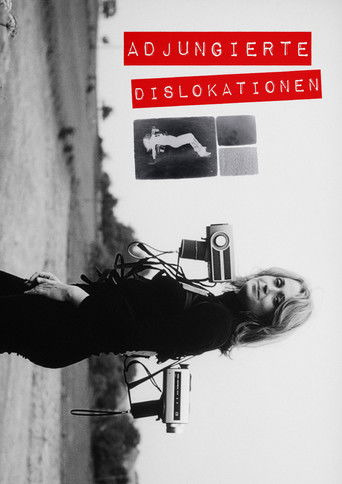
“This film deals with exploring one´s surroundings by means of the body, and the exploration of the surrounding body. Not only is something shown in this film, showing itself is shown, not only is something portrayed, portrayal itself is portrayed. A sense of space is created in a way possible only with film: seeing oneself from the front and back simultaneously, from above and below, and from outside in the center of the space. The film combines opposite parts of the space, which form the body´s imperceptible time-space continuum. Space is carried along, just like the camera.” – VALIE EXPORT
LustLust · 1986
Lust
1986
Movie
“This video film shows indecency in its modern form. While peddling naked female flesh was considered indecent in the past, we can see by the examples of today´s star athletes that skin full of advertising sells better. The same applies to politicians, of course, though in a more subtle way. Advertising on skin as the new indecency! I consider this film to be a continuation of my previous work with the body as a vehicle for social codes. While in the past it was religion that dictated male and female behaviour, which was also expressed in their physical appearance, business has now assumed this role. Business dictates physical behaviour, physical pressure in its most direct form, and even sets standards for how our bodies are to be represented. Religion no longer prescribes morality, that is now done by the global power of business, with its products and codes. Morality has found a new patron.” – VALIE EXPORT
Invisible AdversariesInvisible Adversaries · 1977
Invisible Adversaries
6.71977
MovieDramaScience Fiction
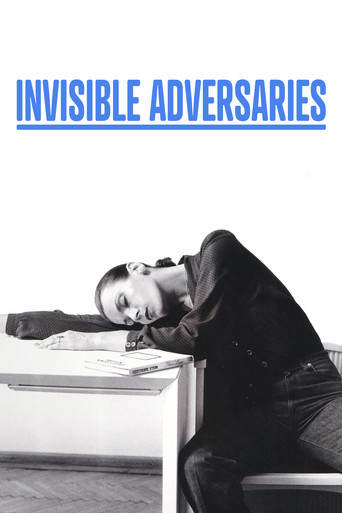
Anna, an artist, is obsessed with the invasion of alien doubles bent on total destruction. Her schizophrenia is reflected in the juxtapositions of long movie camera takes with violently edited montages: private with public spaces; black & white with colour, still photographs with video, earsplitting sounds with disruptive camera angles. Anna uses her body like a map; after a devastating quarrel with her lover, she paints red stitches on herself. Watching their scenes together, we realize how seldom, if ever before, the details of sexual intimacy have been shown in film from the point of view from a woman. Export privileges rupture over unity and never settles for one-dimensional solutions
SyntagmaSyntagma · 1983
Syntagma
6.41983
Movie
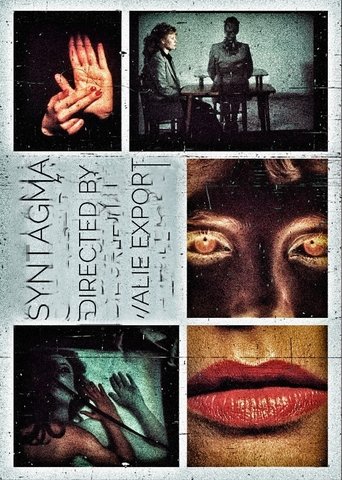
The body and specifically the "woman's body" is often used as a focus for questions of origin, subject-object relations, political resistance and sexuality. Valie Export's notion of "body language" poses an ironic relation to these questions that acknowledges "the end of the body" or at least the final break with the way in which we understand it to be a biological, existential, or metaphysical entity. Export has broken away from any notion of unity - either body, space, or time - into the fragmented world of doubling and difference that is caught in representation.
...Remote..... Remote.......Remote..... Remote.... · 1973
...Remote..... Remote....
6.31973
Movie
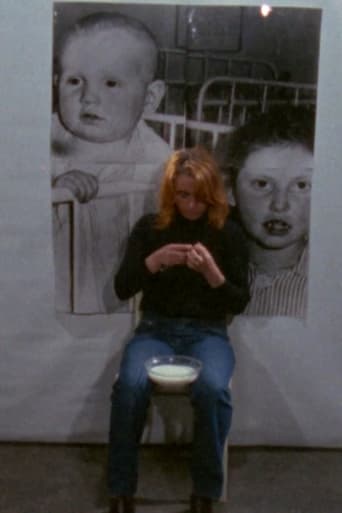
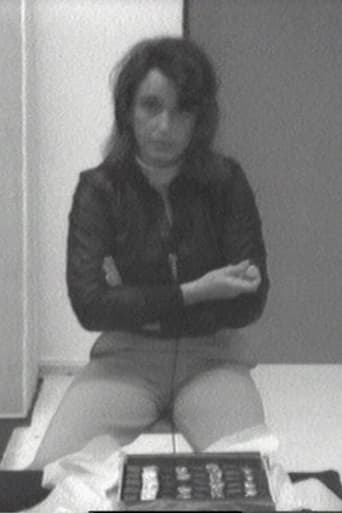
With sometimes painful directness, Valie Export conducts a psychological investigation of the body in this film performance, externalizes an internal state. In front of a police photo showing two children who were sexually abused by their parents, she tortuously cuts into her cuticles until blood drips into a bowl of milk on her lap. On top of the symbolic plane of blood and milk, the physical effect on the viewer of her destructive act of self-mutilation is extreme.
Interrupted LineInterrupted Line · 1972
Interrupted Line
10.01972
Movie
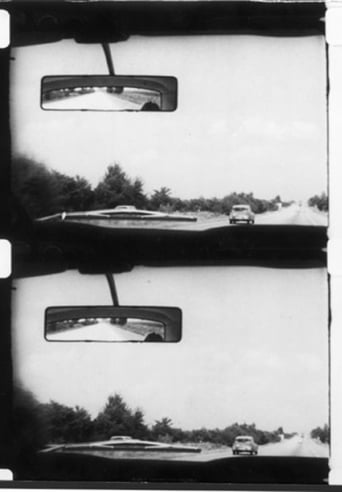
"The middle line marking of the road is filmed through the windscreen of a moving car simultaneously with its own reflection in the driving mirror. The repeated interruptions of the space/time line are as big as a car. The car as a connecting link in time. The cinema as interruption of normal time flow.” – VALIE EXPORT
MenschenfrauenMenschenfrauen · 1980
Menschenfrauen
7.01980
MovieDramaTV Movie
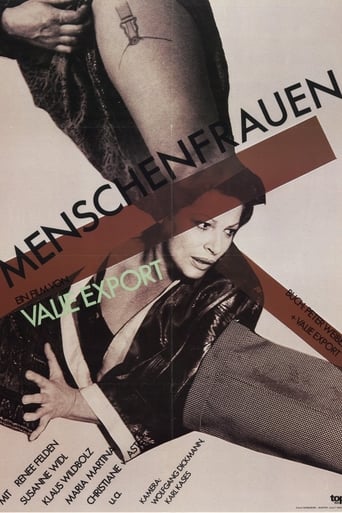
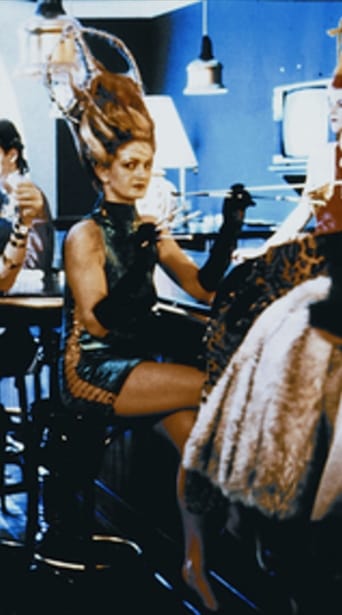
Menschenfrauen is a film about relationships and the psychological oppression of women in society. Franz, a journalist, maintains relationships with four women. His three mistresses are introduced with television dreams of intense emotional violence (in the first dream, a mother shouts at her daughter, explaining that as a girl, she does not deserve a room of her own), and the fourth is his wife. He is desperate to have each to himself. Franz never offers a substantial sign of love, but is willing to say anything and make any promise for affection. His dependence on women for fulfilment is explained through arguments with his wife. He claims "I am my own sound. The women produce voices within me." An understandable and sometimes sympathetic antagonist is one of the films greatest strengths. The emotional damage he causes becomes believable.
HernalsHernals · 1967
Hernals
10.01967
Movie
Documentary and pseudo-documentary procedures were filmed simultaneously by two cameras from different viewpoints. The material was then divided into phases of movement. In the montage each phase was doubled. The techniques used in this process vary. Also the sound was doubled, again using different techniques. Two realities, differently perceived according to the conditions of this film, were edited into one synthetic reality, where everything is repeated. This doubling up destroys the postulate: identity of copy and image.

Filmography

Sort
LustLust · 1986
Lust
1986
Movie
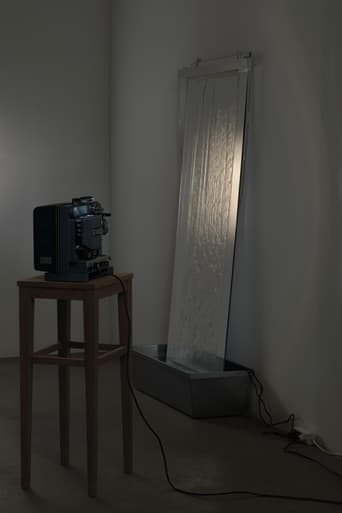
“This video film shows indecency in its modern form. While peddling naked female flesh was considered indecent in the past, we can see by the examples of today´s star athletes that skin full of advertising sells better. The same applies to politicians, of course, though in a more subtle way. Advertising on skin as the new indecency! I consider this film to be a continuation of my previous work with the body as a vehicle for social codes. While in the past it was religion that dictated male and female behaviour, which was also expressed in their physical appearance, business has now assumed this role. Business dictates physical behaviour, physical pressure in its most direct form, and even sets standards for how our bodies are to be represented. Religion no longer prescribes morality, that is now done by the global power of business, with its products and codes. Morality has found a new patron.” – VALIE EXPORT

Director

MenschenfrauenMenschenfrauen · 1980
Menschenfrauen
7.01980
MovieDramaTV Movie
Menschenfrauen is a film about relationships and the psychological oppression of women in society. Franz, a journalist, maintains relationships with four women. His three mistresses are introduced with television dreams of intense emotional violence (in the first dream, a mother shouts at her daughter, explaining that as a girl, she does not deserve a room of her own), and the fourth is his wife. He is desperate to have each to himself. Franz never offers a substantial sign of love, but is willing to say anything and make any promise for affection. His dependence on women for fulfilment is explained through arguments with his wife. He claims "I am my own sound. The women produce voices within me." An understandable and sometimes sympathetic antagonist is one of the films greatest strengths. The emotional damage he causes becomes believable.

Director

The Total FamilyThe Total Family · 1981
The Total Family
9.01981
Movie
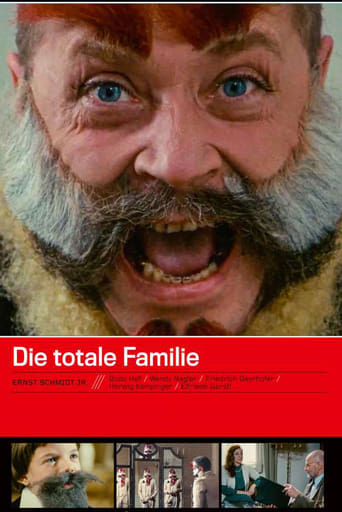
Baron Childerich III of Bartenbruch considers himself to be a descendant of the Merovingian dynasty and he has drawn up a chart of marriages and adoptions which show that he is his own father, grandfather, father-in-law, and son-in-law. He aims at achieving the "total family" based on one man. He persuades his french relative, Pippin, to help him. But the latter lets him down and breaks up the family... Among those who belong to the (surrounding) world of the Baron are Dr. Döblinger, a writer, who has formed a band of muggers and Professor Horn, a psychiatrist, who quiets his patients by leading them on nose rings and beating them up... Family satire with numerous personal and literary allusions based on the novel of the Austrian writer, Heimito von Doderer.

Sister Helga

A Perfect PairA Perfect Pair · 1986
A Perfect Pair
5.01986
Movie
A Perfect Pair posits the idea that individual consumers are walking billboards for the products they use; product slogans and brand names peeking out from every crevice and cranny of the actors’ bodies. Export demonstrates how the body of the consumer, especially that of the female consumer, is co-opted by commercialism. In tongue-in-cheek fashion, A Perfect Pair celebrates the modern-day co-mingling of fetish objects, as a body builder seduces a prostitute at a bar saying, “Your eyes are the most beautiful blue ad-space. Your cheek could promote a Mercedes. Your neck could be a slogan for styled technology.” Export’s work is centered around the evolving role of women in a culture where images increasingly displace material reality. A Perfect Pair wonderfully illustrates the inescapability of advertising’s “regime of signs", the signifying network of personal and product values that is effectively encoded on the space of women’s bodies.

Director