Taiga
1992 · 501 min · ★ 7.5 · Documentary
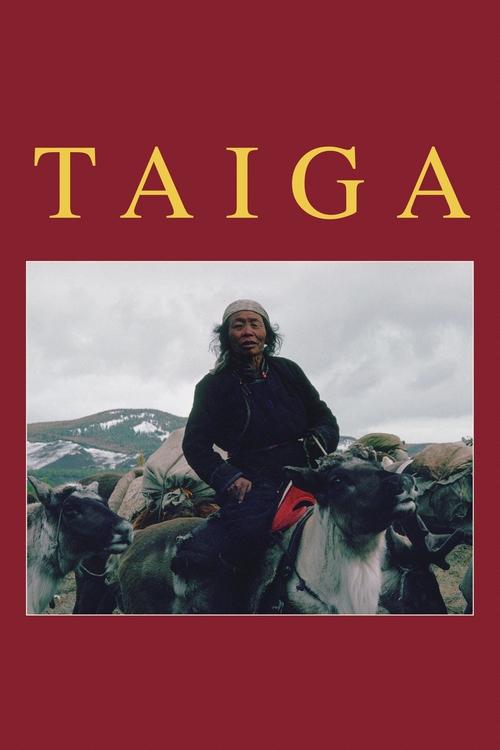
The Darkhad and Soyon Uriyanghai peoples live in a vast valley in Northern Mongolia, much as their ancestors have for centuries. "Taiga" is the record of a long period spent by the German filmmaker Ulrike Ottinger among these people.
Directed by Ulrike Ottinger · Written by Ulrike Ottinger
Your Rating
Make it a double feature
12h 51m together
Both from Ulrike Ottinger.
More from Ulrike OttingerSee all →
 China. The Arts – The People · 1985
China. The Arts – The People
★ 10.01985
MovieDocumentary
China marks the beginning of the extensive Asian theme in Ottinger’s filmography and is her first travelogue. Her observant eye is interested in anything from Sichuan opera and the Beijing Film Studio to the production of candy and sounds of bicycle bells.
 Usinimage · 1987
Usinimage
★ 8.01987
MovieDocumentary
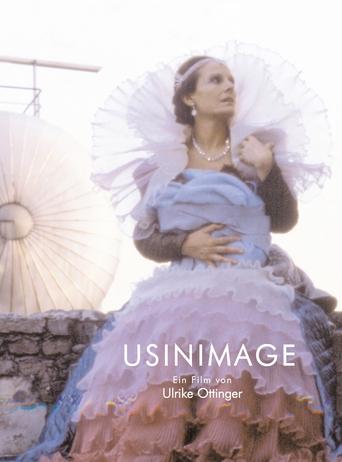
Selected industrial and city settings from the three films were documented again for Usinimage and intercut with the corresponding fiction film scenes, in order to give the landscapes a new accent through artistic defamiliarization and condensation. It is an exploration of city architecture, in which the shooting location serves not just as reflective or constrastive backdrop but rather becomes itself content.
 Twelve Chairs · 2004
Twelve Chairs
★ 7.22004
MovieComedy
...Her son-in-law, Ippolit Matwejewitch Worobjaninow, is a former nobleman and a dandy who is currently wasting away as a small town magistrate in charge of civil marriages. He eagerly takes up the quest to find the treasure. Meanwhile, over the years, the twelve chairs have been dispersed all over the country. However, Worobjaninow is not the only one in pursuit of the treasure. Hot on its trail are Ostap Bender, a clever and colorful conman, as well as Father Fjodor, a priest to whom the wealthy aristocrat has also confessed her secret. Thus begins a wild chase that ranges from North to South, West to East, across water and land, from the country to the city.
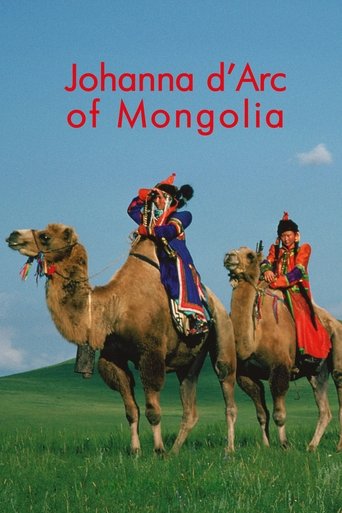 Johanna d’Arc of Mongolia · 1989
Johanna d’Arc of Mongolia
★ 6.71989
MovieDramaAdventure
A group of cosmopolitan women passengers aboard the Trans-Siberian/Mongolian Railway are taken prisoner by Ulan Iga, a warrior princess.
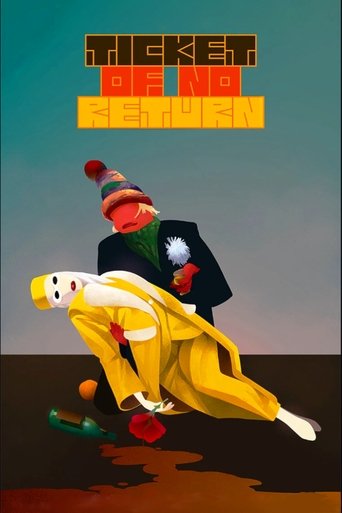 Ticket of No Return · 1979
Ticket of No Return
★ 6.41979
MovieDrama
A sartorially resplendent woman of few words arrives in Berlin with plans to live out the rest of her days as a drunkard.
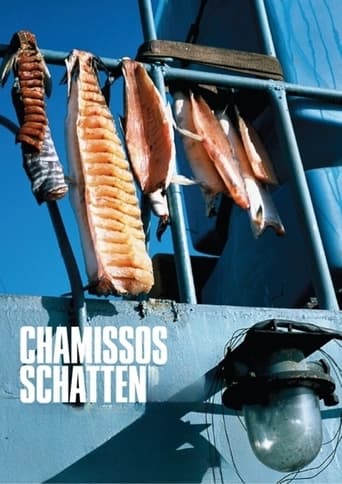 Chamisso’s Shadow · 2016
Chamisso’s Shadow
★ 6.32016
MovieDocumentary
A three-chapter 720-minute cinematic exploration inspired by historical explorers like Adelbert von Chamisso. The film intertwines past and present travel experiences, using readings and visual materials to explore themes of cultural knowledge loss and change, drawing parallels to Chamisso’s “Wondrous Story” of Schlemihl and his shadow.
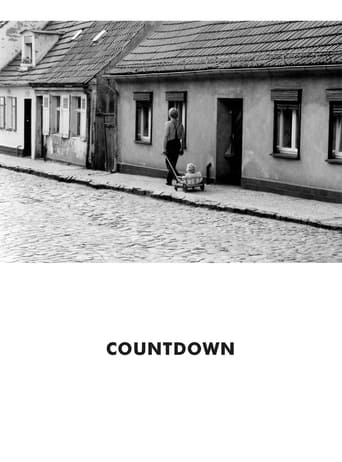 Countdown · 1990
Countdown
★ 6.21990
MovieDocumentary
Countdown follows a chronological sequence. The movie was shot in Berlin and environs over a ten-day period leading up to the unification of the currencies on July 1, 1990. The film thus ends on the date marking “the first stage of German reunification”.
 Prater · 2007
Prater
★ 5.82007
MovieDocumentary
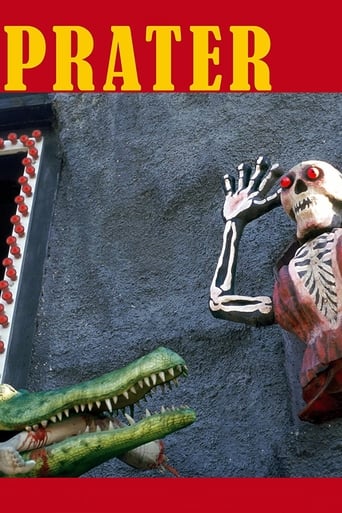
Vienna’s Prater is an amusement park and a desire machine. No mechanical invention, no novel idea or sensational innovation could escape incorporation into the Prater. The diverse story-telling in Ulrike Ottinger’s film “Prater” transforms this place of sensations into a modern cinema of attractions. The Prater’s history from the beginning to the present is told by its protagonists and those who have documented it, including contemporary cinematic images of the Prater, interviews with carnies, commentary by Austrians and visitors from abroad, film quotes, and photographic and written documentary materials. The meaning of the Prater, its status as a place of technological innovation, and its role as a cultural medium are reflected in texts by Elfriede Jelinek, Josef von Sternberg, Erich Kästner and Elias Canetti, as well as in music devoted to this amusement venue throughout the course of its history.
 Superbia – The Pride · 1988
Superbia – The Pride
★ 5.71988
MovieDramaFantasy
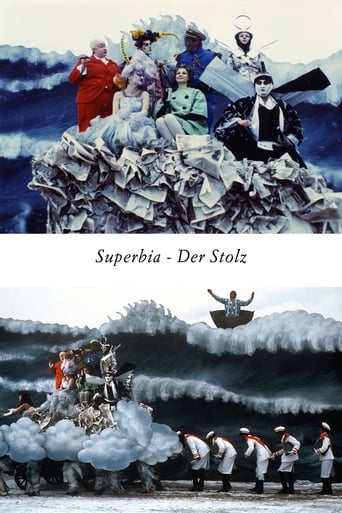
Pride is the first of the seven deadly sins. The introduction is made through early allegorical forms and figures (triumphal procession, dance of death, Baroque tragedy etc.) The triumphal procession of the giant haystack as a symbol of human vanities becomes a military parade of abrupt, functional and arrogant gestures. The most diverse musical fragments and rhythms intone the montage of details in the staged triumphal procession, juxtaposed with documentary images, including marches, ticker-tape parades and military review.
 Dorian Gray in the Mirror of the Yellow Press · 1984
Dorian Gray in the Mirror of the Yellow Press
★ 5.61984
MovieDrama
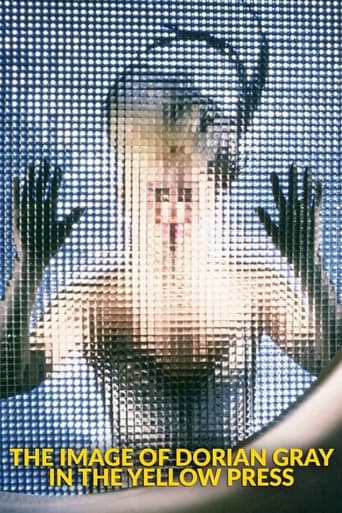
The final installment in Ulrike Ottinger’s Berlin Trilogy (following TICKET OF NO RETURN and FREAK ORLANDO) casts Delphine Seyrig as the nefarious Fritz Lang supervillain Dr. Mabuse, here the head of a powerful media empire that seeks to create headlines by manufacturing (and then publicly destroying) its own celebrity: the wealthy, handsome playboy Dorian Gray.
 Paris Calligrammes · 2020
Paris Calligrammes
★ 5.52020
MovieDocumentary
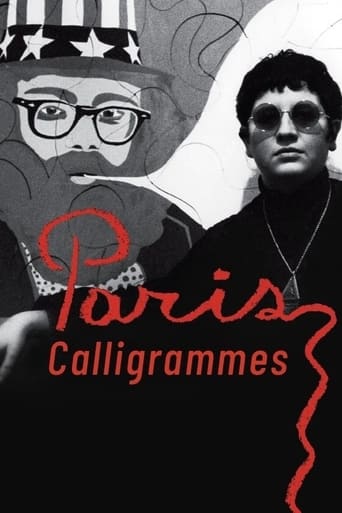
Ulrike Ottinger weaves her personal memories of Parisian bohemianism and the serious social, political and cultural upheavals of the time into a cinematic “figure poem.”
 Seven Women, Seven Sins · 1986
Seven Women, Seven Sins
★ 5.51986
MovieDrama
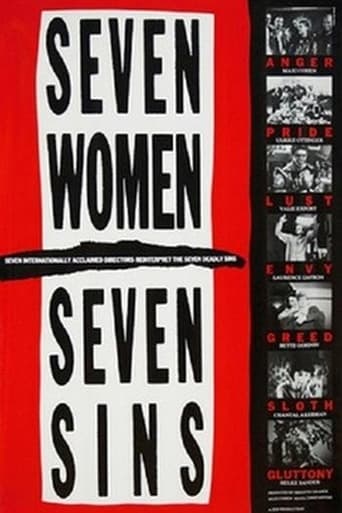
Seven Women, Seven Sins (1986) represents a quintessential moment in film history. The women filmmakers invited to direct for the seven sins were amongst the world's most renown: Helke Sander (Gluttony), Bette Gordon (Greed), Maxi Cohen (Anger), Chantal Akerman (Sloth), Valie Export (Lust), Laurence Gavron (Envy), and Ulrike Ottinger (Pride). Each filmmaker had the liberty of choosing a sin to interpret as they wished. The final film reflected this diversity, including traditional narrative fiction, experimental video, a musical, a radical documentary, and was delivered in multiple formats from 16, super 16, video and 35mm.
 Freak Orlando · 1981
Freak Orlando
★ 5.41981
MovieComedyFantasy
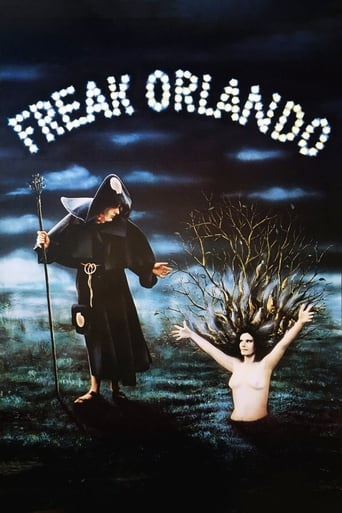
Five more-or-less distinct sections, all featuring "Freak" Orlando, a woman played by the late Magdalena Montezuma, who appears in various guises and deformities throughout.
 Cinématon · 1978
Cinématon
★ 4.91978
MovieDocumentary
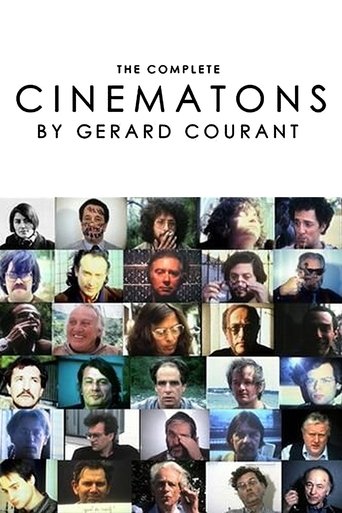
Cinématon is a 156-hour long experimental film by French director Gérard Courant. It was the longest film ever released until 2011. Composed over 36 years from 1978 until 2006, it consists of a series of over 2,821 silent vignettes (cinématons), each 3 minutes and 25 seconds long, of various celebrities, artists, journalists and friends of the director, each doing whatever they want for the allotted time. Subjects of the film include directors Barbet Schroeder, Nagisa Oshima, Volker Schlöndorff, Ken Loach, Benjamin Cuq, Youssef Chahine, Wim Wenders, Joseph Losey, Jean-Luc Godard, Samuel Fuller and Terry Gilliam, chess grandmaster Joël Lautier, and actors Roberto Benigni, Stéphane Audran, Julie Delpy and Lesley Chatterley. Gilliam is featured eating a 100-franc note, while Fuller smokes a cigar. Courant's favourite subject was a 7-month-old baby. The film was screened in its then-entirety in Avignon in November 2009 and was screened in Redondo Beach, CA on April 9, 2010.
 Under Snow · 2011
Under Snow
★ 4.22011
MovieDocumentary
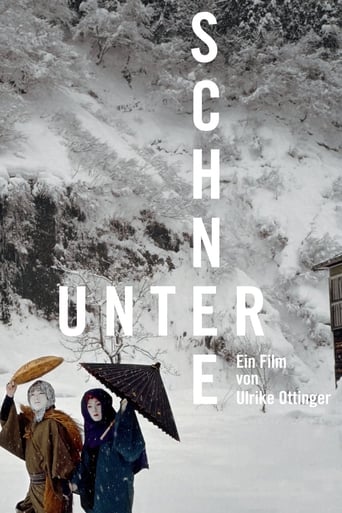
In Echigo, Japan, the snow often lies several feet deep well into May, covering landscapes and villages. Over the centuries, the inhabitants have organised their lives accordingly. In order to record their very distinctive forms of everyday life, their festivals, and religious rituals, Ulrike Ottinger journeyed to the mythical snow country – accompanied by two Kabuki performers. Taking the parts of the students Takeo and Mako, they follow in the footsteps of Bokushi Suzuki, who in the mid-19th century wrote his remarkable book “Snow Country Tales”.
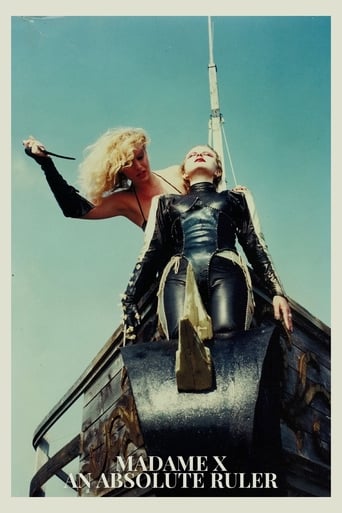 Madame X – An Absolute Ruler · 1978
Madame X – An Absolute Ruler
★ 4.11978
MovieFantasy
The notorious pirate ruler Madame X places a print ad, calling on women to escape their boring lives and promising "gold, love and adventure" to all who come aboard her ship, the Orlando. A motley crew including a housewife, diva and artist (played by Yvonne Rainer) embark on a quest for self-transformation, which quickly heads towards destruction as they are subjected to Madame X's sadistic, erotic escapades.
More Like This
Couldn't load this row right now.