Journey through Images
1981 · 25 min · Documentary
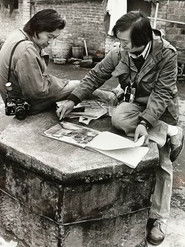
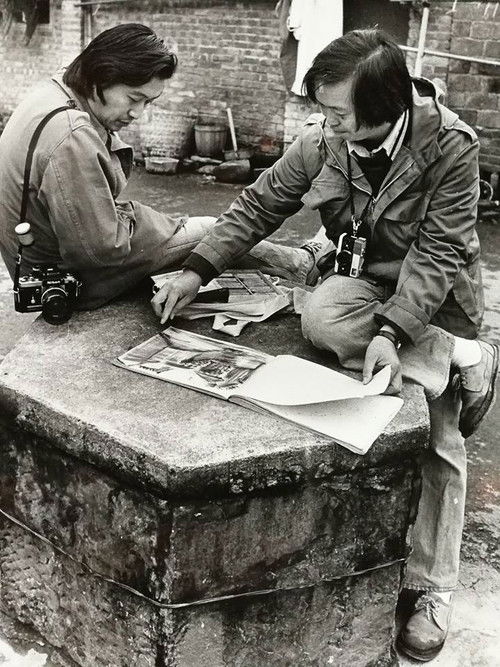
This landmark 1981–82 documentary series consists of weekly 25-minute episodes filmed across Taiwan using an ENG (Electronic News Gathering) camera. It documents local customs and social textures through a distinctly humanistic lens. The project also marks an early collaboration between Christopher Doyle and Chang Chao-Tang.
Directed by Chang Chao-Tang · Written by Lei Hsiang
Your Rating
Make it a double feature
2h 15m together
Both from Chang Chao-Tang.
More from Chang Chao-TangSee all →
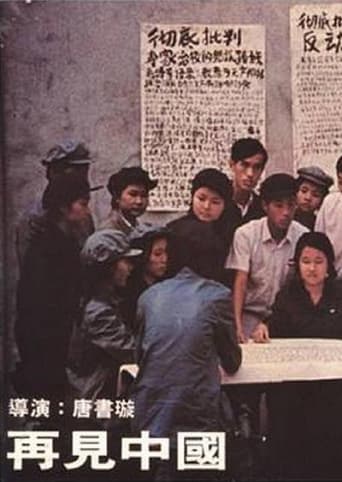 China Behind · 1978
China Behind
★ 6.21978
MovieDrama
A group of Mainlanders fleeing the Cultural Revolution risk all to reach the adjacent British ‘haven’ of Hong Kong; yet what they find there is a far cry from their dreams of liberty.
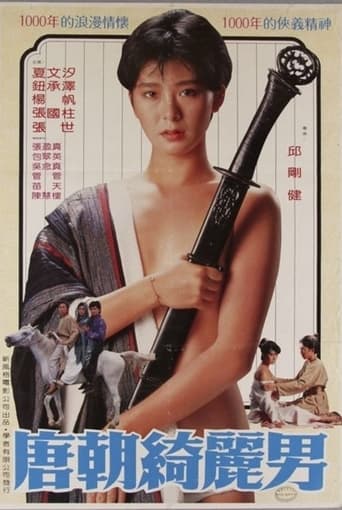 The Glamorous Boys of Tang · 1985
The Glamorous Boys of Tang
★ 6.01985
MovieFantasyAdventure
A surreal uninhibited adventure between two boys, their mysterious love interest and two Japanese monks in the Tang dynasty. Feature debut by the acclaimed scriptwriter Chiu Kang-Chien.
 The Woman of Wrath · 1984
The Woman of Wrath
★ 5.81984
MovieDrama
A woman resorts to prostitution out of hunger and commits suicide shortly after, leaving her daughter to embark on an equally cruel path.
 Regarding Huang Hua-Cheng · 2020
Regarding Huang Hua-Cheng
2020
MovieDocumentary
An in-depth documentary on the reclusive Taiwanese artist Huang Hua-Cheng and his avant-garde legacy. Commissioned by the Taipei Fine Arts Museum for the retrospective exhibition: “An Open Ending: Huang Hua-Cheng” (2020).
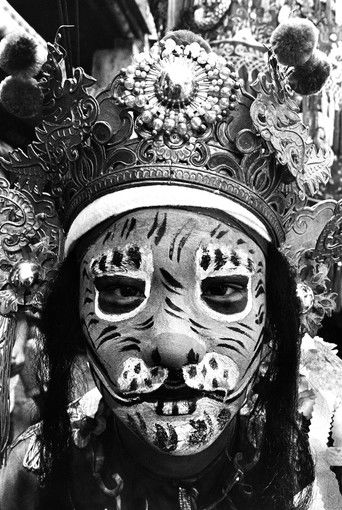 The Beauty of Rituals · 1981
The Beauty of Rituals
1981
MovieDocumentary
"The Beauty of Rituals" (《祭典之美》) by Chang Chao-tang (張照堂) surveys Taiwanese folk festivals across regions and seasons, framing them through the perspectives of archaeologist Chen Chi-lu (陳奇祿), choreographer Lin Hwai-min (林懷民), psychologist Yu Te-hui (余德慧), and painter Shiy De-jinn (席德進). The script and voiceover by Chiang Hsun (蔣勳) articulate the symbolic and affective dimensions of traditional belief.With music by Ma Shui-long (馬水龍), Chou Wen-chung (周文中), Kitaro (喜多郎), and Mike Oldfield, the film juxtaposes Eastern and Western sonic forms, re-mediating ritual as a dynamic contemporary cultural field.
 Songs of the Wanderers · 2013
Songs of the Wanderers
2013
MovieDocumentary
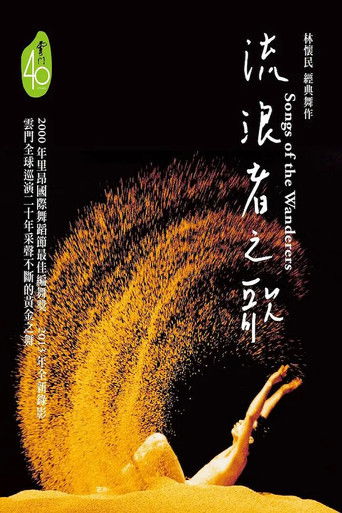
This dance film presents Siddhartha as reimagined by Lin Hwai-min and performed by Cloud Gate Dance Theatre of Taiwan, directed for screen by Chang Chao-Tang. Inspired by Hesse’s novel and a pilgrimage to Bodh Gaya, where the Buddha attained enlightenment, Lin created a work of stillness and elemental force. The stage is shaped by tons of golden rice grains into shifting landscapes—like rain, waterfalls, and deserts. Georgian folk songs flow through the space as dancers, carrying wooden staffs, move in slow, spiraling journeys, while a monk in white remains motionless. In the final scene, a dancer rakes the grains into vast concentric circles, forming an image of quiet intensity. Premiered in 1994, this 90-minute work is one of Lin’s key creations. Widely toured and acclaimed, it remains among Cloud Gate’s most performed works. Recorded in high definition, this 2013 version stands as the definitive edition of this landmark piece.
 Modern Poetry Exhibition/1966 · 1966
Modern Poetry Exhibition/1966
1966
Movie
Artists contributing to the 1966 Modern Poetry Exhibition included HUANG Hua-cheng, LONG Sih-liang, HUANG Yong-song, and CHANG Chao-tang; each artist chose their favorite modern poems and transformed them into imagery. This film is a time capsule capturing some of the exhibits, as well as the young artists.
 The Instant of Gaze: Portraits by Chang Chao-Tang · 1999
The Instant of Gaze: Portraits by Chang Chao-Tang
1999
Movie
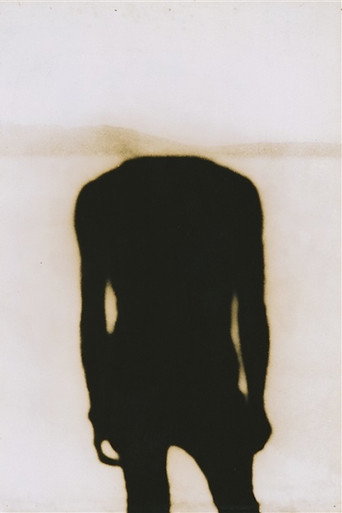
A biographical documentary filmed in 1999 on the occasion of Chang Chao-tang (張照堂) receiving the National Award for Arts (國家文藝獎) in the Fine Arts category (美術類). In the film he is credited as both director and editor under the pseudonym “Gao Shang-tu” (高尚土)—a name derived by decomposing the character “tang” (堂) into its constituent elements “gao” (高), “shang” (尚), and “tu” (土). Semantically, the pseudonym implies a counter-reference to the notion of temple-like, institutional “high culture,” redirecting emphasis instead toward the vernacular and the earthy—suggesting that what is truly “noble” lies in the force emerging from the “soil” (土) of the people. For this reason, the film may also be understood as a semi-autobiographical documentary that carries an element of self-writing within its particular historical context.
 家庭/電影 · 1981
家庭/電影
1981
MovieDocumentary
During his period working in Taiwan, Christopher Doyle made this experimental short film documenting the families of friends around him. This film received an Honorable Mention at the 4th Golden Harvest Awards (1981).
 逆旅與幻象 · 1984
逆旅與幻象
1984
MovieDocumentary
Early collaboration between Chang Chan-tang and Christopher Doyle documenting the friendship of their inner circle in Taiwan during the early 80s.
 Wild Cursive · 2009
Wild Cursive
2009
MovieMusic
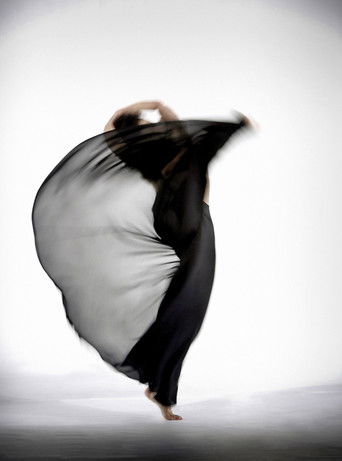
"Wild Cursive" is the third piece of Taiwanese dancer and choreographer Lin Hwai-min's Cursive trilogy, a captivating series translating the development of the fascinating art form of Chinese calligraphy into dance. As Lin says himself, the final part marks the climax of the trilogy, because it corresponds to the completely detached, free and highly abstract forms of “spontaneous” calligraphy. The performance contains elements of Tai Chi and is musically accompanied by compositions by Jim Shum and Liang Chun-mei. The performance was recorded in 2009 at the National Theater in Taipei, Taiwan.
 Legacy · 2003
Legacy
2003
MovieDocumentary
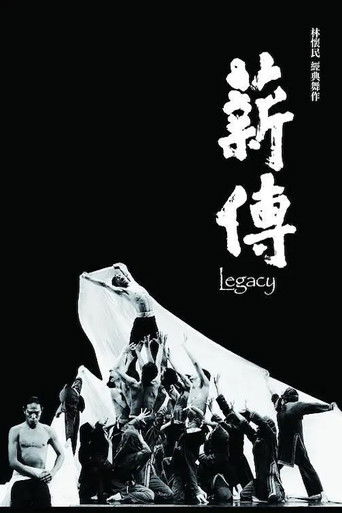
This landmark dance film presents Legacy, a defining work by Lin Hwai-min and Cloud Gate Dance Theatre of Taiwan, directed for screen by Chang Chao-Tang. Premiered in 1978, the work marked one of the first major theatrical productions centered on Taiwan’s own history, leaving a powerful and immediate impact. Built on a strong sense of ritual, Legacy evokes collective memory and identity, reflecting Cloud Gate’s commitment to engaging with society and history through dance. This documentary captures a 2003 performance for the company’s 30th anniversary. With live percussion by JUT Percussion Group and the voice of Chen Da, the dancers push their physical limits in an intense and deeply emotional staging.
 Portrait of the Families · 1997
Portrait of the Families
1997
MovieDocumentary
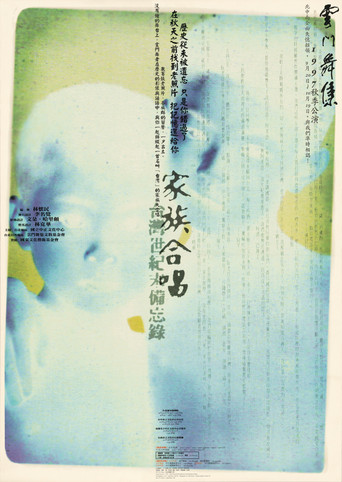
This landmark dance film presents *Portrait of the Families*, a defining work by Lin Hwai-min and Cloud Gate Dance Theatre of Taiwan, directed for screen by Chang Chao-Tang. *Portrait of the Families* is a mournful elegy for loss. Dancers move amid projections of nearly 200 historical Taiwanese photographs collected by Chang Chao-Tang and the voices of oral histories, evoking the deep scars and pain left by the 228 Incident and the White Terror. This film captures the original staging from the work’s 1997 premiere.
 Songs of Pasta'ay · 1989
Songs of Pasta'ay
1989
MovieDocumentary
The Pasta’ay, which means "the festival of the legendary little people," is a significant ritual held every other year in the Saisiat aborigine group in Taiwan. Every ten years, they hold the Great Ritual. This film focuses on the Great Ritual in 1986. It tries to convey the Saisiat people’s affection for and belief in the legendary little people. At the same time, the film brings into light Saisiat people’s ambivalence towards tourist invasion, and their dilemma of being caught between tradition and modernization. Structured by the Pasta’ay songs’ movements, the film breaks down to 15 chapters. It carefully juxtaposes the visual with the aural elements, which are conveyed in the conceptual dichotomy between “the real” and “the artificial.”
 The Homecoming Pilgrimage of Dajia Mazu · 1975
The Homecoming Pilgrimage of Dajia Mazu
1975
MovieDocumentary
Viewers are transported back in time to 1974 to see the annual Taoist celebration of the Dajia Mazu Pilgrimage. Thousands of participants accompany a statue of the goddess Mazu, who protects seafarers, on a 9-day, 8-night procession, stopping at several prominent temples along the way. The religious pilgrimage is a round-way journey from the Zhenlan Temple in Dajia, Taichung City to Fengtian Temple in Xingang of Chiayi County on the Western plains of Taiwan. The mesmerising festival takes place every year during the third lunar month and still attracts large masses to this day. The audio track of the film was once banned under the Kuomintang (KMT) due to the film’s inclusion of spoken Hokkien (Taiwanese), giving viewers at the time an altered and suppressed understanding of the event and its cultural significance in Taiwan. Viewers now can revel in the beauty of the Taiwanese language and see the film for the true spirit that it captures.
 The Dream of the Red Chamber · 2005
The Dream of the Red Chamber
2005
MovieDocumentary
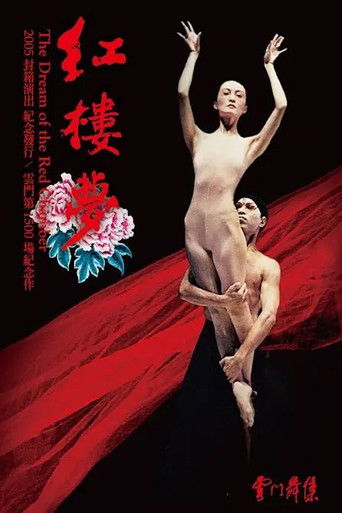
This dance film presents Dream of the Red Chamber as reimagined by Lin Hwai-min and performed by Cloud Gate Dance Theatre of Taiwan, directed for screen by Chang Chao-Tang. Inspired by the classic Chinese novel, the story centers on the fragile love between Jia Baoyu, Lin Daiyu, and Xue Baochai, set against the rise and fall of a great aristocratic family. Lin’s choreography frames the tale as a memory: a young man who has left the garden looks back on a vanished world. The Twelve Beauties appear in flowing, embroidered costumes, moving through falling flowers and shifting seasons. Classical imagery merges with contemporary dance, creating a restrained yet lyrical visual language. Premiered in 1983, the work became one of Cloud Gate’s signature productions. In 2005, Lin retired the piece as the company turned toward a more austere, introspective aesthetic. This film preserves a late-stage performance, documenting a key work from Cloud Gate’s early repertoire.
More Like This
Couldn't load this row right now.