Short Films 1975: #3 (Hollis Frampton)
1975 · 2 min
Begins with landscape/sunset thru mist, ends with window sill.
Directed by Stan Brakhage
Your Rating
Cast
 Hollis Frampton
 Make it a double feature
34m together
Both from Stan Brakhage.
More from Stan BrakhageSee all →
 Self Song & Death Song · 1997
Self Song & Death Song
★ 8.01997
Movie
SELF SONG documents a body besieged by cancer. The amber glow of flesh suggests both victory and submission to death. Blackness surrounds the image and takes it over altogether. Furthermore, the complex grooves and patterns of the flesh struggle to maintain their focus, suggesting the obscuring and dissolving effects of cancer. In DEATH SONG the film begins with blue hues which suggest the permanent aspect of death to contrast a sequence of overexposed yellow. Within these images are microscopic organisms constantly being 'washed out' by whiteness, which seeks to dissolve the image. In this respect, we might view the purity of whiteness as being 'soiled'. By the end of the film, the image has shifted to the blue screen suggesting a comfortable aspect of death. Yet, this vision is too idyllic in Brakhage's mind, and thus he allows the blueness to bleed from the side of the frame, opening the 'blinds' to the cancerous light. Preserved by the Academy Film Archive in 2016.
 By Brakhage: An Anthology, Volume One · 2003
By Brakhage: An Anthology, Volume One
★ 7.02003
MovieDocumentary
Working completely outside the mainstream, the wildly prolific, visionary Stan Brakhage made more than 350 films over a half century. Challenging all taboos in his exploration of “birth, sex, death, and the search for God,” he has turned his camera on explicit lovemaking, childbirth, even autopsy. Many of his most famous works pursue the nature of vision itself and transcend the act of filming. Some, including the legendary Mothlight, were made without using a camera at all, as he pioneered the art of making images directly on film, by drawing, painting, and scratching.
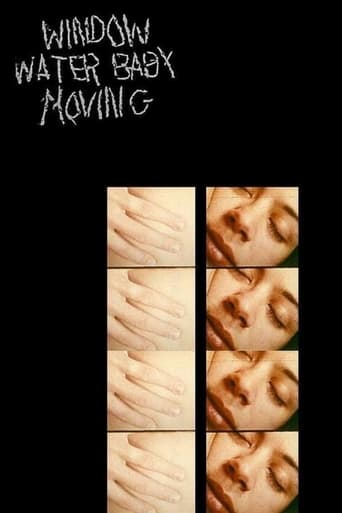 Window Water Baby Moving · 1959
Window Water Baby Moving
★ 6.91959
MovieDocumentary
On a winter's day, a woman stretches near a window then sits in a bathtub of water. She's happy. Her lover is nearby; there are close ups of her face, her pregnant belly, and his hands caressing her. She gives birth: we see the crowning of the baby's head, then the birth itself; we watch a pair of hands tie off and cut the umbilical cord. With the help of the attending hands, the mother expels the placenta. The infant, a baby girl, nurses. We return from time to time to the bath scene. By the end, dad's excited; mother and daughter rest.
 Unglassed Windows Cast a Terrible Reflection · 1953
Unglassed Windows Cast a Terrible Reflection
★ 6.81953
MovieDrama
An anatomy of violence. Four young men and two young women are on a drive. There's a rivalry between two guys for one of the girls. On a remote road, the car stalls. The driver hitchhikes for help. Led by the intrepid girl, the others walk toward abandoned buildings, perhaps a mining operation. One of the three guys sits and reads. The intrepid one explores the building and sees something that scares her. She screams; the two rivals and the second girl run to find her. Something she says starts a fight between her two suitors. The one reading a book walks away in disgust. After stopping the fight, the two young women follow. How can this end? Preserved by the Academy Film Archive in 2005.
 Sweetgrass · 2009
Sweetgrass
★ 6.72009
MovieDocumentary
An unsentimental elegy to the American West, Sweetgrass follows the last modern-day cowboys to lead their flocks of sheep up into Montana's breathtaking and often dangerous Absaroka-Beartooth mountains for summer pasture, revealing a world in which nature and culture, animals and humans, vulnerability and violence are all intimately meshed.
 Seasons... · 2002
Seasons...
★ 6.72002
Movie
Brakhage's frame-by-frame hand carvings and etchings directly into the film emulsion, sometimes photographically combined with paint, are illuminated by Solomon's optical printing; this footage was then edited by Solomon into a four part 'seasonal cycle'. This film can be considered to be part of a larger, 'umbrella' work by Brakhage entitled «...» . Seasons... is inspired by the colors and textures found in the woodcuts of Hokusai and Hiroshige, and the playful sense of forms dancing in space from the film works of Robert Breer and Len Lye.
 Anticipation of the Night · 1958
Anticipation of the Night
★ 6.61958
MovieDocumentary
First person view of a man, seen only in shadow, attempting to connect with the world around him.
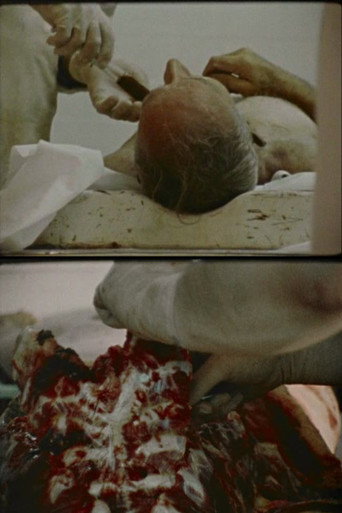 The Act of Seeing with One's Own Eyes · 1972
The Act of Seeing with One's Own Eyes
★ 6.51972
MovieDocumentary
At a morgue, forensic pathologists conduct autopsies of the corpses assigned. "S. Brakhage, entering, WITH HIS CAMERA, one of the forbidden, terrific locations of our culture, the autopsy room. It is a place wherein, inversely, life is cherished, for it exists to affirm that no one of us may die without our knowing exactly why. All of us, in the person of the coroner, must see that, for ourselves, with our own eyes. It is a room full of appalling particular intimacies, the last ditch of individuation. Here our vague nightmare of mortality acquires the names and faces of OTHERS. This last is a process that requires a WITNESS; and what 'idea' may finally have inserted itself into the sensible world we can still scarcely guess, for the CAMERA would seem the perfect Eidetic Witness, staring with perfect compassion where we can scarcely bear to glance." – Hollis Frampton
 Dog Star Man · 1965
Dog Star Man
★ 6.41965
MovieFantasy
Experimental film following a cycle of seasons as well as the stretch of a single day as a man and his dog slowly ascend a mountain.
 Cannibal! The Musical · 1996
Cannibal! The Musical
★ 6.41996
MovieComedyWestern
Heading through Colorado Territory in search of gold and women, Alferd Packer and his group of bemused companions find themselves lost, starving and musically inspired by the obstacles they confront along the way, including a die-hard Confederate cyclops, a trio of surly trappers, a tribe of Japanese-speaking "Indians," and ultimately, each other.
 Prelude: Dog Star Man · 1962
Prelude: Dog Star Man
★ 6.11962
MovieDramaFantasy
A creation myth realized in light, patterns, images superimposed, rapid cutting, and silence. A black screen, then streaks of light, then an explosion of color and squiggles and happenstance. Next, images of small circles emerge then of the Sun. Images of our Earth appear, woods, a part of a body, a nude woman perhaps giving birth. Imagery evokes movement across time. Part of the Dog Star Man series of experimental films.
 Dog Star Man: Part III · 1964
Dog Star Man: Part III
★ 6.11964
MovieDrama
Sexual intimacy. Three kinds of images race past, superimposed on each other sometimes: two bodies, a man and a woman's, close up, nude - patches of skin, wisps of hair, glimpses of a face and genitalia; strips of celluloid with lines and squiggles scratched on them; and, close-up shots of what appear to be the insides of living bodies - a heart beating, muscle and sinew and tissue wet with fluids. The exterior and interior of desire.
 Elementary Phrases · 1994
Elementary Phrases
★ 6.11994
MovieAnimation
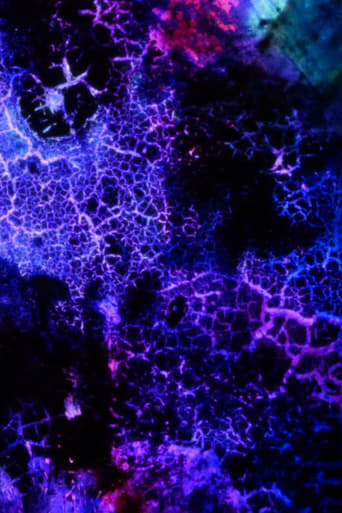
Colleagues at the University of Colorado at Boulder, the two began with strips of film Brakhage had painted on by hand, photographing them frame by frame with Solomon’s optical printer. They often printed two strips of film together, some of them containing images taken by Solomon, then chose from the images what Brakhage says “seemed to us natural phrases,” which Brakhage arranged into the final form. The result is a 40-minute silent film in which occasional hints of photographic images sometimes seem to peek through largely abstract shapes.
 20 Little Films · 2012
20 Little Films
★ 6.02012
MovieDocumentary
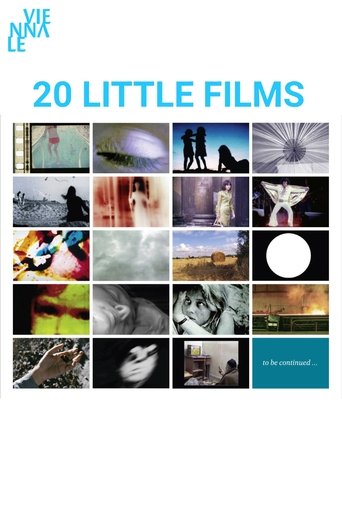
Since 1995, the Viennale has invited renowned directors to create short, one-minute films as personal contributions to the festival. Ranging from home movies to political essays, musical sketches to abstract studies, these “little films” form a unique anthology of cinematic moments. 20 Little Films collects a selection of these works, premiering together for the Viennale’s 50th anniversary at the Locarno Film Festival.
 For Life, Against the War · 1967
For Life, Against the War
★ 6.01967
MovieAnimation
First shown on January 30, 1967, FOR LIFE AGAINST THE WAR was an open-call, collective statement from American independent filmmakers disparate in style and sensibility but united by their opposition to the Vietnam War. Part of the protest festival Week of the Angry Arts, the epic compilation film incorporated minute-long segments which were sent from many corners of the country, spliced together and projected. The original presentation of the works was more of an open forum with no curation or selection, and in 2000 Anthology Film Archives preserved a print featuring around 40 films from over 60 submissions.
 Yggdrasill: Whose Roots Are Stars in the Human Mind · 1997
Yggdrasill: Whose Roots Are Stars in the Human Mind
★ 6.01997
MovieScience Fiction
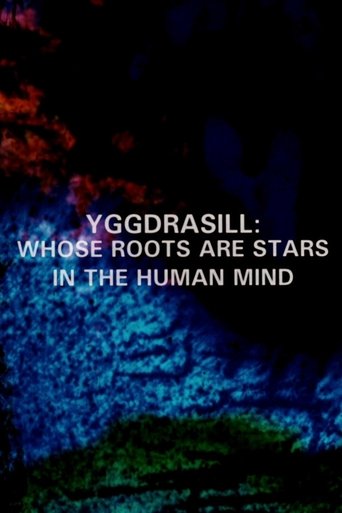
This film, a combination of hand-painting and photography, is a fulsome exposition of the themes of DOG STAR MAN. In that early epic I had envisioned The World Tree as dead, fit only for firewood; and at end of DOG STAR MAN I had chopped it up amidst a flurry of stars (finally Cassiopia's Chair): now, these many years later, I am compelled to comprehend YGGDRASILL as rooted in the complex electrical synapses of thought process, to sense it being alive today as when nordic legendry hatched it. I share this compulsion with Andrei Tarkovsky, whose last film The Sacrifice struggles to revive The World Tree narratively, whereas I simply present (one might almost say "document") a moving graph approximate to my thought process, whereby The Tree roots itself as the stars we, reflectively, are.
More Like This
Couldn't load this row right now.
