G
Directing
Georges Dufaux
Born March 17, 1927 · Lille, Nord, Nord-Pas-de-Calais, France
Died November 8, 2008 · aged 81
Georges Dufaux was a Canadian documentary film director and cinematographer.
Known For
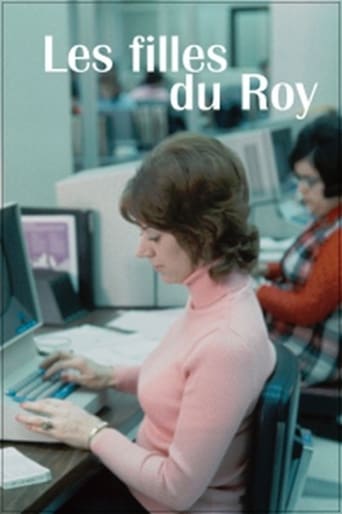 They Called Us : Les Filles du Roy · 1974
They Called Us : Les Filles du Roy
★ 7.51974
MovieDocumentary
The history of the roles of women in Quebec society, beginning with the women shipped from France to the New World by the King to populate the colony with the men already there, and ending with the modern career woman.
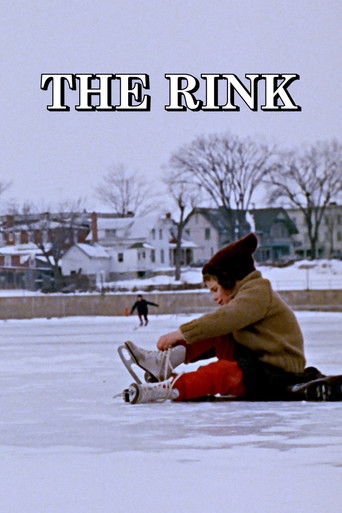 The Rink · 1963
The Rink
★ 8.01963
MovieDocumentary
This short, silent film captures a Sunday afternoon at a community skating rink. Iconic Quebec director Gilles Carle has the camera follow toddlers learning to skate, young girls flashing their skates and boys decked out in the colours of their favourite hockey teams. A picture perfect moment on a bright winter's day.
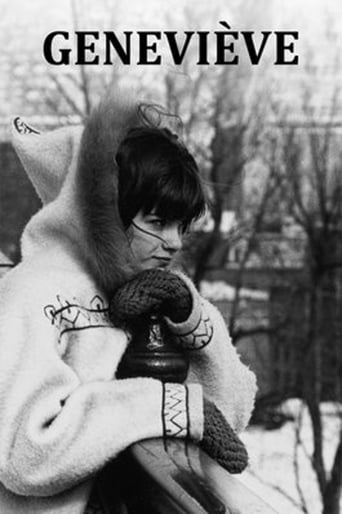 Geneviève · 1964
Geneviève
★ 6.61964
MovieDrama
Two teenage girls go to winter carnival in Quebec City for the first time. Their ambiguous, tentative relation with a young boy brings both of them the sweet intensity and disillusionment of first love. One of four film sketches on the problems of adolescents facing the adult world in the 1960s included in the anthology film That Tender Age (La fleur de l'âge, ou Les adolescentes). The three other sketches were directed by Jean Rouch, Hiroshi Teshigahara, and Gian Vittorio Baldi.
 Ethnocide: Notes on El Mezquital · 1977
Ethnocide: Notes on El Mezquital
★ 6.21977
MovieDocumentary
Through the direct testimony of the Indians, the phenomenon of acculturation suffered by the Otomí minority of the Mezquital Valley, one of the poorest rural areas of the state of Hidalgo, in Mexico, is analyzed. It tries to show a broader problem that encompasses a large part of the Continent; how other peoples, other ethnic groups, are exterminated with all kinds of mechanisms, from brutal repression to the most sophisticated cultural penetration.
 Multiple Man · 1969
Multiple Man
★ 10.01969
MovieDocumentary
A many-faced view of humanity, of global man in all his forms and interests. Produced originally in 70 mm (with stereophonic sound) for showing at Man and His World, the Montréal fair that succeeded Expo 67, this film employs the multi-image technique. People of all places, origins, cultures, secular and religious, are here united and seen side by side, creating an impressive, inspiring and challenging portrait. The film's title appears in seven languages. Film without words.
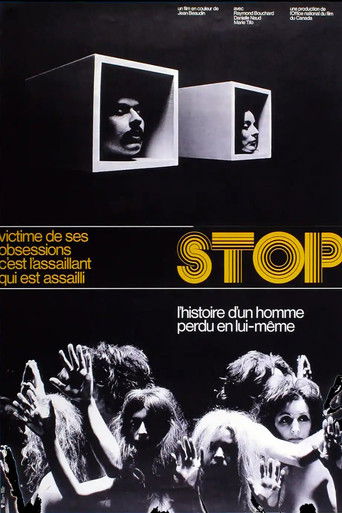 Stop · 1971
Stop
★ 8.01971
MovieDrama
A professional race car driver's obsession with winning races causes communication problems between him and his wife that threaten to separate them.
 In the Labyrinth · 1967
In the Labyrinth
★ 8.51967
MovieDocumentaryAnimation
"Labyrinth" is a groundbreaking multi-screen 45-minute presentation produced for Chamber III of the Labyrinth at Expo 67 in Montreal, using 35 mm and 70 mm film projected simultaneously on multiple screens. A film without commentary in which multiple images, sometimes complementary, sometimes contrasting, draw the viewer through the different stages of a labyrinth. The tone of the film moves from great joy to wrenching sorrow; from stark simplicity to ceremonial pomp. It is life as it is lived by the people of the world, each one, as the film suggests, in a personal labyrinth. Re-released in 1979 as "In the Labyrinth" by the National Film Board of Canada in a 21-minute single projection format.
 Des armes et les hommes · 1973
Des armes et les hommes
★ 8.01973
MovieDocumentary
Filmography
Sort
Stop · 1971Stop
★ 8.01971
MovieDrama
A professional race car driver's obsession with winning races causes communication problems between him and his wife that threaten to separate them.
Director of Photography
Des armes et les hommes · 1973Des armes et les hommes
★ 8.01973
MovieDocumentary
Director of Photography



 Les 90 Jours · 1959
Les 90 Jours
★ 7.51959
MovieDrama
Director of Photography

 The Punishment · 1962
The Punishment
★ 8.01962
MovieDrama
An aimless young woman is sent home from school with nothing to do. Drifting through the streets of Paris, she comes across a variety of people.
Director of Photography