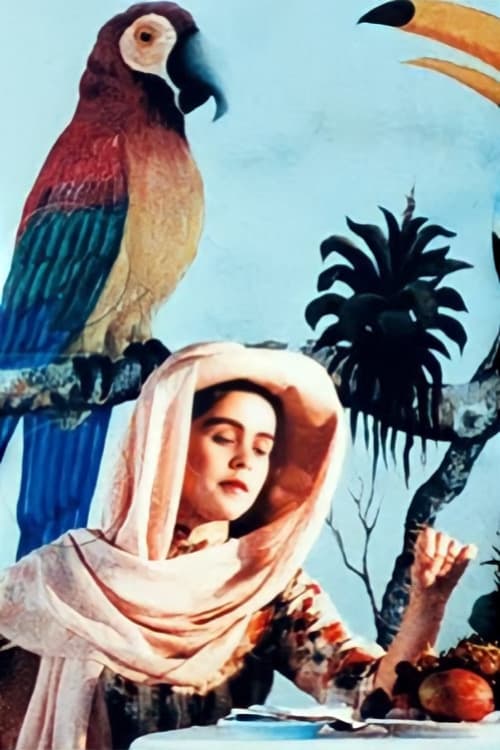
Quem Seria o Feliz Conviva de Isadora Duncan?
Quem Seria o Feliz Conviva de Isadora Duncan?

1992 · 30 min

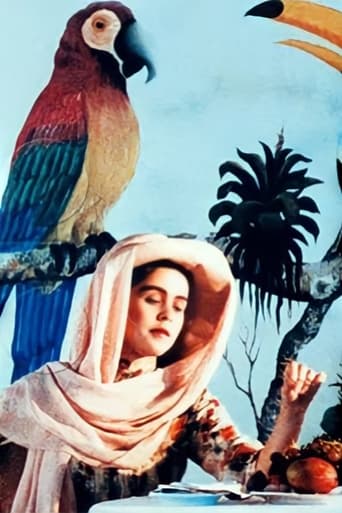
The meeting between the young Brazilian author Oswald de Andrade, 18 years old, and the famous American ballerina Isadora Duncan, 40 years old, as she traveled through Brazil.

Directed by Júlio Bressane

Your Rating

Cast

Make it a double feature

2h together

Quem Seria o Feliz Conviva de Isadora Duncan?

The Agony

Both from Júlio Bressane.

More from Júlio BressaneSee all →

OswaldianasOswaldianas · 1992
Oswaldianas
★ 9.01992
MovieDrama
Collective film with five segments around the works and life of brazilian writer Oswald de Andrade.
The Long Voyage of the Yellow BusThe Long Voyage of the Yellow Bus · 2023
The Long Voyage of the Yellow Bus
★ 9.02023
MovieDocumentary
For this behemoth, Bressane took his opera omnia and edited it in an order that first adheres to historical chronology but soon starts to move backwards and forward. The various pasts – the 60s, the 80s, the 2000s – comment on each other in a way that sheds light on Bressane’s themes and obsessions, which become increasingly apparent and finally, a whole idea of cinema reveals itself to the curious and patient viewer. Will Bressane, from now on, rework The Long Voyage of the Yellow Bus when he makes another film? Is this his latest beginning? Why not, for the eternally young master maverick seems to embark on a maiden voyage with each and every new film!
Capitu and the ChapterCapitu and the Chapter · 2023
Capitu and the Chapter
★ 8.52023
MovieDramaRomance
“If you had to choose between me and your mother, who would it be?” Capitu asks provocatively of her problematic lover. Elsewhere, they dance to inaudible music with their friends, each couple keeping to a rhythm of their own. At times, this depiction of the memories we see one Dom Casmurro commit to paper with a flamboyant pen seems to be an interplay of conflicting emotions – particularly when jealousy raises its head. Adapted from the Brazilian classic novel 'Dom Casmurro' (1899) by Machado de Assis as an ironic/philosophical essay on poetry and jealousy, and featuring fragments of Bressane’s previous works.
The AgonyThe Agony · 1976
The Agony
★ 7.81976
MovieRomanceCrime
Cropped hair, a rosemary branch behind the ear, yellow shirt of shiny satin, he's behind the wheel of his car when passing by a woman who walks by the roadside. Strongly painted lips, printed dress with round skirt and red shoes matching the color of the lipstick, she catches his attention. He gives her a ride, the two of them stare in silence for a few moments. They introduce themselves to one another and between the two establishes an absurd dialogue and full of metaphors. And they are driving around in corners of Rio de Janeiro, to the sound of Noel Rosa and Lamartine Babo. Eva and Antena, she a seer, he, an assassin on the run, initiate an unusual case of love, a marginal love, where boredom often gives way to tragedy, creating the agony of a holiday spent in an abyss.
Bethânia Bem de Perto: A Propósito de um ShowBethânia Bem de Perto: A Propósito de um Show · 1966
Bethânia Bem de Perto: A Propósito de um Show
★ 7.81966
MovieDocumentaryMusic
Documentary about Maria Bethânia, at the very beginning of her career as a singer, when she arrived in Rio da Bahia to replace Nara Leão in the show Opinião. Bethânia's appearance, at that time in southern Rio, was a cultural shock that shook the city. The film also contains scenes of her daily life and meetings with other musicians.
Memoirs of a Strangler of BlondesMemoirs of a Strangler of Blondes · 1971
Memoirs of a Strangler of Blondes
★ 7.41971
MovieDramaHorror
First film by Julio Bressane shot in exile, "Memoirs" is a film about a man who repeatedly kills the same type of woman in same places, the same way. Filmed on the streets of London.
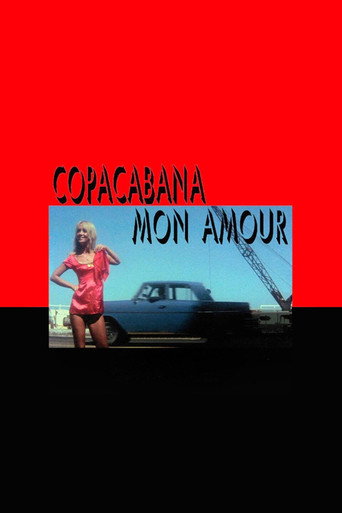
Copacabana Mon AmourCopacabana Mon Amour · 1970
Copacabana Mon Amour
★ 7.31970
MovieDramaComedy
Sônia and her homosexual brother are both believed by their mother to be possessed by the devil. She works as a prostitute in the streets of Copacabana and he’s a servant who falls madly in love with his employer.
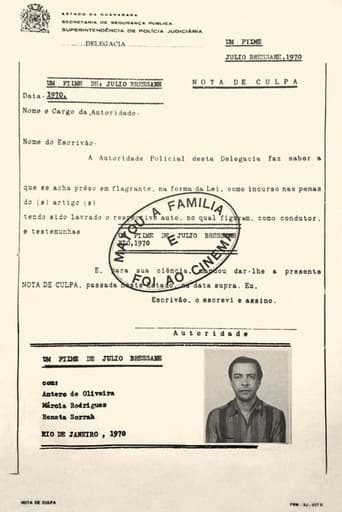
Killed the Family and Went to the MoviesKilled the Family and Went to the Movies · 1969
Killed the Family and Went to the Movies
★ 6.61969
MovieDramaComedy
A man living with his parents in a low middle-class apartment in Rio de Janeiro coldly stabs them with a razor and then goes to the movies. Marcia, a rich and dissatisfied young woman, takes advantage of a trip from her husband to go to her home in Petrópolis, where she receives a visit from an old friend, Regina.
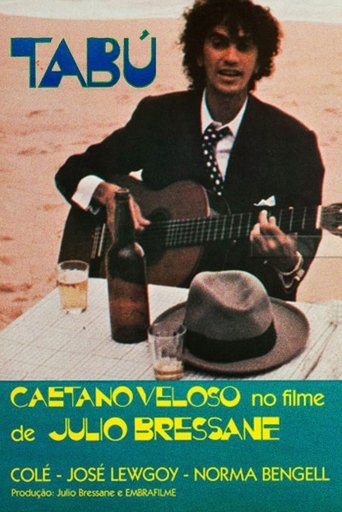
TabuTabu · 1983
Tabu
★ 6.51983
MovieComedyMusic
The fictional encounter in Rio de Janeiro, Brazil (in the 30s) between popular songwriter Lamartine Babo and inconoclast poet and playwright Oswald de Andrade.
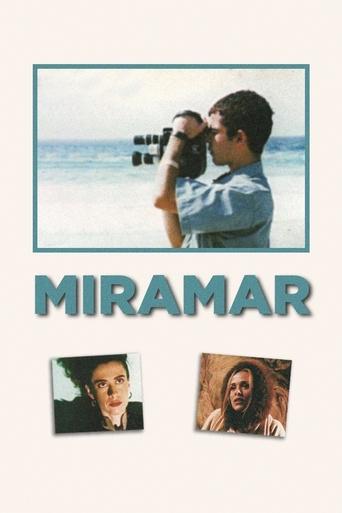
MiramarMiramar · 1997
Miramar
★ 6.21997
MovieDrama
Story with some autobiographical touches taken from director's life.
Chinese ViolaChinese Viola · 1975
Chinese Viola
★ 6.01975
MovieDocumentary
The rare short film presents a curious dialogue between filmmaker Julio Bressane and actor Grande Otelo, where, in a mixture of decorated and improvised text, we discover a little manifesto to the Brazilian experimental cinema. Also called "Belair's last film," Chinese Viola reveals the first partnership between photographer Walter Carvalho and Bressane.
The Queen of the NightThe Queen of the Night · 2023
The Queen of the Night
★ 6.02023
MovieFantasyHorror
A statue steps down from the pedestal and sets out in search of her Creator, the cold Queen of the Night. In the urban night, she encounters mysterious figures that disappear like shadows. Freely inspired by characters from Mozart's opera, The Magic Flute.
Baron Olavo, The HorribleBaron Olavo, The Horrible · 1970
Baron Olavo, The Horrible
★ 6.01970
MovieComedyCrime
Bressane’s first color film, shot in the home of the artist Elyseu Visconti. Part of it is missing sound and final editing because the director was forced to leave Brazil. Horror and humor to deal with the subject of insanity: “In the end everyone leaves the house as though they were laboratory mice escaping, they invade the city and contaminate the world”. “If we talk about horror, this film deals with national horror, with Mojica Marins as an emblem. There might be a few touches of Corman and English horror, but it is another level of horror. What transformed the film was the location where we were shooting, the house of a 19th century painter, a receptacle of light. When I arrived and saw that house, that light, I said: ‘This is the film. This is the horror’. The meaning of the film, its appeal, derives from this laboratory of light” (J. Bressane). — Torino Film Festival
Killed the Family and Went to the MoviesKilled the Family and Went to the Movies · 1991
Killed the Family and Went to the Movies
★ 5.51991
MovieDramaComedy
In Rio de Janeiro, after an altercation with his father and mother, a young man named Bebeto kills his family and goes to a movie theater, where he watches four weird vignettes.
Days of Nietzsche in TurinDays of Nietzsche in Turin · 2002
Days of Nietzsche in Turin
★ 5.52002
MovieDrama
A cinematographic essay, without dialogues, about the months Nietszche spent in Turin, Italy, with narration quoted by his original writings.
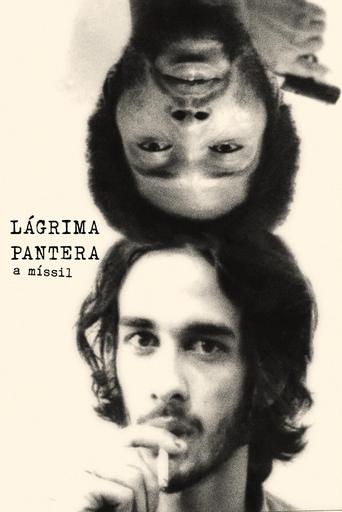
Lágrima Pantera: A MíssilLágrima Pantera: A Míssil · 1972
Lágrima Pantera: A Míssil
★ 5.51972
MovieDrama
A silent film shot in New York in 1972, including scenes in Hélio Oiticica’s apartment. Last film made in exile by Bressane, it mimics the experimental concept of "quasi-cinema" by Hélio Oiticica. It consists of a fragmentary experience of freedom, in super-8 and 16mm, in a code out of time, out of the square, while recreating (with different cameras) the wild and sensitive look that Oiticica dedicated to cinema. Its definitive 71-minute restored version was completed in the early 2000s.

More Like This

Couldn't load this row right now.
Rate this film

Your ratings make Midnight smarter