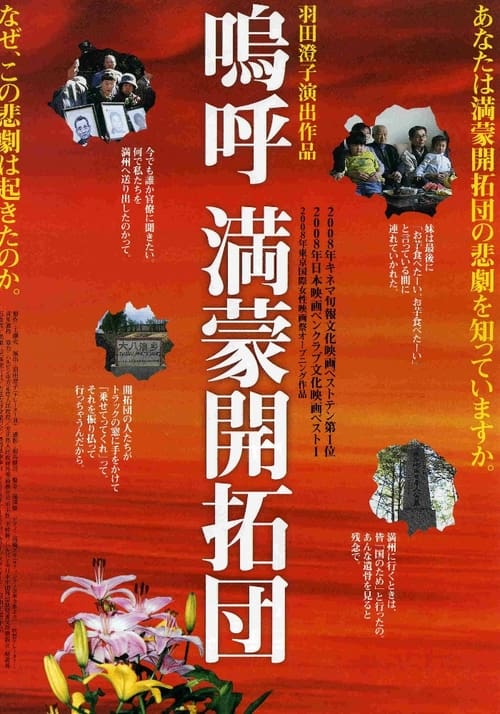
The Japanese Settlers to the Manchuria and Inner Mongolia of Mainland China

The Japanese Settlers to the Manchuria and Inner Mongolia of Mainland China

2009 · 120 min · ★ 6.7 · Documentary

Set in the Japanese puppet state of Manchukuo, the tragic theme of the film is the destruction of millions of lives in the 13 years before Manchukuo collapsed with Japan’s World War II surrender in August 1945, and the years of suffering it brought in its wake.

Directed by Sumiko Haneda

Your Rating

Make it a double feature

3h 40m together
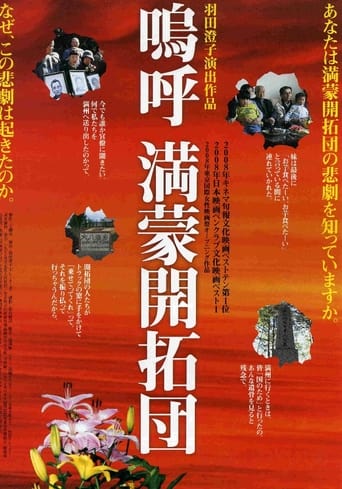
The Japanese Settlers to the Manchuria and Inner Mongolia of Mainland China
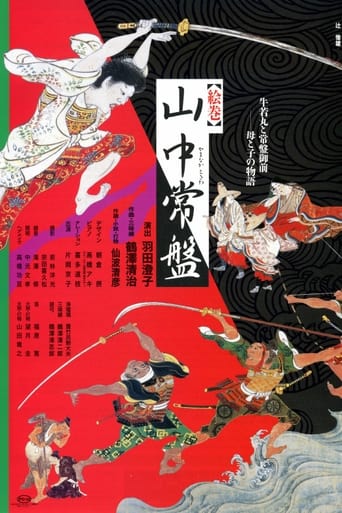
Into the Picture Scroll: The Tale of Yamanaka Tokiwa

Both from Sumiko Haneda.

More from Sumiko HanedaSee all →

Getting Old without AnxietyGetting Old without Anxiety · 1990
Getting Old without Anxiety
10.01990
MovieDocumentary
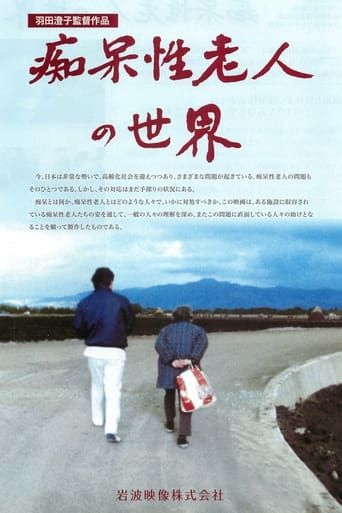
The care facilities for the elderly in a small town in Gifu prefecture, and the comparison with the welfare in Denmark, Sweden and Australia.
How to Care for the SenileHow to Care for the Senile · 1986
How to Care for the Senile
10.01986
MovieDocumentary
Shot in a retirement home over a period of two years, this film raises the question of "how to take care". The director films with great tenderness, not only the daily life of patients with senile dementia, but also the work of caregivers. Widely broadcast, the film sparked lively debate on the care and support society in Japan.
Into the Picture Scroll: The Tale of Yamanaka TokiwaInto the Picture Scroll: The Tale of Yamanaka Tokiwa · 2004
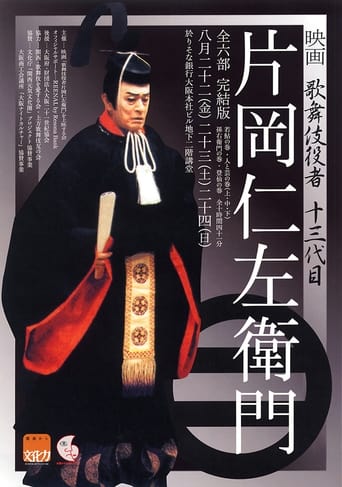
Into the Picture Scroll: The Tale of Yamanaka Tokiwa
10.02004
MovieDocumentary
This extraordinary film presents Japanese classical scroll painting as never before. The Yamanaka Tokiwa comprises twelve scrolls painted by Matabei Iwasa some 400 years ago. Haneda redefines the art documentary and demonstrated that a film about a masterpiece can be equally masterful.
Kabuki Actor Kataoka NizaemonKabuki Actor Kataoka Nizaemon · 1992
Kabuki Actor Kataoka Nizaemon
8.01992
MovieDocumentary
Documentary film from Japan.
The Cherry Tree with Gray BlossomsThe Cherry Tree with Gray Blossoms · 1977
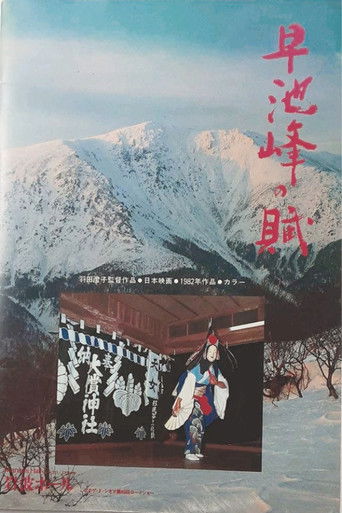
The Cherry Tree with Gray Blossoms
7.21977
MovieDocumentary
The poignant focal point for this film is a cherry tree that is over 1400 years old. Beginning with the tree, the director then explores the families and environment around the tree. The editing and music contribute to the sense of a haunting past contained within the solid structure of an ancient natural wonder.
The Poem of Hayachine ValleyThe Poem of Hayachine Valley · 1982
The Poem of Hayachine Valley
7.01982
MovieDocumentary
Shot in the foothills of Iwate Prefecture’s mystical Mt. Hayachine, the film records a year in the life of the area’s villages.
Island of LovesIsland of Loves · 1982
Island of Loves
6.51982
MovieDrama
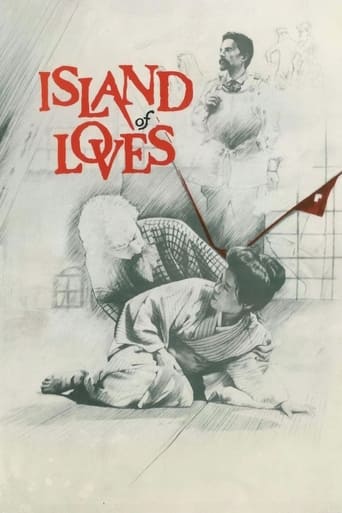
This film depicts the life of the 19th-century Portuguese writer Wenceslau De Moraes by means of nine ancient ballads from China. The writer married a Chinese woman after he left his wife and family to go live in Macao. Later, he moved to Japan where he fell in love with a Japanese woman, staying in Japan for the rest of his life. Mixed in with the career and loves of Moraes is the history of Portugal at home and in its colonies.
Children in the ClassroomChildren in the Classroom · 1954
Children in the Classroom
6.01954
MovieDocumentary
A short documentary about the behaviour of Japanese primary school students.
And Then Akiko Is...  A Portrait of a DancerAnd Then Akiko Is... A Portrait of a Dancer · 2012
And Then Akiko Is... A Portrait of a Dancer
2012
MovieDocumentary
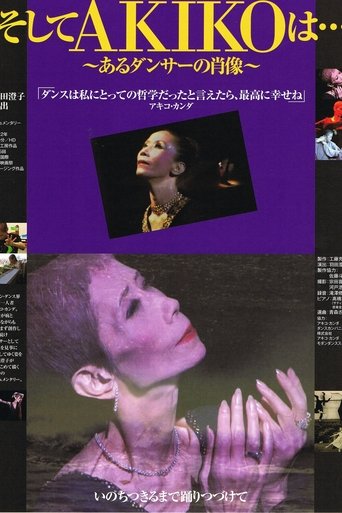
Sumiko Haneda returns to film what will be the final bits of Akiko Kanda's life, documenting Kanda's will to dance as she struggles with terminal cancer.
Akiko: Portrait of a DancerAkiko: Portrait of a Dancer · 1985
Akiko: Portrait of a Dancer
1985
MovieDocumentary
“I have three tasks in my life: to dance, to teach dance, and to create dance,” says the pioneering Japanese performer Akiko Kanda in this intimate portrait of creativity and individuality, After seeing a Martha Graham performance in college, Kanda left her family behind in Japan and arrived in New York City, where she studied under the legendary Graham and became a principal dancer with the troupe. Following the wiry artist as she moves from practice floor to performance hall, and from the cramped single-room apartment she lives in to a trip home to see her aging mother, director Sumiko Haneda reveals a woman who has rebelled against traditional ideals of marriage and motherhood, and who nearly single-handedly brought modern dance to Japan-and kept it alive. “When I die,” Kanda tells the director, “I will be content if I can just say, ‘I danced.'”
All's Well That Ends WellAll's Well That Ends Well · 2007
All's Well That Ends Well
2007
MovieDocumentary
Documentary on end-of-life care in Japan
Far-Away Home: Lushun and DalianFar-Away Home: Lushun and Dalian · 2011
Far-Away Home: Lushun and Dalian
2011
MovieDocumentary
Haneda Sumiko, documentary filmmaker who was born in Dalian, Manchuria in 1926 and was there to experience the conclusion of the Pacific War. Following her previous work , she revisits Dalian and Lushun, places where she spent her formative years. Lushun has served as an important naval port in modern times, and in 2009 was finally fully opened to foreigners. Haneda joined a tour organized as part of that opening, and delves into memoires as she visits the house where she grew up and the school she attended.
Women’s Testimonies - Pioneering Women in the Labor MovementWomen’s Testimonies - Pioneering Women in the Labor Movement · 1996
Women’s Testimonies - Pioneering Women in the Labor Movement
1996
MovieDocumentary
In 1982, the socialist researcher Ishidō Kiyotomo organized a round table with women activists who had participated in the rise of the labor movement, from the Taishō era (1912-1925) to the Shōwa era (1926-1989). At his request, Haneda records this meeting. Stimulated by her desire to " preserve the history of these women ", the director adds additional sequences to the recording. In the film, the discrimination and domination suffered by these activists are told in the first person.
School for Village Women, Women’s College in the VillageSchool for Village Women, Women’s College in the Village · 1957
School for Village Women, Women’s College in the Village
1957
MovieDocumentary
Haneda’s debut as full director, made after four years spent as an assistant, is set in a farming village in Shiga Prefecture (east of Kyoto). The film depicts the traditional architecture, lifestyles and customs of the village, its agricultural and domestic labour, but its central focus, as with many of Iwanami’s early films, is on education.
Dedicated Treasures of Horyuji-TempleDedicated Treasures of Horyuji-Temple · 1971
Dedicated Treasures of Horyuji-Temple
1971
MovieDocumentary
Woman Was the Sun—The Life of Hiratsuka RaichoWoman Was the Sun—The Life of Hiratsuka Raicho · 2002
Woman Was the Sun—The Life of Hiratsuka Raicho
2002
MovieDocumentary
Documentary on pioneer Japanese feminist Hiratsuka Raicho

More Like This

Couldn't load this row right now.
Rate this film

Your ratings make Midnight smarter