Bask in Sunshine
2003 · 50 min · Documentary
Contemporary art has become a trend for young people in China. Young artists often organize activities in the form of art groups or small groups — but this is not only looked down on by the government, but is also subject to punishments and restrictions. This film documents a gathering of more than 200 artists in Nanjing, all from different regions of China, who to engage in a modern art activity titled "Bask in the sunshine."
Directed by Hu Jie
Your Rating
Make it a double feature
1h 56m together
Both from Hu Jie.
More from Hu JieSee all →
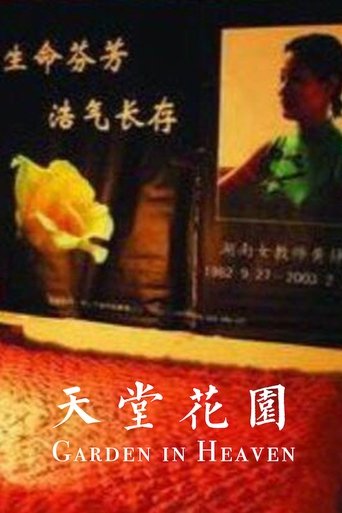 Garden in Heaven · 2007
Garden in Heaven
★ 10.02007
MovieDocumentary
By following the case of Huang Jing, a woman teacher who died of date rape, this documentary captures changes in China between 2003 and 2005, before and after the injunction to respect and protect human rights was incorporated into the constitution. By highlighting grassroots activity by women, the film illustrates awareness of human rights, women’s struggle against judicial corruption, and women taking action against domestic violence in China.
 The East Wind State Farm · 2010
The East Wind State Farm
★ 9.02010
MovieDocumentary
In 1957, two hundred teachers, students, and cadres were labeled as "Rightists" for voicing criticism of the Communist Party and sent to the East Wind State Farm in southwest China. As part of China's disastrous Great Leap Forward, these inmates were forced to take part in ill-conceived deforestation, agricultural and industrial projects that led to wide-scale famine. Later they endured the Cultural Revolution when their camp was visited by large groups of "sent-down" youth from the cities. After 21 years of "remolding," the "Rightists" were finally "rehabilitated" in 1978 and allowed to leave in 1978. THE EAST WIND STATE FARM re-examines the tragic events of Chinese modern history during the height of Maoist rule. Director Hu Jie collects dozens of extensive interviews with both inmates and staff who served through three decades of the camp's existence.
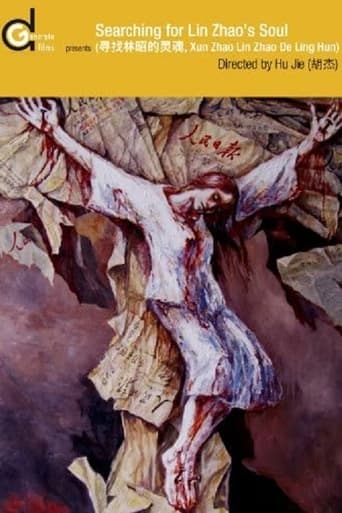 Searching for Lin Zhao's Soul · 2004
Searching for Lin Zhao's Soul
★ 8.72004
MovieDocumentary
This landmark documentary reveals the tragic life of a gifted young woman who was executed for speaking out during the height of Chairman Mao’s rule.
 Spark · 2013
Spark
★ 8.02013
MovieDocumentary
Spark was an underground publication that emerged in Gansu province in 1960, and was centered on the ongoing famine and the Great Leap Forward. Ultimately, 43 people, including the Rightist teachers and students who were connected with the publication, the peasants and the rural cadres who sympathized with them, were arrested and given long prison terms. Among them, three key figures were executed during the Cultural Revolution.
 Red Art · 2008
Red Art
★ 8.02008
MovieDocumentary
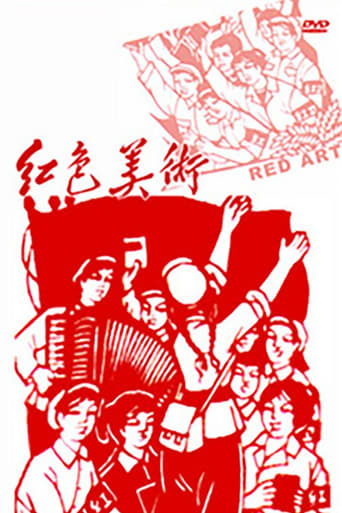
The launch and development of the Great Proletarian Cultural Revolution not only has a series of CCP Central Committee documents that have promoted wave after wave of movements, but also has various propaganda methods. A large number of different types of literary and artistic products have been produced in a collective form and with the input of the State. As a weapon of revolutionary struggle, works of art are important representatives of this period. Art was a tool for the Cultural Revolution; it fully embodies its aesthetic characteristics, actively cooperating with the development of various movements and the popularization of ideas. It has cultivated the values and visual experience of a generation of Chinese people — the paintings of the Cultural Revolution have been regarded as treasures by Chinese collectors. This film shows the characteristics of the Cultural Revolution paintings through a large number of paintings, as well as the bloody violence and despotism behind them.
 Demolition Workers · 1997
Demolition Workers
★ 8.01997
MovieDocumentary
One of Hu Jie's 'Farmers Working in the City' films. The city is developing rapidly, with tall buildings and highways. Behind this bustling city, there is such a group of people. They come from the countryside. Maybe they are not dressed well, or they have only finished elementary school, but they work hard with their own work. The piece of prosperity pays its youth and sweat. (Shot between 1997 and 1998.)
 Scaffolders · 1997
Scaffolders
★ 8.01997
Movie
One of Hu Jie's 'Farmers Working in the City' films. The city is developing rapidly, with tall buildings and highways. Behind this bustling city, there is such a group of people. They come from the countryside. Maybe they are not dressed well, or they have only finished elementary school, but they work hard with their own work. The piece of prosperity pays its youth and sweat. (Shot between 1997 and 1998)
 Though I Am Gone · 2006
Though I Am Gone
★ 7.52006
MovieDocumentary
Filmmaker Hu Jie uncovers the tragic story of a teacher beaten to death by her students during the Cultural Revoution. In 1966, the Cultural Revolution exploded throughout China, as Mao's Red Guards persecuted suspected Rightists. Bian Zhongyun, the vice principal of a prestigious school in Beijing, was beaten to death by her own students, becoming one of the first victims of the revolutionary violence that would engulf the entire nation.
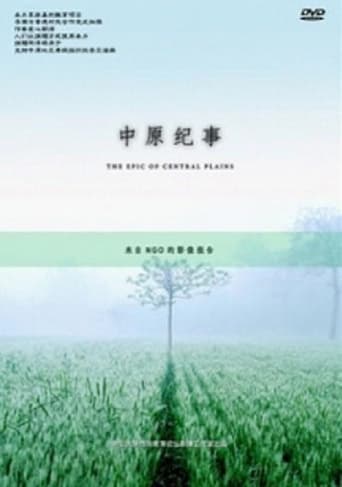 The Epic Of The Central Plains · 2006
The Epic Of The Central Plains
★ 7.02006
MovieDocumentary
In the late 1980s and early 1990s, in an attempt to stop the spread of AIDS, the Chinese government sought a “purer” blood supply from its rural population. Burdened by agricultural taxes and rising costs of education and health care, many peasants sold blood to state and private blood-collectors. Due to lack of sanitary control, a large number of blood-sellers were infected with HIV. Starting from the mid-1990s, AIDS villages multiplied.
 Tayuan · 2007
Tayuan
2007
MovieDocumentary
Tayuan is the location of the first museum of the Cultural Revolution in China. However, this important Cultural Revolution museum was established with private funds. The reason for its construction here is that there is a tomb of the victims of the Cultural Revolution. This film documents the little-known massacre and the construction of the Cultural Revolution Museum in Shantou, Guangdong during the Cultural Revolution. However, a few years later, this museum was banned by the government.
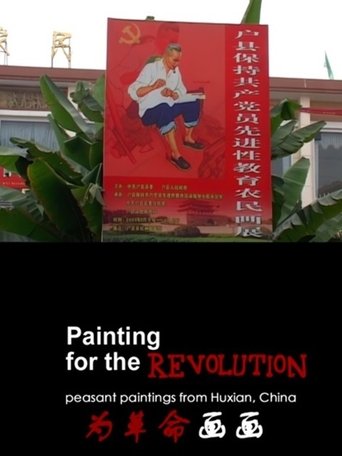 Painting For The Revolution: Peasants Paintings from HU County · 2005
Painting For The Revolution: Peasants Paintings from HU County
2005
MovieDocumentary
Hu County, in suburban Xi’an, is famous for its peasant paintings, produced in 1958 during the Great Leap Forward. It became particularly famous during the Cultural Revolution, when these works were hailed as model paintings. In 2005, the directors visited the county and interviewed both the painters and their teachers. Comparing different political languages and artistic imaginings across the ages, the film draws on diverse sources: old documentary film clips, new propaganda paintings, Beijing Opera in the local “Qin” accent, and traces of the old amongst the new. All these elements are engaged to help us better understand the painters and the phenomenon of propaganda paintings
 Remote Mountain · 2003
Remote Mountain
2003
MovieDocumentary
This is a documentary about coal miners. In the Qilian mountains of Qinghai Province, where the altitude is over 3,600 meters and the air thin, there are numerous small coal mines in which work around 200 miners aged 17 to 50. Every day, they must crawl through pits 60 to 70 metres deep just to carry out 30 loads of coal. Each load weighs 50 kilograms. The miners earn 500 yuan a month, without insurance. Miners normally suffer from pneumoconiosis after working four or five years in the mine and cannot work thereafter. They usually spend their wages on building houses, marriage, and tuition fees for their children. If they die in an accident, their family receives a 5,000 yuan pension. This film is a record of these working conditions, and of human labour. (Shot June 1995.)
 Baobao and Beibei · 2002
Baobao and Beibei
2002
Movie
Baobao and Beibei are twins and live in Nanjing. When they were three-and-a-half years old, their parents were laid off. To secure their the children's future, their parents choose for Baobao and Beibei to be gymnast, because the school sports coach had praised them. In order to train sports stars, amateur sports schools conduct cruel training on young children. Parents also have to obey the coach’s request and force their children to practice exercises. They believe that sports are a fair competition, and, as long as they are hard-hearted and push their children to the top, they will have bright prospects. Baobao and Beibei spent their childhood training like this. Their ideal is to participate in the Olympics, win gold medals for their country, and buy a house for their parents.
 From Jiabian Gou to Mingshui River · 2021
From Jiabian Gou to Mingshui River
2021
Movie
This film narrates the tragic events that unfolded at Jiabian Gou Farm from 1958 to December 1960, resulting in the deaths of over two thousand individuals due to exhaustion and starvation. Originally a labor reform farm housing prisoners in Jiuquan City, Gansu Province, Jiabian Gou Farm was transformed in 1958 into a facility for re-educating labor inmates. It also took in over three thousand individuals labeled as rightists from Gansu, including university professors, county-level officials, military officers, professionals from various industries, and teachers from different schools. Amid the political terror of the Great Leap Forward, extravagant claims flourished, and an atmosphere of self-preservation and selective reporting of positive news prevailed. This environment led to instances of cannibalism being overlooked, even as people continued to starve to death.
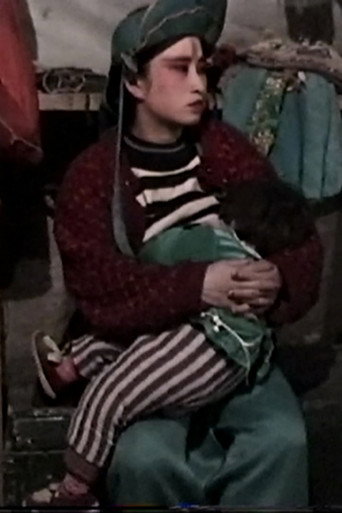 Theater Troupe · 1997
Theater Troupe
1997
Movie
Folk theater is a representation of local culture in China — a reflection of its characteristics. Hu Jie filmed a mobile theater troupe's performance and as well their backstage drama. This is a Henan opera troupe; they perform in rural areas of Henan and Shandong. They contact village officials in advance, negotiate a price, and then come to perform. Such performances are welcomed by the villagers. The troupe is a closed small society. There is a strict hierarchical system inside: The protagonist of the troupe is usually invited from the state-run troupe to support the scene. These people eat delicious and spicy food, and the boss treats them indifferently. But child actors are like child labor in the troupe. Children are called apprentices, but are actually exploited and used like slaves. Children slowly grow into actors, and then find a partner in the troupe and get married. Women similarly are not treated well — they shine on the stage, but off-stage they're abused.
 The Man Who Reached Heaven · 2012
The Man Who Reached Heaven
2012
MovieDocumentary
This film tells the story of the translator Wang Tiesheng. Before 1949, Wang graduated from Tongji University in Shanghai. He was a student with good morals, intelligence and health. He then served as an assistant professor in the Economics Department of Renmin University. However, he was labelled a “Rightist” in 1957 and was sent to a farm in Tianjin to undertake forced labour. There, he underwent extreme humiliating “reform” and suffered starvation. Later, on a bumpy road as he was being sent to be buried, he miraculously discovered that he was actually alive.
More Like This
Couldn't load this row right now.