Early Color TV Manipulations
1968 · 5 min
Marked by a playful, irreverent sense of improvisation and experimentation, these experiments with image manipulation and synthesis form a link between Paik's performance and sculptural works of the 1950s and early 1960s and the celebrated video works and installations of his later years.
Directed by Nam June Paik
Your Rating
Make it a double feature
8m together
Both from Nam June Paik.
More from Nam June PaikSee all →
 Good Morning, Mr. Orwell · 1984
Good Morning, Mr. Orwell
★ 8.11984
MovieComedyMusic
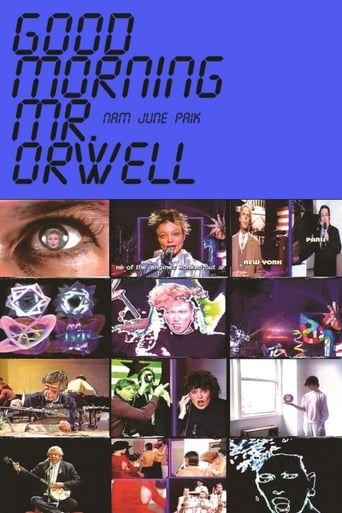
In his book "1984", George Orwell saw the television of the future as a control instrument in the hands of Big Brother. Right at the start of the much-anticipated Orwellian year, Paik and Co. were keen to demonstrate satellite TV's ability to serve positive ends-- Namely, the intercontinental exchange of culture, combining both highbrow and entertainment elements. A live broadcast shared between WNET TV in New York and the Centre Pompidou in Paris, linked up with broadcasters in Germany and South Korea, reached a worldwide audience of over 10 or even 25 million (including the later repeat transmissions).
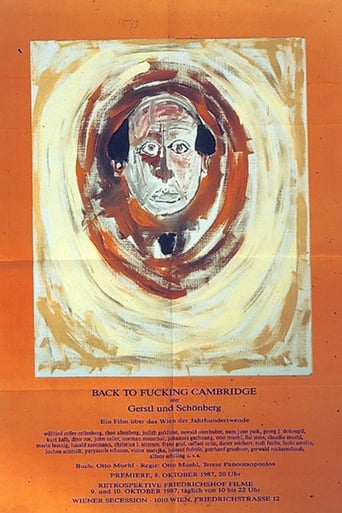 Back to Fucking Cambridge · 1987
Back to Fucking Cambridge
★ 8.01987
MovieComedy
About a group of graduates from Cambridge University who go back to their college to visit a friend who has stayed on there. Otto Muehl founded a community of artists in Vienna in 1970 with the aim of exploring a completely free life practice. Since 1972, this society experiment at the Friedrichshof in Burgenland, 60 kilometers from Vienna, further developed. From the mid-1970s, other municipalities were founded in 30 European cities. At Friedrichshof itself lived at times up to 240 members and visitors.
 Beatles Electroniques · 1968
Beatles Electroniques
★ 8.01968
MovieMusic
Part of a collection of restored early works by Nam June Paik, the haunting Beatles Electronique reveals Paik's engagement with manipulation of pop icons and electronic images. Snippets of footage from the feature film A Hard Day's Night and the "Rain" promotional film are countered with Paik's early electronic processing.
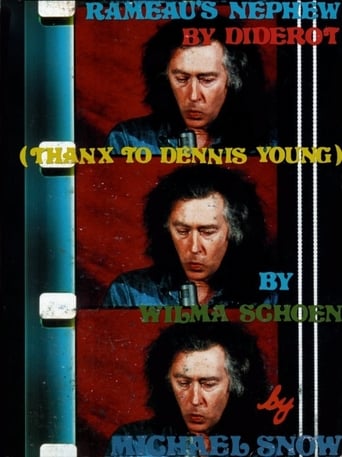 ‘Rameau’s Nephew’ by Diderot (Thanx to Dennis Young) by Wilma Schoen · 1974
‘Rameau’s Nephew’ by Diderot (Thanx to Dennis Young) by Wilma Schoen
★ 7.81974
MovieComedyMystery
Various unrelated vignettes, often juxtaposing sound and image.
 Electronic Moon No. 2 · 1972
Electronic Moon No. 2
★ 6.51972
MovieScience Fiction
Part of the "Video-Film Concert" collection released by EAI. From 1966 - 1972.
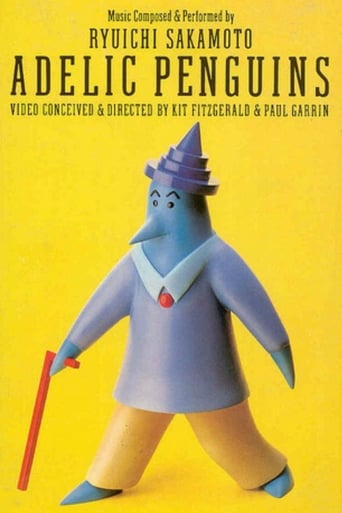 Adelic Penguins · 1986
Adelic Penguins
1986
MovieMusic
Originally commissioned by the Sony Corporation of Japan and performed live on the JumboTRON, a fourteen-story TV set at the Expo in Tsukuba, Japan, Adelic Penguins is a collaboration between Fitzgerald, artist Paul Garrin, and composer Ryuichi Sakamoto (who also appears as a performer). Structured in six segments, this technical tour-de-force is a pyrotechnic fusion of sound and image, in which the dynamic visual imagery fully complements and heightens Sakamoto's staccato, percussive score. Fitzgerald and Garrin merge terrestrial and interplanetary worlds, in which Sakamoto's figure becomes an integral part of the landscape. Set aloft in the surreal world of the artists' invention, Sakamoto dances, floats and walks through a hyperkinetic universe.
 Laboratorium Anthology · 1999
Laboratorium Anthology
1999
MovieDocumentary
Scenes from the life and work at Anthology Film Archives. Much of the footage in this video was shot by Auguste Varkalis.
 Fluxfilm Anthology 1962-1970 · 2010
Fluxfilm Anthology 1962-1970
2010
MovieDocumentaryFantasy
Feature-length compilation program presenting 37 out of 41 original fluxfilms produced and directed in the 1960s by Fluxus artists, including George Maciunas, Nam June Paik, Yoko Ono, Robert Watts, Paul Sharits, et al.
 Home Movies 1971-81 · 1985
Home Movies 1971-81
1985
MovieDocumentary
Home movies shot on Super 8mm by W+B Hein over 10 years.
 Tapes · 2020
Tapes
2020
MovieDocumentary
The tapes in the program consist of some of Mekas’ earliest cassettes from the 1990s not long after he first began working with video as well as more recent mini-DV tapes from 2010s. The contents of the tapes have not been previously seen in their entirety. The footage provides rare insight into aspects of Mekas’ video-making practice, as well as his activities, thoughts, dreams, and concerns, especially during the later years of his life.
 Allan ‘n Allen’s Complaint · 1982
Allan ‘n Allen’s Complaint
1982
Movie
The influence of Jewish fathers on their sons and the complexity of familial relationships are explored in a witty, poignant portrait of two artists. Beat poet Allen Ginsberg (whose father Louis was a poet in his own right) and performance artist/sculptor Allan Kaprow (whose father is a high-powered lawyer) are the sons who struggle with and against the influences of these patriarchal figures.
 The Medium Is the Medium · 1969
The Medium Is the Medium
1969
MovieTV Movie
Produced by WGBH-TV in Boston, the Medium Is the Medium is one of the earliest and most prescient examples of the collaboration between public television and the emerging field of video art in the U.S. WGBH commissioned artists — Allan Kaprow, Nam June Paik, Otto Piene, James Seawright, Thomas Tadlock and Aldo Tambellini — to create original works for broadcast television. Their works explored the parameters of the new medium, from image processing and interactivity to video dance and sculpture.
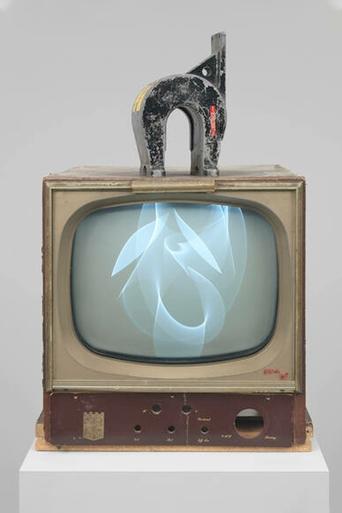 Magnet TV · 1965
Magnet TV
1965
Movie
Magnet TV is an early example of Nam June Paik’s “prepared televisions,” in which he altered the television image or its physical casing. This work, which was featured in Paik’s first solo exhibition in New York, consists of a seventeen-inch black-and-white set on which an industrial-sized magnet rests. The magnetic field interferes with the television’s electronic signals, distorting the broadcast image into an abstract form that changes when the magnet is moved. Paik’s radical action undermines the seemingly inviolable power of broadcast television by transforming the TV set into a sculpture, one whose moving image is created by chance procedures and can be manipulated at will.
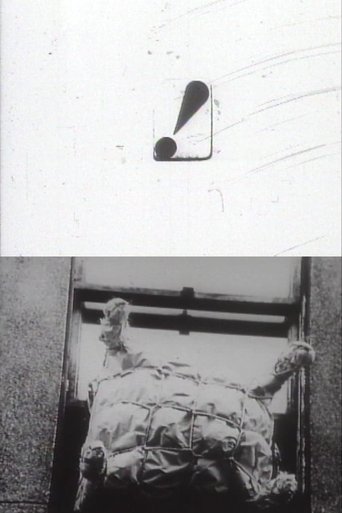 Hi-Red Centre Shelter Plan · 1964
Hi-Red Centre Shelter Plan
1964
Movie
Hi-Red Centre were comprised of Genpei Akasegawa, Natsuyuki Nakanishi and Jiro Takamatsu, who enacted ‘happening’-style performance art in unusual spaces during the early 1960s in Japan. The film is an extremely rare document of one of their early events, where they hired out a room in the Imperial Hotel and invited many friends and professionals in the art scene to participate in the occasion. The performance parodies Cold War fears and the construction of private bomb-shelters, as they diligently measure each guest’s weight and proportions in pretence that they are to build human-size shelters for each individual. Key figures of the art scene make an appearance, including Yoko Ono, video-artist Nam June Paik, noise artist Yasunao Tone, filmmaker Masao Adachi and graphic designer Tadanori Yokoo. A rarely seen and exceptional insight into the Japanese art scene of the era, Jonouchi records the event in his characteristically erratic style.
 Media Shuttle: New York - Moscow · 1978
Media Shuttle: New York - Moscow
1978
MovieDocumentaryAnimation
Collaboration with Nam June Paik and Dimitri Devyatkin, combining footage from the US and Russia: Brezhnev on TV, a May Day parade, veterans in the park. The film was shown internationally in New York.
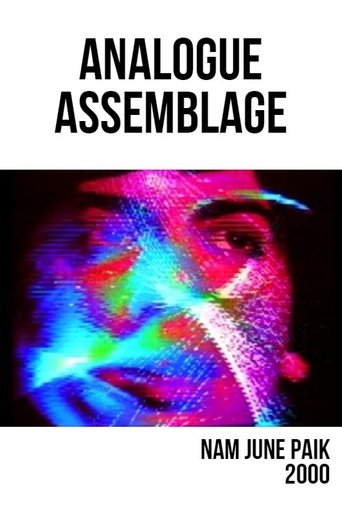 Analogue Assemblage · 2000
Analogue Assemblage
2000
Movie
Drawing from Paik's earliest experiments with video synthesizers, Analogue Assemblage employs current technology to create a multilayered montage that references both the old and the new. The eerie 1969 electronic score floats over ghostly image processing; the result is a paean to the way the future was.
More Like This
Couldn't load this row right now.