Local Knowledge
1992 · 33 min · ★ 10.0
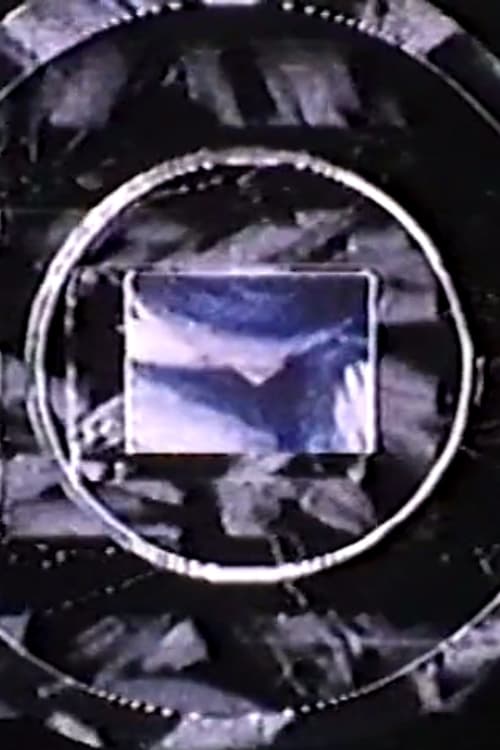
"David Rimmer's film is at once a somber and celebratory meditation on time and place. Its title, 'Local Knowledge', is marine terminology for what a skipper must know when navigating dangerous waters. Rimmer is an experienced sailor and the film's spiritual and geographical center is aptly named Storm Bay, where he spends his summers. But it's a troubled site. The camera, moving with tide and swell, seems to strain anxiously at its anchor and it becomes clear from here on in nothing will ever be at rest. Local Knowledge won't save anyone anymore. Preserved by the Academy Film Archive in 2015.
Directed by David Rimmer
Your Rating
Make it a double feature
3h 27m together
A close match in mood and era.
More from David RimmerSee all →
 Along the Road to Altamira · 1986
Along the Road to Altamira
★ 10.01986
Movie
"The lateral movement of the title "Along the Road to Altamira" signals that we are about to embark on a journey through Spain. Our final destination is Altamira, where the first forms of representation by Paleolithic man still remain. These images, a narrator tells us in German, would have remained undiscovered if not for the childish curiosity and unconditioned vision of the young girl who noticed the ancient paintings of bison on the cave ceiling.
 Bricolage · 1984
Bricolage
★ 7.51984
Movie
A TV movie sequence is repeated in slow motion: the sound gradually gets out of sync with the image. The point moves on the soundtrack while the viewer anticipates the meeting of the image and sound.
 Jack Wise: Language of the Brush · 1998
Jack Wise: Language of the Brush
★ 7.01998
MovieDocumentary
In this intriguing film, Jack Wise speaks very privately about his artistic process —'losing oneself in the language of the brush'— and what it means to be an artist. While at work in his studio, Wise talks about calligraphy being his freedom and the mandala his discipline. As he reveals his spiritual journey into Eastern religions and the importance of the mandala, we see the circle become a dominant motif in his art, and discern the influence of Chinese and Tibetan art on his own landscape-based work. Director David Rimmer's experimental voice asserts itself sensitively. Pace and imagery —water droplets, leaf and tree forms, a door which opens— sublimely convey the mystery and pulse of the artist's paintings, process, and perceptions.
 Watching for the Queen · 1973
Watching for the Queen
★ 6.51973
Movie
Watching for the Queen continued Rimmer's investigations of minimal narrative and the anonymous/autonomous shot. Pattern recognition, saccadic eye movement and feature rings are well known phenomena in the behavioral sciences. However, in Watching for the Queen, Rimmer has succeeded in employing these mechanisms in the telling of a story, by employing mathematical ordering in an aesthetic manner. Preserved by the Academy Film Archive in 2014.
 Narrows Inlet · 1980
Narrows Inlet
★ 6.01980
Movie
Starting with a boat swaying on its anchor at the head of an inlet, a landscape of pilings, shore, and forest is slowly revealed by time-lapse photography as the morning fog lifts. While the deep space of the landscape evolves out of the fog-enshrouded flatness of early morning, the camera skips from fixed point to fixed point - suggesting the motion of the human eye while reading.
 Treefall · 1970
Treefall
★ 6.01970
Movie
"Treefall" was originally made for a dance performance at the Vancouver Art Gallery, April, 1970. Structured in the form of two loops of high-contrast images of trees falling, reprinted and overlapped. Preserved by the Academy Film Archive in 2014.
 Fracture · 1973
Fracture
★ 6.01973
Movie
Variously relaxed, apprehensive, or relieved, the fractured gestures of a woman and a baby are played backward and forward, frame by frame, like a musical phrase. Preserved by the Academy Film Archive in 2014.
 Seashore · 1971
Seashore
★ 6.01971
Movie
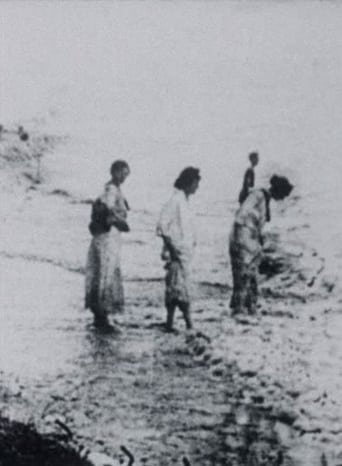
The basic image derives from a shot of women in (Edwardian era) dresses standing along the edge of the ocean. Within this eight-second loop, [Rimmer] cuts shorter ones. For example, the activity of a central group of three women is cut so that the figures repeat certain motions over and over and over again... Rimmer also chose to use the forms of surface imperfections, the scratches and dirt patterns, as bases for his loops... Although working in a disciplined style of re-structuring cinematic forms, his highly orchestrated creations have inspired great admiration both from cineastes and the more general public. Preserved by the Academy Film Archive in 2014.
 Migration · 1969
Migration
★ 6.01969
MovieDocumentary
"Whereas SQUARE INCH FIELD was composed largely in the camera, Rimmer's next film, MIGRATION, made full use of rear-projection rephotography, stop-framing, and slow motion. The migration of the title is interpreted as the flight of a ghost bird through aeons of space/time, through the micro-macro universe, through a myriad of complex realities. A seagull is seen flying gracefully in slow motion against a grainy green sky; suddenly the frame stops, warps and burns, as though caught in the gate of the projector. Now begins an alternation of fast and slow sequences in which the bird flies through time-lapse clouds and fog and, in a stroboscopic crescendo, hurtles into the sun's corona. Successive movements of the film develop rhythmic, organic counterpoints in which cosmic transformations send jelly fish into the sky and ocean waves into the sun." - Gene Youngblood. Preserved by the Academy Film Archive in 2014.
 An Eye for an Eye · 2003
An Eye for an Eye
★ 6.02003
Movie
An experimental film by David Rimmer (2003) which was influenced by or done to be performed at 'Rave' concerts which Rimmer was fond of attending in the 2000's. The relationship / resemblance of this film to 'light shows' (live projections) of the 1960's is unmistakable as an influence." -Al Razutis
 As Seen on TV · 1986
As Seen on TV
★ 6.01986
Movie
The structure of the film alternates between looped, processed stock TV imagery and a blank, static blue screen. This formal motif - a blank frame or screen onto which the artist projects imagery which expresses inner emotions and anxieties - is a motif which recurs throughout Rimmer's filmic oeuvre. As Seen on TV is a moving film which conveys a deep-seated human experience.
 Blue Movie · 1970
Blue Movie
★ 4.51970
Movie
Blue Movie was made for the international Dome Show where it was projected down onto the muslin surface of David Rimmer's geodesic dome. The audience lay on the floor looking up at it, the inside of each eye finishing the globe. Preserved by the Academy Film Archive in 2013.
 The Dance · 1970
The Dance
★ 2.01970
Movie
With an irresistible humour, Rimmer speculates in The Dance on the nature of the film loop. We see a (1920s) couple whilring around a dance floor at a dizzying pace... Uncanny in its ability to evoke complexity of responses from a simplicity of means. Preserved by the Academy Film Archive in 2015.
 Know Place · 1967
Know Place
1967
MovieDocumentary
Short documentary on the alternative, open education of 'Know Place', seemingly some kind of rural arts school retreat.
 Collective · 2008
Collective
2008
MovieAnimationMusic
Animated music video featuring montage of various performers overlaid by psychedelic/trance visuals.
 Home Movies 1971-81 · 1985
Home Movies 1971-81
1985
MovieDocumentary
Home movies shot on Super 8mm by W+B Hein over 10 years.
More Like This
 Pather Panchali · 1955
Pather Panchali
★ 7.81955
MovieDramaHistory
Impoverished priest Harihar Ray, dreaming of a better life for himself and his family, leaves his rural Bengal village in search of work. Alone, his wife, Sarbojaya, looks after her rebellious daughter, Durga, and her young son, Apu, as well as Harihar's elderly aunt Indir. The children enjoy the small pleasures of their difficult life, while their parents suffer the daily indignities heaped upon them.
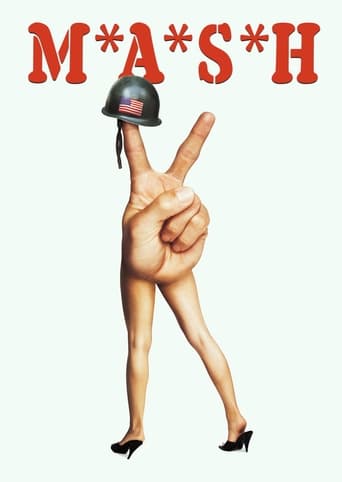 M*A*S*H · 1970
M*A*S*H
★ 6.91970
MovieComedyDrama
One of the world's most acclaimed comedies, M*A*S*H focuses on three Korean War Army surgeons brilliantly brought to life by Donald Sutherland, Tom Skerritt and Elliott Gould. Though highly skilled and deeply dedicated, they adopt a hilarious, lunatic lifestyle as an antidote to the tragedies of their Mobile Army Surgical Hospital, and in the process infuriate Army bureaucrats. Robert Duvall, Gary Burghoff and Sally Kellerman co-star as a sanctimonious Major, an other-worldly Corporal, and a self-righteous yet lusty nurse.
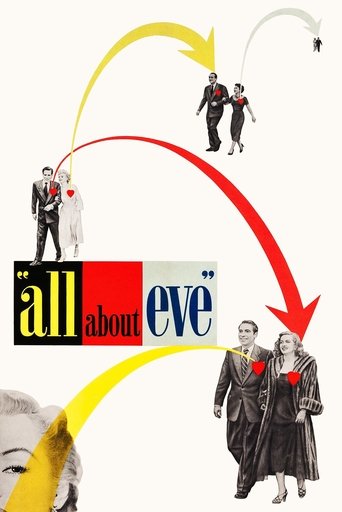 All About Eve · 1950
All About Eve
★ 8.11950
MovieDrama
From the moment she glimpses her idol at the stage door, Eve Harrington is determined to take the reins of power away from the great actress Margo Channing. Eve maneuvers her way into Margo's Broadway role, becomes a sensation and even causes turmoil in the lives of Margo's director boyfriend, her playwright and his wife. Only the cynical drama critic sees through Eve, admiring her audacity and perfect pattern of deceit.
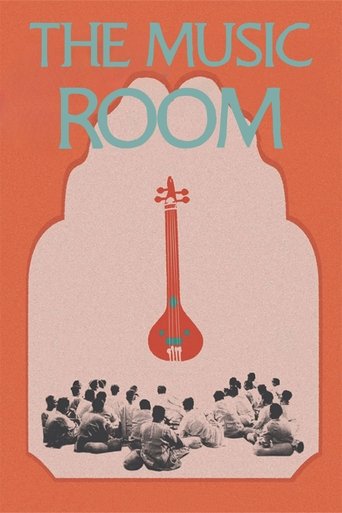 The Music Room · 1958
The Music Room
★ 7.51958
MovieDramaMusic
An aging, decadent landlord’s passion for music becomes the undoing of his legacy as he sacrifices his wealth in order to compete with the opulent music room of his younger, richer neighbour.
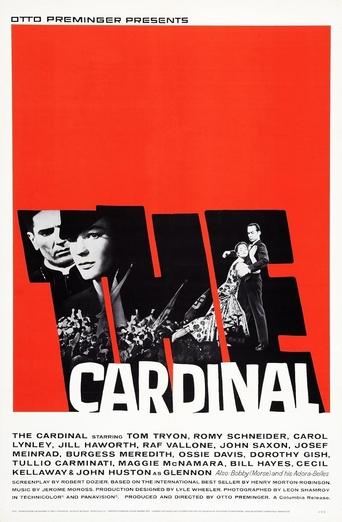 The Cardinal · 1963
The Cardinal
★ 6.51963
MovieDramaHistory
A young Catholic priest from Boston confronts bigotry, Nazism, and his own personal conflicts as he rises to the office of cardinal.
 Bambi Meets Godzilla · 1969
Bambi Meets Godzilla
★ 6.51969
MovieComedyAnimation
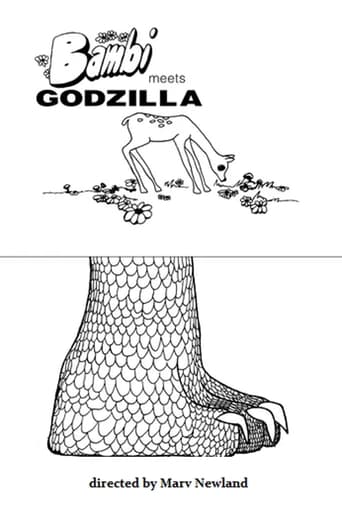
A deer, disillusioned by the consumerism that defines his life. A lizard, ostracized from society, forever wandering. A chance meeting in the middle of a field. Who will survive? And who will transcend existence? Preserved by the Academy Film Archive in 2009.
 The Sound of Music · 1965
The Sound of Music
★ 7.71965
MovieDramaFamily
In the years before World War II, a tomboyish postulant at an Austrian abbey is hired as a governess in the home of a widowed naval captain with seven children and brings a new love of life and music into the home.
