Directing
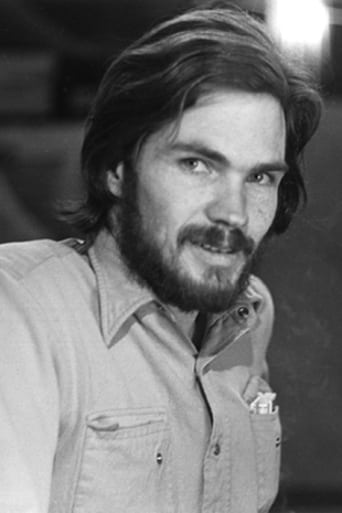
David Rimmer
Born January 20, 1942 · Vancouver, Canada (age 84)
Internationally celebrated filmmaker David Rimmer has over 25 experimental and documentary film and video productions to his credit. Throughout his prolific career, he has worked primarily in film, video and photography with his expertise extending to a variety of other media. His multi-faceted background includes working in performance, sound, sculpture, holography and dance. His experience as a …
Known For
 Know Place · 1967
Know Place
1967
MovieDocumentary
Short documentary on the alternative, open education of 'Know Place', seemingly some kind of rural arts school retreat.
 Collective · 2008
Collective
2008
MovieAnimationMusic
Animated music video featuring montage of various performers overlaid by psychedelic/trance visuals.
 Home Movies 1971-81 · 1985
Home Movies 1971-81
1985
MovieDocumentary
Home movies shot on Super 8mm by W+B Hein over 10 years.
 Narrows Inlet · 1980
Narrows Inlet
★ 6.01980
Movie
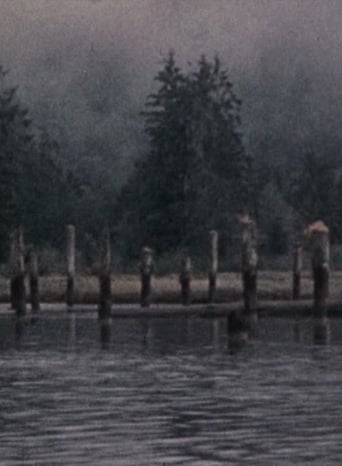
Starting with a boat swaying on its anchor at the head of an inlet, a landscape of pilings, shore, and forest is slowly revealed by time-lapse photography as the morning fog lifts. While the deep space of the landscape evolves out of the fog-enshrouded flatness of early morning, the camera skips from fixed point to fixed point - suggesting the motion of the human eye while reading.
 Gathering Storm · 2003
Gathering Storm
2003
MovieAnimation
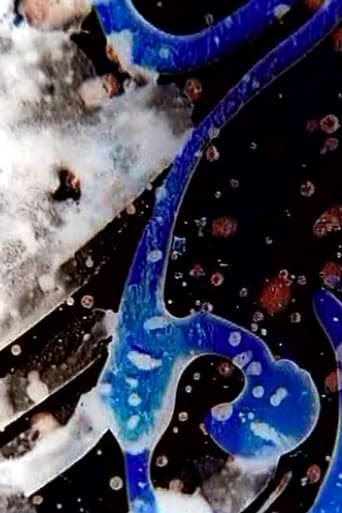
A hauntingly beautiful film about the world's flight into chaos. Rimmer has taken McLaren's camera-less technique to new heights. He paints directly on clear 35mm leader, using odd materials such as household cleaners, varnish, inks and sometimes fish scales and ferns. He feeds the loops through a film editing machine, overlays them with music and records the result with a mini DV camera. A production of the National Film Board of Canada.
 Blue Movie · 1970
Blue Movie
★ 4.51970
Movie
Blue Movie was made for the international Dome Show where it was projected down onto the muslin surface of David Rimmer's geodesic dome. The audience lay on the floor looking up at it, the inside of each eye finishing the globe. Preserved by the Academy Film Archive in 2013.
 Treefall · 1970
Treefall
★ 6.01970
Movie
"Treefall" was originally made for a dance performance at the Vancouver Art Gallery, April, 1970. Structured in the form of two loops of high-contrast images of trees falling, reprinted and overlapped. Preserved by the Academy Film Archive in 2014.
 Fracture · 1973
Fracture
★ 6.01973
Movie
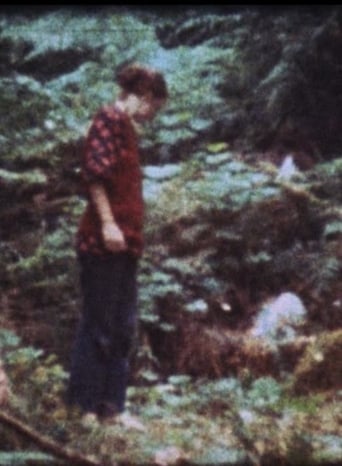
Variously relaxed, apprehensive, or relieved, the fractured gestures of a woman and a baby are played backward and forward, frame by frame, like a musical phrase. Preserved by the Academy Film Archive in 2014.