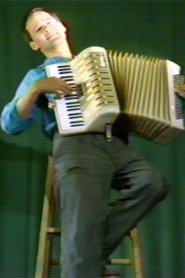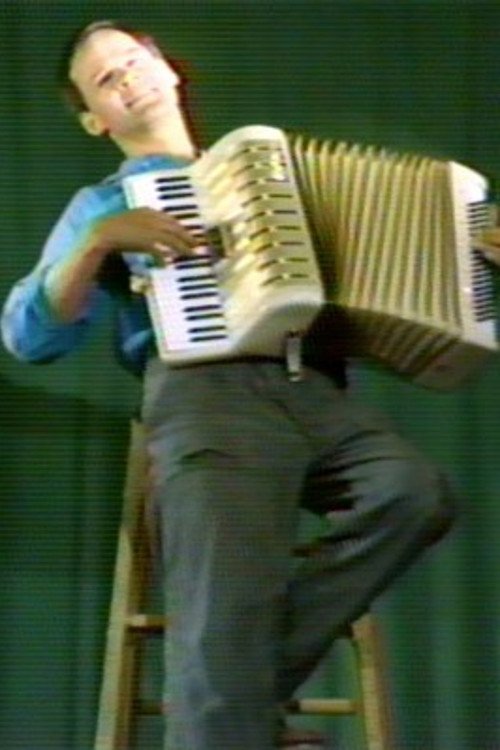
Accordion
1981 · 5 min
“A man, an accordion, a ladder, and a video camera. It’s as simple as that.” - Andrew Lampert
Directed by Tony Conrad
Your Rating
Cast
Make it a double feature
2h 5m together
Both from Tony Conrad.
More from Tony ConradSee all →
 Normal Love · 1965
Normal Love
★ 7.21965
MovieThriller
A follow-up to now legendary film Flaming Creatures. This vivid, full-color homage to B-movies is a dizzying display of camp that clearly affirms Smith’s role as the driving force behind underground cinema and performance art of the post-war era. The director was known to constantly re-edit the film, often during screenings as it was still unspooling from the projector.
 The Genius · 1993
The Genius
★ 7.01993
MovieComedyCrime
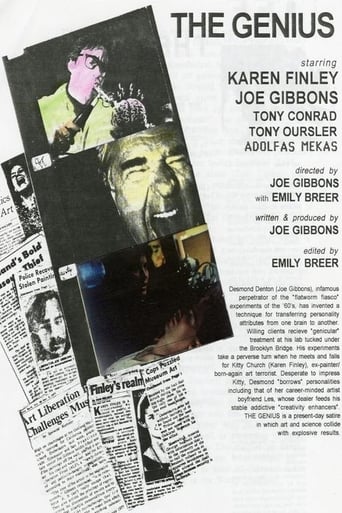
A ramshackle underground SF satire set and shot in the self-absorbed art world of lower Manhattan, written, produced, and directed by Joe Gibbons, who also plays one of the lead parts. Gibbons plays a mad scientist who's developed a technique for transferring personalities from one person's body to another; he becomes obsessed with an outlaw artist (played by performance artist Karen Finley) who destroys paintings in various galleries as a form of anarchist, anticapitalist protest.
 The Ballad of Genesis and Lady Jaye · 2012
The Ballad of Genesis and Lady Jaye
★ 6.82012
MovieDocumentaryMusic
An intimate, affecting portrait of the life and work of ground-breaking performance artist and music pioneer Genesis Breyer P-Orridge (Throbbing Gristle, Psychic TV +) and their wife and collaborator, Lady Jaye, centered around the daring sexual transformations the pair underwent for their 'Pandrogyne' project.
 The Autumn Feast · 1961
The Autumn Feast
★ 6.41961
Movie
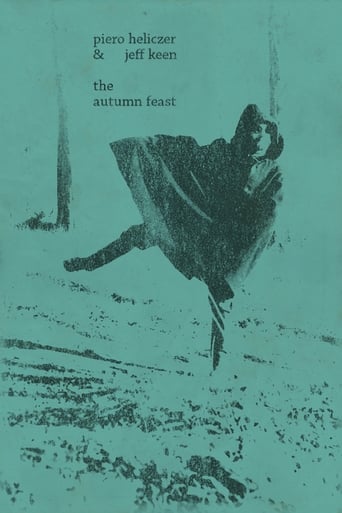
A deliberately non-synchronous film, shot in 8mm with the sound on tape. Piero Heliczer reads his poem "The Autumn Feast," and the visuals interact with, but does not literally represent, what is read.
 Chumlum · 1963
Chumlum
★ 6.11963
MovieDocumentary
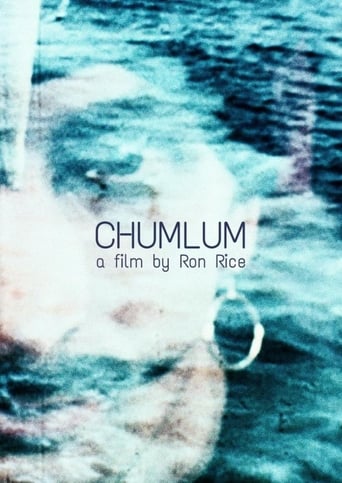
Ron Rice's Chumlum is one of those films in which the conditions of its construction are integral to the experience of watching it. It is a record of a cadre of creative people having fun on camera, playing dress-up, dancing, flirting, lazing around.
 The Invasion of Thunderbolt Pagoda · 1968
The Invasion of Thunderbolt Pagoda
★ 6.01968
MovieFantasy
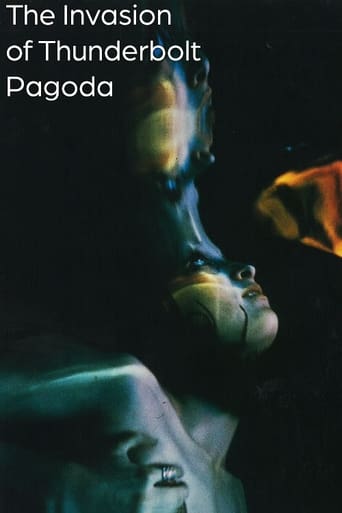
At the court of the Yellow Emperor, the Majoon Traveler & Lady Firefly appear in the Hall of Unconscious Magnetism.
 Tony Conrad: DreaMinimalist · 2008
Tony Conrad: DreaMinimalist
★ 5.72008
Movie
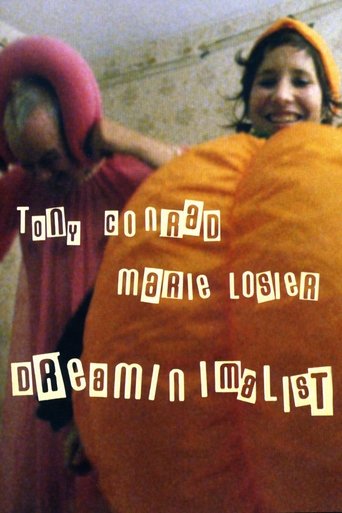
The latest in Marie Losier's ongoing series of film portraits of avant-garde directors (George and Mike Kuchar, Guy Maddin, Richard Foreman), DreaMinimalist offers an insightful and hilarious encounter with Conrad as he sings, dances and remembers his youth and his association with Jack Smith. - Harvard Film Archive
 The Flicker · 1966
The Flicker
★ 5.41966
Movie
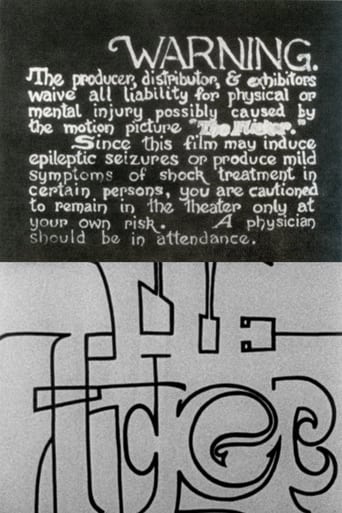
A film consisting of alternating black and white frames.
 Flaming Creatures · 1963
Flaming Creatures
★ 4.81963
MovieHorrorComedy
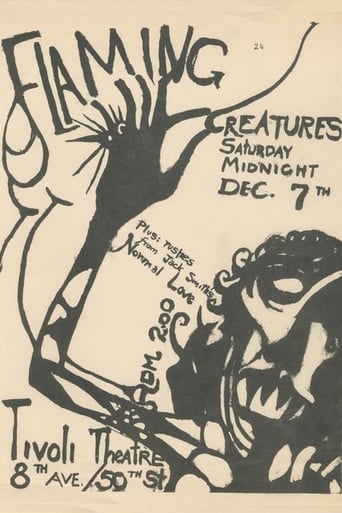
Filmmaker and artist Jack Smith described his own film as a “comedy set in a haunted movie studio.” Flaming Creatures begins humorously enough with several men and women, mostly of indeterminate gender, vamping it up in front of the camera and participating in a mock advertisement for an indelible, heart-shaped brand of lipstick. However, things take a dark, nightmarish turn when a transvestite chases, catches and begins molesting a woman. Soon, all of the titular “creatures” participate in a (mostly clothed) orgy that causes a massive earthquake. After the creatures are killed in the resulting chaos, a vampire dressed like an old Hollywood starlet rises from her coffin to resurrect the dead. All ends happily enough when the now undead creatures dance with each other, even though another orgy and earthquake loom over the end title card.
 Laboratorium Anthology · 1999
Laboratorium Anthology
1999
MovieDocumentary
Scenes from the life and work at Anthology Film Archives. Much of the footage in this video was shot by Auguste Varkalis.
 Home Movies 1971-81 · 1985
Home Movies 1971-81
1985
MovieDocumentary
Home movies shot on Super 8mm by W+B Hein over 10 years.
 Library · 1970
Library
1970
MovieDocumentary
Initially titled "Books for all". A moving institutional commission in which the filmmakers lovingly portray New Jersey's public library system.
 This Is Cosmos · 2014
This Is Cosmos
2014
MovieDocumentary
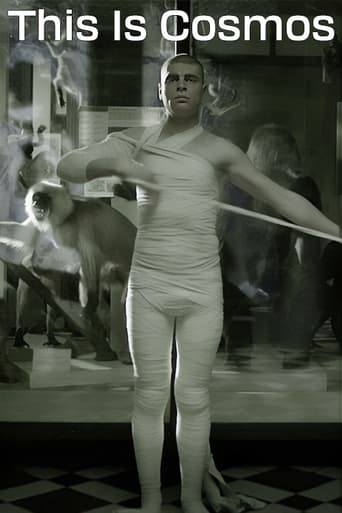
Based on the ideas of Russian philosopher, Nikolai Fedorov, Anton Vidokle’s film was shot in Siberia, Crimea, and Kazakhstan. Fedorov, like others, believed that death was a mistake, “because the energy of cosmos is indestructible, because true religion is a cult of ancestors, because true social equality is immortality for all.” Fedorov was one of the Cosmo-Immortalists, a surge of thinkers that emerged in Russia in the late 19th and early 20th centuries. They linked Western Enlightenment with Russian Orthodoxy and Eastern philosophical traditions, as well as Marxism, to create an idiosyncratically concrete metaphysics. For the Russian cosmists, cosmos did not mean outer space: rather, they wanted to create “cosmos” on earth. “To construct a new reality, free of hunger, disease, violence, death, need, inequality – like communism.”
 Hey Bud · 1987
Hey Bud
1987
MovieDocumentary
Hey Bud begins with the suicide of Bud Dwyer, a government official who killed himself on television. Writes Zando: "I view the suicide as pornographic. The suicide, exposed to a wide television audience, becomes a kind of sex act that plays upon the tension created between exhibitionist and voyeur. It forces viewers to take either an empathetic position vis-a-vis the exhibitionist, or to act as voyeurs (who release their repressed desire to see the forbidden face of Death). My interest is to understand the power seated in the position of the exhibitionist, and to explore that source of power for my own personal drama. Bud Dwyer gained power by authoring his own death, but his power was fatal: the instant power is taken via exhibitionism, it is lost through death. This is the traditional power for women who must seek power via exhibitionism and exploitation — they gain power only through death-of-self."
 Joan of Arc · 1967
Joan of Arc
1967
Movie
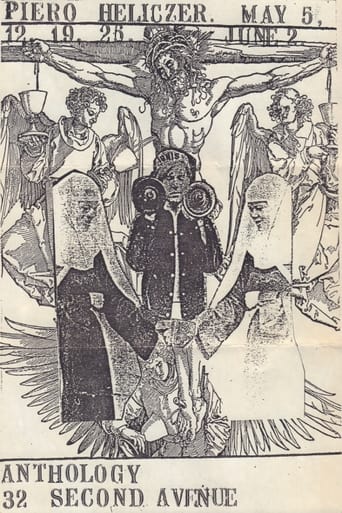
The story of Joan of Arc as applied to the present revolution in arts and more. The Gothic is applied to the War in Vietnam. The film is experimental in the sense that in it the visual becomes tactile.
 Cycles of 3s and 7s · 1977
Cycles of 3s and 7s
1977
Movie
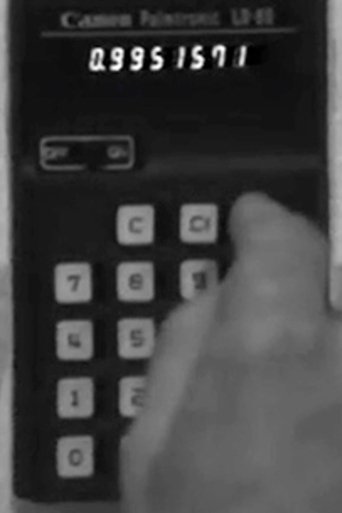
“Cycles of 3s and 7s is a doubled statement. First and foremost, it is a commentary on computer art and the role of computers in video. Secondly, its arithmetic project has some bearing on the construction of musical scales. In reclaiming the computer as a performance instrument, I intended that the human operator must compete directly with the computer, doing what the computer does best. The selection of a simple hand calculator was a deliberate denial of the computer aesth/ethic of bigger, faster: computer art must be doable within even the most modest architecture. Cycles of 3s and 7s shows that it is not the answer that ‘counts,’ but the pleasure in getting there. Simple rote calculation is turned into rhythm and song; accuracy of gesture and count become a game. These are ‘stories’ about numbers, the kind machines should like to hear and tell—if they ‘liked.’” - Tony Conrad
More Like This
Couldn't load this row right now.