Directing

Tony Conrad

Born July 3, 1940 · Concord, New Hampshire, USA

Died April 9, 2016 · aged 75

Anthony Schmalz "Tony" Conrad was an American avant-garde video artist, experimental filmmaker, musician, composer, sound artist, teacher, and writer. Active in a variety of media since the early 1960s, he was a pioneer of both structural film and drone music. He performed and collaborated with a wide range of artists over the course of his career, most prominently La Monte Young's 1960s New York …

Known For
Hey BudHey Bud · 1987
Hey Bud
1987
MovieDocumentary
Hey Bud begins with the suicide of Bud Dwyer, a government official who killed himself on television. Writes Zando: "I view the suicide as pornographic. The suicide, exposed to a wide television audience, becomes a kind of sex act that plays upon the tension created between exhibitionist and voyeur. It forces viewers to take either an empathetic position vis-a-vis the exhibitionist, or to act as voyeurs (who release their repressed desire to see the forbidden face of Death). My interest is to understand the power seated in the position of the exhibitionist, and to explore that source of power for my own personal drama. Bud Dwyer gained power by authoring his own death, but his power was fatal: the instant power is taken via exhibitionism, it is lost through death. This is the traditional power for women who must seek power via exhibitionism and exploitation — they gain power only through death-of-self."
This Is CosmosThis Is Cosmos · 2014
This Is Cosmos
2014
MovieDocumentary
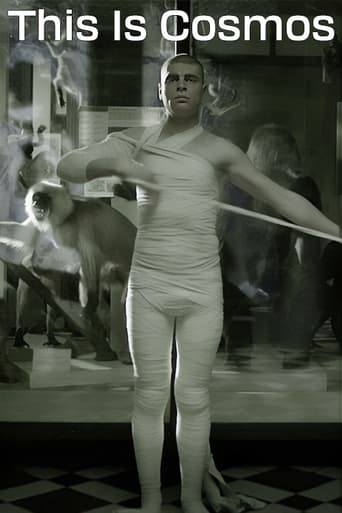
Based on the ideas of Russian philosopher, Nikolai Fedorov, Anton Vidokle’s film was shot in Siberia, Crimea, and Kazakhstan. Fedorov, like others, believed that death was a mistake, “because the energy of cosmos is indestructible, because true religion is a cult of ancestors, because true social equality is immortality for all.” Fedorov was one of the Cosmo-Immortalists, a surge of thinkers that emerged in Russia in the late 19th and early 20th centuries. They linked Western Enlightenment with Russian Orthodoxy and Eastern philosophical traditions, as well as Marxism, to create an idiosyncratically concrete metaphysics. For the Russian cosmists, cosmos did not mean outer space: rather, they wanted to create “cosmos” on earth. “To construct a new reality, free of hunger, disease, violence, death, need, inequality – like communism.”
ChumlumChumlum · 1963
Chumlum
6.11963
Movie
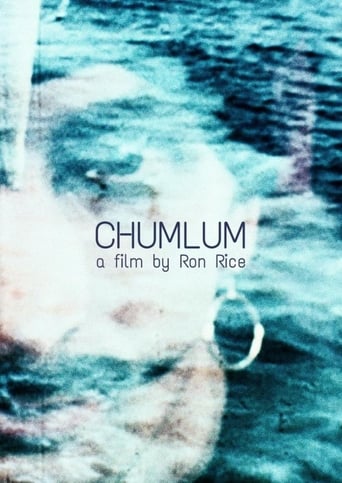
Ron Rice's Chumlum is one of those films in which the conditions of its construction are integral to the experience of watching it. It is a record of a cadre of creative people having fun on camera, playing dress-up, dancing, flirting, lazing around.
Home Movies 1971-81Home Movies 1971-81 · 1985
Home Movies 1971-81
1985
MovieDocumentary
Home movies shot on Super 8mm by W+B Hein over 10 years.
LibraryLibrary · 1970
Library
1970
MovieDocumentary
Initially titled "Books for all". A moving institutional commission in which the filmmakers lovingly portray New Jersey's public library system.
Flaming CreaturesFlaming Creatures · 1963
Flaming Creatures
4.81963
Movie
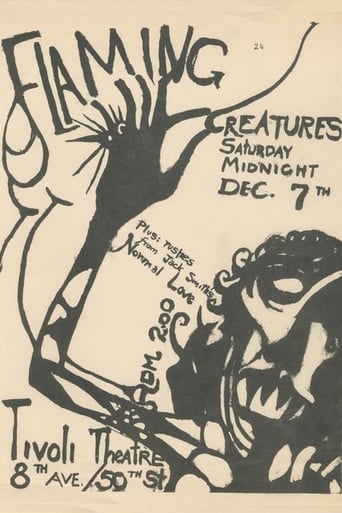
Filmmaker and artist Jack Smith described his own film as a “comedy set in a haunted movie studio.” Flaming Creatures begins humorously enough with several men and women, mostly of indeterminate gender, vamping it up in front of the camera and participating in a mock advertisement for an indelible, heart-shaped brand of lipstick. However, things take a dark, nightmarish turn when a transvestite chases, catches and begins molesting a woman. Soon, all of the titular “creatures” participate in a (mostly clothed) orgy that causes a massive earthquake. After the creatures are killed in the resulting chaos, a vampire dressed like an old Hollywood starlet rises from her coffin to resurrect the dead. All ends happily enough when the now undead creatures dance with each other, even though another orgy and earthquake loom over the end title card.
Joan of ArcJoan of Arc · 1967
Joan of Arc
1967
Movie
The story of Joan of Arc as applied to the present revolution in arts and more. The Gothic is applied to the War in Vietnam. The film is experimental in the sense that in it the visual becomes tactile.
The Invasion of Thunderbolt PagodaThe Invasion of Thunderbolt Pagoda · 1968
The Invasion of Thunderbolt Pagoda
6.01968
MovieFantasy
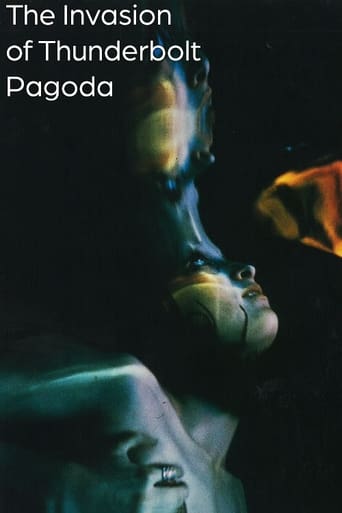
At the court of the Yellow Emperor, the Majoon Traveler & Lady Firefly appear in the Hall of Unconscious Magnetism.
Filmography

Sort
Hey BudHey Bud · 1987
Hey Bud
1987
MovieDocumentary
Hey Bud begins with the suicide of Bud Dwyer, a government official who killed himself on television. Writes Zando: "I view the suicide as pornographic. The suicide, exposed to a wide television audience, becomes a kind of sex act that plays upon the tension created between exhibitionist and voyeur. It forces viewers to take either an empathetic position vis-a-vis the exhibitionist, or to act as voyeurs (who release their repressed desire to see the forbidden face of Death). My interest is to understand the power seated in the position of the exhibitionist, and to explore that source of power for my own personal drama. Bud Dwyer gained power by authoring his own death, but his power was fatal: the instant power is taken via exhibitionism, it is lost through death. This is the traditional power for women who must seek power via exhibitionism and exploitation — they gain power only through death-of-self."

Camera Operator

This Is CosmosThis Is Cosmos · 2014
This Is Cosmos
2014
MovieDocumentary
Based on the ideas of Russian philosopher, Nikolai Fedorov, Anton Vidokle’s film was shot in Siberia, Crimea, and Kazakhstan. Fedorov, like others, believed that death was a mistake, “because the energy of cosmos is indestructible, because true religion is a cult of ancestors, because true social equality is immortality for all.” Fedorov was one of the Cosmo-Immortalists, a surge of thinkers that emerged in Russia in the late 19th and early 20th centuries. They linked Western Enlightenment with Russian Orthodoxy and Eastern philosophical traditions, as well as Marxism, to create an idiosyncratically concrete metaphysics. For the Russian cosmists, cosmos did not mean outer space: rather, they wanted to create “cosmos” on earth. “To construct a new reality, free of hunger, disease, violence, death, need, inequality – like communism.”

Thanks

Flaming CreaturesFlaming Creatures · 1963
Flaming Creatures
4.81963
Movie
Filmmaker and artist Jack Smith described his own film as a “comedy set in a haunted movie studio.” Flaming Creatures begins humorously enough with several men and women, mostly of indeterminate gender, vamping it up in front of the camera and participating in a mock advertisement for an indelible, heart-shaped brand of lipstick. However, things take a dark, nightmarish turn when a transvestite chases, catches and begins molesting a woman. Soon, all of the titular “creatures” participate in a (mostly clothed) orgy that causes a massive earthquake. After the creatures are killed in the resulting chaos, a vampire dressed like an old Hollywood starlet rises from her coffin to resurrect the dead. All ends happily enough when the now undead creatures dance with each other, even though another orgy and earthquake loom over the end title card.

Sound

Cycles of 3s and 7sCycles of 3s and 7s · 1977
Cycles of 3s and 7s
1977
Movie
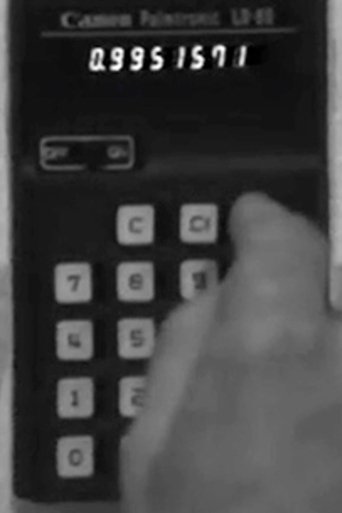
“Cycles of 3s and 7s is a doubled statement. First and foremost, it is a commentary on computer art and the role of computers in video. Secondly, its arithmetic project has some bearing on the construction of musical scales. In reclaiming the computer as a performance instrument, I intended that the human operator must compete directly with the computer, doing what the computer does best. The selection of a simple hand calculator was a deliberate denial of the computer aesth/ethic of bigger, faster: computer art must be doable within even the most modest architecture. Cycles of 3s and 7s shows that it is not the answer that ‘counts,’ but the pleasure in getting there. Simple rote calculation is turned into rhythm and song; accuracy of gesture and count become a game. These are ‘stories’ about numbers, the kind machines should like to hear and tell—if they ‘liked.’” - Tony Conrad

Director

In LineIn Line · 1985
In Line
1985
Movie
A trisection of the spectators’ power over their own image language: word, trance, and command are installed as valences of the artist’s license, revealed as figures of parental authority. How peculiar that people like being an audience because they enjoy their submission to the authority of the program. This ritual of being dominated is a conspiracy with themselves that we enjoy but refuse to acknowledge. “Oh, no. I don’t like TV because I’m submissive; it’s because it makes me feel good.” The programs are always carefully crafted to be sensitive to people’s selfprotectiveness, even if they offer a good scare, or a good cry. Well, if this is all true, what happens when, by chance, you submit to a program that refuses to be polite about your closet masochism? That tells all? —Tony Conrad

Director

Tiding over till TomorrowTiding over till Tomorrow · 1977
Tiding over till Tomorrow
1977
MovieDocumentary
Originally debuted in 1977, where it took the form of a dual slide projection with live piano accompaniment by the artist. In the 2012 installation version at the Buffalo AKG, the slides were transferred to digital projection and Conrad’s live accompaniment was replaced by a contemporaneous recording of him playing piano. The piano accompaniment belongs to a larger durational performance project that Conrad called Music and the Mind of the World. Between 1976 and 1982, the artist—who was known as a violinist and had no formal piano training—recorded himself experimenting at length on the piano. The photographs that make up Tiding over till Tomorrow were taken by Conrad and are joined by a number of enigmatic texts slides by the artist Anne Turyn.

Director