Het vertraagde vertrek

Het vertraagde vertrek

1983 · 107 min

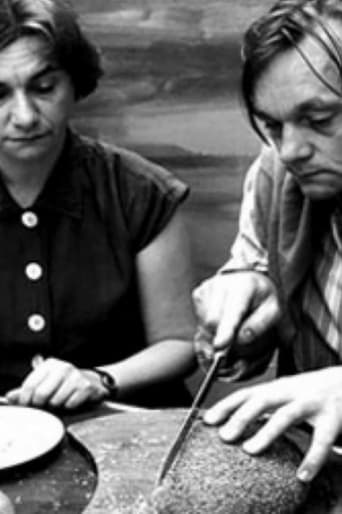
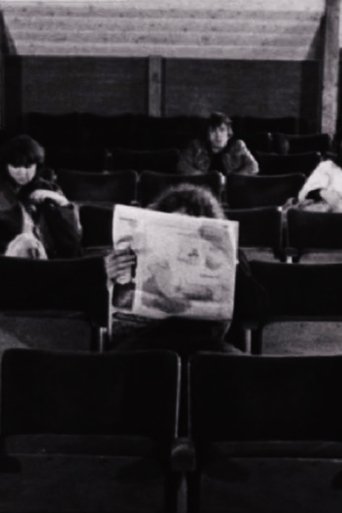
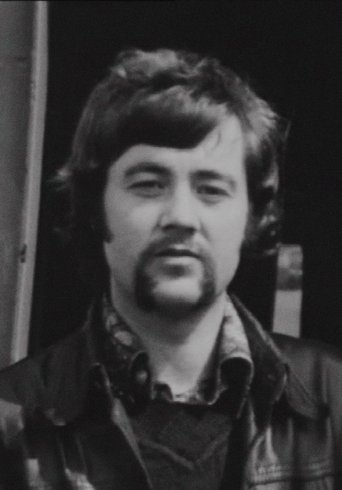
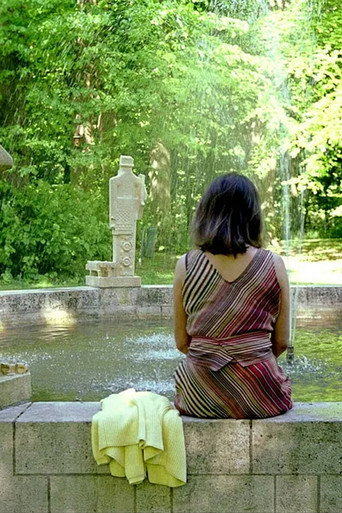
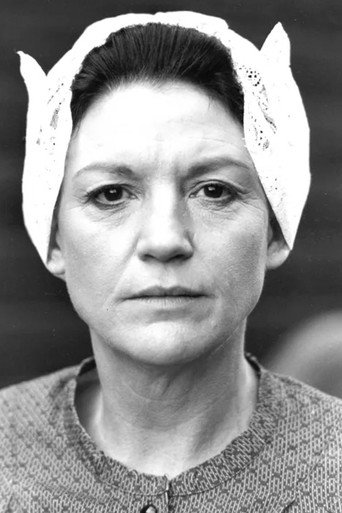
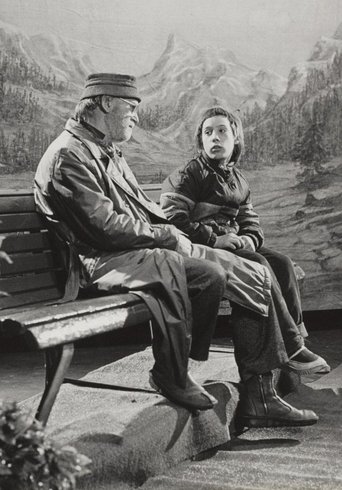
Jacq Vogelaar and Frans van de Staak cooperated in a sort of struggle between language and film: their perspectives are different, even exclusive. For Vogelaar his primary preoccupation with language as a novelist is anger, and rebuilding its expression as an individual fixation of the embodied space, whereas for Van de Staak as a filmmaker language is embedded in the activity of making film, which goes beyond any linguistic fixation... "The actor's unintended gestures, manner of moving or change of bodily position, is as important as the text he speaks -all that has to be on the same level of significance, and by doing so it becomes meaningless, because only then it dissolves." No one scene [except the first] 'exists' in advance, fixed in a script, but each scene was created and realized in reaction to a previous scene, which was then screened after its recording. As a result of this 'domino-method' the scenario was written after the making of the film, which took one year.

Directed by Frans van de Staak

Your Rating

Make it a double feature

3h 32m together
Het vertraagde vertrek
Traces of Smoke

Both from Frans van de Staak.

More from Frans van de StaakSee all →
PassengersPassengers · 1990
Passengers
★ 10.01990
Movie
A bus driver on a regular route in the 'polder' moves into a new house with his wife. They are the first inhabitants of a new estate. At the same time, a homeless man and an woman movie into the driver's bus.
Traces of SmokeTraces of Smoke · 1992
Traces of Smoke
★ 10.01992
MovieDrama
A portrait of a woman and 26 witnesses who appear to be accusing her of something but we'll never know what. We'll never even know who she is and who the witnesses are. A complex experiment about space, voice and speech.
People Passing Through Me in an Endless ProcessionPeople Passing Through Me in an Endless Procession · 1981
People Passing Through Me in an Endless Procession
★ 9.01981
Movie
The film consists of 25 scenes. Each scene is performed by eight actors [out of a group of nine]; the ninth actor continually changing places with another actor who appears in only one or two scenes. The music plays a role like an actor: as soon as the music speaks the actors are silent. The writing of the scenario and making of the film were mainly a question of searching for a 'theme', and the film itself is also concerned with 'what it's about'. This 'unstated' aspect is approached from all its related facets. Scenes were made on the themes of anger, love of pleasure, refusal, disintegration, fear. Both the images, and the texts rise above the everyday level and are no longer narrative. (Wim Schlebaum)
Soldiers Without GunsSoldiers Without Guns · 1985
Soldiers Without Guns
★ 8.01985
MovieDramaWar
GlintGlint · 1996
Glint
★ 7.01996
Movie
Every scene of the film comprises a dialogue between a man and a woman. The dialogues are fragmentary, in other words, the dialogue in one scene does not tie in with that of the next. In addition there is no development in the relationship between the actor and the actress towards a happy or unhappy ending. The dialogues are not only of substantial interest; it is above all material for the actors. The film balances on the boundary between portraying an intimate relationship between a woman and a man and the intimacy in the acting between the actor and actress. When an actor or actress hardly has any words in a scene, he or she portrays loneliness; when he/she has a monologue, then the attention is focused on speaking the text, on (the reflection about) being an actor. (Wim Schlebaum
SepioSepio · 1996
Sepio
★ 6.71996
Movie
Like in his short Ten poems of Hubert Kzn Poot (1975) there is just one protagonist in Sepio. A woman is immersed within a landscape in summertime and she adores her beloved one in everything that emerges from her surroundings.—atelierfransvandestaak.nl
Deed UndoneDeed Undone · 1989
Deed Undone
★ 6.21989
MovieDrama
Two couples. The four characters are played by eight actors. There is little dialogue. Sometimes a couple does not seem to live together, just to be alive together in the same room. Each one of them at one time walks through an anymous part of Amsterdam. They put their feet down with a will, clicking their way through town. We do not know where or why they are going. To a meeting, to get some exercise, nowhere? They have difficulty in communicating. They leave notes to each other on the table rather than talk.
Divided EarthDivided Earth · 1985
Divided Earth
★ 4.51985
MovieDocumentary
La terra in due means the earth of the landlords versus that of the peasants who actually cultivate it. This film uses evocative photogrphy and a dignified rhythm to depict the death of peasant culture. This fact is brought home by the super 8 footage shot ten years earlier. Blank's familiarity with the villagers and their unsselfconsciousness in front of the camera produce a high degree of authenticity in this account of culture of the 'mezzadria'.
Verse TextureVerse Texture · 1998
Verse Texture
1998
MovieDrama
An actress and an actor overhear parts of the play "Three Travelers Watch Sunrise" by Wallace Stevens (1879-1955). The dialogues of the three [Chinese] travelers and the girl [Anna] are spoken as a monologue by the actress. The actor just listens but occasionally he gives her instructions.
MarmerMarmer · 2010
Marmer
2010
Movie
OptochtOptocht · 1978
Optocht
1978
Movie
Four persons travel by rail to visit a city. On arrival they take a bicycle to continue their tour and join occasionally a passing protest manifestation. The camera is never far off their trail.
SonataSonata · 1975
Sonata
1975
Movie
A film poem in which the words, spoken by an actor, do not refer to concrete objects or "reveal their meaning" but function like notes in a musical score.
WindschaduwWindschaduw · 1986
Windschaduw
1986
Movie
Constructed around two poems by Gerrit Kouwenaar, who reads his own verse off- screen. The film focuses on a man and woman packing, going away, arriving at their destination, packing again, and going back to square one. This avant-garde film is a curious melding of poetry and visual narration. Director Frans van de Staak coordinates the reading of two poems by Gerrit Kouwenaar, a well-known Dutch poet, with visual sequences of a couple going off on vacation. The vacation idyll is interspersed with nature shots and minimal, barely-present dialogue. Soon the couple is packing up and heading back to their daily routine -- accompanied by poetry that reinforces the image of unsatisfactory lives, adrift and floating with the current, no destination in sight. [Eleanor Mannikka, All Movie Guide]
TerzakeTerzake · 1977
Terzake
1977
Movie
Political texts from the journal In Search, edited by M.S. Arnoni (Wim Schlebaum)
Italiaans concertItaliaans concert · 2002
Italiaans concert
2002
Movie
De zee in een flesDe zee in een fles · 1990
De zee in een fles
1990
MovieDocumentary
Documentary about the work of Venetian painter Carpaccio.

More Like This

Couldn't load this row right now.

Rate this film

Your ratings make Midnight smarter