Frans van de Staak

Directing

Frans van de Staak

Born January 1, 1943

Died January 1, 2001 · aged 58

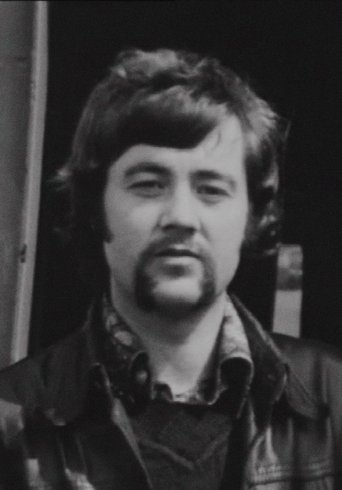
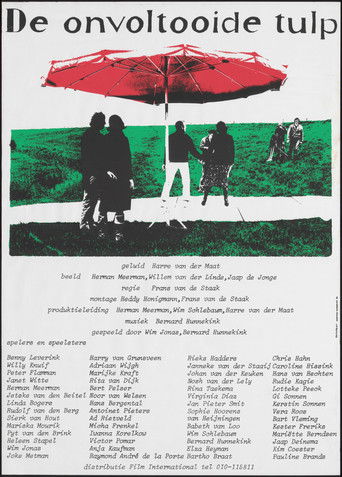
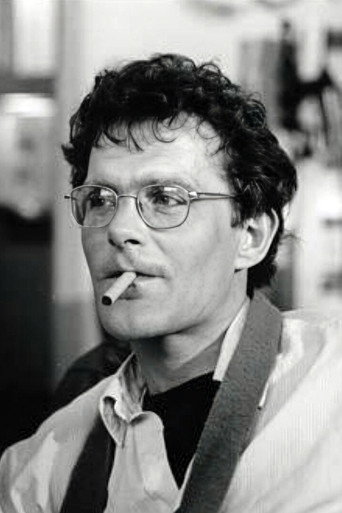
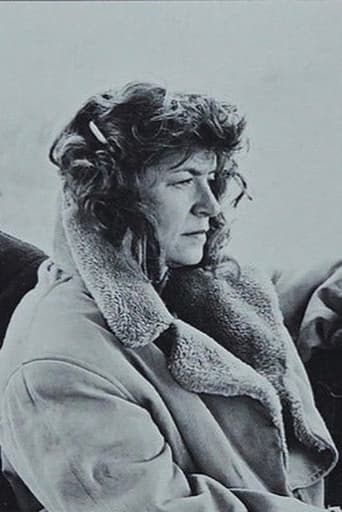
Frans van de Staak (1943-2001) studied at the Netherlands Film Academy from 1963 on. He financed his first films usually from his own savings for his work as a graphics artist. His films can be characterised by a consistent investigation of (cinematographic) space, time, language, images and movement in their mutual relations. His first full-feature, The Imperfect Tulip, was completed by Van de St…

Known For
Deed UndoneDeed Undone · 1989
Deed Undone
6.31989
MovieDrama
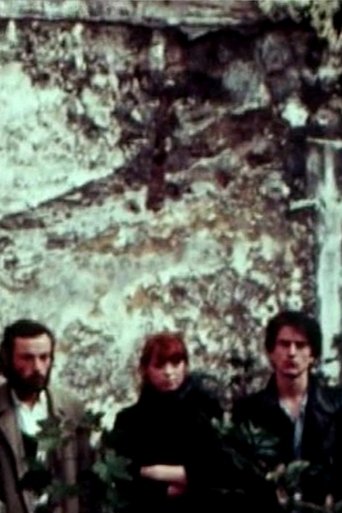
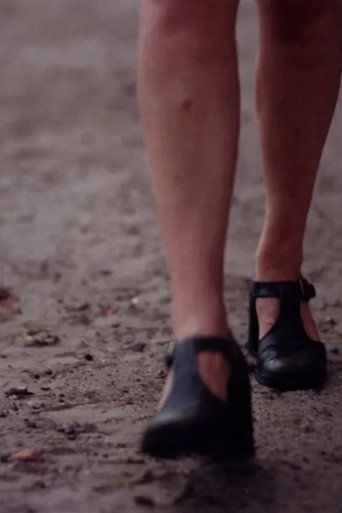
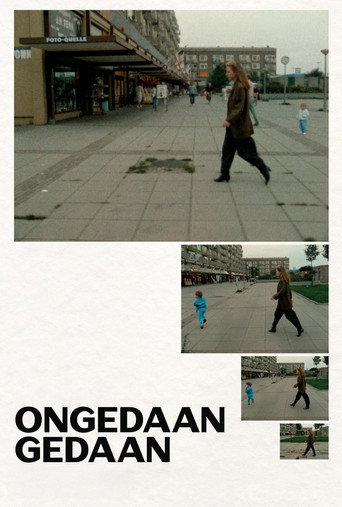
Frans van de Staak, Holland's most prominent avant-garde director, made this film "...about people who want to get something done. I leave out the why as well as the results. What's left is the moment of endeavour. There are two couples. The four characters are played by eight actors. There is little dialogue. Sometimes a couple does not seem to live together, just to be alive together in the same room. Each one of them at one time walks through an anymous part of Amsterdam. They put their feet down with a will, clicking their way through town. We do not know where or why they are going. To a meeting, to get some exercise, nowhere? They have difficulty in communicating. They leave notes to each other on the table rather than talk. The film sometimes mocks their intensity. It is surprising that such a strange film can keep the viewer's attention for an hour and a quarter. But it certainly does. (Dutch Fim 1988-89)
Traces of SmokeTraces of Smoke · 1992
Traces of Smoke
10.01992
MovieDrama
A portrait of a woman and 26 witnesses who appear to be accusing her of something but we'll never know what. We'll never even know who she is and who the witnesses are. A complex experiment about space, voice and speech.
WindschaduwWindschaduw · 1986
Windschaduw
1986
Movie
Constructed around two poems by Gerrit Kouwenaar, who reads his own verse off- screen. The film focuses on a man and woman packing, going away, arriving at their destination, packing again, and going back to square one. This avant-garde film is a curious melding of poetry and visual narration. Director Frans van de Staak coordinates the reading of two poems by Gerrit Kouwenaar, a well-known Dutch poet, with visual sequences of a couple going off on vacation. The vacation idyll is interspersed with nature shots and minimal, barely-present dialogue. Soon the couple is packing up and heading back to their daily routine -- accompanied by poetry that reinforces the image of unsatisfactory lives, adrift and floating with the current, no destination in sight. [Eleanor Mannikka, All Movie Guide]
PassengersPassengers · 1990
Passengers
10.01990
Movie
A bus driver on a regular route in the 'polder' moves into a new house with his wife. They are the first inhabitants of a new estate. At the same time, a homeless man and an woman movie into the driver's bus.
MarmerMarmer · 2010
Marmer
2010
Movie
Verse TextureVerse Texture · 1998
Verse Texture
1998
MovieDrama
An actress and an actor overhear parts of the play "Three Travelers Watch Sunrise" by Wallace Stevens (1879-1955). The dialogues of the three [Chinese] travelers and the girl [Anna] are spoken as a monologue by the actress. The actor just listens but occasionally he gives her instructions.
OptochtOptocht · 1978
Optocht
1978
Movie
Four persons travel by rail to visit a city. On arrival they take a bicycle to continue their tour and join occasionally a passing protest manifestation. The camera is never far off their trail.
BestemmingBestemming · 1998
Bestemming
1998
Movie

Filmography

Sort
Deed UndoneDeed Undone · 1989
Deed Undone
6.31989
MovieDrama
Frans van de Staak, Holland's most prominent avant-garde director, made this film "...about people who want to get something done. I leave out the why as well as the results. What's left is the moment of endeavour. There are two couples. The four characters are played by eight actors. There is little dialogue. Sometimes a couple does not seem to live together, just to be alive together in the same room. Each one of them at one time walks through an anymous part of Amsterdam. They put their feet down with a will, clicking their way through town. We do not know where or why they are going. To a meeting, to get some exercise, nowhere? They have difficulty in communicating. They leave notes to each other on the table rather than talk. The film sometimes mocks their intensity. It is surprising that such a strange film can keep the viewer's attention for an hour and a quarter. But it certainly does. (Dutch Fim 1988-89)
Director

WindschaduwWindschaduw · 1986
Windschaduw
1986
Movie
Constructed around two poems by Gerrit Kouwenaar, who reads his own verse off- screen. The film focuses on a man and woman packing, going away, arriving at their destination, packing again, and going back to square one. This avant-garde film is a curious melding of poetry and visual narration. Director Frans van de Staak coordinates the reading of two poems by Gerrit Kouwenaar, a well-known Dutch poet, with visual sequences of a couple going off on vacation. The vacation idyll is interspersed with nature shots and minimal, barely-present dialogue. Soon the couple is packing up and heading back to their daily routine -- accompanied by poetry that reinforces the image of unsatisfactory lives, adrift and floating with the current, no destination in sight. [Eleanor Mannikka, All Movie Guide]

Director

Het BezoekHet Bezoek · 1970
Het Bezoek
1970
Movie
A girl visits a place where a boy and another girl stay for a while. Afterwards they all leave. The film was shot in a period of two weeks, with one week of rest in between. Each scheduled day the complete script was played several times again. Such a 'take of the whole script' was only partially shot. [Actually no one of the actors was rehearsed: one learns the text by reading it in action.] This repetition stands in sharp contrast with the fact that the actors and members of the crew create an ad hoc context that never became final. For example: 'this is a visit'. There is an essential correspondence between the situation on the set and the spectator's observation of what happens on the screen later, which is nevertheless also its most distinctive characteristic.

Director

Het vertraagde vertrekHet vertraagde vertrek · 1983
Het vertraagde vertrek
1983
Movie
Jacq Vogelaar and Frans van de Staak cooperated in a sort of struggle between language and film: their perspectives are different, even exclusive. For Vogelaar his primary preoccupation with language as a novelist is anger, and rebuilding its expression as an individual fixation of the embodied space, whereas for Van de Staak as a filmmaker language is embedded in the activity of making film, which goes beyond any linguistic fixation... "The actor's unintended gestures, manner of moving or change of bodily position, is as important as the text he speaks -all that has to be on the same level of significance, and by doing so it becomes meaningless, because only then it dissolves." No one scene [except the first] 'exists' in advance, fixed in a script, but each scene was created and realized in reaction to a previous scene, which was then screened after its recording. As a result of this 'domino-method' the scenario was written after the making of the film, which took one year.

Director

People Passing Through Me in an Endless ProcessionPeople Passing Through Me in an Endless Procession · 1981
People Passing Through Me in an Endless Procession
9.01981
Movie
The film consists of 25 scenes. Each scene is performed by eight actors [out of a group of nine]; the ninth actor continually changing places with another actor who appears in only one or two scenes. The music plays a role like an actor: as soon as the music speaks the actors are silent. The writing of the scenario and making of the film were mainly a question of searching for a 'theme', and the film itself is also concerned with 'what it's about'. This 'unstated' aspect is approached from all its related facets. Scenes were made on the themes of anger, love of pleasure, refusal, disintegration, fear. Both the images, and the texts rise above the everyday level and are no longer narrative. (Wim Schlebaum)

Director