
Où en êtes-vous, Yervant Gianikian et Angela Ricci Lucchi?
2015 · 21 min · Documentary
In this short film, screened and commissioned by the Centre Pompidou in Paris, Gianikian and Ricci Lucchi revisit regions at war or in crisis through archive images of the 20th century.
Directed by Yervant Gianikian
Your Rating
Make it a double feature
2h 26m together
Both from Yervant Gianikian.
Where Do You Stand?See all →
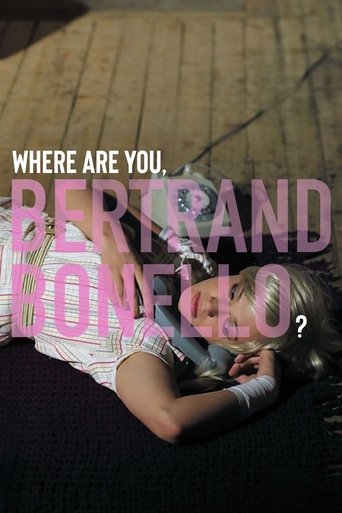 Where Are You, Bertrand Bonello? · 2014
Where Are You, Bertrand Bonello?
2014
MovieDocumentary
An autobiographical essay film structured as a letter to the director’s young daughter, "Où en êtes-vous, Bertrand Bonello?" weaves clips from Bonello’s films, excerpts from his scripts, pop songs, and snippets of original footage into a lyrical, reflexive cinematic self-portrait. "Où en êtes-vous?" is a collection initiated by Centre Pompidou, who asked directors to make retrospective and introspective films.
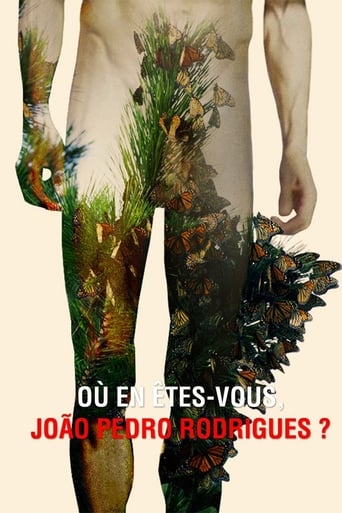 Where Do You Stand Now, João Pedro Rodrigues? · 2016
Where Do You Stand Now, João Pedro Rodrigues?
★ 2.32016
MovieDocumentary
João Pedro Rodrigues answers the question from the title with an autobiographical short-film.
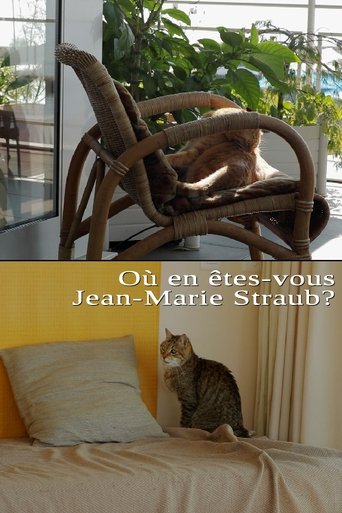 Où en êtes-vous, Jean-Marie Straub ? · 2016
Où en êtes-vous, Jean-Marie Straub ?
2016
MovieDocumentary
An initiative from Pompidou Center, filmed by Jean Marie Straub.
 Where Do You Stand Today, Christian Petzold? · 2017
Where Do You Stand Today, Christian Petzold?
2017
MovieDocumentary
"Où en êtes-vous ?" (Where do you stand today?) is a project initiated by the Centre Pompidou, which commissions its guest filmmakers to make a free-form film in response to a question simultaneously retrospective, introspective and focused on their future ideas and projects. Here Christian Petzold is joined by Christoph Hochhäusler as they analyze a sequence from Hitchcock's The Wrong Man (1956) through a series of photograms. With this tribute to Harun Farocki, who died in 2014, Christian Petzold endeavors to revive and perpetuate the spirit, taste and methods of his former teacher and friend.
 The Moon · 2018
The Moon
2018
MovieDrama
In the form of a fiction, Naomi Kawase delivers a self-portrait which is also a re-crossing of her earlier films. The old city of Nara, the first capital of Japan where Naomi Kawase is from and where she still lives, opens up a reverie where past, present and future meet. In its winding streets mingle the "Haré" of days of celebration and ceremony and the "Ké" of everyday life.
 Où en êtes-vous, Teresa Villaverde ? · 2019
Où en êtes-vous, Teresa Villaverde ?
2019
MovieDocumentary
In Rio de Janeiro, people from the Mangueira neighbourhood follow the television broadcast on a big screen as the juries vote on each samba school. In 2019, Mangueira took to the Sambadrome a strong, bold samba of resistance to what’s taking place in Brazil right now. The film witnesses the tension while waiting for the final score, and the great joy of people from every generation when Mangueira wins and becomes champion of the 2019 Carnival.
 Another Day at the Office · 2019
Another Day at the Office
★ 5.02019
MovieComedy
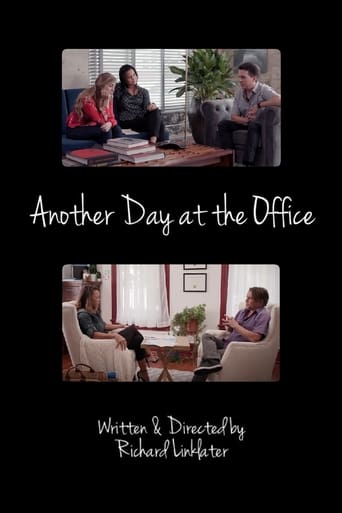
A day in the life of Rick Linklater, taking in a conference call with some young studio executives and a session with a psychologist.
 Où en êtes-vous? (Numéro 2) · 2020
Où en êtes-vous? (Numéro 2)
2020
Movie
Video #2 of Finite Rants, a series of eight visual essays commissioned by Fondazione Prada and curated by Luigi Alberto Cippini and Niccolò Gravina. Bertrand Bonello reworks the last minutes of his 2016 film Nocturama, which documents the logistical operations and the organization of terrorist attacks in Paris by a group of teenagers. Starting with "Où en êtes-vous?", a video commissioned by the Centre Pompidou in 2014 and conceived as a letter to his then 11-year-old daughter, the director makes a new work altering the final sequence of Nocturama and completely modifying the textual component and the soundtrack in this video essay as a second letter written for his now 17-year-old daughter.
 Where Do You Stand, Tsai Ming-liang? · 2022
Where Do You Stand, Tsai Ming-liang?
2022
MovieDocumentary
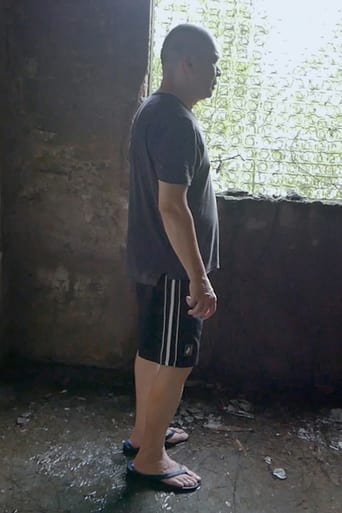
"For reasons of health, Lee Kang-sheng and I moved to the mountains. We don't have any neighbors. Our house is part of a row of dilapidated houses. I love these abandoned houses. I often walk around in them casually. I think they are beautiful. I said to Lee Kang-sheng: we don't have to go elsewhere to make films anymore. I'll make all my remaining films right here. I got some old chairs and some of my paintings and arranged them in these abandoned houses. And thus, this film was made." Tsai Ming-liang
 Where Are You, Jafar Panahi? · 2026
Where Are You, Jafar Panahi?
★ 7.02026
MovieDocumentary
Jafar Panahi and fellow Iranian director Majid Barzegar take a 20-minute drive to Kiarostami’s grave, during which time “the two friends speak appropriately of cinema, but also censorship and festivals, police power and ideology.”
More from Yervant GianikianSee all →
 Angela's Diaries. Two Filmmakers. · 2018
Angela's Diaries. Two Filmmakers.
★ 8.02018
MovieDocumentary
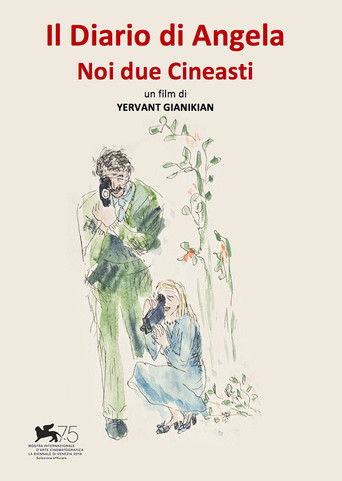
Every day of her life, Angela kept a diary, filled with words and drawings, in which she recorded public and private matters, meetings, things she had read, everything. Including the account of two trips to Russia (1989-90). The period of the collapse of the USSR. A diary that she had been keeping in small Chinese notebooks, since before Dal Polo all’Equatore (1986), on our uninterrupted work on the violence of the 20th century. From our tours in the United States with the “scented films” of the late seventies to the Anthology Film Archive of New York and the Berkeley Pacific Film Archive...
 People, Years, Life · 1990
People, Years, Life
★ 7.01990
MovieDocumentary
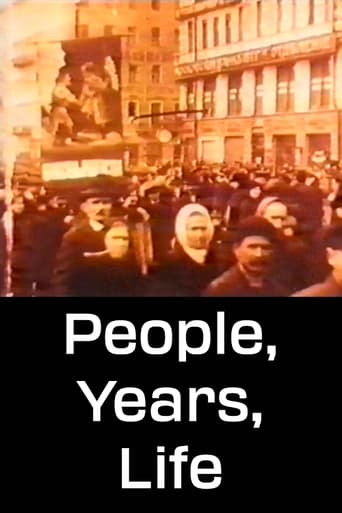
Using images shot in Russia and Armenia from World War I to the 1930s and retrieved from a Soviet film archive, Gianikian and Ricci Lucchi constructed a meditative film about the status of Armenians as a people without a state. Inspired by the diary of Gianikian’s father, People, Years, Life uses rare footage depicting the region’s major historic events: the end of Tsarist Russia, violence in the Caucasus during World War I, the 1918 Armenian exodus from Azerbaijan. Gianikian and Ricci Lucchi’s treatment of the material manipulates the speed of the images, adds color and music, and magnifies various parts of the image, so that the movement of bodies across the frame begins to carry the weight of exile, mourning, dispossession.
 On the Heights All Is Peace · 1998
On the Heights All Is Peace
★ 6.81998
MovieDocumentary
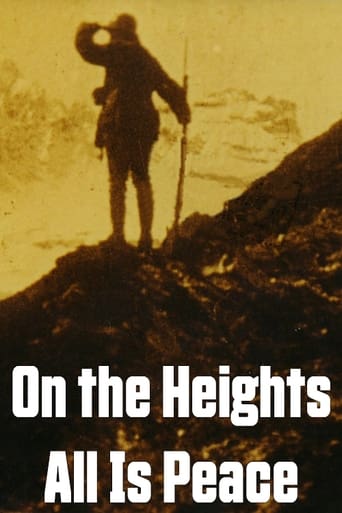
Found footage anti-war film comprising film documents of the Austro-Hungarian and Italian army on the Alpine front, and from first generation picture material by war-film pioneer Luca Comerio.
 Oh! Man · 2004
Oh! Man
★ 6.72004
MovieDocumentaryWar
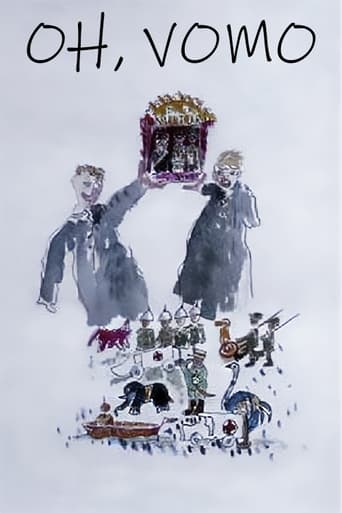
After Prisoners of the war and On the Heights all is Peace, this film concludes Yervant Gianikian and Angela Ricci Lucchi's trilogy on the first world war. From the emblem of totalitarianism to individual physical suffering, the directors use this representation of man's rampaging violence to draw up an anatomical inventory of the damaged body and examine the consequences of the conflict on children, from 1919 to 1921. From the deconstruction to the artificial reconstruction of the human body, they try to understand how humanity can forget itself and perpetuate these horrors.
 From the Pole to the Equator · 1987
From the Pole to the Equator
★ 6.51987
MovieDocumentary
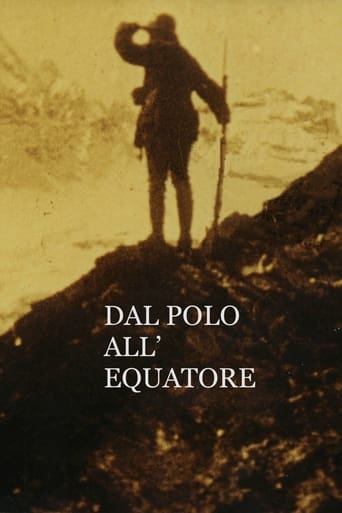
The title Dal polo all'equatore was first used by the pioneering documentary maker, Luca Comerio, for a compilation film of 1925; it was used again by Yervant Gianikian and Angela Ricci Lucchi for their film of 1985. Much of the original has been re-worked: the 'found footage' has been re-shot, slowed down, tinted, and re-edited with a sound track of minimalist composition. As a result, the exotica of colonial travel and sport take on new and sinister meanings. The acts of violence, especially those of hunting, recur in patterns that suggest visually that war is a logical development. A close examination of the work, starting with the opening sequence of a railway journey, explores the centrality of questions of memory and history to this remarkable and influential film.
 Balkan Inventory · 2000
Balkan Inventory
★ 6.02000
MovieDocumentary
Comprised of images shot by amateur photographers and German soldiers in the Balkans from the twenties through the forties, BALKAN INVENTORY was begun by Gianikian and Ricci Lucchi in response to the tragedy unfolding in the former Yugoslavia.
 Barbaric Land · 2013
Barbaric Land
★ 5.02013
MovieDramaDocumentary
Milan-based duo Yervant Gianikian and Angela Ricci Lucchi create an astonishing work of militant poetry with this found-footage chronicle of Mussolini's brutal invasion of Ethiopia.
 Electric Fragments No. 4 - Asia · 2005
Electric Fragments No. 4 - Asia
★ 5.02005
Movie
 Karagoez catalogo 9,5 · 1981
Karagoez catalogo 9,5
★ 4.01981
MovieDocumentaryHistory
Excerpts from a collection of 9.5mm films dating from 1900 to 1928—including theatrical films, anthropological documentaries, and home movies—that reveal much about life during the silent-film era. —MoMa
 Io ricordo · 1997
Io ricordo
1997
Movie
The memoirs of Raphael Gianikian, Yervant’s father, who survived the 1915 Armenian genocide in eastern Turkey.
 Criminal Animals · 1994
Criminal Animals
1994
MovieDocumentary
In this filmic comment on Fascist ideology - which uses footage from the recently discovered archives of Luca Comerio - invisible hands push captive animals to fight among themselves.
 Film perduto · 2008
Film perduto
2008
Movie
 African Diary · 1994
African Diary
1994
MovieDocumentary
African Diary uses footage from a filmed personal diary shot in Algeria by an anonymous Frenchman between 1927-1936. Here, they reprise his cinematic jottings as he followed in the footsteps of the 19th century Orientalists like Flaubert.
 Erat Sora · 1975
Erat Sora
1975
Movie
 Aria · 1994
Aria
1994
Movie
Primarily constructed from scientific films about the atmosphere from the turn of the last century.
 Trasparenze · 1998
Trasparenze
1998
Movie
Decaying nitrate film: cinema as an incendiary explosive bomb of memory.
More Like This
Couldn't load this row right now.
