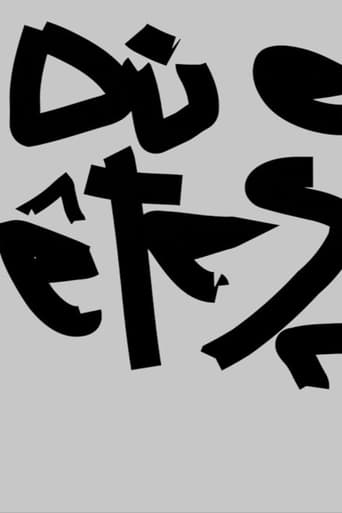
Où en êtes-vous, Jean-Marie Straub ?
2016 · 10 min · Documentary
An initiative from Pompidou Center, filmed by Jean Marie Straub.
Directed by Jean-Marie Straub
Your Rating
Cast
-
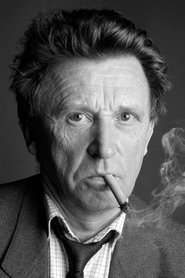 Jean-Marie Straub Self
Make it a double feature
36m together
Both from Jean-Marie Straub.
Where Do You Stand?See all →
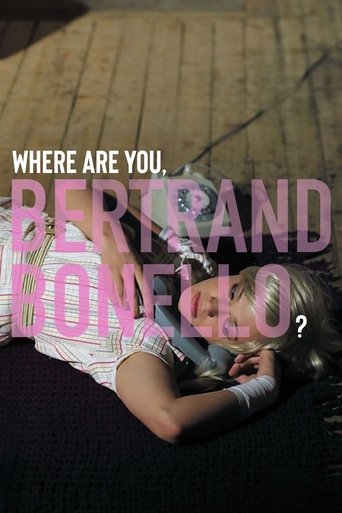 Where Are You, Bertrand Bonello? · 2014
Where Are You, Bertrand Bonello?
2014
MovieDocumentary
An autobiographical essay film structured as a letter to the director’s young daughter, "Où en êtes-vous, Bertrand Bonello?" weaves clips from Bonello’s films, excerpts from his scripts, pop songs, and snippets of original footage into a lyrical, reflexive cinematic self-portrait. "Où en êtes-vous?" is a collection initiated by Centre Pompidou, who asked directors to make retrospective and introspective films.
 Où en êtes-vous, Yervant Gianikian et Angela Ricci Lucchi? · 2015
Où en êtes-vous, Yervant Gianikian et Angela Ricci Lucchi?
2015
MovieDocumentary
In this short film, screened and commissioned by the Centre Pompidou in Paris, Gianikian and Ricci Lucchi revisit regions at war or in crisis through archive images of the 20th century.
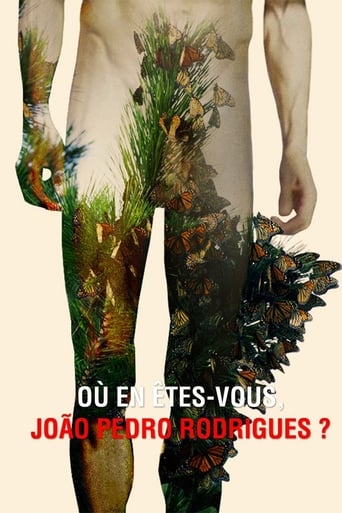 Where Do You Stand Now, João Pedro Rodrigues? · 2016
Where Do You Stand Now, João Pedro Rodrigues?
★ 2.32016
MovieDocumentary
João Pedro Rodrigues answers the question from the title with an autobiographical short-film.
 Where Do You Stand Today, Christian Petzold? · 2017
Where Do You Stand Today, Christian Petzold?
2017
MovieDocumentary
"Où en êtes-vous ?" (Where do you stand today?) is a project initiated by the Centre Pompidou, which commissions its guest filmmakers to make a free-form film in response to a question simultaneously retrospective, introspective and focused on their future ideas and projects. Here Christian Petzold is joined by Christoph Hochhäusler as they analyze a sequence from Hitchcock's The Wrong Man (1956) through a series of photograms. With this tribute to Harun Farocki, who died in 2014, Christian Petzold endeavors to revive and perpetuate the spirit, taste and methods of his former teacher and friend.
 The Moon · 2018
The Moon
2018
MovieDrama
In the form of a fiction, Naomi Kawase delivers a self-portrait which is also a re-crossing of her earlier films. The old city of Nara, the first capital of Japan where Naomi Kawase is from and where she still lives, opens up a reverie where past, present and future meet. In its winding streets mingle the "Haré" of days of celebration and ceremony and the "Ké" of everyday life.
 Où en êtes-vous, Teresa Villaverde ? · 2019
Où en êtes-vous, Teresa Villaverde ?
2019
MovieDocumentary
In Rio de Janeiro, people from the Mangueira neighbourhood follow the television broadcast on a big screen as the juries vote on each samba school. In 2019, Mangueira took to the Sambadrome a strong, bold samba of resistance to what’s taking place in Brazil right now. The film witnesses the tension while waiting for the final score, and the great joy of people from every generation when Mangueira wins and becomes champion of the 2019 Carnival.
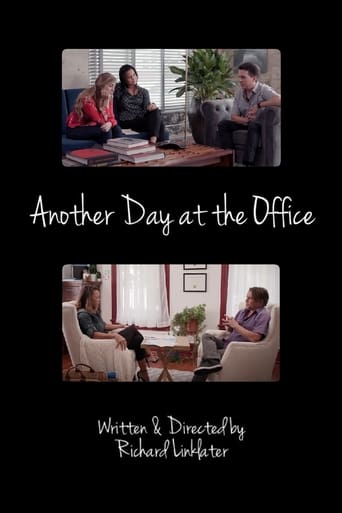 Another Day at the Office · 2019
Another Day at the Office
★ 5.02019
MovieComedy
A day in the life of Rick Linklater, taking in a conference call with some young studio executives and a session with a psychologist.
 Où en êtes-vous? (Numéro 2) · 2020
Où en êtes-vous? (Numéro 2)
2020
Movie
Video #2 of Finite Rants, a series of eight visual essays commissioned by Fondazione Prada and curated by Luigi Alberto Cippini and Niccolò Gravina. Bertrand Bonello reworks the last minutes of his 2016 film Nocturama, which documents the logistical operations and the organization of terrorist attacks in Paris by a group of teenagers. Starting with "Où en êtes-vous?", a video commissioned by the Centre Pompidou in 2014 and conceived as a letter to his then 11-year-old daughter, the director makes a new work altering the final sequence of Nocturama and completely modifying the textual component and the soundtrack in this video essay as a second letter written for his now 17-year-old daughter.
 Where Do You Stand, Tsai Ming-liang? · 2022
Where Do You Stand, Tsai Ming-liang?
2022
MovieDocumentary
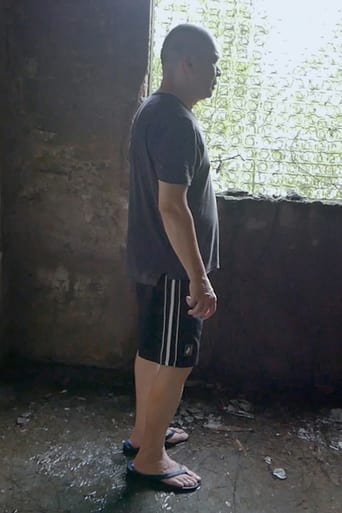
"For reasons of health, Lee Kang-sheng and I moved to the mountains. We don't have any neighbors. Our house is part of a row of dilapidated houses. I love these abandoned houses. I often walk around in them casually. I think they are beautiful. I said to Lee Kang-sheng: we don't have to go elsewhere to make films anymore. I'll make all my remaining films right here. I got some old chairs and some of my paintings and arranged them in these abandoned houses. And thus, this film was made." Tsai Ming-liang
 Where Are You, Jafar Panahi? · 2026
Where Are You, Jafar Panahi?
★ 7.02026
MovieDocumentary
Jafar Panahi and fellow Iranian director Majid Barzegar take a 20-minute drive to Kiarostami’s grave, during which time “the two friends speak appropriately of cinema, but also censorship and festivals, police power and ideology.”
More from Jean-Marie StraubSee all →
 Class Relations · 1984
Class Relations
★ 6.81984
MovieDrama
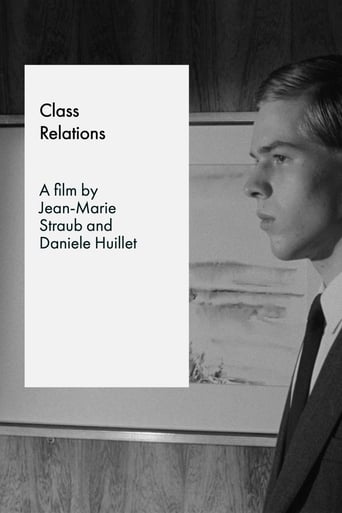
A young man, recently arrived in New York from Europe, becomes swept up in a series of events that are beyond his knowledge or control.
 Too Early / Too Late · 1982
Too Early / Too Late
★ 6.61982
MovieDocumentary
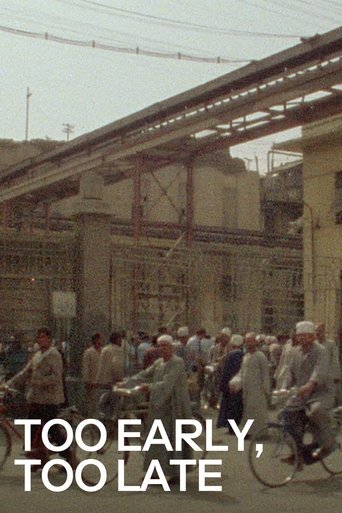
Inspired by a letter by Friedrich Engels and a 1974 account of two militant Marxist writers who had been imprisoned by the Nasser regime, Straub-Huillet filmed this film in France and Egypt during 1980. They reflect on Egypt’s history of peasant struggle and liberation from Western colonization, and link it to class tensions in France shortly before the Revolution of 1789, quoting texts by Engels as well as the pioneering nonfiction film Workers Leaving the Lumière Factory (1895).
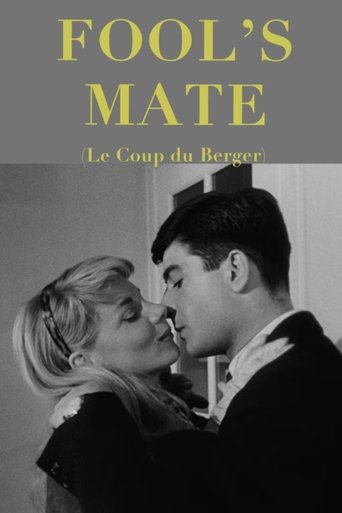 Fool’s Mate · 1956
Fool’s Mate
★ 6.61956
MovieComedyDrama
Claire is a chic young Parisian woman married to a somewhat older husband, Jean. Claire meets her lover, Claude, at his apartment, where he gifts her a fur coat. Now Claire needs to figure out how to return home with this expensive gift without the affair being found out.
 These Encounters of Theirs · 2006
These Encounters of Theirs
★ 6.42006
MovieDramaDocumentary
These Encounters Of Theirs divides 10 non-professional actors into couples, then has them take turns in declaiming the Dialogues With Leuco, Cesare Pavese's abstract, philosophical work.
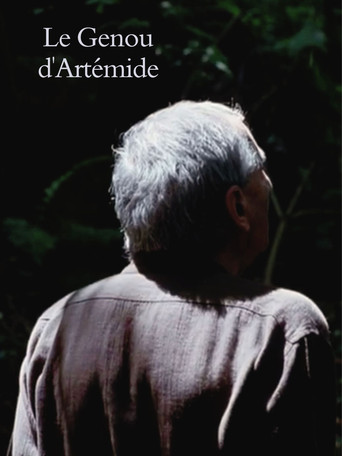 Artemide’s Knee · 2008
Artemide’s Knee
★ 6.42008
MovieDramaMusic
Mourning the death of his partner and collaborator Danièle Huillet, Straub finds tender mercy in music and nature. Out of the abyss, Kathleen Ferrier sings “The Farewell” from Gustav Mahler’s “The Song of the Earth”, (which the composer wrote in 1909 after the death of his daughter) and Heinrich Schütz’s Lament on the Death of His Wife. The landscape also provides solace: the mountain grove where Endymion pines for his beloved Artemis, “a wild thing, untouchable, mortal,” appears to embody the Japanese concept of ‘mono no aware’ — a wistful acceptance of the fleeting beauty of things.
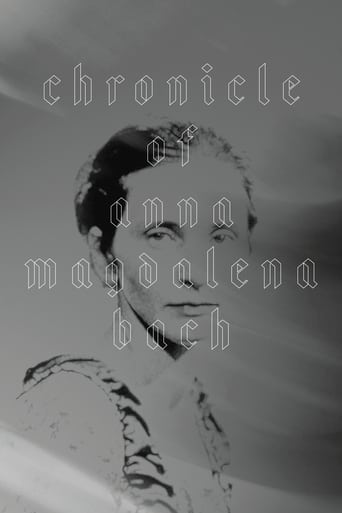 Chronicle of Anna Magdalena Bach · 1968
Chronicle of Anna Magdalena Bach
★ 6.31968
MovieMusicDrama
The life and music of Johann Sebastian Bach as presented by his wife, Anna.
 A Visit to the Louvre · 2004
A Visit to the Louvre
★ 6.32004
MovieDocumentary
A visit to the Louvre in Paris commentated by an actor reading Cézanne.
 History Lessons · 1972
History Lessons
★ 6.21972
MovieDrama
Set in contemporary Rome, the film shows through a series of encounters with “ancient” Romans, how the economic and political manipulation by ancient Roman society led to Caesar’s dictatorship. - British Film Institute
 The Return of the Prodigal Son · 2003
The Return of the Prodigal Son
★ 6.02003
MovieDrama
In Italy, immediately subsequent to the war, a group of people who lost all they possessed during the conflict, settle in a village in ruins. They intend to restore the city from the rubble and re-start life, in imitation of the women of Messina who rebuilt their city, destroyed as it was by an earthquake. Oscillating between respect and suspicion, co-existence between group members is tense. Things become complicated when an envoy from the government arrives to say that nothing there belongs to them. The film is a free adaptation of fragments of the novella ‘The Women of Messina’, by Sicilian writer Elio Vittorini.
 Moses and Aaron · 1975
Moses and Aaron
★ 5.81975
MovieDrama
A familiar Biblical tale transformed into a cinematic opera of seemingly endless possibility. In expressive, melodic tones, the fraternal pair debate God’s true message and intent for His creations, a conflict that leads their followers towards chaos and sin. Set almost entirely within a Roman amphitheater whose history lends every precise line-reading and gesture, every startling camera move and cut, a totalizing force.
 Fortini/Cani · 1977
Fortini/Cani
★ 5.71977
MovieDocumentary
The film is a sort of presentation of Franco Fortini's book 'I Cani del Sinai'. Fortini, an Italian Jew, reads excerpts from the book about his alienation from Judaism and from the social relations around him, the rise of Fascism in Italy, the anti-Arab attitude of European culture. The images, mostly a series of Italian landscape shots, provide a backdrop that highlights the meaning of the text. - Fabrizio Sabidussi
 Introduction to Arnold Schoenberg’s Accompaniment to a Cinematic Scene · 1973
Introduction to Arnold Schoenberg’s Accompaniment to a Cinematic Scene
★ 5.71973
MovieDocumentary
This is a small, intense film based on Schoenberg’s opus of the same name with the subtitle “danger, fear, catastrophe”. It deals with emerging fascism and the persecution of Jews, as well as with their historical continuities.
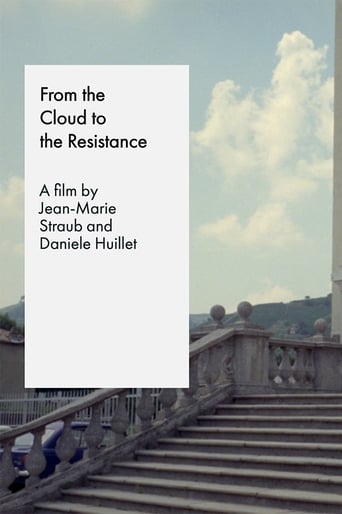 From the Clouds to the Resistance · 1979
From the Clouds to the Resistance
★ 5.31979
MovieDrama
Two segments. The first one arranges six stories from Cesare Pavese’s «Dialoghi con Leucò», taken from classical mythology. The second segment is taken from Pavese’s novel «La luna e i falò»: after World War II the emigrant «The Bastard» comes back to his village in the Langhe (northern Italy) to find out that everyone he knew has died, and that the war has deeply changed relationships between people.
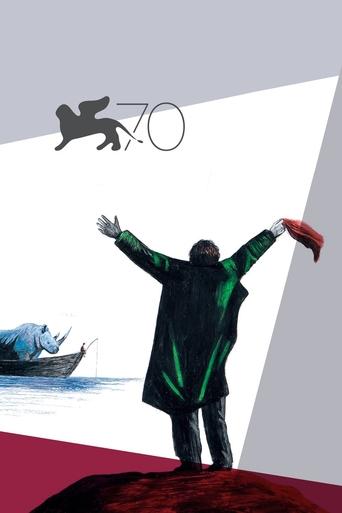 Venice 70: Future Reloaded · 2013
Venice 70: Future Reloaded
★ 5.02013
MovieDramaDocumentary
Made for the Venice Film Festival's 70th anniversary, seventy filmmakers made a short film between 60 and 90 seconds long on their interpretation of the future of cinema.
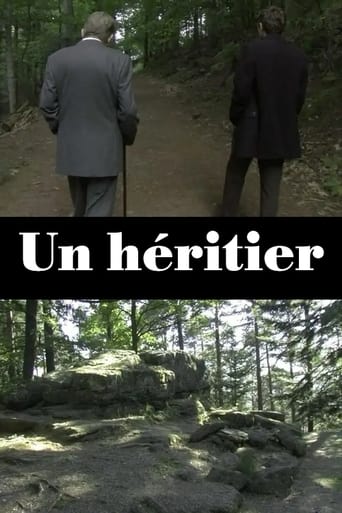 Un héritier · 2012
Un héritier
★ 5.02012
Movie
In 1994, Jean-Marie Straub and Danièle Huillet adapted the novel Colette Baudoche – Story of a Young Girl of Metz by Maurice Barrès as a film they titled Lothringren!. In 2010, Jean-Marie Straub returned to the eastern provinces of France, this time to Alsace, to film the second half of a diptych based on Barrès’s work. The text is derived from In the Service of Germany, a book about the mountain of Saint-Odile, which Barrès wrote in 1903. With Joseph Rottner in the principal role, Straub traces the path of a young country doctor as he tours Mont Saint-Odile, following the routes that Barrès himself took to the chateau of Ratsamhausen and around the ruins of the ancient fortification known as the "Pagan Wall,” which are unique in the area. Straub, himself born in Metz, plays the role of a resident of Lorraine whom the young Alsatian engages in conversation.
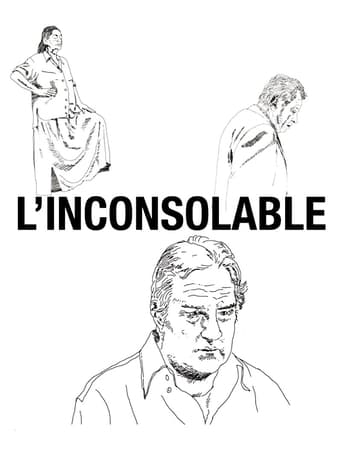 L’Inconsolable · 2011
L’Inconsolable
★ 5.02011
Movie
With L’inconsolable, Jean-Marie Straub continues the mise en scène of Cesare Pavese’s Dialogues with Leucò, initiated in 1978 with Dalla nube alla resistenza and followed up in 2006, 2007 and 2008 with Quei loro incontri, Artemis’s Knee and Le streghe – femmes entre elles. L’inconsolable is a reflection on the myth of Orpheus.
More Like This
Couldn't load this row right now.