Graal

Graal

1980 · 77 min · ★ 2.3

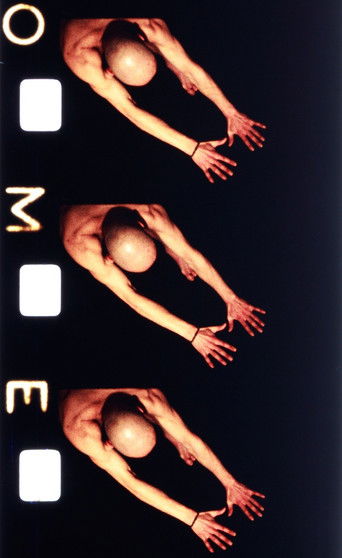
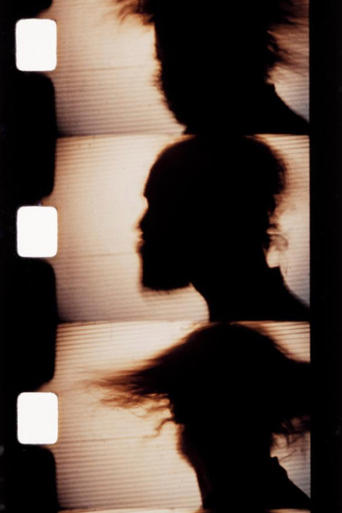
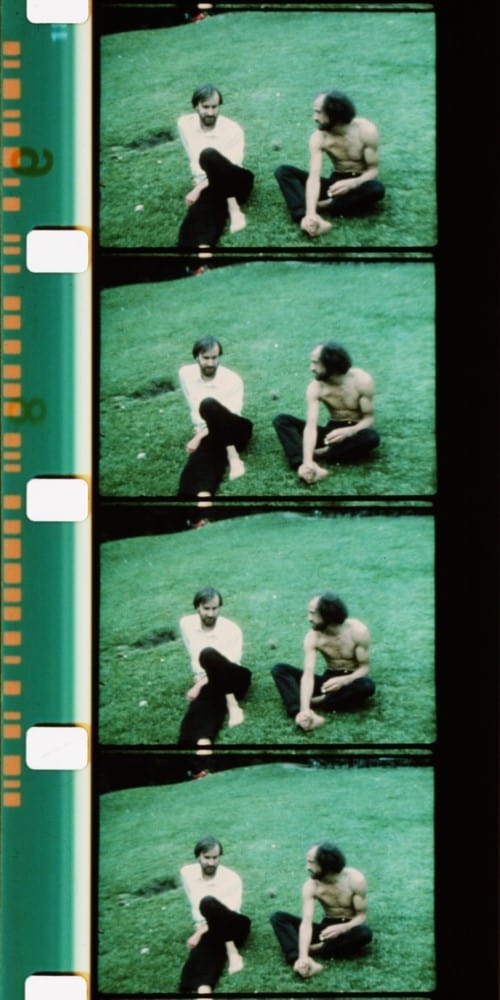
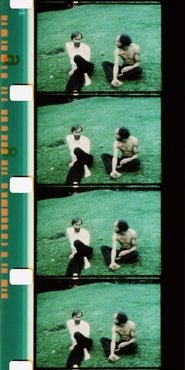
The film Graal goes (as well as all the films which precede it) toward an open and avowed paganism, in which pagan force and magic imbue all the subjects at all times. (...) This is not about "the" Holy Grail and its legend but about the concept of the Grail, taken in a larger sense as a universal archetype: abbreviation, metaphor of the cosmos. In fact, achievement. That is what the Grail is: the achievement's completion.

Directed by Teo Hernández

Your Rating

Cast
Make it a double feature

2h 42m together
Graal

Cristaux

Both from Teo Hernández.

Le Corps de la PassionSee all →

CristoCristo · 1977
Cristo
3.31977
MovieDrama
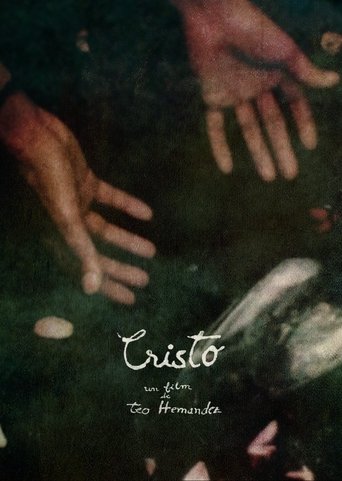
All of history, that of Christ or any other, permeates the world, leaves its mark, modifying and informing history, and all that the human reproduces and creates. The best way for historical interpretation or literary adaptation is to move as far as possible from literal interpretation. That is, it is a contemporary and personal interpretation. The story of Christ is an archetypal story. It has modified and informed a morality and a vision of the human being in the West, it must be taken for what it is and what it has become: matter.
CristauxCristaux · 1978
Cristaux
10.01978
MovieDrama
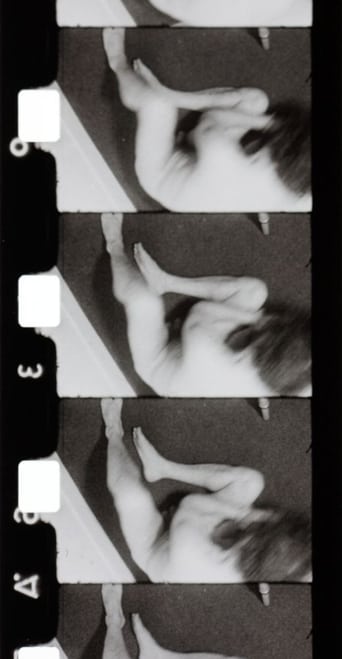
The tetralogy pieces are dominated by the concept and presence of death, foreclosure, fetal vertigo. As such, CRISTAUX is a real descent into an inner labyrinth, which we do not know if it is organic or cultural. At the same time, the film contains a dialectical break that initiates other semantic directions in Hernandez's work. Under the influence of Michel NEDJAR, the filmmaker abandons his traditional method of editing based on rushes. The operation is now completed inside the camera, filming. This more flexible way of proceeding ("the camera must become a second eye") is already reflected in the clear openings of Lacrima Christi: the Christian myth seems to be on the way to exorcising. The pantheistic intoxication - close to that evoked by Nietzsche - seizes places, objects and participants.
Lacrima ChristiLacrima Christi · 1980
Lacrima Christi
5.01980
Movie
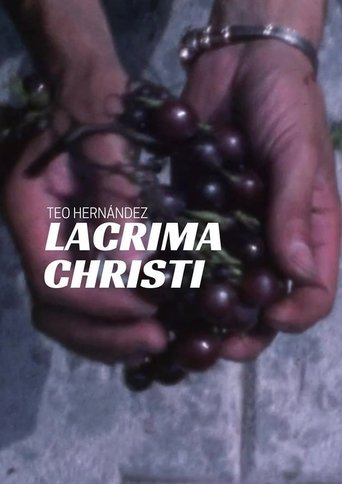
Lacrima Christi is the longest of the over 150 films made by the Mexican filmmaker resident in Paris, Teo Hernández. Part three of a tetralogy devoted to Christ’s Passion, Lacrima Christi is an exploration of the transfer between desire and myth that takes as its starting point a series of objects found in the flea market of Belleville.

More from Teo HernándezSee all →

CristauxCristaux · 1978
Cristaux
10.01978
MovieDrama
The tetralogy pieces are dominated by the concept and presence of death, foreclosure, fetal vertigo. As such, CRISTAUX is a real descent into an inner labyrinth, which we do not know if it is organic or cultural. At the same time, the film contains a dialectical break that initiates other semantic directions in Hernandez's work. Under the influence of Michel NEDJAR, the filmmaker abandons his traditional method of editing based on rushes. The operation is now completed inside the camera, filming. This more flexible way of proceeding ("the camera must become a second eye") is already reflected in the clear openings of Lacrima Christi: the Christian myth seems to be on the way to exorcising. The pantheistic intoxication - close to that evoked by Nietzsche - seizes places, objects and participants.
4 à 4 Métro-Barbès-Rochechou-Art4 à 4 Métro-Barbès-Rochechou-Art · 1983
4 à 4 Métro-Barbès-Rochechou-Art
6.01983
Movie
In the early '80s, this collective of artists invented a style of cinema made in 4 hands, where each of the protagonists is also a filmmaker.
The Sun Also RisesThe Sun Also Rises · 1957
The Sun Also Rises
5.81957
MovieDramaRomance
A group of disillusioned American expatriate writers live a dissolute, hedonistic lifestyle in 1920's France and Spain.
Our Lady of ParisOur Lady of Paris · 1982
Our Lady of Paris
5.31982
MovieDocumentary
Magical Super-8 (shown on 16mm) single frame portrait of the Notre Dame cathedral featuring luminous light and a dense score incorporating players from the square. - Early Monthly Segments
Lacrima ChristiLacrima Christi · 1980
Lacrima Christi
5.01980
Movie
Lacrima Christi is the longest of the over 150 films made by the Mexican filmmaker resident in Paris, Teo Hernández. Part three of a tetralogy devoted to Christ’s Passion, Lacrima Christi is an exploration of the transfer between desire and myth that takes as its starting point a series of objects found in the flea market of Belleville.
CinématonCinématon · 1978
Cinématon
4.91978
MovieDocumentary
Cinématon is a 156-hour long experimental film by French director Gérard Courant. It was the longest film ever released until 2011. Composed over 36 years from 1978 until 2006, it consists of a series of over 2,821 silent vignettes (cinématons), each 3 minutes and 25 seconds long, of various celebrities, artists, journalists and friends of the director, each doing whatever they want for the allotted time. Subjects of the film include directors Barbet Schroeder, Nagisa Oshima, Volker Schlöndorff, Ken Loach, Benjamin Cuq, Youssef Chahine, Wim Wenders, Joseph Losey, Jean-Luc Godard, Samuel Fuller and Terry Gilliam, chess grandmaster Joël Lautier, and actors Roberto Benigni, Stéphane Audran, Julie Delpy and Lesley Chatterley. Gilliam is featured eating a 100-franc note, while Fuller smokes a cigar. Courant's favourite subject was a 7-month-old baby. The film was screened in its then-entirety in Avignon in November 2009 and was screened in Redondo Beach, CA on April 9, 2010.
SaloméSalomé · 1976
Salomé
4.21976
MovieDrama
A personal interpretation of Oscar Wilde Salome from three basic elements: the light, the color, and the projection speed.
Vloof the Egret: Monkey BreadVloof the Egret: Monkey Bread · 1987
Vloof the Egret: Monkey Bread
3.01987
Movie
The outcome of Hernández’ friendship with the dancer and choreographer Bernardo Montet, this work, ranging from black-and-white to color, is the vertiginous record of a cross-dressing act, or a therapeutic performance on identity. Presented for the first time in Rouen, on May 26th 1987.
ProménadeProménade · 1988
Proménade
1988
Movie
Sacré-CoeurSacré-Coeur · 1983
Sacré-Coeur
1983
Movie
Teo Hernández's unmistakable camera movements portray the Basilica of the Sacred Heart in Paris.
Cinématon IICinématon II · 1978
Cinématon II
1978
Movie
Reel 2 of Gérard Courant's on-going Cinematon series.
MayaMaya · 1979
Maya
1979
Movie
Hymn to nature, song to the cosmos, Mâyâ builds a world where the camera generates a new type of representation in which the depth of field is reduced to the essential. Everything happens, in a way, on the same surface.
Avec BernardoAvec Bernardo · 1991
Avec Bernardo
1991
Movie
Portrait of the contemporary dancer and choreographer, Montet Bernardo.
ConcertinoConcertino · 1990
Concertino
1990
Movie
FragmentsFragments · 1987
Fragments
1987
MovieDocumentary
Eyes and ears travel discontinuously through everyday life and the sub-worlds of the city and the body. A fragmented and subjective day-to-day chronicle that outlines a recurring obsession for registering even the most ordinary things, where the least poetic aspects of life, that is to say, the most somber ones, become the eye’s filter.
Le DéjeunerLe Déjeuner · 1988
Le Déjeuner
1988
MovieDocumentary
Filmed in 1988 on the occasion of the parties at the house of Marie-Noëlle Delorme. Shot with camera in hand to small bursts of frames and almost image by image, but then slowed down.

More Like This

Couldn't load this row right now.
Rate this film

Your ratings make Midnight smarter